

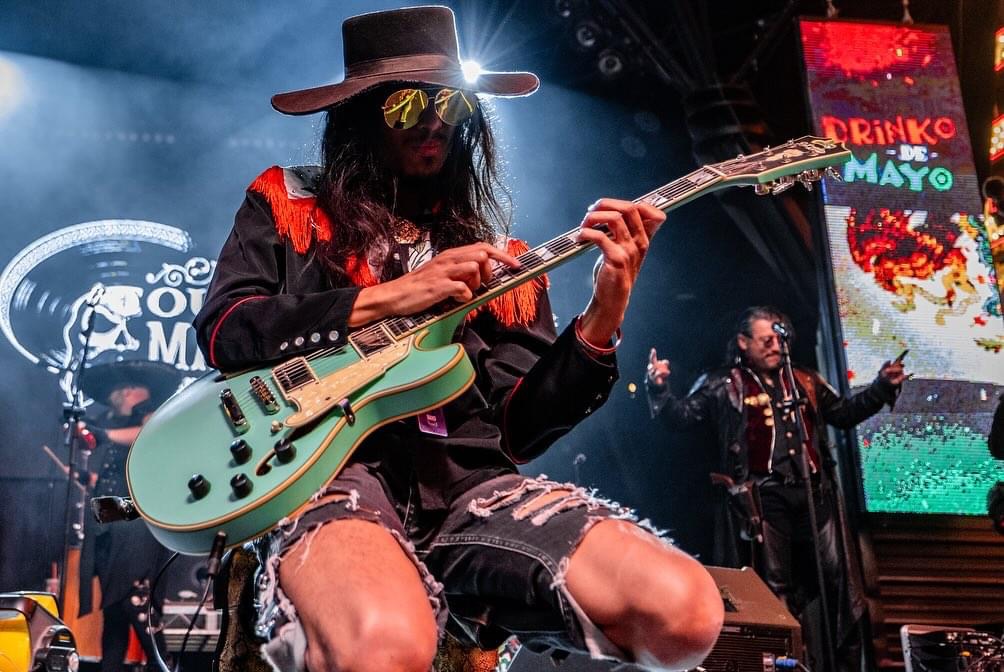

We recently connected with Stevie Garcia and have shared our conversation below.
Alright, Stevie thanks for taking the time to share your stories and insights with us today. Can you talk to us about how you learned to do what you do?
Learning the craft of playing instruments, writing music, and improvising is definitely a life-long endeavor. I started on the electric guitar at the age of 11, inspired by Eric Clapton and other blues-rock guitarists. At first I found out about guitar tabs online and would use those to learn how to play songs I enjoyed on the radio stations like: KROQ (Alt. Rock), or KLOS (Classic Rock). It didn’t take long for me to realize; a lot of the tabs were wrong. I had to listen carefully and figure out the correct notes for myself, on the guitar. Few for the first few years I didn’t know anything about music theory, but I would just find out what spots/frets sounded correct. What used to take hours to figure out on the guitar, now might take seconds. I started out primarily self-taught, but I learned from others more in high school. I joined the choir with my sister, and had a great music teacher who taught me how to sing and sight-sing / read music. It was the first time I read music, and it was through the sound itself. My dad bought me a book on music theory, and that opened up my mind into the world of chords, scales, notes, and progressions. Halfway through high school, I would take the bus after school to a local community college, and take music classes on piano and guitar. This is where I was introduced to William Leavitt’s Modern Method for Guitar (a classic first published in 1966). This was a huge moment for me, where my mind made the connections between the music notes, and the frets on the guitar. It was also my big first introduction to the sounds of Jazz, which made a huge impact on me, and became a lifelong love of mine. I started playing in the pit orchestra of musicals in high school, reading 100+ page books of sheet music. I’ve continued to play musicals throughout my career, expanding instrument doubles to: banjo, mandolin, ukulele, classical and acoustic steel guitar. My learning was further deepened once high school ended: I enrolled in the music program at Fullerton Junior College, studying classical and jazz guitar, and learned so much from the great teachers there. I excelled in all the courses and particularly enjoyed Music Theory and Aural skills, as well as Counterpoint training. After two years there, I transferred to USC’s Thornton School of Music, and really filled in the blanks of my training. I had a lot of opportunities for ensemble classes, and those were a great help. All through my college days and beyond, I would take as many gigs as possible, so I was always learning on the job, on how to blend with musicians, learn parts, and memorize songs. Writing sheet music out from listening became a huge asset to me, so I can now play thousands of songs I’ve performed over the years, on short notice. I started learning music production in USC from a class, and continued training outside of school. Joining forces with my main production partner, multi-platinum producer Funkonaut / Victor Taylor, was big step in the growth process as well.
I feel like I’ve always tried to learn as much as possible and do my best. For sure what could have sped up my learning more though, would have been meeting more accomplished musicians and playing with them. Make time to go to jam sessions, play songs you don’t know, and fit into a group on the spot. There were a number of times I did this when I was young and the bandleaders really told me to stop, or play, or whatever. Quick lessons that stuck with me forever, and made me a more sensitive musician. Just jump in and don’t be afraid to be wrong; be ready to adjust and learn on the spot. In reality, this advice is still useful, and I still want to get involved with even better musicians, and learn on the spot.
For sure the number one skill a musician can learn, is to listen. It starts from just putting on the music, and giving it your undivided attention. Focus in on the different instruments one at a time, then as a whole. Even having a focused attention span is a skill. Once the sound lives in your head, and you can reproduce it mentally, you’ve basically won. After that you just move your fingers around until you find the spots that match the sound, and then repeat the physical motions over and over, until they become smooth. For sure, each instrument has some training needed to achieve the optimum motions without hurting yourself, and that should be sought out from more experienced musicians / teachers when you can. This includes stretching. The physical training is a big thing I value from my schooling. Once you make listening a habit, fitting into any group becomes possible. The instructions for any genre are all on the records. Also, you should preserve your listening ability: wear earplugs in rock bands or loud groups/ orchestras (they didn’t teach me that in school). I like the silicone ones, not the memory foam type ones. If you’re caught in a loud zone without any earplugs, some napkin shreds from the bar can be effective.
I guess it can be easy to blame outside influences for getting in the way. Maybe it’s being short on money for gas to get to jam sessions that don’t pay anything, and cost to get in. Maybe it’s feeling like there’s not enough time left, to go out and meet people and learn. Maybe it’s being too tired and not sleeping enough, so you don’t feel up to it. Personally, one thing I can say for sure was holding me back was drugs and alcohol. Automatically, it made me have less time, money, and rest. Besides that, when I was under the influence, the work I could get done was at a fraction of my normal capability. I don’t want to say everyone is affected the same way, but it was a problem for me. Also, it didn’t help that basically everywhere I played it was offered to me. I’ve been sober for a few years now, and I can say my mental, physical, and emotional stability are way better now. I used to feel off for months at a time, and that would definitely stand in the way of my work and learning. I want to be the best I can in this life, and removing substances has been a huge help for me.
Stevie, before we move on to more of these sorts of questions, can you take some time to bring our readers up to speed on you and what you do?
Well early on, I knew I wanted to be a musician. Later in high school, with talks of college and careers, I started to feel like a life in music was viable, even if primarily a teacher or something like that. During my entire time of music school, at FJC and USC, I would take gigs for money, performing on the guitar. I paid for rent on a room near USC, while I was attending, with money from gigs. In this industry, making strong connections with your peers is key. Having a good reputation is vital. Anyone who knows me feels assured, that if the project is in my hands, everything will be great and it’s taken care of. This trust builds over time, and I’ve become a part of a network, where I can solve peoples needs in music. I do provide provide lessons, if I feel like we’re a good fit: I’ve spent many hours and years, studying and dissecting the intricacies of music and guitar for myself, so that I may achieve mastery. Primarily though, I run my business through: performing live, recording, and producing.
Often times, people want a feeling in their music, but they don’t know musical terms, or styles. I can interpret their message and draw upon my vast pool of musical experience, in many instruments and genres to provide a tailored solution to the song. This can be while filling in on guitar live in a band, adding a track to a song they’re making, or recording an entire production around a melody they have in mind. Sometimes you need a screaming electric guitar solo, a somber piano background, or a Funky galactic universe. Because of my knowledge over many genres, I can create new sounds and genres. To me that is the essence of making “new” music; it should draw upon the history of music, and attempt to make something truly fresh, something that could have only existed now.
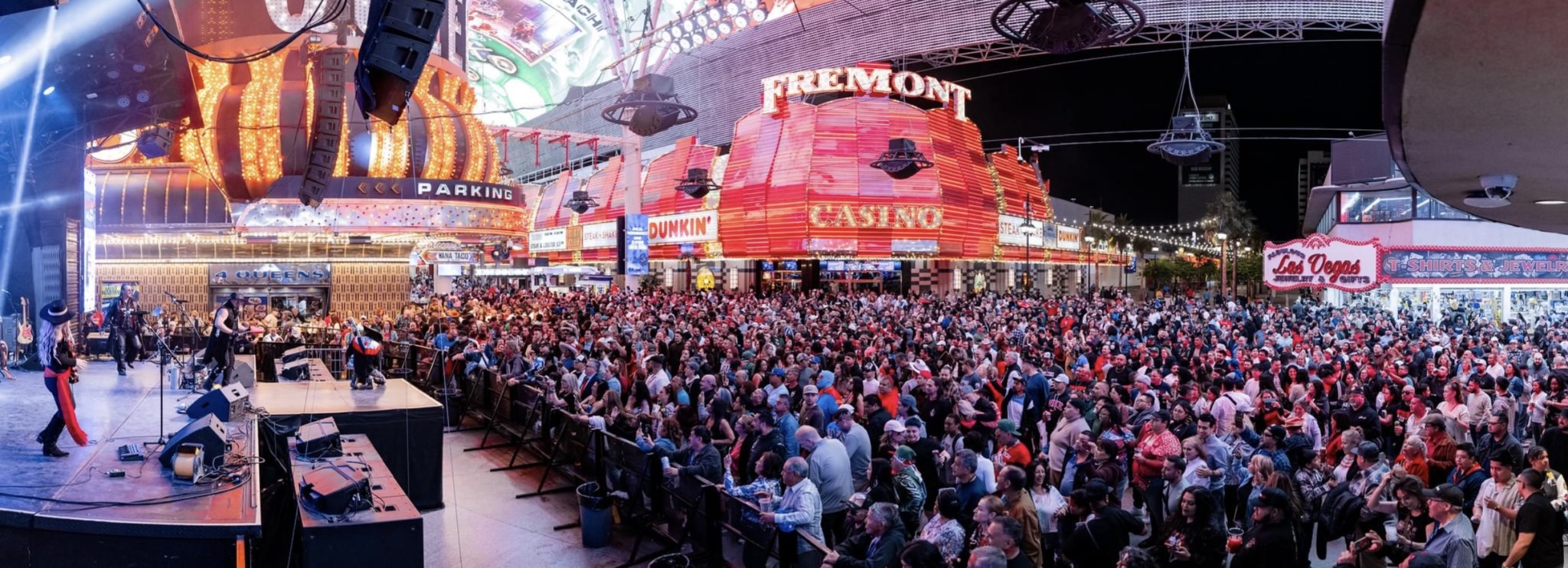
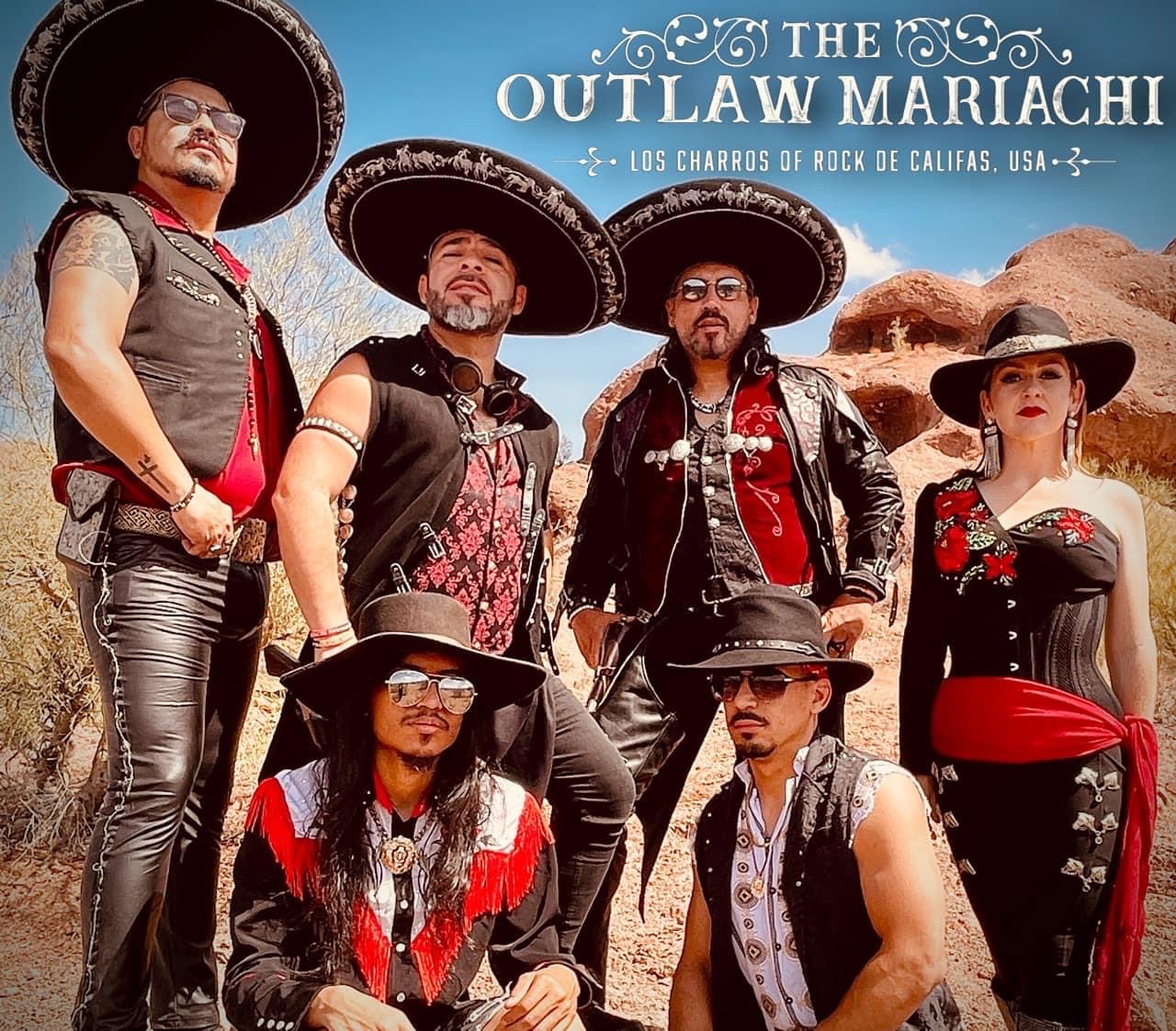
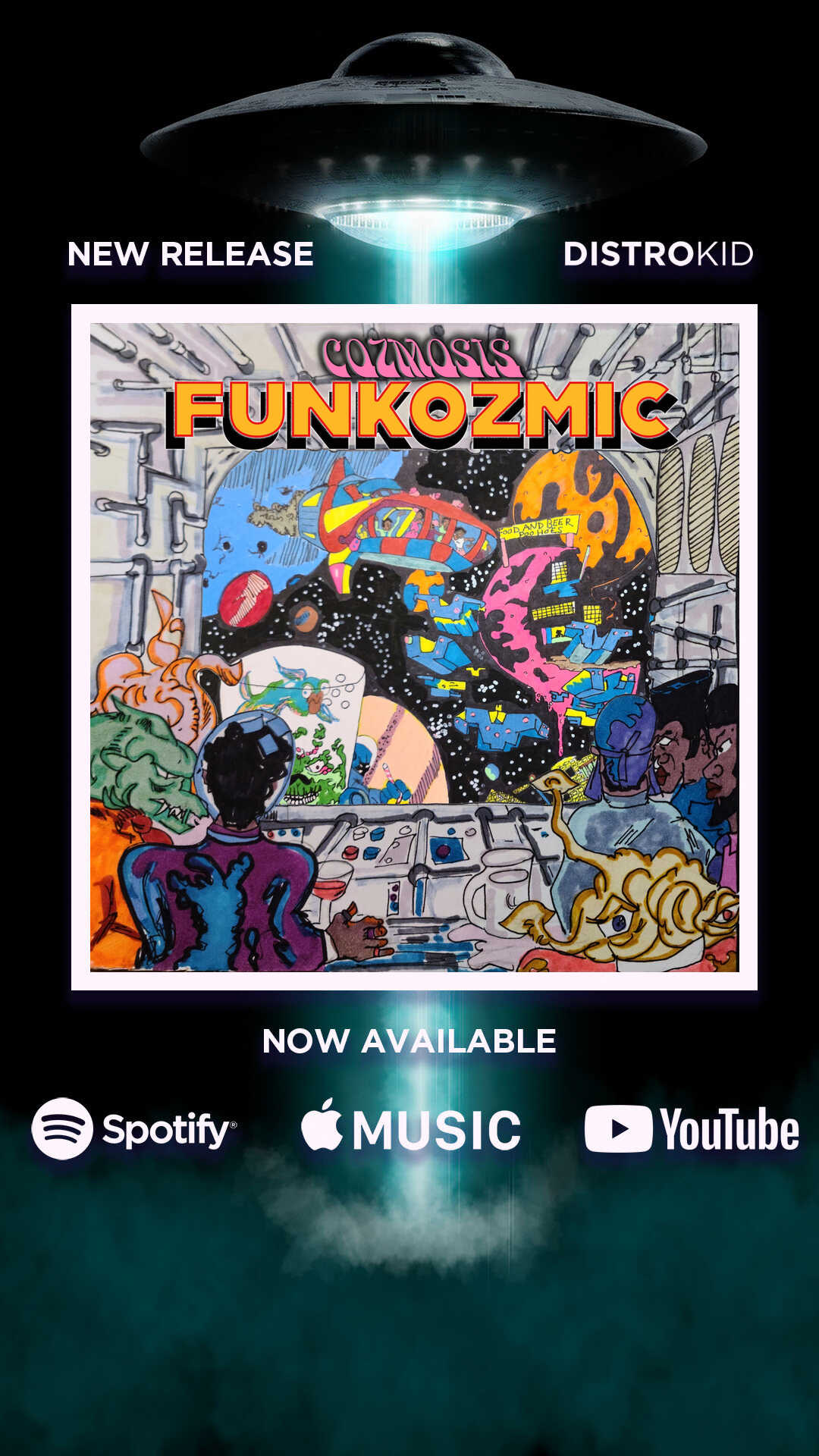
I’m probably most proud of my creations with Funkonaut, under Cozmosis and Funkonaut. To me, they embody the spirit of peering into the funky galactic future, and showing it now. It is a reality and a world I feel, but I don’t yet see it around us, so we’re working to help it manifest into the present moment. My philosophies, experiences, and dreams come together to create a world that could only exist now, or rather in the future. On another side of my endeavors, I’m proud of the work I’m doing with The Outlaw Mariachi. It’s a Rock Mariachi band, that combines elements of Mexican music and Rock music, which flow seamlessly into each other and bring together people of all backgrounds. It’s a great opportunity for me to bring the energy and spirit of electric guitar to people, through huge riffs, solos, and showmanship. I also appreciate connecting with my Mexican heritage. We just released our debut album, have traveled to 12 states of the US from the west coast to Texas, and are continuing to expand our reach.

Can you share your view on NFTs? (Note: this is for education/entertainment purposes only, readers should not construe this as advice)
OK, so NFT’s (Non-fungible tokens) are a big part of a huge new frontier, the metaverse. I guess I kind of look at it like explorers discovering the “New World” of America, but in a digital domain. Currently NFT’s don’t seem to be a big part of our daily lives, but I think there is huge potential. The potential is there especially for artists. You can make digital prints, exclusive tracks, animated characters, in person experiences; limitless possibilities really. Once the metaverse really gets going, and people regularly integrate their avatars into the digital dimension, then NFT’s are really going to take off. It’s the next step of our modern world. Probably at that point, people will be using Virtual Reality headsets to navigate. Once people are spending a lot of time in the metaverse, they will naturally want to collect items and experiences via NFT’s. There is really a whole other dimension percolating in the air, and at some point it will become mainstream. It seems like it’s a good time to get ahead of the curve, and start creating some NFT’s, which can spiral into higher value later on. They can be traded and repriced, so the market’s supply and demand will go into action. I’d like to think of NFT potential like Bitcoin, and we know how that turned out.
Is there something you think non-creatives will struggle to understand about your journey as a creative?
It’s never a good idea to over generalize, but I think that the path of the creative is often misunderstood. Some people think it is chosen as a way of escape, so that an easier, more care-free life can be lived; one devoid of real work and responsibility. A revision to “Do what you love, and you’ll never work a day in your life” I heard and relate to is: “Do what you love, and you’ll work harder than you ever have before.” Being a full-time creative is really a lot of work. There aren’t off days; you have to be ready to jump into action at any moment, and sometimes sustained for days on end. A music careers teacher at USC told us you have to have “Seagull Syndrome.” If you’ve ever seen seagulls, they’re never chilling; they’re always looking for the next opportunity. For my own health, and partially as a privilege of having more steady, better paying work, I occasionally have to turn down opportunities that are highly demanding and immediate. It takes a while to get to that point though, but it’s really nice to give yourself some time off when you need it.
Adding on to the point of the misunderstandings of why we get into this work: it’s kind of a choice and it kind of isn’t. There was a period of a couple years in high school when I wasn’t doing much with the guitar, and it was the worst period of my life; I was miserable. Over the years I started to notice, when I would be away from music too long, even days or weeks; I begin to feel terrible. It’s somewhat a blessing and a curse: I am allowed to experience the highest joy of life by immersing myself in a musical life, or I experience despair and depression, by keeping myself away from playing music. I choose to have a life I love, so I choose a career in music. It’s more of a vocation, and a dedication through my life, actions, words, and creations. A great guitar teacher and mentor, Bruce Forman, once asked me: “Why do you play keep playing guitar?” I responded “The more I learn about the guitar and music, the more I understand life and how to live.”
Contact Info:
- Website: https://steviegarcia.com
- Instagram: https://instagram.com/steviegarciamusic
- Facebook: https://www.facebook.com/steve.garcia.98284/
- Linkedin: https://www.linkedin.com/in/steviegarciamusic/
- Youtube: https://www.youtube.com/@steviegarciamusic
- Soundcloud: https://soundcloud.com/steviegarciamusic
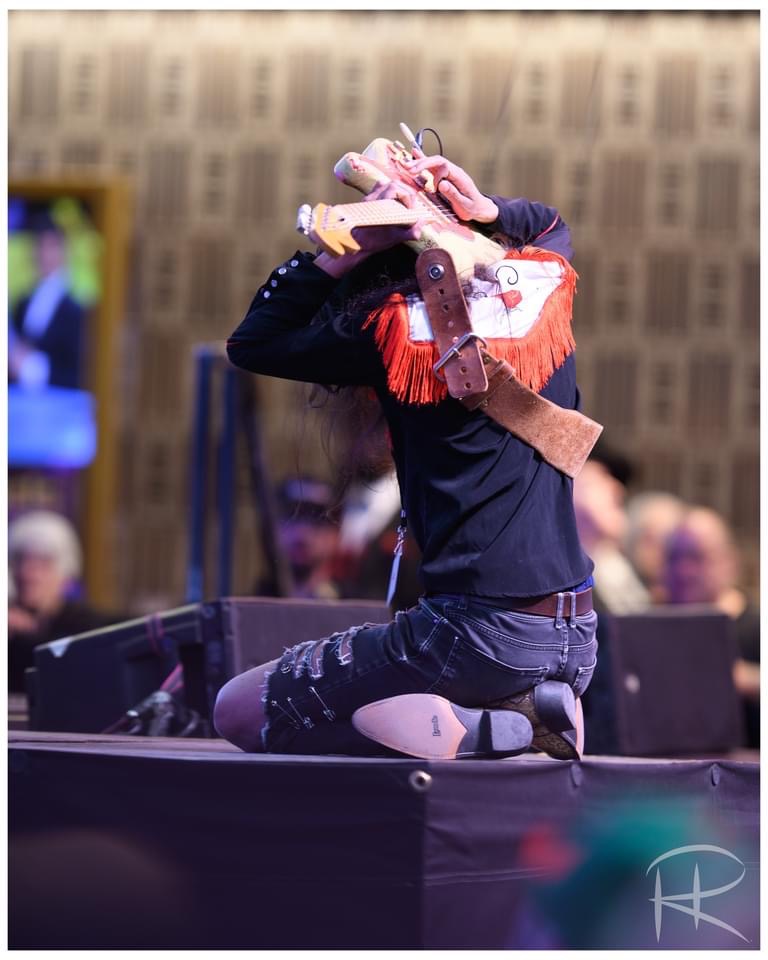
Image Credits
Hank Robinson