Today we’d like to introduce you to Gideon Kimmel
Hi Gideon, it’s an honor to have you on the platform. Thanks for taking the time to share your story with us – to start maybe you can share some of your backstory with our readers?
Sure. From a very early age I was the designated listener of my friend group, I always found their stories fascinating and I enjoyed offering my perspective, it was how I felt useful, in fact, before voice over my original plan was to become a psychologist. It’s what I was good at, and I enjoyed it, so it seemed like the natural next step. But somewhere along the way something shifted, not just because I’d secured my first “real” job in working for the Office for People with Developmental Disabilities, but also because COVID hit, and I felt like I could focus on what I wanted for the first time. It was here that I began the transition from listening to speaking.
I decided to take the plunge into voice over in August of 2020 and from there, I became a small-business owner. Being a beginner in this new art/business was refreshing because I love sinking my teeth into new things, especially when silly voices are involved, but it also meant that I, with only a couple college business courses under my belt would need to learn to do all the work that comes with running a voice over business, email marketing, staying accountable to yourself, staying on top of invoices and making time to audition when you’ve got a full time job, all while trying to maintain your sanity because now you’re your own boss. But I got used to it, I polished up my project management skills, did tons of performance and business coaching, booked a solid body of work, and most recently secured representation with my agents at Access Talent. From here the work continues, the opportunities are bigger than ever and I’m very excited to see where this next chapter takes me.
We all face challenges, but looking back would you describe it as a relatively smooth road?
The road has been anything but smooth. To take you back to the beginning, I was born almost four months premature and was diagnosed with cerebral palsy not long after. I needed multiple surgeries before I left the hospital and then several times later down the line; I’m up to 12 now. I got started with speech, occupational, and physical therapies as soon as I got home to bridge my developmental gap and I continued that work until middle school. Growing up I had trouble holding pencils, tying my shoes, and struggled with abstract thinking and spatial reasoning. However, once I started middle school, I got to a point where, other than getting extra time on tests, no one could tell I was developmentally delayed, so I started to feel out of place going to OT and PT with kids who had a lot more support needs than I did. This sense of feeling out of place persisted, and it wasn’t just contained to my feelings about my delays.
My mother was born in Switzerland and is a descendant of Polish and Russian Jews and my father is from St. Lucia. The biracial stereotype of not feeling like you fit in to either of your parents’ cultural boxes has always been true for me. Bullying from one demographic of kids who don’t know better is bad enough, but to seek community in another, only to be told that you don’t fit in there either is isolating. Couple that with the fact that my parents divorced when I was three, my father was absent for most of my childhood, and that my mother and stepfather argued a lot, it was hard to feel safe growing up.
I came to the conclusion that I needed to be doing more to be accepted, that I wasn’t good enough as I was. So I came up with an absolutely fool-proof plan, to be accepted I was going to be as helpful as possible to everyone else, even at the expense of myself. I made sure I was there for them, and would drop everything I had going on if they called, because that’s what it means to be a good friend, right? I operated with this mindset for a very long time and in a lot of ways my approach worked. I became closer with the friends I had, I made new ones, and I was well-liked, but as I got older, I started to feel like this toolbox I’d constructed as a kid only had a couple tools in it. I still lacked confidence in myself, and I often avoided any situation in which I felt conflict was likely. If you’d asked me back then how I saw myself, I’d have said I was selfless, easy-going, and nonchalant. Now, after years of therapy I look back and see that so much of that “selfless” “nonchalant” behavior was self-abandonment, that it came with unspoken expectations, and resentment when people didn’t reciprocate in ways that I wanted but was too afraid to express, I’ll admit it, I’m a recovering people-pleaser. I’ve spent my adult life figuring out which strategies thought up by my overwhelmed childhood brain don’t work for me anymore and I’m working to replace them with tools that do. Even as I write this I wonder if my struggles are “enough,” whatever that means. At the end of the day, I’m very fortunate to have the life that I do, but it’s also taken a lot to get here and it takes a lot to keep going. We’re works in progress from the moment we’re born but I can say with confidence that progress has been made!
Thanks for sharing that. So, maybe next you can tell us a bit more about your work?
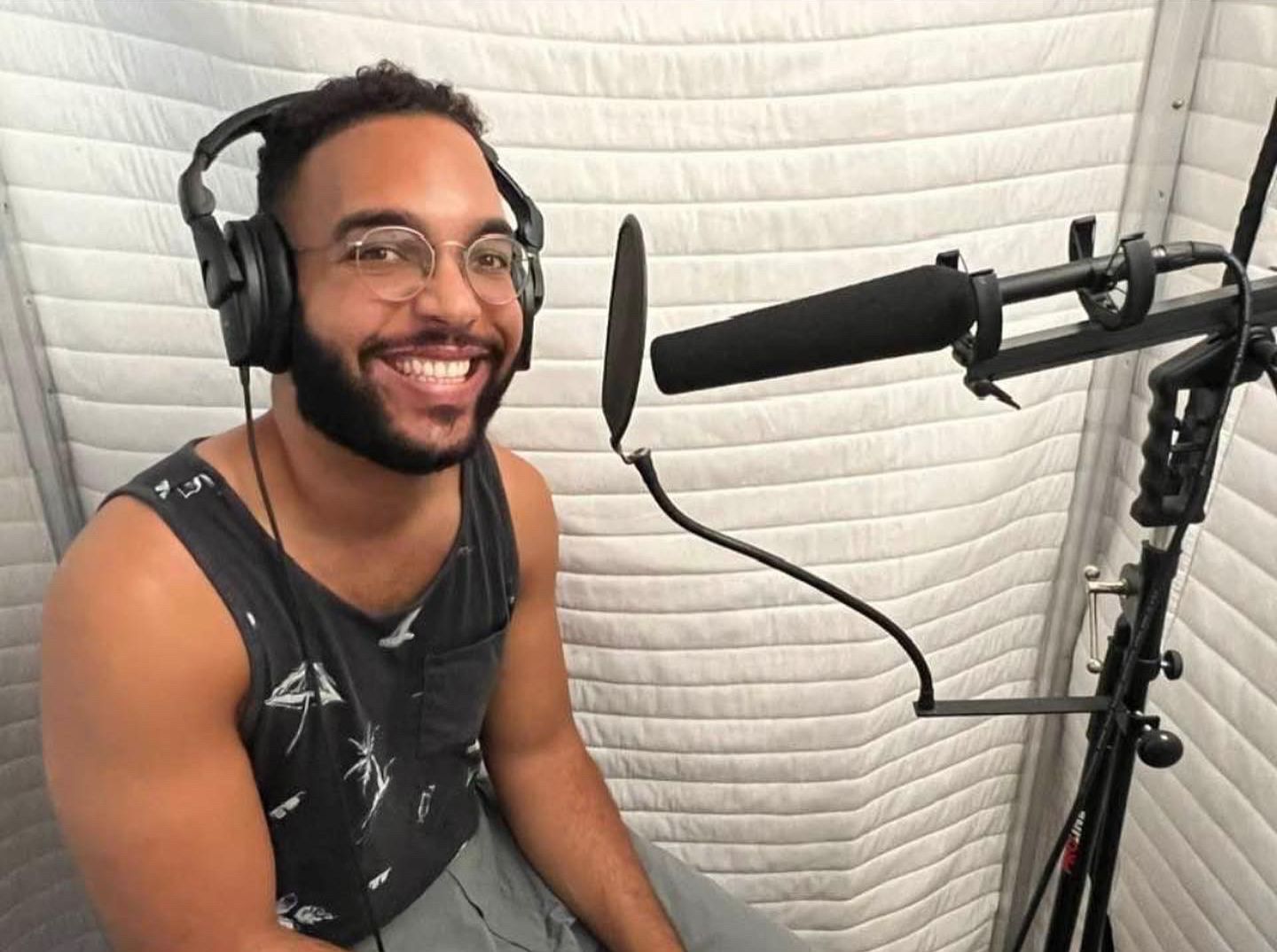
I’m a voice actor, I’ve been helping creatives and companies tell their stories since August of 2020. Whether it’s a Tide commercial, a company’s e-learning module, or a video game, there’s a story to be told. A lot of feedback I’ve received has been about my ability to take direction, so it looks like those years of people-pleasing paid off! But seriously, I make sure I’m easy to work with. There’s so much that goes on behind the scenes that I don’t ever get to see, and a lot of times the voice over is the last piece of the puzzle before a project is finished, so I do my best to make sure my clients can cross their finish lines feeling excited about their projects. Storytelling is one of humanity’s defining traits and I’m just grateful to be a part of this tradition that’s existed for as long as we have.
I’m so proud of where I am. Sometimes I forget how far I’ve come. When you serve as the protagonist of your story it’s so easy to fixate on everything you don’t have yet and to look at your past wins with a sense of, “meh” (maybe that’s just me). Even in doing this interview, I’m reminded to keep things in perspective. I talk about my developmental journey in an earlier question and I just feel lucky, because had a couple things been different, I may not be able to do this work or live the life that I do. Ultimately, it’s that unique experience and the resulting beliefs, values, and opinions that I’ve formed that set me apart from others, no one else has that.
What are your plans for the future?
Going full-time in voice over is at the top of the list. I’d love to be able to support myself doing what I love, and I know I can get there, it just takes time and consistency. In the back-half of 2024 I’m upping my direct marketing and making more time to network. Other than that, I’m open, I think it’s easy to put ourselves on a track leading to what we think will make us happy only to be derailed by forces beyond our control, or find out that what we thought would make us happy, doesn’t. Being focused on the future is great but it’s also important to savor the present because that’s all we’ve really got.
Contact Info:
- Website: https://www.gideonkimmel.com/
- Instagram: gideonkvo