

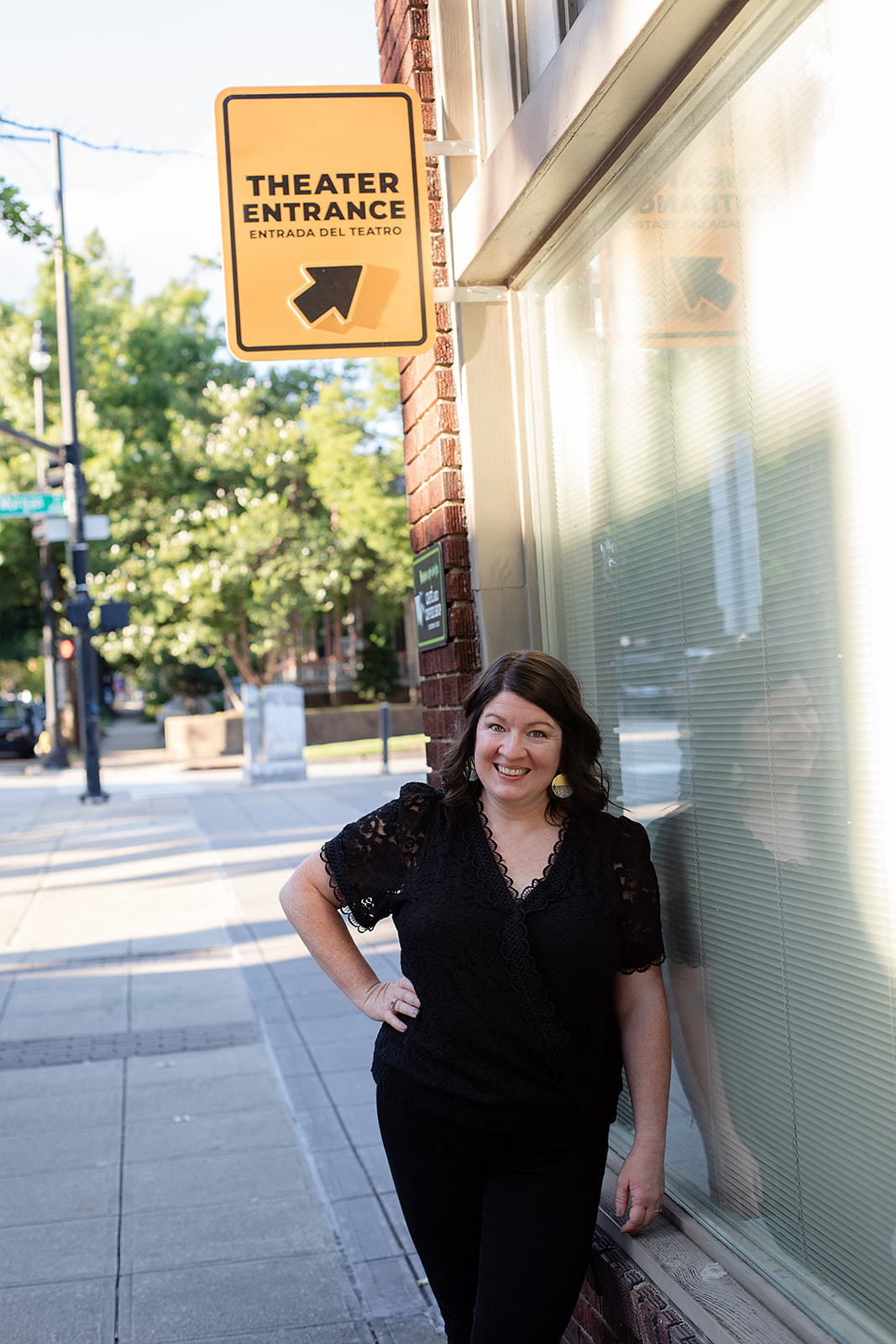

Alright – so today we’ve got the honor of introducing you to Amy Sawyers-williams. We think you’ll enjoy our conversation, we’ve shared it below.
Amy, thanks for taking the time to share your stories with us today Can you talk to us about how you learned to do what you do?
Here is a link to a copy of the below text with links: https://docs.google.com/document/d/10ekYj9wxKktJCSSDK7gePiBAg0A3RjZwsxi_HuYXywE/edit?usp=sharing
I am a 40-year-old social practice theatre artist, improv comedian, and mother. By day, I work in college arts administration to pay the bills. If I could travel back and tell my 15-year-old self that, in 25 years, I’d be a social practice artist, she might have rolled her eyes and asked why I didn’t chase Broadway. I’d have to sit her down and explain, as I’m telling you now, what a rich, exciting, and creative journey it’s been—and how I wouldn’t change a thing.
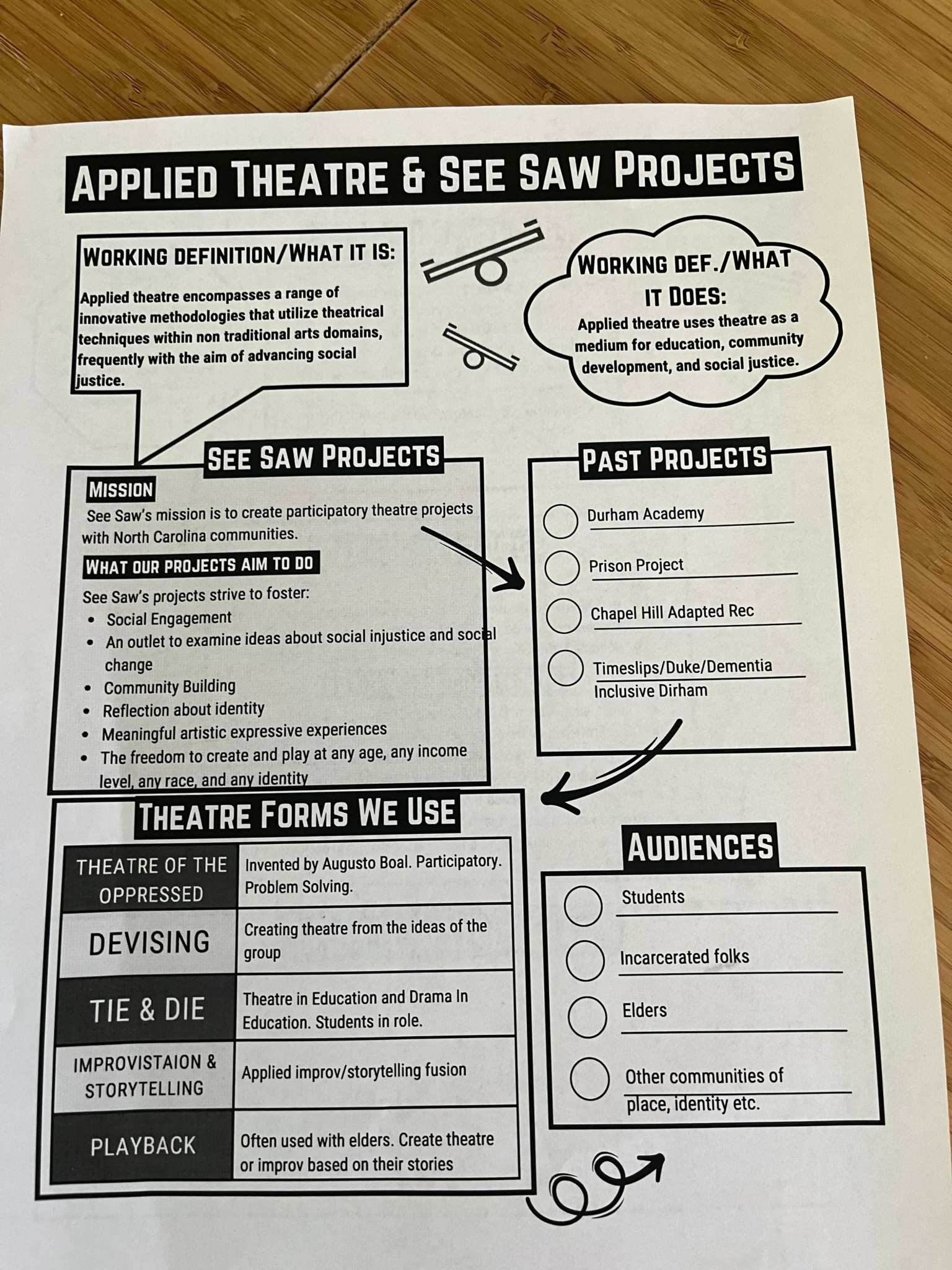
As an artist, I identify as an applied theatre artist-practitioner, though I also call myself a social practice theatre artist. Essentially, I co-create artistic experiences with people who crave creativity but may not have access to professional arts opportunities. Using improvisation, storytelling, theatre-making, and poetry—all art forms I deeply love—I help open doors to artistic expression.
How did I learn my craft? Thinking back, I realize that without my love of theatre and performance, I wouldn’t be the artist I am today. And as for how I got into theatre, I wonder if I ever really had a choice. It called to me, and in many ways, I think it saved my life.
I discovered acting during a turbulent time in my teens, as I was grappling with a parent’s struggle with addiction. Acting became a form of escape, and as someone drawn to oral storytelling, I was good at it. I found a second home in Chicago’s community theatre and high school musicals. Living just 30 minutes from some of the country’s best theatre and improv—Steppenwolf and Second City—I soaked up every show I could. I couldn’t have pursued this passion without the support of my mom, for whom I am endlessly grateful.
I went on to study theatre at the University of Wisconsin in Madison. While I felt most alive on stage, I started to feel alienated by the formal theatre world. I was fortunate to attend UW at the same time as Carrie Coon, who, during a break from rehearsing Quake, told me, “Amy, you’re going to save the world one day.” She saw my drive to connect theatre with social service, and her words validated my instincts.
After graduating and growing more disillusioned with the theatre industry’s emphasis on appearance, a friend introduced me to the field of applied theatre. Intrigued, I looked up the CUNY MA in Applied Theatre discovering it was “the first program of its kind in the United States, using theatre as a medium for education, community development, and the pursuit of social justice.” It didn’t take me long to submit my application.
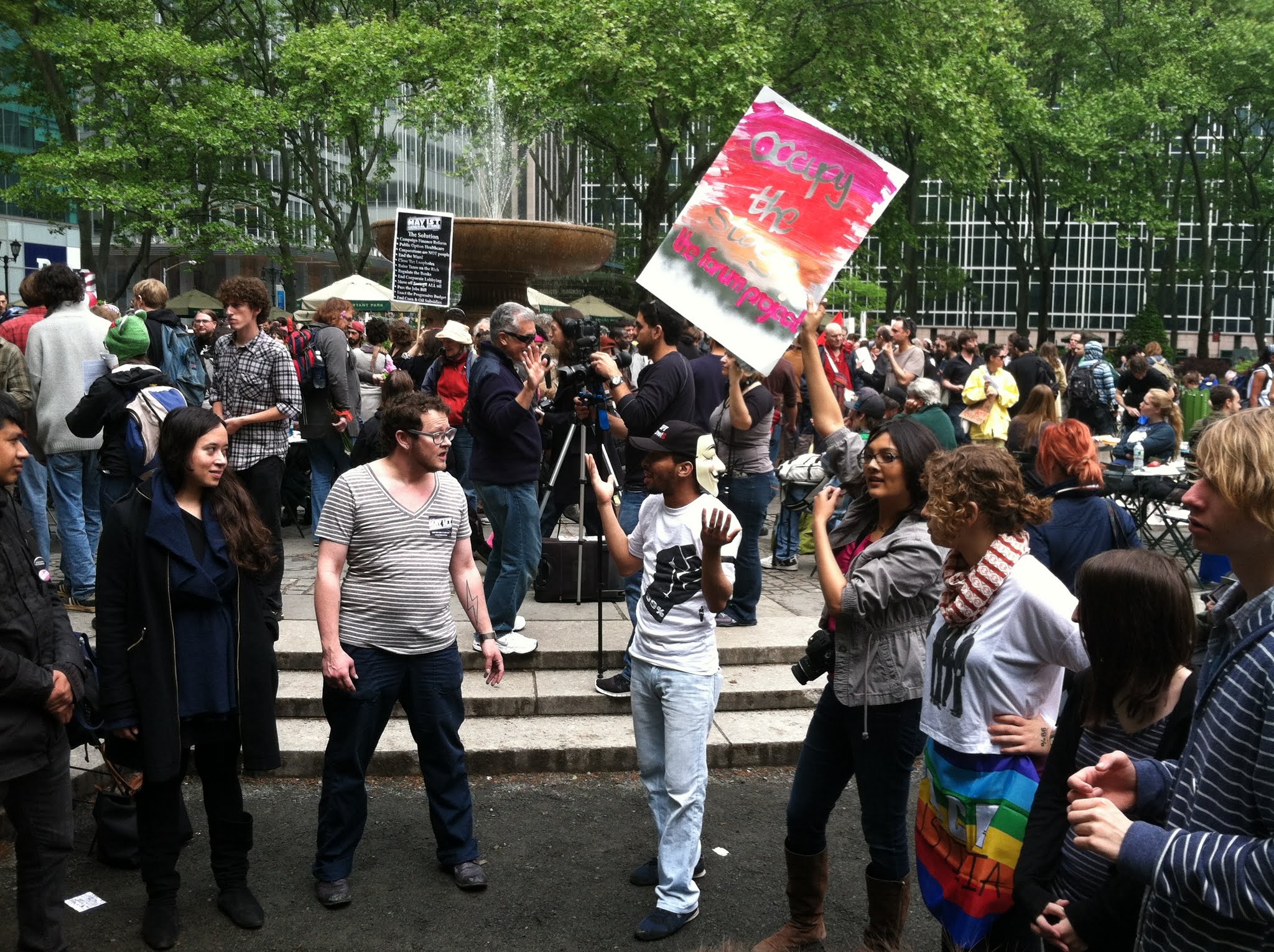
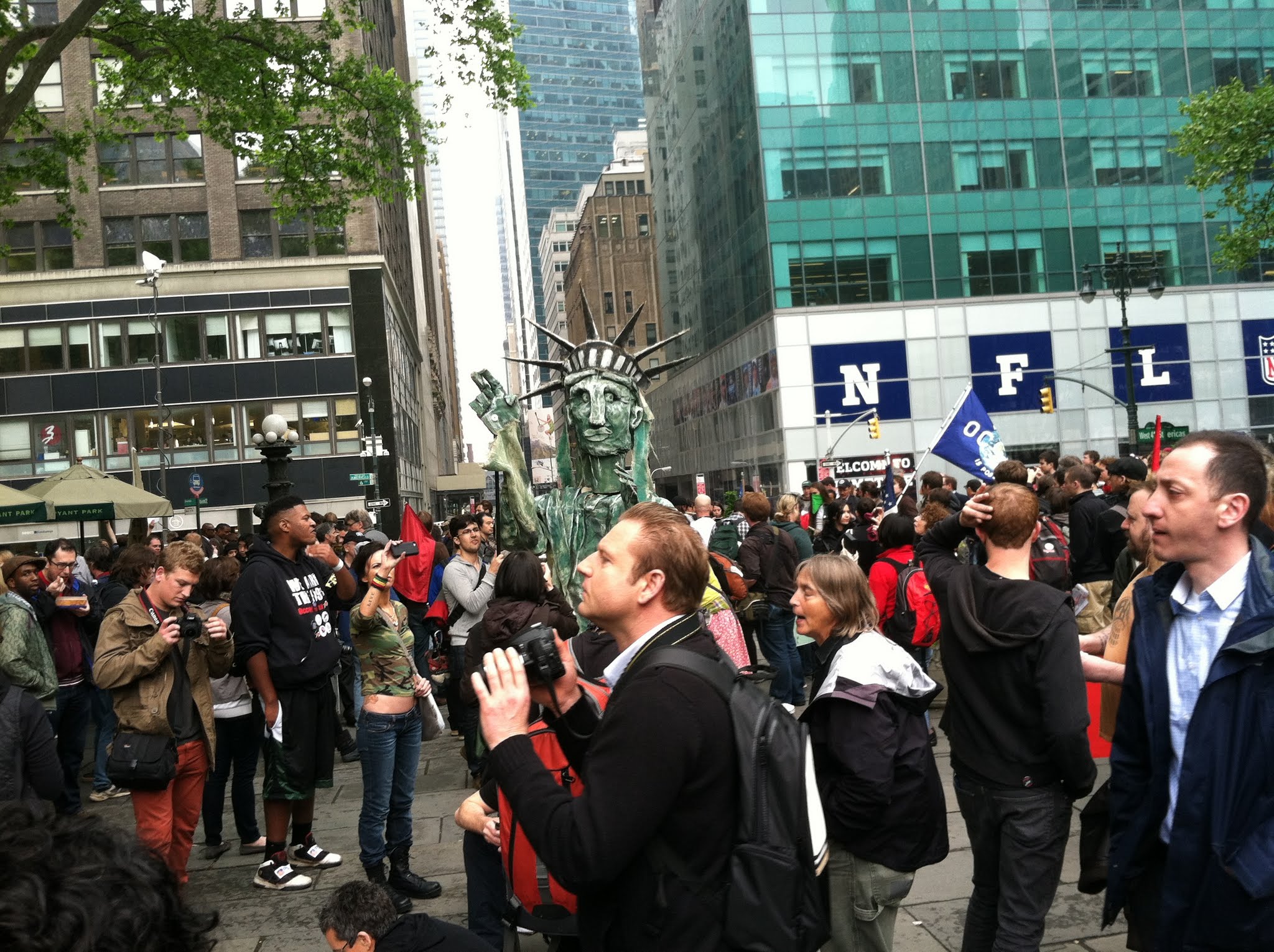
Grad school in New York City allowed me to learn as much from the city as from the program. My first year in the MA program was 2011, with the Occupy Wall Street movement in full swing. I experienced Theatre of the Oppressed in Zuccotti Park, saw cutting-edge experimental theatre, co-created devised workshops with the Red Umbrella Project, and created immersive theatre on the Arab Spring for high school audiences.
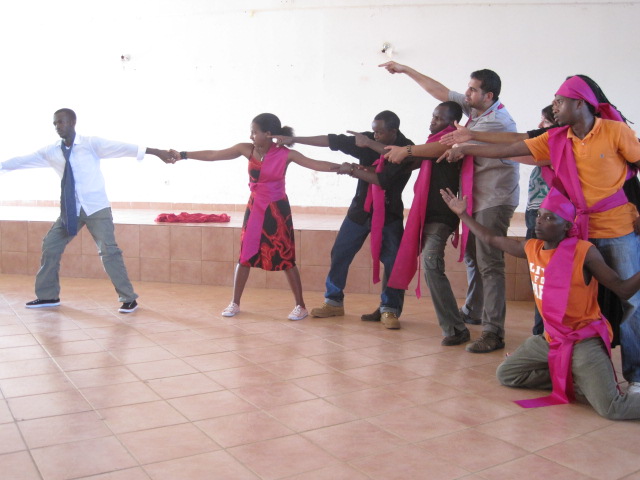
My time in New York was foundational in teaching me how to use theatre to foster healing, raise awareness, and explore identity. I learned what a teaching artist was, how to manage three gigs in different boroughs in one day, and about the responsibility my white privilege places on me to acknowledge and dismantle it—a lifelong pursuit. In 2013, I traveled to Kigali with my classmates to exchange skills with Rwanda’s first theatre education college cohort, expanding my understanding of global perspectives in this work. I also made deep, lasting friendships with diverse artists who continue to teach me.
So, when people ask me, “How did you learn to do what you do?” I answer that I learned acting and experienced hardships young, which provided the foundation to pursue social-change theatre in my 20s. And I keep learning, with each project and each person I work with.
After New York, I continued to grow as a socially engaged theatre artist. I moved to Raleigh, NC, and saw the need for a company that could mobilize applied theatre teaching artists, so I founded See Saw Projects. I co-taught theatre in prisons, nursing homes, over Zoom, and now in art museums. I’m a natural oral communicator with endless curiosity and creativity—qualities that helped me develop skills in facilitation, collaboration, devised theatre, and curriculum writing.
Looking ahead, I’m excited to expand my work into healthcare settings, learning from Dr. Sarah Wilbur, who teaches the Artists in Healthcare course at Duke University. We met when I became an artist in residence with Timeslips and Dementia Inclusive Durham in 2020 and continue collaborating to integrate the arts with memory care. We just returned from the NOAH conference, which solidified my future learning goals: I want to learn grant-writing for healthcare, understand healthcare terminology, and forge partnerships in the field.
I feel lucky to do this work and love to talk about it with anyone who’ll listen, so please reach out if you’d like to connect. I think that my teenage self understands now why I didn’t chase Broadway.
Great, appreciate you sharing that with us. Before we ask you to share more of your insights, can you take a moment to introduce yourself and how you got to where you are today to our readers.
I am an applied theatre artist, improv comedian, arts administrator, and mom, dedicated to arts leadership since 2006. I define applied theatre as a dynamic field that uses theatre to foster healing, social justice, education, and community building. I hold a Master’s in Applied Theatre from CUNY, where I honed skills in devising, Theatre of the Oppressed, Theatre-In-Education, and worked as a teaching artist in NYC schools. Throughout my career, I’ve co-created, devised, and directed original shows and workshops with diverse communities, which have been presented on both local and national stages. In 2017, I founded See Saw Projects to bring the transformative power of applied theatre to communities across North Carolina.
Currently, I am an artist in residence with the Nasher Museum of Art’s Reflections Program at Duke University and a guest artist in Dr. Sarah Wilbur’s Artist in Healthcare Course.
I also perform as an improv comedian at Comedy Worx, where I’m part of the flagship show, “Capital City Culture Club,” drawing on 16 years of improv training and teaching experience that I infuse into See Saw Projects. Additionally, I work at NC State University as the manager of arts outreach and engagement.
I am deeply committed to the belief that the arts are inherently healing, enriching, and socially engaging, especially in an age where technology can isolate us. I believe arts should be accessible to everyone, regardless of age, ability, sexual orientation, race, or income. I am trying to figure out how to balance my artistic practice and motherhood.
Learn more about See Saw Projects at seesawprojects.org, or connect with us on Instagram @seesawprojects and on Facebook @SeeSawProjects. I look forward to connecting!
Any resources you can share with us that might be helpful to other creatives?
I wish that I knew about applied theatre or theatre in education when I was in high school! I would have considered colleges like: University of Minnesota Twin Cities – Theatre Arts: Social Justice/Applied Drama, BA, NYU Steinhardt – Educational Theatre: Applied Theatre, BS, University of North Carolina at Charlotte – Theatre: Applied Theatre, BA, Pacific University Oregon – Applied Theatre, BA etc.
Have any books or other resources had a big impact on you?
I am totally inspired by Adrienne Marie Brown’s book, Emergent Strategy. I try to infuse my life and my projects with some of the book’s core principles:
– Small is good, small is all. (The large is a reflection of the small.)
– Change is constant. (Be like water.)
– There is always enough time for the right work.
– There is a conversation in the room that only these people at this moment can have. Find it.
– Never a failure, always a lesson.
– Trust the People. (If you trust the people, they become trustworthy.)
– Move at the speed of trust. Focus on critical connections more than critical mass — build the resilience by building the relationships.
– Less prep, more presence.
– What you pay attention to grows.
(Buy the book. It’s so, so good.)
Contact Info:
- Website: https://seesawprojects.org/
- Instagram: @seesawprojects
- Linkedin: https://www.linkedin.com/in/amy-sawyers-williams-84465329/
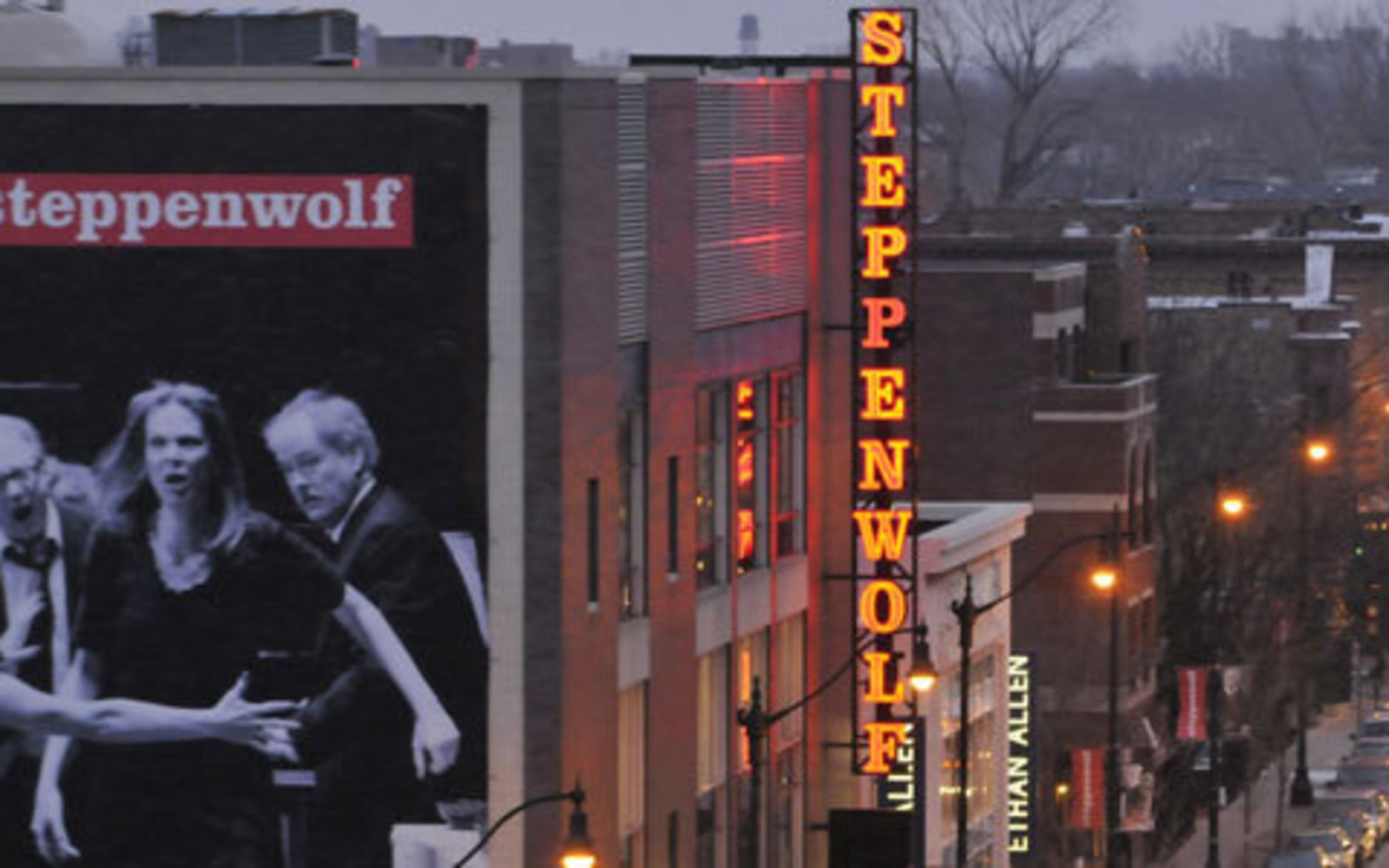
Image Credits
For my portrait: Image credit Allie Mullin Photography