



Today we’d like to introduce you to Kisha Jarrett
Hi Kisha, so excited to have you with us today. What can you tell us about your story?
BLACK GIRL IN THE WOODS was born after a trip to Iceland in 2019 and Bali in early 2020. After years of pain and being misdiagnosed, I finally got the right diagnosis but my body – which used to be athletic and strong – had lost a lot of strength and mobility. I gained about 100 pounds over the course of a year. So here I was, on my first solo trip as a fat, Black woman in Iceland and I ended up signing up for an ice cave walk with about 9 other people. About halfway through, we got harnessed and then the guide was like, okay, now go up. I was by far the biggest person in the group of Australians and other Europeans and was out of shape and was like, ‘there is just no fucking way this is going to go well.’
But I did it. I climbed up and got to the top and had this moment of ‘holy shit, I did it!’ And that moment reminded me of who I used to be. Before I was in pain, before I let the pain trump movement, before I had to think about limitations. I was invigorated and inspired to keep going and moving and doing more things that I didn’t think I could do.
A couple months later, I was in Bali and went to an underground waterfall, where it’s a few hundred steps of jagged and slippery rock down. BUT, what went down must come back up and here I was – again, the biggest person I saw, climbing up these steps. One of the guides saw me and was like, ‘I didn’t think you’d be able to do it but you took no breaks.’
Those two trips inspired me to keep the momentum going where I lived (which was in Oregon at the time). I wanted to go hiking (which I had never done) and got groups of friends to go with me (this was early on in the pandemic). I started watching travel and athletic shows (Eco Challenge) and just thought, I’m going to do a solo thru-hike. Had I hiked long distance before? Nope. Had I overnight camped before? Nope. Had I a clue as to what I was getting myself into? Triple nope.
To long story short this part, I ended up trying to make a documentary about thru-hiking the Pacific Northwest Trail – 1,200 miles from Glacier Park to Olympia. But I didn’t pick a trail that was well documented or easy to accomplish- this had bushwhacking, not many people had completed it, and was a dangerous trek through bear country. I trained, I lost weight, I gained sponsors, I got equipment, I had production meetings, we spent money, we got to Glacier, we set out on the trail, I ripped the tendons in both my feet the first day walking 15 miles with a 55-pound pack.
So now, I’m devastated. I let my team down, I let the sponsors down, I let Black people down, I let fat people down, I let down people with auto-immune diseases down, I let my friends down. I was crumpled by the weight (quite literally) of what I set out to do and how I failed so spectacularly at it. I lost friends in this endeavor – people I thought were my family. And here I was, sedentary on the couch, in two boots for eight weeks while my feet healed.
Little by little, the people that stuck with me helped me shift the narrative I set for myself. I didn’t need to do this alone – or in any traditional way. I found other like-minded individuals and groups that were also finding healing in nature and that became the focus of the documentary.
Cut to a year and a half later and we are still shifting. Equity work is sliding back – companies aren’t as supportive of stories from people of color and they certainly aren’t willing to fund stories from more than one of us. So the story is still shifting. The documentary is now including how difficult it is for me to find the funds to finish post and get this feature length doc to festivals.
Can you talk to us a bit about the challenges and lessons you’ve learned along the way. Looking back would you say it’s been easy or smooth in retrospect?
hahaha- definitely not.
I outlined a bunch of struggles in the last question, but the biggest ones can be broken into professional and personal.
For the professional – it’s just been getting this thing over the finish line. People are so interested when I talk to them about the film and what its about and love it but then say that they are already supporting a Black female. And to that, I say, so what? If a company only has 10 people that it is supporting and seven are white men with three being female and one of those three female being black with the other two being white – why do the white men and women get to be supported in groups but not us?
For the personal – as I mentioned, I lost friendships during the course of making this thing and I regret it. I mean, not everyone is meant to be in your life forever, and I ultimately am on the other side of hurt – but it was hard. It was hard to be so in your head on failing and then not having the people you loved love you back. Made me believe the worst voices in my head for a long time.
Can you tell our readers more about what you do and what you think sets you apart from others?
For my day job – I serve as the Marketing & Audience Engagement Director at Ars Nova in NYC. I absolutely LOVE being a connector and helping artists achieve things with projects they didn’t know were possible. In my life outside of theatre and film, I am a producer and a storyteller and a writer. I’m very inspired by being around other creative people. I want to help them take their next step and find their next stage.
What would you say have been one of the most important lessons you’ve learned?
To trust in myself. Sometimes I let the doubt creep in and I start letting the depression take over. Let the niggling whispers of perception dim my shine. Then I get out of my apartment and out of the city and into the woods or near the ocean and come back to myself.
Contact Info:
- Website: https://www.blackgirlinthewoods.org/
- Instagram: https://www.instagram.com/black.girl.in.the.woods/
- Other: PayPal : @ blackgirlinthewoods
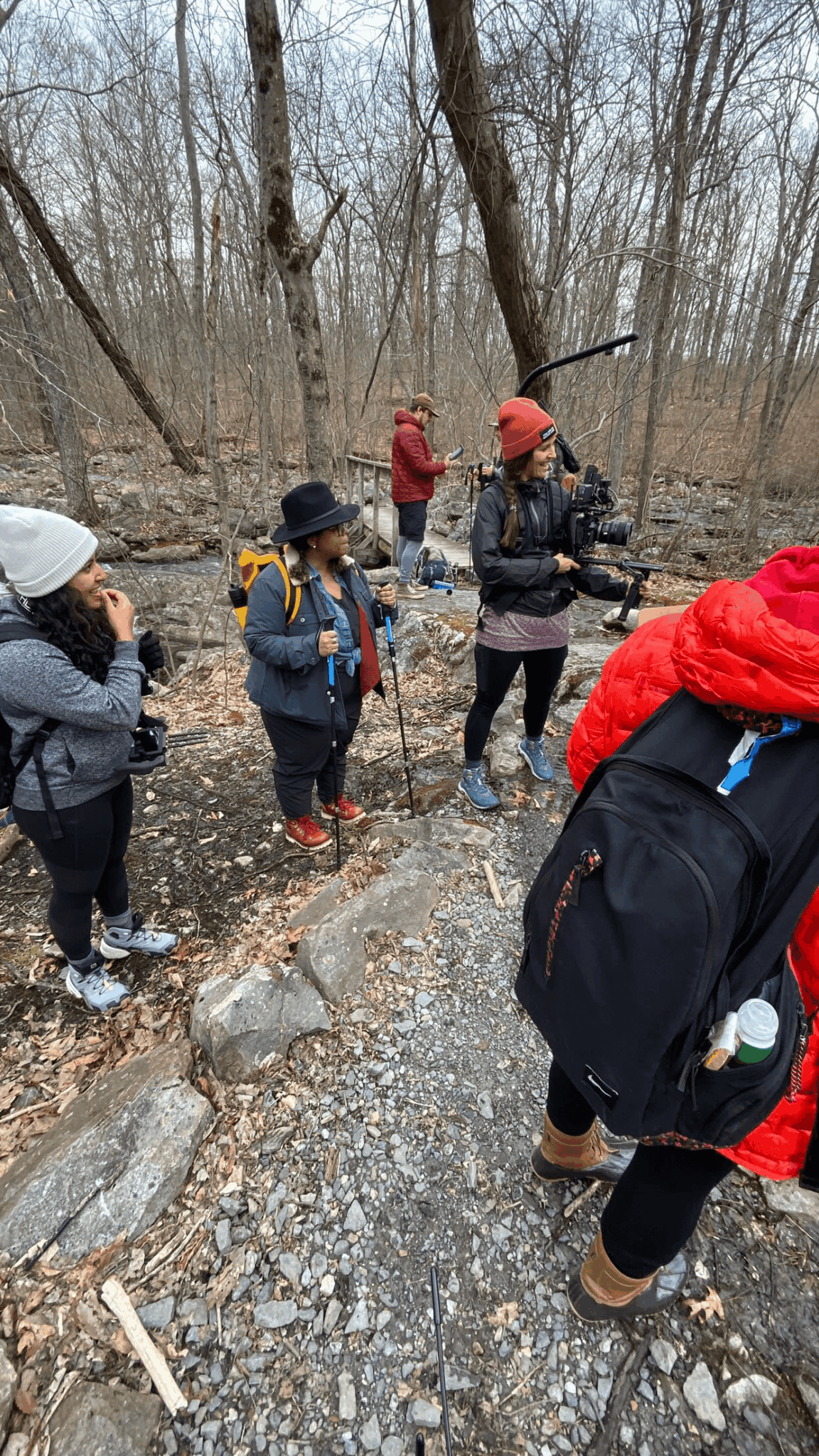
Image Credits
Brave Space Media