

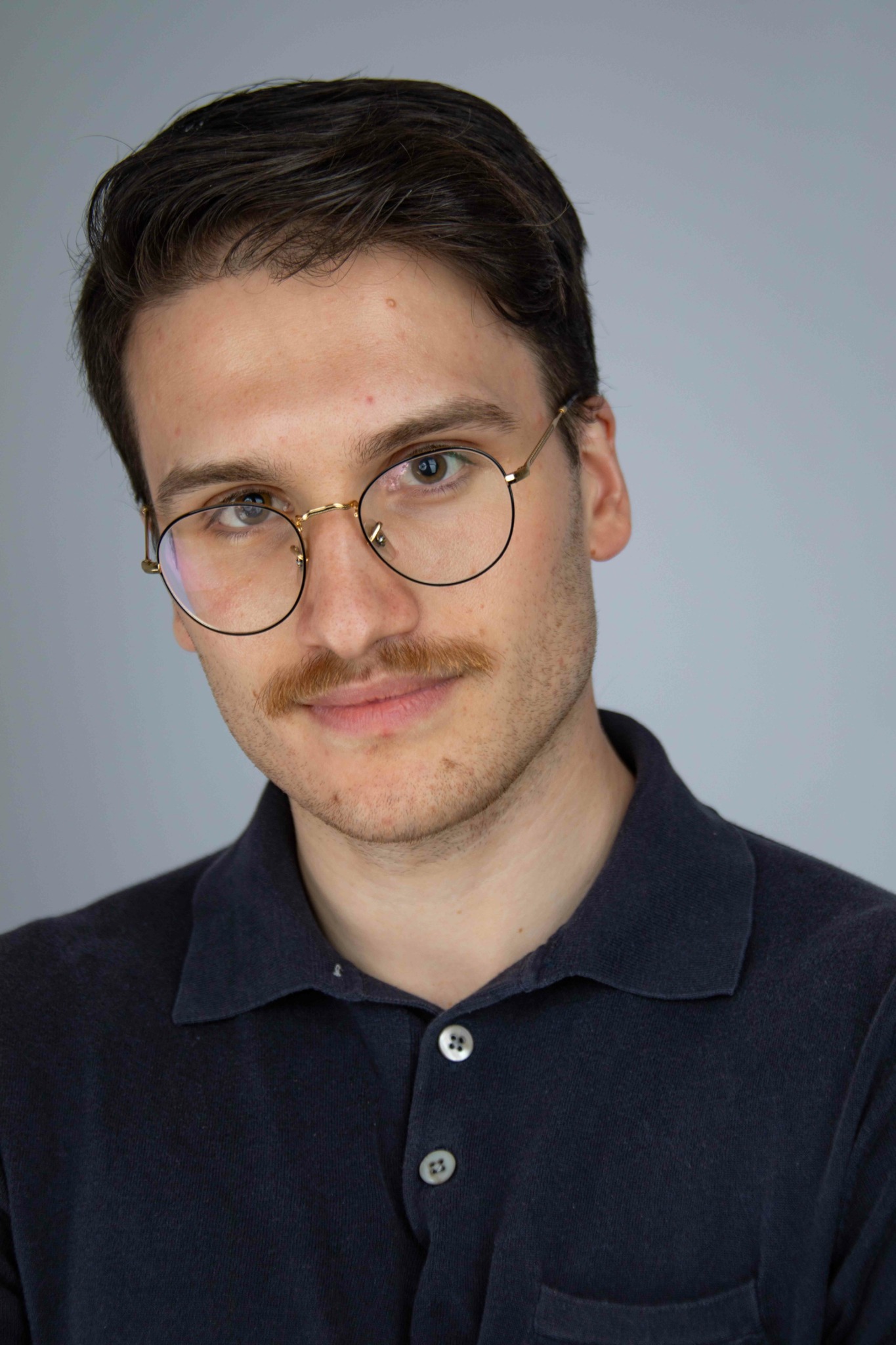

We recently connected with Carl-philipp Wengler and have shared our conversation below.
Alright, Carl-Philipp thanks for taking the time to share your stories and insights with us today. How did you learn to do what you do? Knowing what you know now, what could you have done to speed up your learning process? What skills do you think were most essential? What obstacles stood in the way of learning more?
Hmmmm… Well for one, I don’t think you’re ever done learning as an actor and I believe you become better by simply living life. The more varied experiences you have to draw from, the easier it’ll be as an actor, I think. It gives you a wider range of emotions to draw from and will help you to relate to any character you need to portray or any emotion you want to bring to life.
And although I believe in that and try to stay open to new experiences and learn new things, I also believe you need to work, hone your skills, etc. Which is why I’m currently attending an acting school (Lee Strasberg), have in the past, and will continue to do so. It’s a great place and opportunity to practice, try new things/take risks (since you may not be able to do this on-set), and network. I’ve met great people at every single course I’ve taken and believe I will continue to meet great people along my way. And moving on to the essential skills part, I think it comes down to a few things. Having a growth mindset, i.e. wanting to learn, finding or creating opportunities for yourself, staying creative, consistent and taking risks when it feels right. Those would be the essential skills I would want to give an actor. Add a touch of humility, two cups of ambition, a pinch of not taking yourself too seriously, and a gallon of resilience, and you’ve got the perfect cocktail. Seriously though, you’ll need resilience (even more than a gallon), because you will get shut down so many times and it may take 100 auditions or submissions before you get a part again. I’ve been pretty lucky so far and even during dry-spells, something has come up for me, but I never rest and always keep an eye out for the next opportunity. This leads me right into what could speed up the process, which is patience. Don’t rush the process, trust the process. It sounds dumb and easy to say, but it’s true. I remember being so anxious two years ago and wanting to rush and I gained absolutely nothing from it except stressful days that got my anxiety pumped up when there was absolutely no need for that. I should’ve just stayed calm and kept doing what I was doing, which were the right steps and motions. So yeah, I would say that to speed up the process, do the right things and take the actions that create the most upward momentum – don’t get lost in the details or small actions that’ll only marginally advance you – and then keep doing those, patiently, because it’ll pay off. And be open to opportunities, risks and new experiences. I know I’ve said it a lot, but you need to be, otherwise you might miss some of the greatest things in life.

Awesome – so before we get into the rest of our questions, can you briefly introduce yourself to our readers.
Sure! I’m basically Pitbull, aka Mr. Worldwide, as I was born in Germany to a German father and Spanish mother, who had grown up, lived, and worked in Mexico and the US. And when I was two, we moved to Brussels, Belgium, where I grew up. After graduating high school, I moved to Paris, France, where I worked at Disneyland Paris before studying political science. I then spent half a year in Berlin to finish my BA (Summer 2022) and since then, I’ve been back and forth between Brussels, Paris, L.A…
So yeah, Mr. Worldwide describes me pretty well, I think.
And I got into the acting world rather late, if we’re talking professionally. It was only a few years ago, after I finished my BA. I had known I wanted to be an actor for a while, but I didn’t really know how to get there and what path to take to achieve this goal of mine. I’d been in Drama groups, but I’d never had any formal training, so I took some acting classes here and there (in Paris I went to Cinestudio Paris and Le Cours Florent) and I also attended some stunt workshops (CUC in Northern France and SPA in L.A.), – because I love action movies and want to become the kind of actor that can do some of his own stunts. That really got the ball rolling and then I worked at Disneyland Paris (again) as an actor, on a live-show. But I knew I wanted to come to the US, so I came here in March of this year and I’ve been attending LSTFI (Lee Strasberg) since then. This was a teenage dream for me, especially since some of the actors I admire most went to this school (Merryl Streep, Al Pacino, Chris Evans…). And now I’m living it, which is great! I’ve already learned so much and I look forward to learning much more here in L.A.
On another note, what I’m most proud of. It’s tough, because I’m proud of pretty much everything I’ve worked on. Personally, the most rewarding and touching achievements have been the liveshow at Disneyland Paris and being part ‘La Muerte de un Comediante’, in which I got to star along Diego Peretti. Both those projects were so much fun and I think I contributed to them greatly through my linguistic skills, being a polyglot. That’s also what I think will be a main selling point for me: My language skills. I speak four languages fluently, none of them with a discernable accent and I can learn accents quite rapidly. And I know it’s luck and the privilege of growing up in a multilingual household, but I got to make the most out of it.
And I will.
What do you think is the goal or mission that drives your creative journey?
Absolutely. I grew up watching many movies (in great part thanks to my mother and our Wednesday afternoon cinema runs). Those movies nurtured my creativity oh-so-much. I still remember running around the playground pretending to be a Jedi with one of my best friends. I remember sitting on the floor of my bedroom designing huge battle scenarios with Lego or fighting with my G.I., Star Wars, Marvel, etc. action figures. I had such a great time doing that and I’ll never forget it. And movies like Star Wars, the early MCU (I was 12 when the first Avengers came out and it blew my mind), The Hobbit trilogy, or Pirates of the Caribbean inspired much of what I imagined. I can honestly say that I wouldn’t be who I am today without those movies and these are just a few… Transformers, Harry Potter, John Wick, James Bond, Inception, Sherlock Holmes… Movies shaped my life and they still do. So my mission is to give back to the upcoming generation. I want them to sit in the cinema like I did, staring in awe as the movie unfolds in front of their eyes and they say ‘Wow, I wanna be like that someday!’. I know exactly what that feels like. And it’s an awesome feeling coming out of the cinema and wanting to be your heroes. I wish that upon every kid, teenager, and even adult. I’d also add that part of my mission is for people to feel something through my work. Whether it be joy, sadness, anger, grief, envy, laughing out loud, or swearing at what I have done, I want them to feel something.
Other than that, I consider my creative mission to entertain. Again, whether that take shape in the form of laughing, crying, sitting at the edge of your seat… Doesn’t matter, but I grew up with great movies that entertained me and inspired me, so I just want to give that back. And I’m already well underway.

In your view, what can society to do to best support artists, creatives and a thriving creative ecosystem?
That’s a really good question. I suppose there are many approaches to this. One model I’ve encountered first-hand is the French state model, which gives artists a monthly subsidy if they’ve worked a certain number of hours. So before anyone starts screaming ‘COMMUNISTS!’, no, that’s not what it is. You need to work a certain number of hours and even then, your subsidy will vary, depending on how much you worked.
Personally, I think this is a great incentive for artists to create more of their own content and it gives them more freedom to choose projects. This way, you’re not obliged to take any opportunity just to pay the bills. It’s a privilege and luxury and has been discussed a lot in France, but I do see the major benefit for artists – and for consumers too, as this allows your entertainment industry to thrive, in my opinion.
So when I hear about artists here in L.A. who are working two or three jobs, I can see the benefit of such a system. However, some would argue that this allows artists and creatives to lean back and not work as hard. I can also see the point being made there and I’m sure that could happen to some artists. It’s a tough ask to improve a system that has its merits and flaws, especially if you don’t know whether your solution/proposition would end up improving upon the status quo.
What I do believe is that funding for creatives (especially writers and directors) would go a long way, as it would allow them to create more projects and pay their crew, which is often a breaking point for many small productions. I think that would contribute to a thriving ecosystem and turn into a virtuous circle – but again, no proof for that and it could fail spectacularly!
Contact Info:
- Instagram: https://www.instagram.com/cap291099/
- Linkedin: https://www.linkedin.com/in/carl-philipp-wengler-46636421a/
- Other: vimeo: https://vimeo.com/user200434763

Image Credits
Drew Bly
Wolf Marloh
Maurice Jaccard
David Owen