

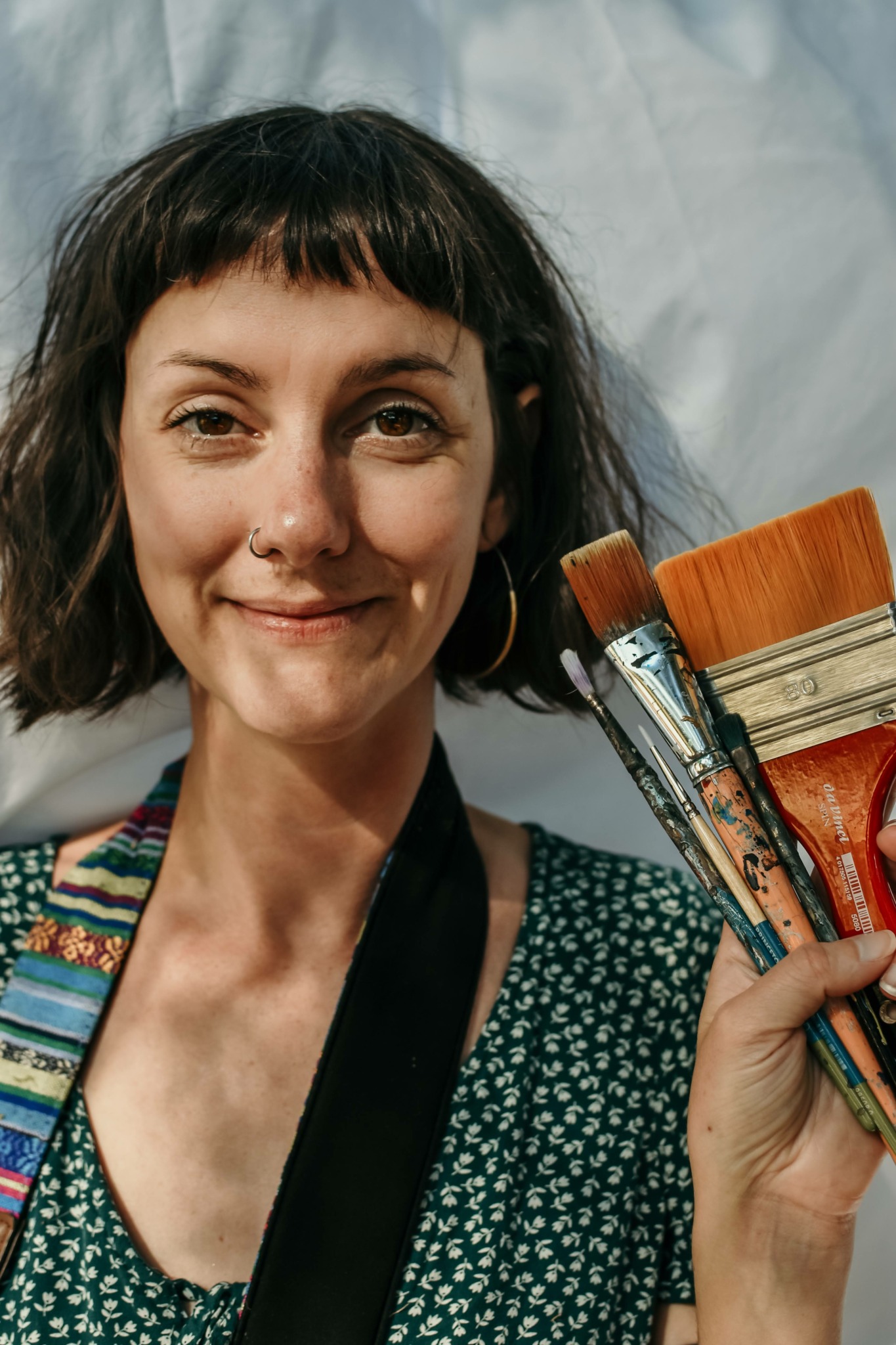

We were lucky to catch up with Bekah Zeimetz recently and have shared our conversation below.
Bekah, appreciate you joining us today. Have you been able to earn a full-time living from your creative work? If so, can you walk us through your journey and how you made it happen? Was it like that from day one? If not, what were some of the major steps and milestones and do you think you could have sped up the process somehow knowing what you know now?
From the moment I set out to sell art, I wanted to do it full-time. I love making art, and I also love how dynamic running a business is. There are always new problems to solve and chances to be creative, and no two days look the same. That’s really important to me. I get extremely bored and restless with monotony. I am also an introvert who sometimes has extrovert tendencies, so the idea of spending a lot of time alone is really appealing to me, but I also like socializing selectively at events and openings. This is the first career that has felt like it truly fits my values, needs, and desires.
Last year, I chose to go full-time (almost 1 year ago today). It was my best sales year at the time, and by the end of the year, I ended up profiting a decent living wage salary even while working 3-4 days a week at my day job… it only took 6 years to get to that point. Those six years had a lot of ups and downs. There were numerous times I almost threw in the hat and gave up all together. Building a business and a following takes a lot of hard work, grueling hours, and being willing to learn and pivot if something isn’t working.
Here were some milestones that I used to make the decision to go full-time:
✨I sold every painting I made in the first half of the year at my Summer shows, plus some from previous years,
✨Painted and sold my largest painting to date,
✨Had my first 5 figure show,
✨Reached a savings goal I had to go full-time,
✨Paid off my debt,
annnnnd spent a month or two completely exhausted, scattered, and realizing that it just isn’t sustainable for my health to continue on working 60-80 hours a week anymore.
What I saw last year was what was possible. And I truly felt that without more time and space (to paint and also to take care of and nurture me) I would be doing myself and my art a disservice.
And, I also realized that it’s never going to feel like the “right time” and yet it always is. Life doesn’t get more simple, and there are always risks. That won’t change, so either I was going to keep waiting around for a magical moment that would never come, or I was going to realize that I had to lean on and trust myself (real talk, still not the easiest thing).
I also had to come to terms with the fact that I could be “unsuccessful” in taking this leap. Something outside of my control could throw a wrench into my plans, and I might have to go back to a day job. And you know what? It could happen, and that’s okay, and it doesn’t mean I’m a failure. Sometimes you go all in on a good hand and the cards don’t fall your way. It doesn’t mean you made the wrong choice.
As I reach one year of doing this crazy thing full-time, I’m so glad I made the leap. So far, the cards have fallen my way, and I’ve grown so much, both as an artist and a business owner.
When you follow your dreams, you inspire others and create more beauty in a world that sometimes feels incredibly dark, and that is priceless.
Awesome – so before we get into the rest of our questions, can you briefly introduce yourself to our readers.
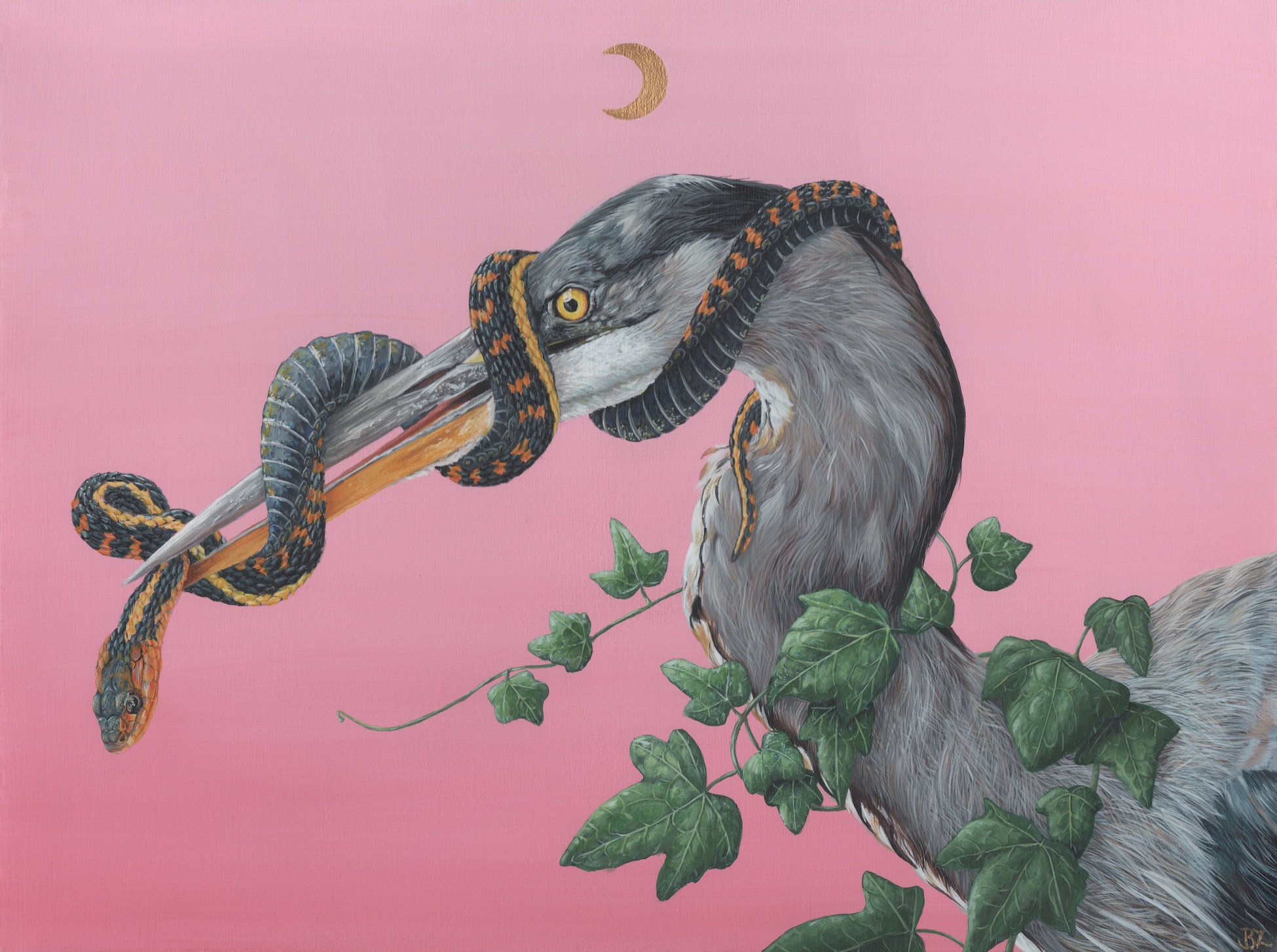
I’m a self-taught wildlife and botanical artist based in Eugene, Oregon. I create realistic paintings in acrylic to remind the viewer that magic still exists… even when the world feels impossibly hopeless. “There’s so much wisdom in nature that when we notice it, it awakens possibility within us,” says Rick Rubin in the Creative Act. This sums it up beautifully, and the only way to a better world is one where we create love and hope in ourselves and the world around us.
My journey into art was a winding one. I’ve always loved creating and spent most of my childhood writing stories, drawing, and crafting, mostly animals. I started painting in high school and immediately fell in love with color. I considered pursuing an art and business degree but then the “lie of the starving artist” crept into my decision-making process. I ended up getting a degree in nutrition, managing several coffee shops, and teaching yoga before “The Artist’s Way” brought me back to art and helped me see this career could be a viable one.
I started my art business in 2018 selling pet portraits, and when I was asked to show my work at a local cafe, I made a natural transition into painting wildlife. During the pandemic, I invested in a telephoto lens and nice camera so that I could start taking my own reference photos. Spending so much time in nature, bird-watching and learning to appreciate and love the PNW really had an impact on me and may have been the only thing that got me through such a collectively challenging time. This is when my work began to focus primarily on native species and plants. I also evolved from painting basic wildlife portraits to more dynamic & narrative compositions.
My creative process flows from the field into the studio. Prior to starting a new collection, I spend intentional moments in nature, collecting wildlife and landscape references. Armed with inspiration from the most magical places, I return to the studio which is nestled under a wise, old cedar tree and begin the process of mapping out my work.
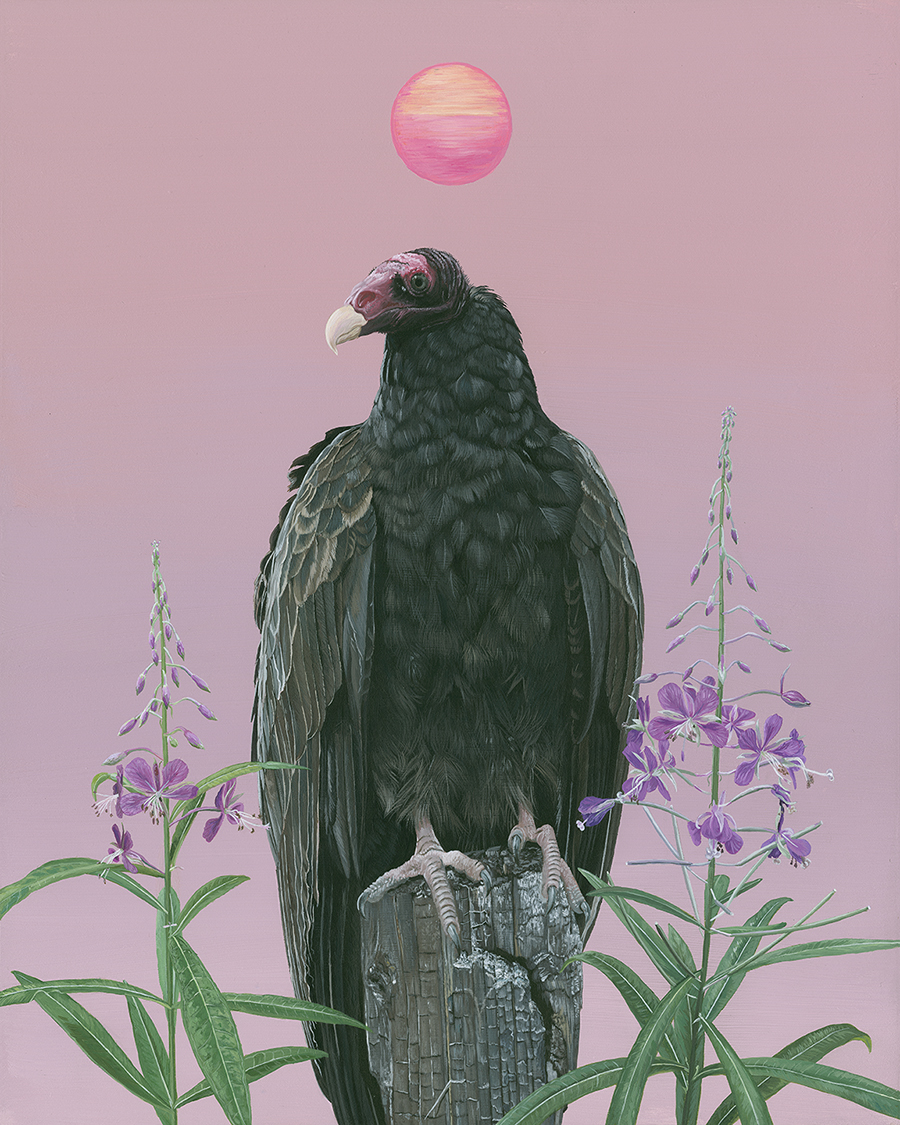
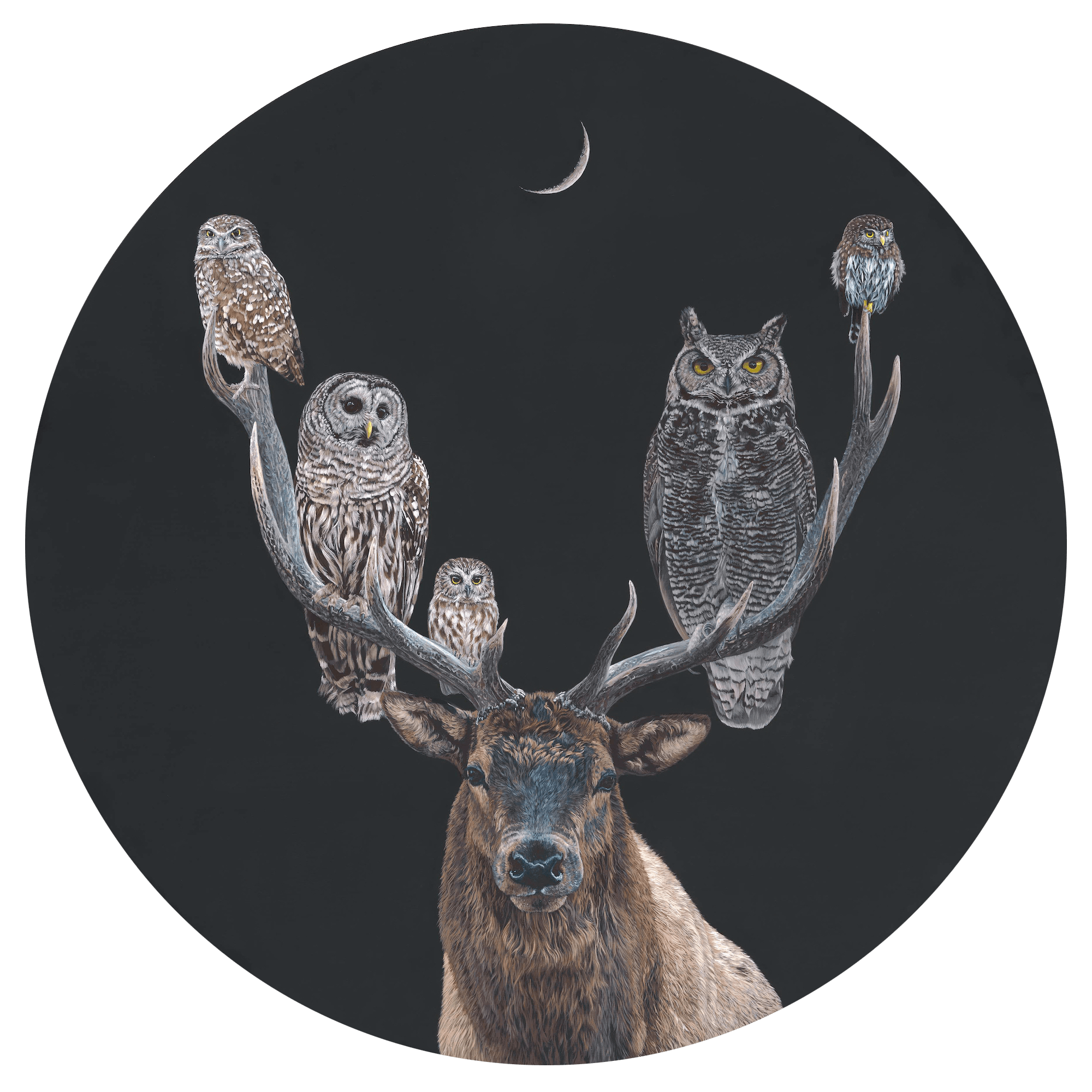
Each piece is made up of thousands (sometimes hundreds of thousands) of tiny brushstrokes. Living, breathing animals slowly emerge from abstract swaths of color. Depending on the size and complexity, this process can take anywhere from one day to months of work, meticulously capturing the magic of the wild so that I can share it with you!
Any insights you can share with us about how you built up your social media presence?
I still don’t have a huge following, but I’m over 10k on Instagram now (which is the only platform I’m actively using), so that feels significant to me. I don’t think there’s a one size fits all approach to growing on social media. For me, it was leaning into the social aspect of it. People want to connect, with you and with what you have to say. Which means showing your face occasionally. It is a social platform as opposed to a selling platform, after all.
I paint a lot of birds, and there’s a huge birding community on Instagram, so once I started leaning more into that, asking people to share their experiences or favorite birds, sharing about my birding experiences, etc. I started to see more growth. I’ve also always worked to be authentic, approachable, and responsive which has allowed me to be lucky enough to have an engaged audience, and I think that’s a lot more valuable than a huge number of followers. Engaged followers are the ones who buy from you, and engagement builds credibility.
The final piece of advice I have is that social media is up and down. I’ll have months with very little growth, and some that are amazing. The most important thing is to stay consistent with showing up and being willing to pivot if your strategy isn’t working anymore.
What do you find most rewarding about being a creative?
I’m not sure I can choose only one, but here are the things I find the most rewarding:
1. Connecting with others. I do a lot of in-person events, and I have met so many amazing people, accomplished artists, fellow birdwatchers, skilled wildlife photographers, etc.
2. Inspiring others. I’ve had a lot of artists tell me they are inspired by what I share on Instagram or hearing about my journey, and it feels so invaluable that something I’m doing could be the fire that causes someone else to follow their dream.
3. The places my art has taken me. My partner and I travel often for shows, and I’m not sure we would get the chance to travel so often if not for my art.
4. Spending time in nature. I literally get to write off birding trips. Amazing.
Contact Info:
- Website: https://www.bekahzeimetz.com/
- Instagram: https://www.instagram.com/bekahzeimetzart/
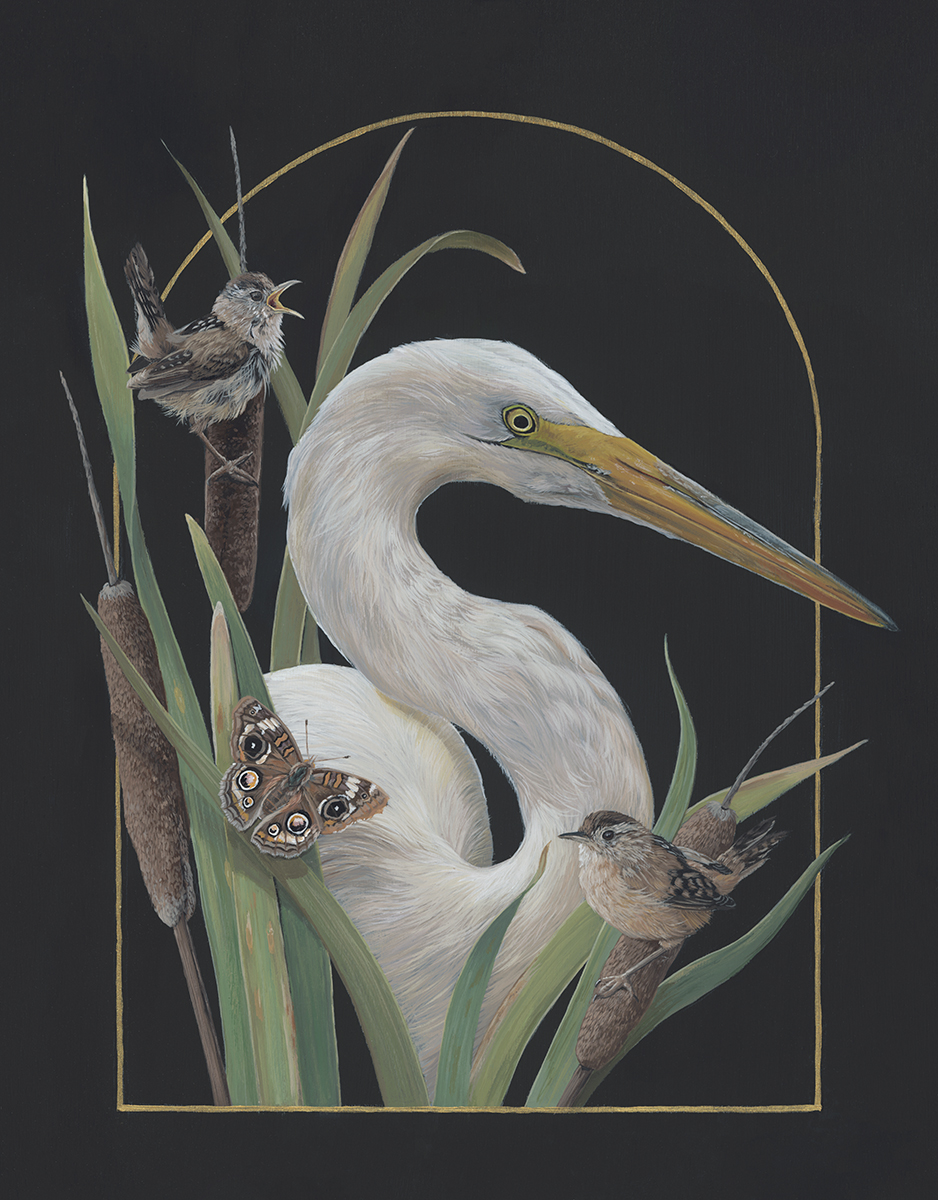
Image Credits
Emily Farthing