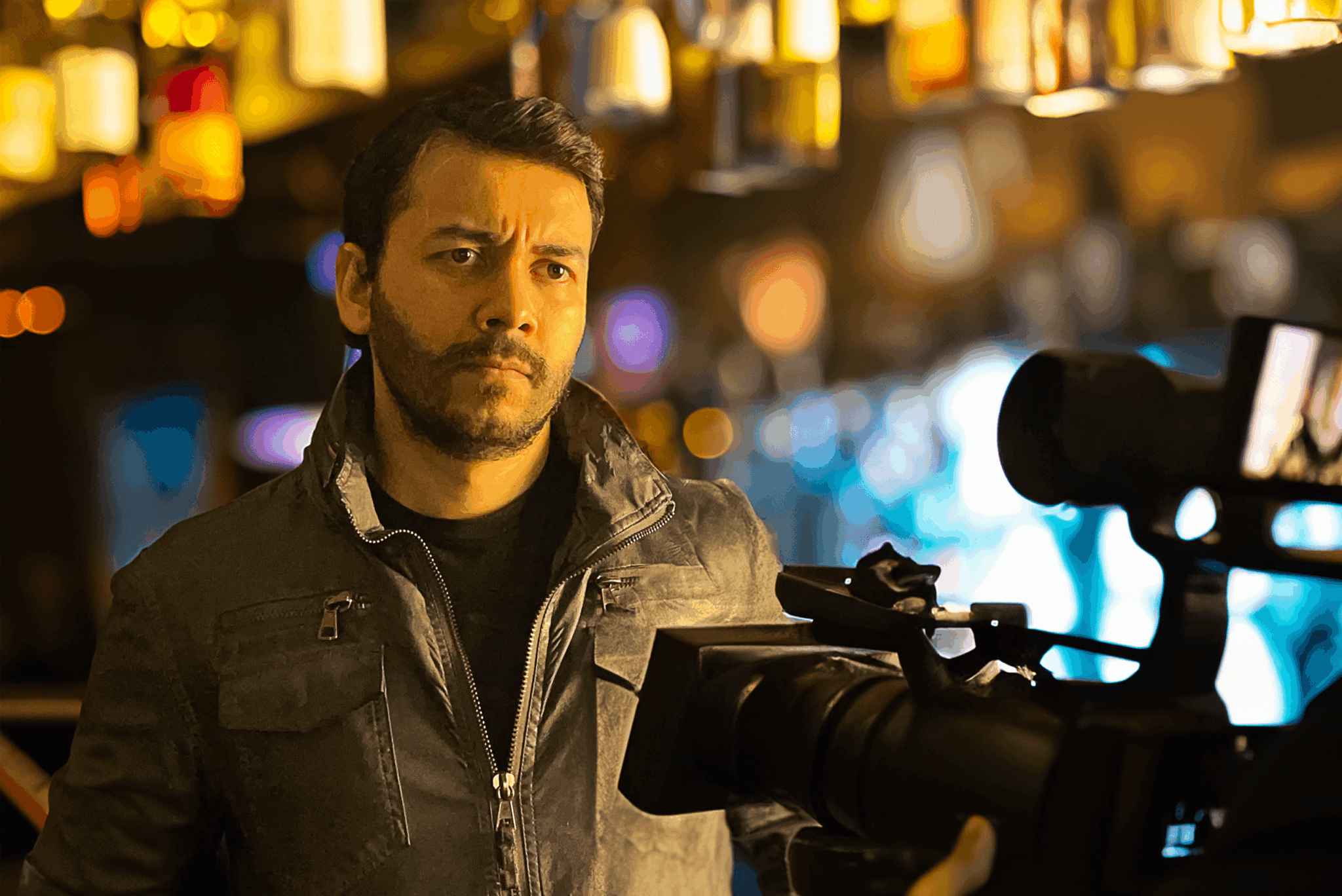

We caught up with the brilliant and insightful Nevin Bolla a few weeks ago and have shared our conversation below.
Nevin, looking forward to hearing all of your stories today. Can you recount a story of an unexpected problem you’ve faced along the way?
One of the most unexpected challenges I’ve faced in my creative journey was the shift to a completely digital audition process, especially after the pandemic. Before, most actors and actresses, myself included, would physically attend auditions. There were opportunities to participate in workshops, interact with others in the industry, and really get a feel for the energy in the room. That personal interaction was key to how I prepared for roles.
But when everything shifted to self-tape auditions, it completely changed the game. Auditions that used to be in front of a casting director or even on a studio lot became something you did from home, in front of a camera. At first, it was a shock. I’m someone who prefers in-person auditions because, as nerve-wracking as they can be, you have the advantage of being able to take feedback in real time. If a casting director didn’t like a choice you made, they could tell you right there, and you’d have a chance to adjust and show them a different side of the character. With self-tapes, you don’t get that. You submit your one best take and hope it aligns with what they’re looking for. If it doesn’t, there’s no going back.
I had to adapt quickly, and one of the first things I realized was that I needed to create a professional setup in my own home. Good lighting, a decent camera, and a quiet environment became essential. It was challenging at first because it wasn’t just about performing anymore; it was about becoming my own director, lighting technician, and editor. I remember my first few self-tapes were a bit of a mess—either the lighting was off, or there were distractions in the background. I had to learn, fast, how to create a setup that would allow my performance to shine.
Another challenge was the limitation on creativity. In an in-person audition, I could play around with different interpretations of a character based on the feedback I received. But with self-tapes, you have to choose one version and commit to it. That’s risky because if it’s not what they’re looking for, you don’t get the opportunity to explain or adjust. You can’t defend your choices or show the versatility that might have come across in an in-person audition.
To resolve these issues, I started recording two takes—one that sticks closely to the script and the other where I allow myself to be a bit more creative. That way, I give myself a better chance of hitting the mark, but it’s still a gamble. I also started planning my self-tape sessions carefully, taking into account when the lighting in my apartment is best and ensuring there are no distractions like noisy neighbors or pets. It’s about controlling every element within your environment to give your best performance, which was never something I had to think about before.
Ultimately, adapting to this new way of auditioning has taught me resilience and how to embrace the technical side of the craft. It’s not ideal, but it’s where the industry has gone, and I’ve learned to embrace it. You can now book a role from your bedroom with the right setup and preparation, but there’s still something about the energy of an in-person audition that I miss.
Great, appreciate you sharing that with us. Before we ask you to share more of your insights, can you take a moment to introduce yourself and how you got to where you are today to our readers.
It’s funny how inspiration can come from the most unexpected places. For me, it all started back in third grade during a simple school play about the rainforest. It was one of those generic plays every kid does, nothing special—except for one moment. I had just one line about a praying mantis, something like, “Snap! There goes another insect.” The audience laughed, and my teacher, Miss Woolley, gave me a certificate for best acting the next day. At the time, I didn’t even know what acting was or that it could be a career, but that moment planted a seed in me.
It wasn’t just that experience, though. I have to credit my family, too. My grandfather was a director, and my grandmother was an actress in India, so I guess you could say it’s in my blood. Their passion for the craft made its way to me here in the U.S. Over time, that little seed from third grade grew into a full-blown passion for acting, and I knew this was what I wanted to do with my life.
What sets me apart in this industry is my adaptability. Acting is a creative craft, but it’s also a business, and many actors overlook that. As much as I love the art of storytelling, I’ve learned that a huge part of this profession is understanding the business side. You have to know how to market yourself, how to network with casting directors, producers, and other industry professionals. I’ve spent years honing not just my acting skills, but also my business acumen. Learning new skills like scriptwriting, editing, and even photography has helped me build a brand. As an actor, you’re not just selling performances—you’re selling yourself as a product. You are your own brand, like Coca-Cola or McDonald’s, and you have to show producers and casting directors that you can bring value to their projects.
I’m proud of my ability to adapt to both the creative and business sides of this industry. It wasn’t easy at first; like anyone else, I had my share of trial and error. But over time, I’ve learned that you have to be more than just an artist—you have to be an entrepreneur. Whether it’s navigating the digital landscape of self-tape auditions or building relationships within the industry, I’ve embraced every challenge.
Another thing I’ve learned is that the roles you want won’t always be the roles you’re cast in. Every actor dreams of playing the hero or the strong lead, but the truth is, you need to understand your casting type and lean into it. I’ve made peace with that and focused on building a portfolio of work that showcases my strengths. Whether it’s short films or character-driven projects, I’m always working to create content that fits my unique casting and tells a compelling story.
In terms of what I want potential clients, followers, or fans to know, it’s this: I’m committed to creating complex, nuanced characters that resonate universally. I spent six years with an instructor, who was apart of The Beverly Playhouse, studying script analysis and character development, and those skills allow me to break down a script in a way that brings new depth to a character. My goal is always to create a character that hasn’t been seen before, that leaves an impact.
But I’m also proud of my understanding of the business. So many people enter this industry thinking it’s all about talent, but the reality is that 60% of the time, you need a business mindset to succeed. You have to be proactive, make your own opportunities, and always be learning. That’s the part of my journey I’m most proud of—the ability to adapt and excel in both the creative and business aspects of acting. That balance is what sets me apart.
Is there something you think non-creatives will struggle to understand about your journey as a creative?
The acting industry is arguably one of the toughest industries to break into, and I think that’s something many non-creatives struggle to grasp. People see the glamorous 5-10% of actors who make it to the top—the A-listers on TV and in films—and they assume that’s the norm. What they don’t see is the reality for the vast majority of actors, the 90% who are constantly grinding, auditioning, and facing rejection. It’s not just about looks or charisma; there’s a brutal business side to this industry that requires resilience, adaptability, and a strong will.
One of the biggest misconceptions is how hard it is just to get your foot in the door. The media often portrays the acting world as glamorous, which it can be in certain ways, but it also glamorizes the ease of entry. It doesn’t highlight the thousands of talented actors who work tirelessly without getting their break. Another harsh truth is that sometimes it’s not even about talent. In this era of social media, followers, physical appearance, and perceived “marketability” often outweigh skill and dedication. There are actors out there with incredible talent who are passed over simply because someone with a bigger Instagram following or more “marketable” look came along. And that can be heartbreaking for those of us who’ve spent years honing our craft.
Another thing people don’t realize is that actors don’t often get feedback after auditions. If you don’t book a role, you’re left in the dark. Was it your performance? Was it a production issue? Maybe they just found someone who fit the physical profile better. I once nailed an audition, only to later find out I wasn’t cast because the actor playing my little brother didn’t look enough like me. There was nothing I could have done differently, but when you don’t get that feedback, it can feel like shooting in the dark.
The reality is, the competition is fierce. In some cases, you’re up against 8,000 other actors for the same role, and you don’t always get the chance to stand out. Even veteran actors with decades of experience are often lumped in with newcomers because in today’s industry, everyone is treated as just another name on a submission list. You’re not just competing on talent—you’re competing for attention, for a sliver of opportunity in an industry that’s as much about money and marketability as it is about art.
For non-creatives, it might be hard to understand the mental and emotional toll this industry can take. It’s not just about facing rejection; it’s about persevering in an environment where success is not guaranteed. You can be incredibly talented, hardworking, and passionate, and still, you might never get that big break. That’s a reality every actor has to face. But it’s also what makes the journey so rewarding. The fact that you keep going despite the odds, that you keep pushing even when the road ahead seems impossible—that’s something to be proud of.
So, when people on the outside look at actors and assume it’s an easy or glamorous life, I hope they can take a moment to appreciate the struggle behind the scenes. The hours of preparation, the mental fortitude it takes to keep going, and the constant balancing act of art and business. For every actor that makes it, there are thousands who tried and didn’t. That’s why this industry demands not just talent, but grit, determination, and an unwavering belief in your craft. If you’re not willing to sacrifice, adapt, and fight for it, the industry can easily leave you behind.
Looking back, are there any resources you wish you knew about earlier in your creative journey?
In retrospect, I wish I had been more adaptable to the market. The acting industry, in many ways, functions like a stock market—constantly shifting, with trends that rise and fall based on a variety of factors. I used to do day trading, where you’d buy and sell stocks within the same day, often making small profits based on news, industry trends, or major events. The acting world is a lot like that. Just like in day trading, you have to pay close attention to the market—what’s trending now, what’s coming next, and how you can position yourself to capitalize on those changes.
In the early stages of my career, I was too focused on the craft—the art of acting itself—and I ignored the business side of things. When platforms like Instagram and TikTok started gaining momentum, I stepped back. I wasn’t a fan of putting so much energy into social media. But looking back, I realize that was a mistake. Those platforms are incredibly valuable in building your personal brand, and having a strong social presence makes you more appealing to casting directors, producers, and other industry professionals. If I had embraced those tools earlier, it could have made a huge difference in the visibility and value of my brand.
The truth is, it’s not enough just to be a good actor; you also need to understand the business of acting. You need to ask yourself: “What can this platform do for my brand?” When casting directors see your name attached to a growing social media presence, you become a more valuable asset in their eyes. You can do a great job in an audition, but if your name also pops up on social media, you’re more likely to stay at the top of their interest list.
Another thing I wish I understood earlier is how essential it is to stay ahead of the trends. The market always changes—what was popular 10 years ago, like vampires, is now all about superheroes. If I had been paying attention to those shifts, I could have adapted my work as an actor to better align with what the industry wanted at the time. Instead of waiting for my “big break,” I should have been positioning myself for the future, studying the market, and being two steps ahead. That’s how you survive in this industry—by evolving with it.
Lastly, I also wish I had realized earlier that no one is going to hand you success. You can have fans, supporters, maybe an agent, but at the end of the day, no one can make your dreams happen but you. People will cheer you on, but they won’t be the ones fighting to get you where you want to go. That has to come from within. It’s a resource that I wish I’d known about earlier as it’s the importance of taking initiative and control over your own career. If you sit and wait for something to happen, you’ll get left behind. You have to be the one to take action, push forward, and adapt.
So, if I could go back, the two key resources I wish I had from the start would be: 1) an understanding of how to listen to and adapt to the market, and 2) the realization that your own motivation, drive, and willingness to act are your greatest tools. These aren’t things you can wait to learn—they’re things you have to take hold of as early as possible to truly thrive in this industry.
Contact Info:
- Website: https://www.nevinbolla.com
- Instagram: https://www.instagram.com/nevinbolla