


We caught up with the brilliant and insightful Sarah Norris a few weeks ago and have shared our conversation below.
Hi Sarah, thanks for joining us today. Naming anything – including a business – is so hard. Right? What’s the story behind how you came up with the name of your brand?
I named my business Wild Rye Consulting because I am a botanist and an arborist. Wild Rye Consulting primarily provides consulting arborist services but also offers vegetation community mapping, rare plant surveys, and aquatic resource delineation services. The business is named after the native grasses in the genus Elymus, commonly known as wild rye. The perennial wild rye grasses have deep root systems that help to stabilize soils, prevent erosion, store carbon, and support biodiversity. While the primary focus of the business is trees and providing the services of a consulting arborist, naming the business after an herbaceous understory species speaks to the intricacy and interwovenness of ecology. For healthy trees, the entire setting needs to be considered.
As always, we appreciate you sharing your insights and we’ve got a few more questions for you, but before we get to all of that can you take a minute to introduce yourself and give our readers some of your back background and context?
I have been fascinated by plants since I was a child. My maternal grandfather had a name for everything in the garden, and I was always fascinated by that – that he had a relationship with plants. He cultivated that in me.
I studied Botany and Plant Pathology and earned my bachelor of science at Michigan State University. I had so many wonderful experiences at MSU and this is where I learned to be a scientist working in Dr. Hans Kende’s laboratory. I was curious about roots and the interaction of root systems with soil, so I went on to study Soils and Biogeochemistry at the University of California, Davis and earned by master of science degree. I was fortunate to have been at the right place in the right time and was able to study California salt marsh plants and heavy metal as part of the Pacific Estuarine Ecosystem Indicators Research (PEEIR) consortium, which was funded by the US EPA, under the direction of Dr. Teresa Fan and Dr. Richard Higashi. This was a multidisciplinary research program, and it was horizon-broadening to gain exposure and appreciation for ecosystem research and trophic-level interactions. I am so grateful to have had the opportunity to learn good laboratory skills and combine this knowledge with field sampling.
I earned my International Society of Arboriculture (ISA) Certified Arborist credential in 2006 while working at a local environmental and engineering firm as an environmental consultant. I worked for two environmental firms in the Sacramento region for nearly 18 years before starting my own business enterprise. This was an invaluable experience as I learned about project management, marketing, and business strategy as my career grew. I began to experience burnout, though, when I found myself in the simultaneous roles of the technical expert, project manager, regulatory specialist, and environmental construction compliance liaison. I continued in this way for a long time. I was in a perpetual state of high stress. I was not working with plants. I was unhappy. I eventually resigned. I was at a mega-low point.
I thought long and hard about what I wanted to do and the skill set that I had. After nearly 20 years working as an environmental consultant, I knew that’s what I was: a consultant. I know how to solve problems and find creative solutions. I know the regulatory environment in California. I understand the project life cycle from planning through construction implementation. However, I could not continue to be a consultant in the way that I had been with my former firm. I felt lost. I spent the summer after my resignation in the garden growing Berkeley tie-dye tomatoes. I grew over 100 tomato plants that summer and grew 17 pepper varieties. The time in the garden helped me to reconnect with my passion: plants.
I founded Wild Rye Consulting on the principle that plants heal. Trees provide a plethora of benefits, including carbon sequestration, improving air quality through trapping particulates, absorbing rainwater and reducing runoff, having a cooling effect through transpiration, building climate resilience, and having a positive influence on lowering stress and improving mental health. Native plants support biodiversity. Species are going extinct at rates above the natural background rate; climate is changing, and habitat fragmentation is increasing. But small actions do matter––especially at the local level. It is important to consider how and where native plants fit into our built environment. It’s critical to biodiversity and human health and mental and spiritual wellness.
Today I center my consulting practice around plants and vegetation science, particularly trees. I love being an arborist. I have a passion for trees and learning, and I sincerely learn from trees every time I touch them. It’s not unusual for me to spend up to 10 hours each month attending webinars, seminars, and conferences and reading articles and journals. Continuing education is a part of the job; it is mandated by ISA to maintain the Certified Arborist credential. Education is a way to invest in yourself––and my clients benefit from this, too. I earned the Registered Consulting Arborist (RCA) credential from the American Society of Consulting Arborists (ASCA) this past summer. Becoming an RCA is a process, and it has made me a better consulting arborist. It also demonstrates a commitment to the advancement of the profession of arboriculture.
As a consulting arborist, I perform tree inventory, risk assessment (hazard evaluation), disease and pest identification, and provide construction plan review and tree preservation services. I also assist clients with selecting the right tree for their planting space. Planting the right tree––and doing so properly––is key to the longevity of the tree. Selecting the right tree and understanding it’s size and character at full maturity also helps to avoid future conflicts with infrastructure. This is so important when you consider many local governments have climate action plans and urban forest canopy goals. It’s hard work to establish a tree in the urban environment. Many trees fail in the first year or two of planting due to insufficient watering and establishment care. Trees need regular water to establish healthy root systems. How much water depends on the tree species and the soil. There are many misconceptions about the root systems of trees. Early and iterative structural pruning is also key to establishing strong branch attachment on trees. I congratulate and thank clients when they plant trees; they have made a gift to the next generation by planting a tree today.
Wild Rye Consulting promotes the use of native plants in the urban environment, where appropriate. Wild Rye Consulting is headquartered in Sacramento, California. As a consulting arborist, I do not perform pruning or plant health care (pest management, fertilization, ect.) services, I provide recommendations. My work is objective; I have nothing else to sell besides arboriculture knowledge and to help clients learn about their trees and how to best care for and manage them. Much of my work includes client education. This is important because it fosters stewardship. Trees are assets and I cannot think of another organism that is multi-benefit the way that that a tree is.
How’d you build such a strong reputation within your market?
As a consultant, my reputation is everything. Clients want someone who is trustworthy, honest and acts with integrity. Integrity is built over time. I have been a consultant in the Sacramento are for 20 years, my peers in the industry and clients know that I have a high standard for technical excellence. I only accept jobs that I am capable and competent to perform. As a small firm, I have to be objective in performing my job duties, to form an opinion or derive a hypothesis based on facts. I always conduct research to ensure my professional judgment is based on facts rather than preconceived opinions. As a consultant, sometimes I have to tell a client something (news or a result) that they don’t want to hear.
What’s a lesson you had to unlearn and what’s the backstory?
Environmental consulting can be very competitive, often with a “say yes” mentality where the tendency is to agree to projects and figure out the details later. This approach may work for larger companies with ample resources, but as a small business owner, I cannot adhere to this mindset. It’s essential for me to focus on areas where I am competent and have the time, ability, and energy to complete the work. Initially, saying no was difficult and made me feel like a failure. However, I’ve come to realize that it’s okay to say no and it’s actually a healthy decision.
Contact Info:
- Website: https://www.wildryeconsulting.com/
- Instagram: https://www.instagram.com/wildryeconsulting/
- Linkedin: https://www.linkedin.com/in/sarah-norris-1342b54/
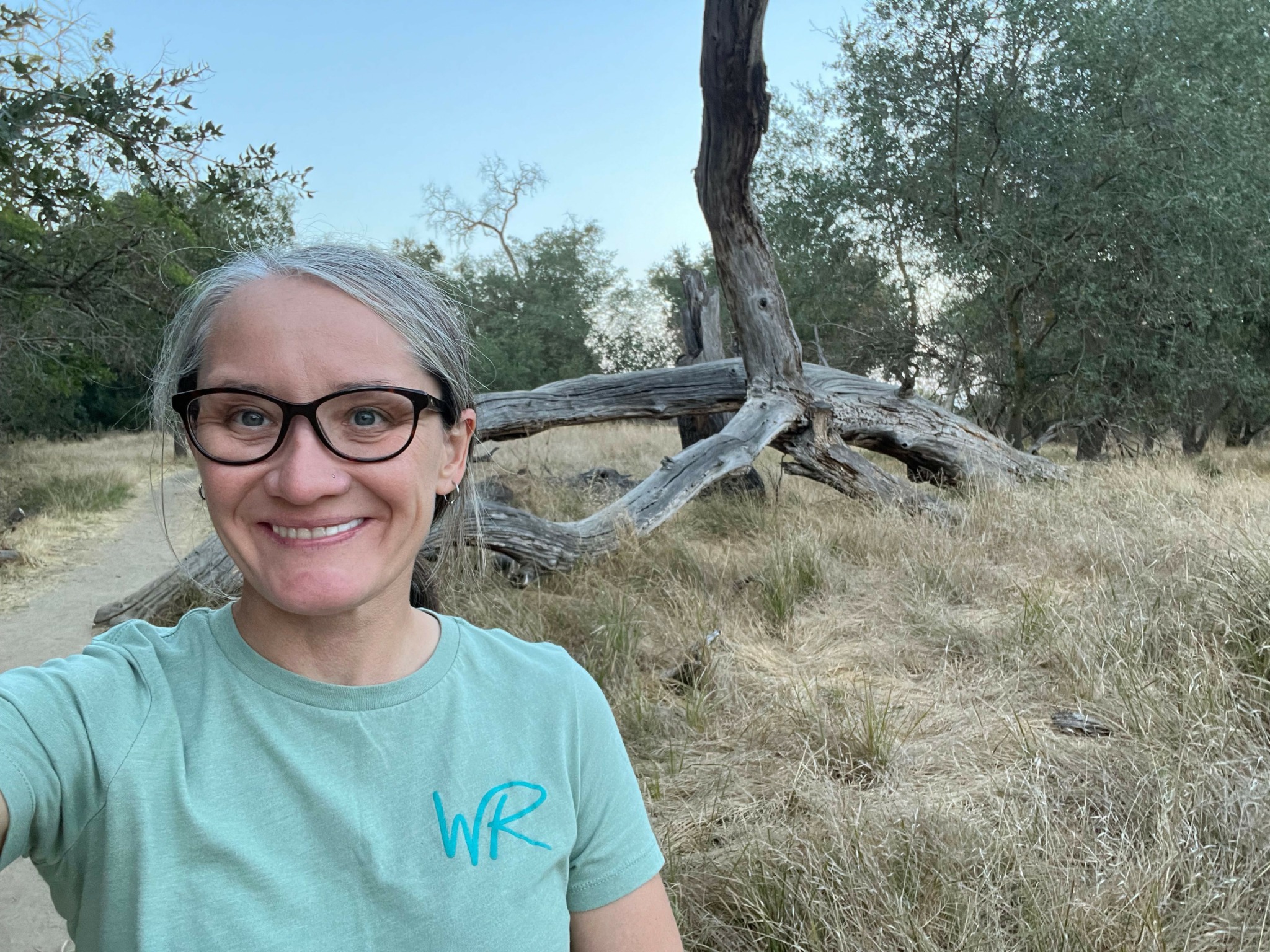
Image Credits
Sarah Norris,
Photo of me that’s not a selfie was taken by Emily Turner. Emily works with me as an arborist assistant on tree inventories, vegetation mapping, and in the social outreach aspects of the business.