

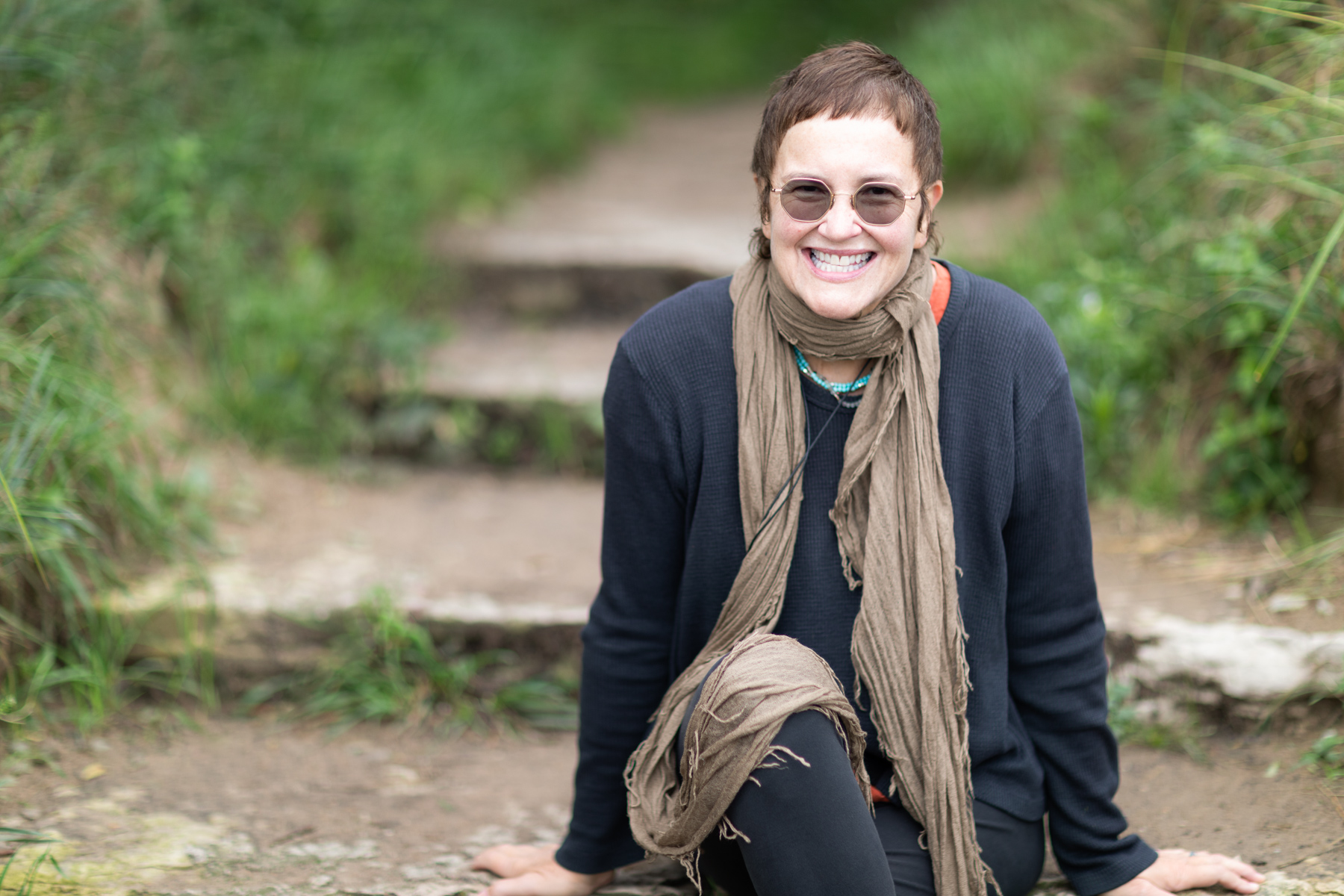

We were lucky to catch up with Cin Salach recently and have shared our conversation below.
Cin, thanks for joining us, excited to have you contributing your stories and insights. I’m sure there have been days where the challenges of being an artist or creative force you to think about what it would be like to just have a regular job. When’s the last time you felt that way? Did you have any insights from the experience?
My son, who’s 16, asked me the other day when I was going to retire. I’m 62. “Never,” I said. I will never get too old to stop doing something that brings me such joy. You don’t age out of being a poet. How great is that? In fact, my “job skills” will keep evolving the older I get.
I had a “regular job” for about a year and a half when I was just out of college. I was a copywriter for Spiegel Catalog. And then one Sunday night in 1987 or 1988 I walked into the Green Mill Lounge to witness the Poetry Slam, and I quit my “regular job,” went freelance, and never looked back.
Shaping my life according to poetry has felt like one of the greatest gifts I’ve ever received. Having my son is the other. Getting to do them both, and witness how poetry and motherhood influence each other is miraculous.
My two favorite jobs are both lifelong gigs. How lucky am I?
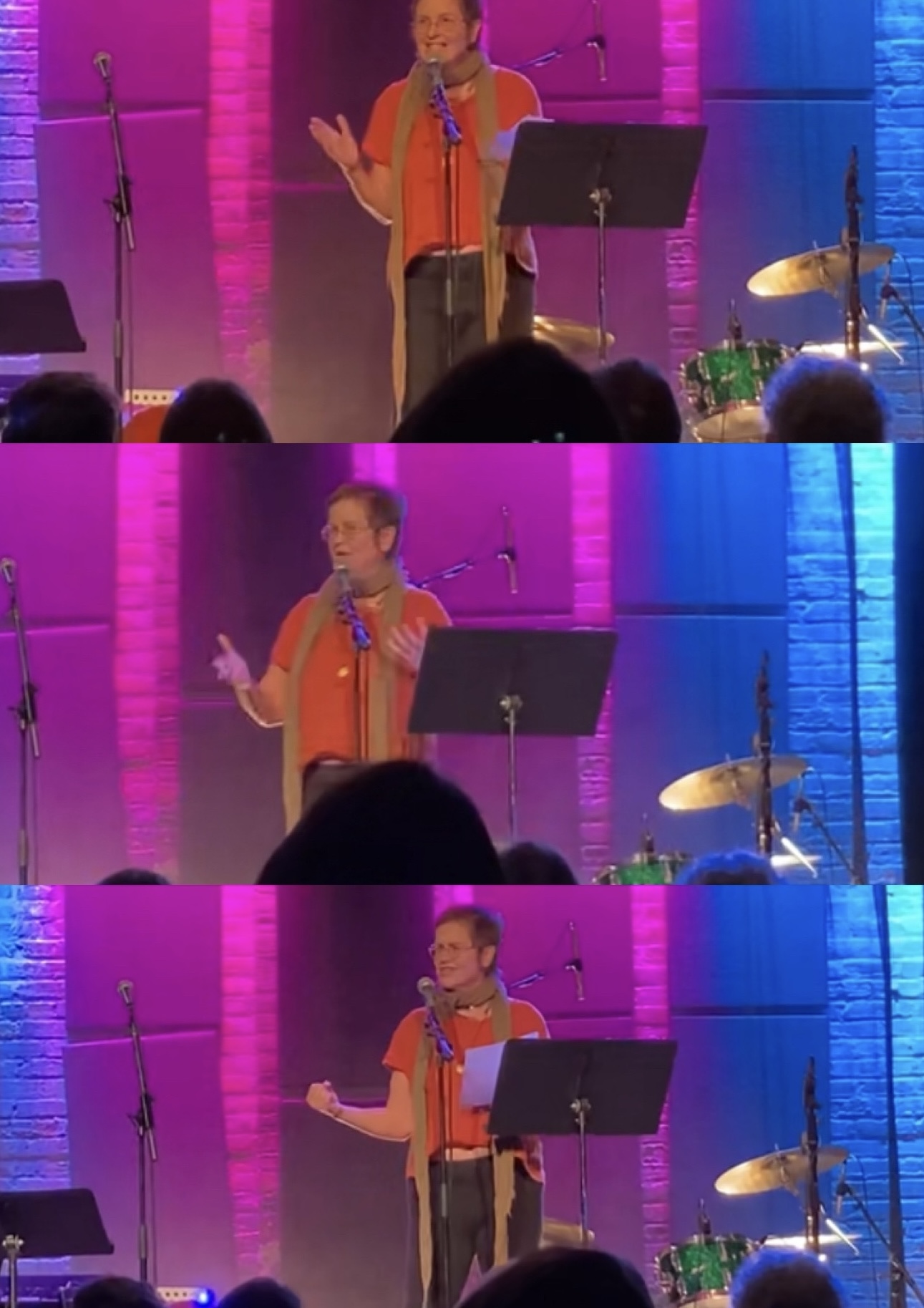
Cin, love having you share your insights with us. Before we ask you more questions, maybe you can take a moment to introduce yourself to our readers who might have missed our earlier conversations?
My life as a poet began when I was about 8 years old. I remember feeling like I didn’t fit into the world, and found myself writing poems in my lavender-painted bedroom while “The Monkees” played on my little turntable. Once I started writing, everything made sense. I often joke that poetry was my first language.
No one told me I could study poetry in college, so I went to U of I, got a BS (!!) in advertising, took poetry classes, worked on the literary journal, and got my first job out of college.
Then I found the Green Mill Lounge and the poetry slam, and Sunday nights at the Mill were my poetry church, my grad school, my everything. I began dating a musician, and we formed a multi-media group called The Loofah Method. We did big performances, collaborating with photographers and dancers, and having a great time. Chicago is THE best city to be a working poet, and collaboration is one of my favorite ways to create.
There’s nothing like being 24, 25, 26 years old and staying up all night making art!
I published my first book, “Looking for a Soft Place to Land” in 1996 with Tia Chucha Press created by Luis Rodriguez—an incredible poet and author who wanted performance poets to have the legitimacy that a published book gave them. My second book, “When I am Yes” – was published in 2016 by Jack Leg Press. In between those books, my son was born, and I started my business “poemgrown,” writing commissioned poetry to help people honor the most important occasions in their lives.
I love translating love stories into love poems. Helping people access their hearts even when the occasion feels too big (with joy or with grief) to do so. There’s nothing that makes someone feel more seen or valued than being handed a poem that was written for you by someone (or many someones) that love you.
What am I most proud of? That I’m still listening and creating my life according to poetry. I started holding writing spaces for women more regularly right before Covid, and that continues to be an important part of poemgrown now as well.
I also hold writing spaces for humans with dementia after my own father was diagnosed many years ago, and that has become one of the most joyful writing spaces in my life.
Poetry is the best map. Of a heart, a moment, a relationship, a life.
I think there is a belief many of us have, maybe left over from school days, that poetry is hard. Or boring. Or complicated. And that there is a right, and a wrong way to read a poem.
But there is NO wrong way to read a poem!! And there is NO wrong way to write one either!
And like the right song at the right time, the right poem can change everything.
What do you think is the goal or mission that drives your creative journey?
My mission is love. To help people experience love as authentically and powerfully as possible by creating space for their voices, and their hearts, to be heard.
Several years ago I was writing a poem and I wanted to use the word “scared.” But autocorrect kept changing it to “sacred.” Again and again, I typed “scared” and my computer changed it to “sacred.” After about the tenth time I finally changed the line in the poem to “Be more sacred than scared.” I put it on a coffee mug just to remind myself every morning that love is always greater than fear.
Whether I am working with a client translating their love story into a poem, holding a writing space for women to split the world open with their truth, or spending an hour with humans with dementia reading, singing, and creating a poem together, I always try to move forward knowing that poetry heals and love wins.
How about pivoting – can you share the story of a time you’ve had to pivot?
In January 2020, I was doing regular workshops called “Splitting the World Open,” inspired by the poet Muriel Rukeyser who said, “What would happen if one woman told the truth about her life? The world would split open.” I held these workshops in my home on the north side of Chicago, around my long dining room table just made for women writing together.
Then we all know what happened—Covid stepped in and changed the world as we know it.
I still remember the last workshop we had before the country locked down. Should we even be having it? We still were hopeful and naive enough to think everything would be fine, but we were also hearing rumblings of quarantining and pods, and e-learning in lieu of our kids going to school.
I took an amazing online class with Stephanie Schwab of Crackerjack Marketing called “Switch!” during which I wrote a business plan to make my “Splitting the World Open” a virtual workshop. By the end of the class, I had an outline, and a marketing plan, and was ready to offer it as a space to women who desperately needed a way to talk and write about everything that they were holding.
Suddenly my workshop which had previously only been able to accommodate women who lived within driving distance of me was available to any woman anywhere.
I was worried that the safe and sacred connection we had in the live sessions might not be possible in a Zoom session, but I was so wrong! Thanks to Covid, the pivot created a richer, broader, more inclusive space to split the world open.
Contact Info:
- Website: https://poemgrown.com
- Instagram: @poemgrown
- Facebook: cin.salach
- Linkedin: https://www.linkedin.com/in/poemgrown
Image Credits
SpiderMeka Portraits