

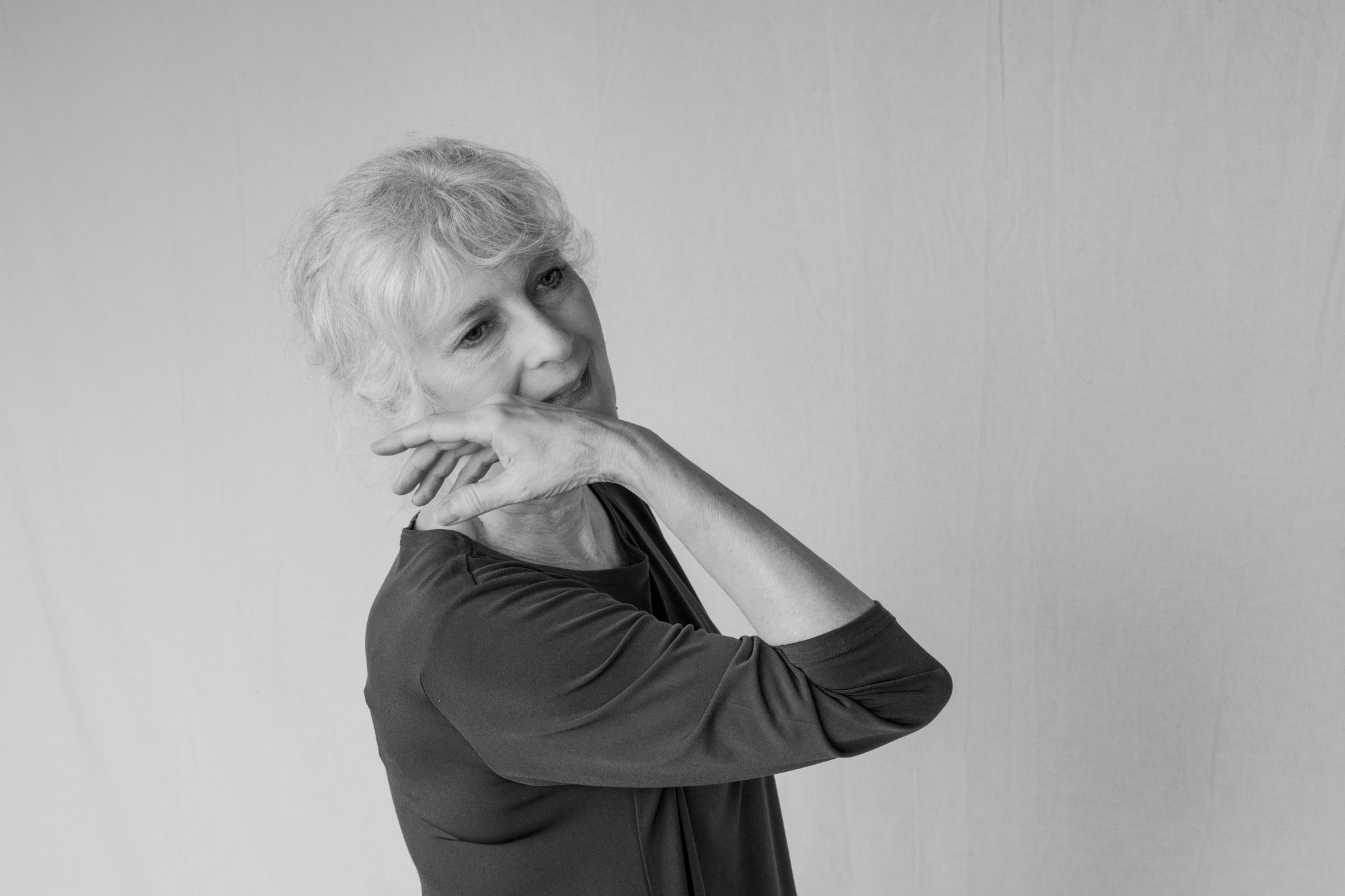

Alright – so today we’ve got the honor of introducing you to Nancy Evans Doede. We think you’ll enjoy our conversation, we’ve shared it below.
Nancy, looking forward to hearing all of your stories today. Can you open up about a risk you’ve taken – what it was like taking that risk, why you took the risk and how it turned out?
I would never have become a professional modern dancer, or choreographer, or Artistic Director of my own modern dance company if I hadn’t taken a risk. To begin with, I always loved dance. As a child, I was enrolled in ballet classes because I needed to correct foot issues. I fell in love with ballet, and wanted to “be” a ballerina when I grew up. Problematically, for me, I did grow up, and up, and up. When I was in high school I was 5’8″ tall, and at that time in the ballet world, had no hope of being that ballerina, at least, not professionally. I changed my direction, and studied theatre. In college I reacquainted myself with modern dance while pursuing an acting/directing degree, and fell back in love with dance – this time, modern dance. I graduated, and took a risk with eight others, to form Steppenwolf Theatre, starting the enterprise in the basement of the Immaculate Conception grade school in Highland Park, Illinois. We all took risks, producing works of theatre that labeled us “audacious”, but caught the attention of critics and audiences alike. I thought I had found my forever path. A dream come true. After my first full season at Steppenwolf, I visited my alma mater, Illinois State University, to see a dear friend perform in the spring dance concert. There I saw a dance entitled “Kindertotenlieder” choreographed by Hanya Holm. It hit me at my core. I was aware from my dance history class that Hanya Holm was a pioneer of modern dance, who established a school in New York City in the name of her mentor, the German expressionist dancer Mary Wigman, but this was the first time I had experienced any of her work. She was well into her 80’s, and as I found out from the back of the program, had been teaching at Colorado College every summer for an eight-week intensive course for nearly 40 years. I decided I had to go. Initially, I planned to just go for the eight weeks, and then return to Steppenwolf and my great apartment. After that grueling, demanding, overwhelming eight weeks, I was at a complete loss. I felt as though I had just started something important, and didn’t know what to do next. I had a talk with Hanya about it. I felt like I was in an “either/or” place – either Steppenwolf, or dance. Hanya told me that the “theatre” in me would never leave me, but the dance was immediate, depending on a willing body and youth. She advised me to expand my studies by working with Nancy Hauser in Minneapolis, MN, and then come to New York to work with Murray Louis. I took the biggest risk of my life at the time. My leave-of-absence from Steppenwolf became a departure, and I packed my car and moved to Minneapolis to study with a woman I had never met. I left a “sure thing” for a big question mark. Money? Job? Down coat? No, to all. Impulsive? Maybe. Driven? Definitely. Hanya and her teachings spoke so deeply to me that I had to follow their lead. As it turned out, Nancy Hauser was critical to my becoming a dancer, choreographer, and teacher. Nancy was a beautiful choreographer, incredible teacher, and an artist with a rich history of her own. She gave me opportunity, pushed me through my limitations, and encouraged me to continue to take the risks necessary to fulfill my potential. Being an artist is “a becoming.” It takes time, effort, failure, belief, and a gift from someone or something that lights the spark inside you. Hanya and Nancy became my lighthouses, my mentors, and my friends. I was both humbled and proud to be in their company and under their observant eyes. The risk I took to go to Colorado was just the first of many risks taken since then. At this point in time, those risks have brought me to where I am today, with a professional modern dance company of my own, Nancy Evans Dance Theatre, now going into its 16th season. I am also honored to be a caretaker of Nancy’s legacy by having rights to reconstruct her signature dance, “Everness.” Now, as then, every day I take a new risk when I enter the studio – whether to teach, choreograph, mentor, or dance. What I’ve found is that risk can become your friend. Like a good friend, it pushes you into new territory, is honest with you when you’ve pushed too far, and can be a helper when you need to regroup. Trusting the risk makes it an exciting journey that will only expand your artistry and ground you to your art.
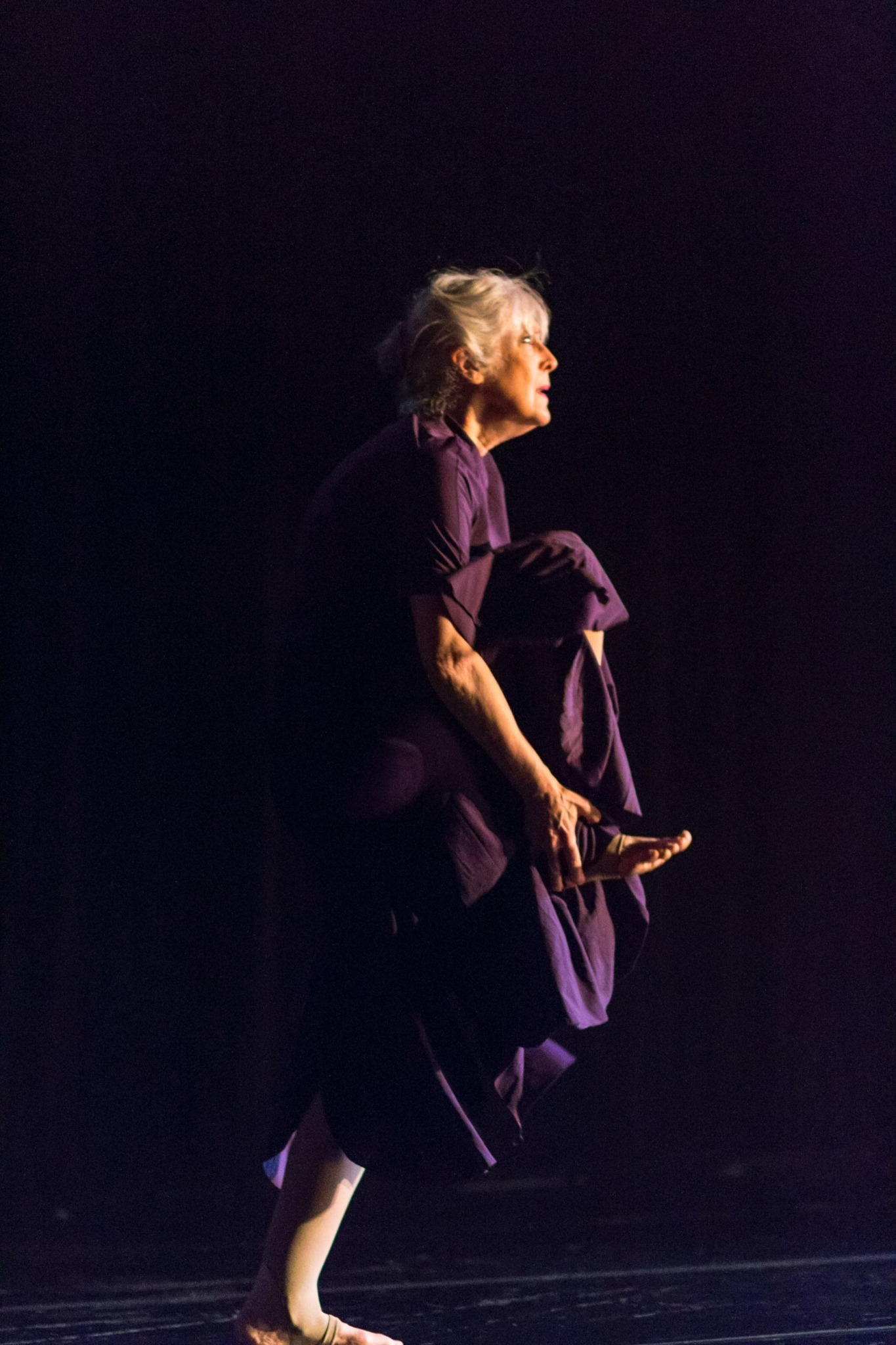
Nancy, love having you share your insights with us. Before we ask you more questions, maybe you can take a moment to introduce yourself to our readers who might have missed our earlier conversations?
I have always been a person who is drawn to things that involved reaching out to people. When I was 9, I walked my neighborhood with a coffee can, collecting loose change from everyone who would part with it “to help other people.” My mother found a full can in the basement and asked me what it was. I told her what I had done and she said that I had only ‘done’ one part of something that definitely was not “done” until I actually ‘did’ what I told my donors I would do. She said I needed to find a worthy cause to give the money to or else I had to return it all to the neighbors. I had been watching the Muscular Dystrophy Telethon on TV, and I loved Jerry Lewis because I thought he was funny. At 9 years old, there are simple reasons for most things. I said I wanted to donate to MDA. She translated the coins into a check, and we sent it off with a note from me (which may or may not have ever been read) to the address on the TV screen. Not long after that, I received a certificate from MDA acknowledging my donation, which I still have. As an adult, I remained a donor. When I was in college, I was in a children’s theatre production that toured around small towns outside Normal, Illinois (the town of Illinois State University) and also performed for the special needs children at the campus-sponsored school. At the show for the special needs kids, my friend, Cal and I, realized that some of the students who were deaf could not hear the words or any of the songs in this musical, “The Point.” Both Cal and I knew basic sign language, and we decided to try and translate as best we could during the show – me for him when he was busy, he for me when I was busy. We didn’t think much of it, really. In fact, I think we both were a bit embarrassed because we were sure we had botched things up in our effort to reach out. However, at the end of the performance, two of the deaf students – about 9 or 10 years old – came up to us and threw their arms around us. One of them was weeping. Cal and I were crying. Apparently, we had done enough. That moment still chokes me up. We thought we were just doing something fun, and not particularly well. We had no idea how it had registered with those kids while we did it. It was humbling indeed. Many years later, I became involved as one of many producers on a project in Los Angeles called Children of the World. My friend from college called me and asked me if I wanted to be a part of it, and I jumped in. It involved recording “We Are The World” with children, and included a video with some 500 children running down the hill in Griffith Park. It was a massive undertaking, with a lot of industry red tape – there were child stars of television and films in the recording, and they had handlers; there were many other children who needed regulating; there were heavyweight musicians playing and recording the soundtrack, and there was the actual studio recording session. It was huge. It was also incredibly fun. Our finished video played on the Disney channel, and the recording was nominated for a Grammy. I did it because I thought it was a unique way to reach out to help others on a much bigger scale, and I got to do it with my friend. Win, win. These experiences helped me to see my place in the world. It’s not about me. It’s about everyone else. When others are touched, so am I. It’s not a selfless act. It’s a community experience. My responsibility as an artist is to not only reach out to others in my audience, but to invite them to be a part of the experience. As Artistic Director of Nancy Evans Dance Theatre, I have a responsibility to the audience. My medium is dance theatre, but the message is all about relationship. If one person in the audience is touched in some way by the work I do with my company, then I have fulfilled my mission as an artist. I’m not a humble do-gooder. I am humbled when I do well. I need to bring my best self to the table and continue to take creative risks in an effort to find yet another way to communicate with others about both simple and complex ideas; to create an environment for a couple of hours where we can all come together from our separate realities and share something meaningful.
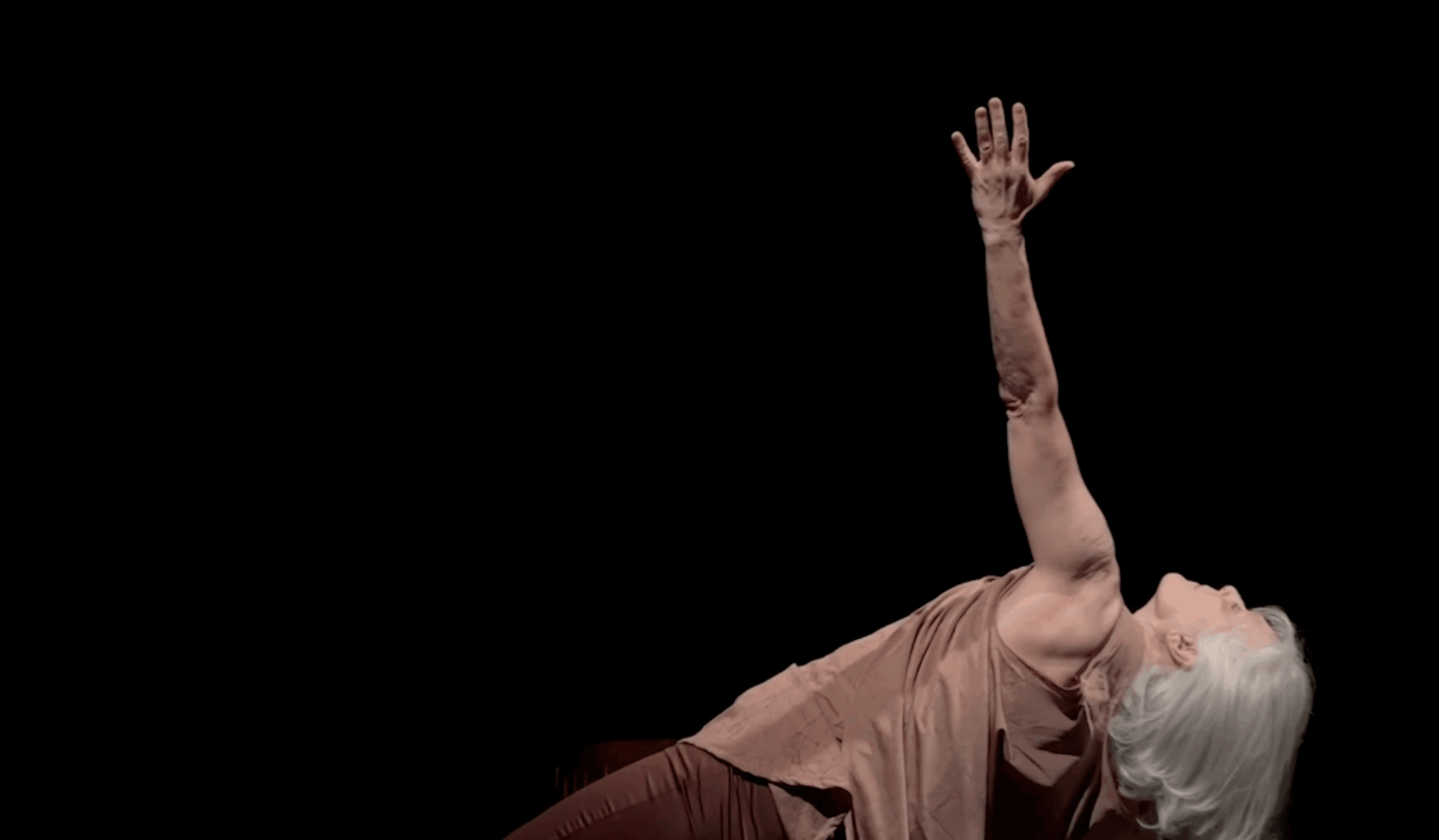
What’s a lesson you had to unlearn and what’s the backstory?
When working with Hanya Holm the first summer at Colorado College, she assigned me a choreographic project: she gave me three dancers, a stage setting, and a piece of music (Stravinsky, thank you very much) and told me to “solve the problem.” It was going to be performed at the final concert. I choreographed that short piece nine times before she finally said “It will have to do.” I felt I had failed miserably. When the concert rolled around, the music teacher/accompanist, John Colman – a man for whom I had a great deal of respect – came up to me with a program. I looked at it, and saw the title that Hanya had chosen for my piece, unbeknownst to me. When I saw the title, a huge light bulb went off over my head, and I said “Well, if I had known THAT….” John Colman chuckled and told me two things: first, that he thought my piece was a success, and then he said something like “you didn’t think she was going to make it easy for you, did you?” I was rooted to the spot. Later, when I had time to process it all, I realized that I had been scratching the surface, and choosing to see the “world” of my dance from one point of view. It hadn’t been working and my insistence upon staying with my original framework did not make it work any better. What I realized I had to unlearn was looking at a situation and following my immediate response to it. I needed to question that situation, expand its boundaries, try lots of ways of dealing with it. That has ended up translating itself to me as “What if?” It has changed my entire outlook on approaching my art, as well as in many areas of my life. The restrictions we place on ourselves in our daily life reflect themselves in our art unless we tackle them and break the pattern. Hanya put it beautifully to me when she said that if you explore as many ways of responding to something as possible, then you have a choice. Good advice.
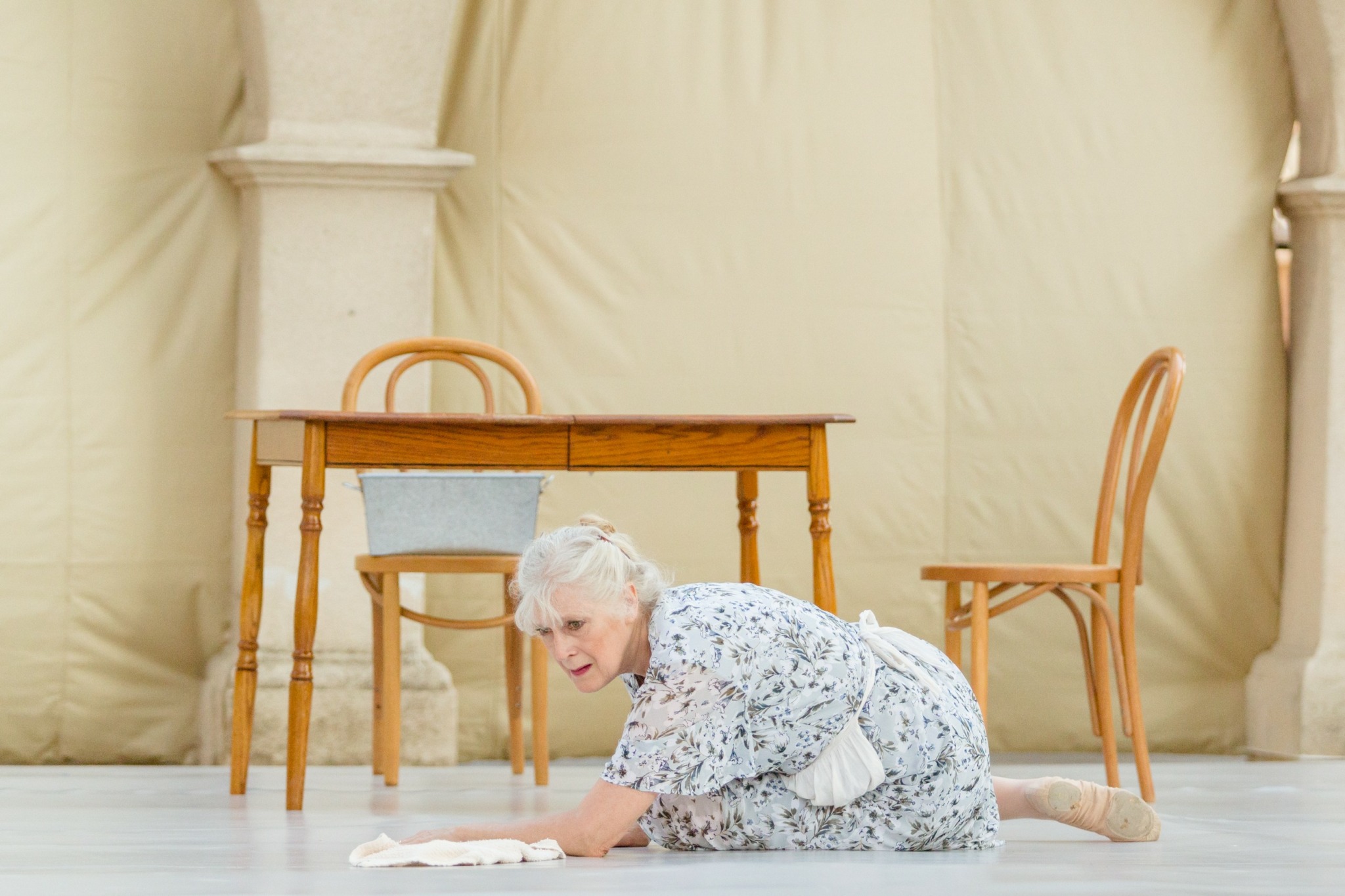
For you, what’s the most rewarding aspect of being a creative?
When the pieces of the creative puzzle begin to fall into their best places. You can feel it, like a tingle up your spine. You know when you’re on the right track, just as you know when you’re forcing things. For me, the breath is critical in this process. When I’m stuck, I know I need to stop and just breathe. Clear the table. Take a step away. Do an ordinary task with total focus. Trust. Now it’s swimming for me. I have to breathe, I can be supported by the water, and it relaxes me. That’s when ideas start to flow again. I can return to the studio with the ability to let the story tell itself.
Contact Info:
- Website: [email protected]
- Instagram: @nancyevansdancetheatre
Image Credits
Jenn Logan
AyamePhoto