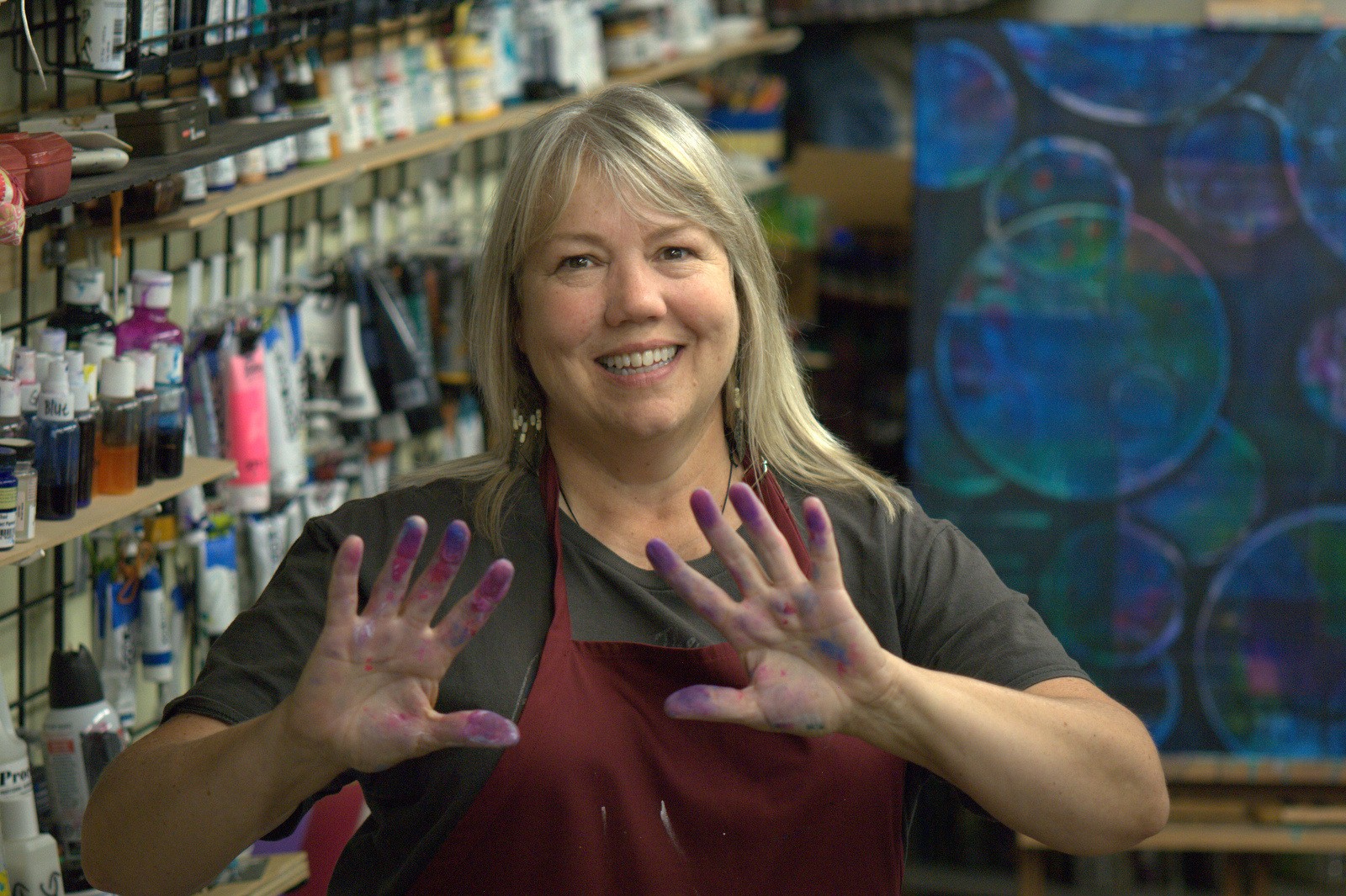

We caught up with the brilliant and insightful Tamara Dinius a few weeks ago and have shared our conversation below.
TAMARA, thanks for taking the time to share your stories with us today I’m sure there have been days where the challenges of being an artist or creative force you to think about what it would be like to just have a regular job. When’s the last time you felt that way? Did you have any insights from the experience?
Every time I’m setting up or tearing down an art show, dragging large paintings to a gallery, feeling stuck in a creative funk, or creating yet another class syllabus, I sometimes think about having a regular job. But then I realize how lucky I am to be an independent working artist. Sure, I hate those 6 a.m. load-ins at juried art shows and the long hours, but I remind myself how great it feels to have the freedom to do what I love.
One of my top ten values in life is freedom. I’m a free spirit, and I just can’t handle the restrictions of a 9-to-5 job. I used to work in HR and Finance for 12 years, and while the paycheck was solid and the hours were somewhat flexible, I wasn’t my best self. I gave up my freedom for a paycheck, and I’ve promised myself that I’ll never let that happen again.
As always, we appreciate you sharing your insights and we’ve got a few more questions for you, but before we get to all of that can you take a minute to introduce yourself and give our readers some of your back background and context?
In 2012, I quit my job as Director of HR/Finance and returned to creating art. Before that, my husband and I ran a furniture-building company from 1989 to 2002. We loved the lifestyle it provided, especially with our two young daughters. Being self-employed meant we could be home with them, so they never needed daycare. We’d often surprise them with a movie after they got off the school bus, and those were some of the best family memories.
Our furniture business grew when a sales rep noticed our work, and soon we had over 11 reps selling our pieces. We mainly produced display units and bookshelves, which small gift stores loved because they were custom-made and affordable. It was a niche market that worked well for us.
Then, in 2002, everything changed. My husband had a serious fall from a ladder, and I was diagnosed with thyroid cancer. During our recovery, I took a job managing finances for a local public agency, and my husband went back to work as a construction project manager.
After 10 years in the 9-to-5 grind, we both were ready for more freedom. So in 2012, I quit my job and began painting again. During a juried art show, a sales rep approached me about representing my card and magnet line. By the end of that year, I had nine sales reps, and my designs were selling really well. I was creating art with my own words incorporated into the pieces, and it struck a chord with people. My card line grew to over 150 designs.
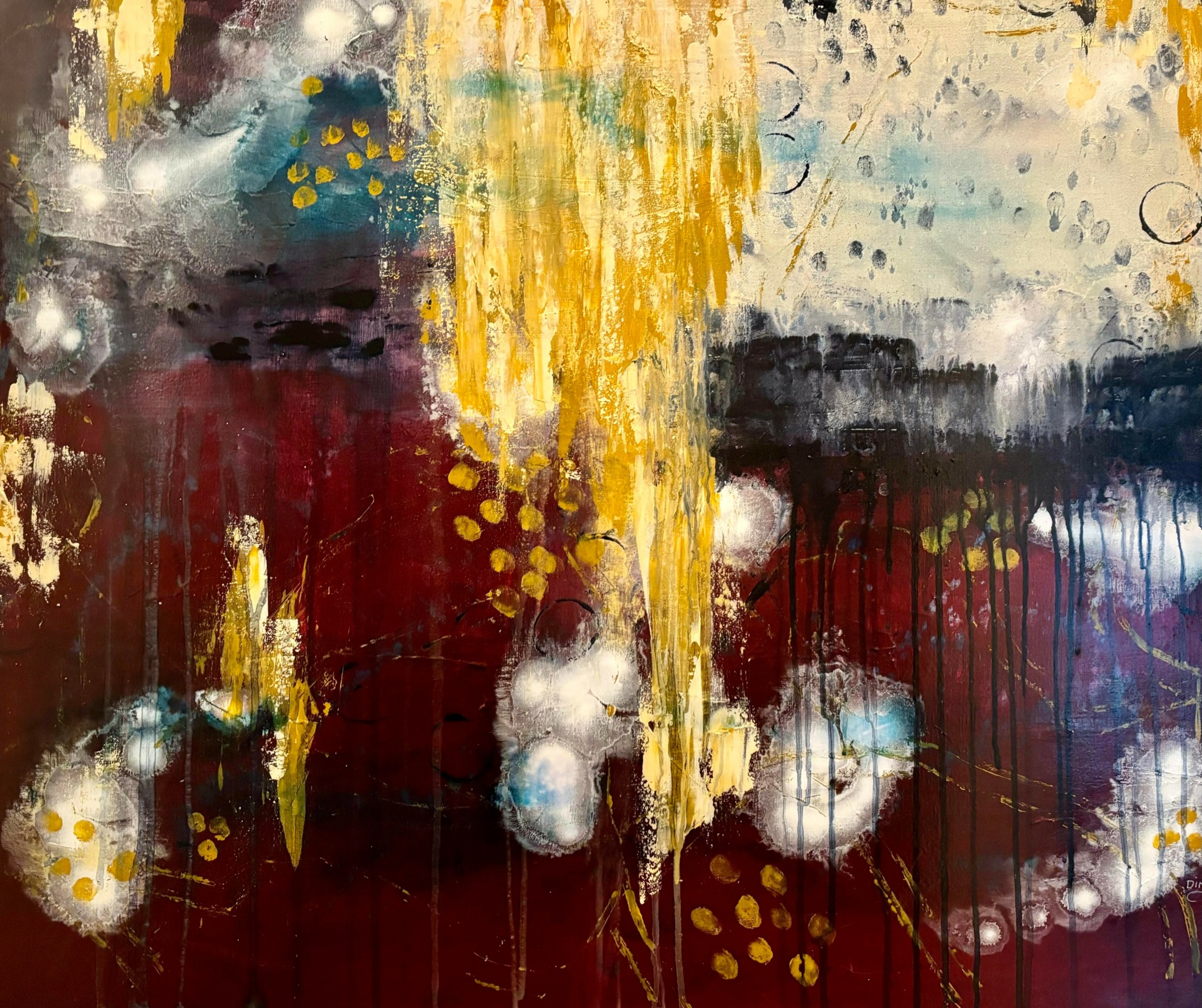
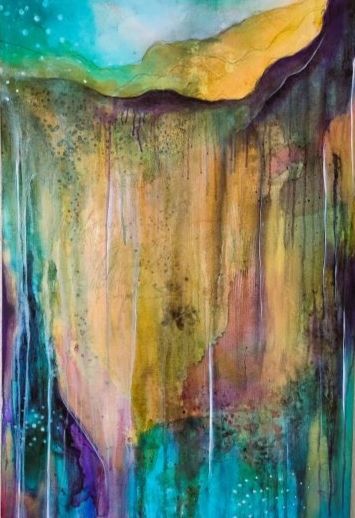
In 2018, my life changed again when my husband was diagnosed with Lewy Body Dementia. I put down my brushes to focus on being his caregiver. By 2022, I started dabbling in art again. I entered a piece into a show, won Best in Abstract, and discovered my love for abstract impressionism. The piece, titled “Falling,” was created during my husband’s decline. Every day, I knew it might be the last “best day” with him, and I felt like I was falling deeper into a void of loss and pain.
In August 2023, my husband passed away. It’s taken me a year to start painting again. Art is my therapy, my friend, my confidant.
Is there a particular goal or mission driving your creative journey?
One of my main goals is to give others a creative outlet. I love teaching and feel so excited when a student has that “aha” moment. Seeing their eyes light up when they realize they’ve created something beautiful—and discovering a confidence they didn’t know they had—is so rewarding. I’ve had many students shed a few tears while creating, overwhelmed by the emotions art can stir up. It’s also common for students to bring friends along, wanting them to experience the same freedom of expression that art offers.
What can society do to ensure an environment that’s helpful to artists and creatives?
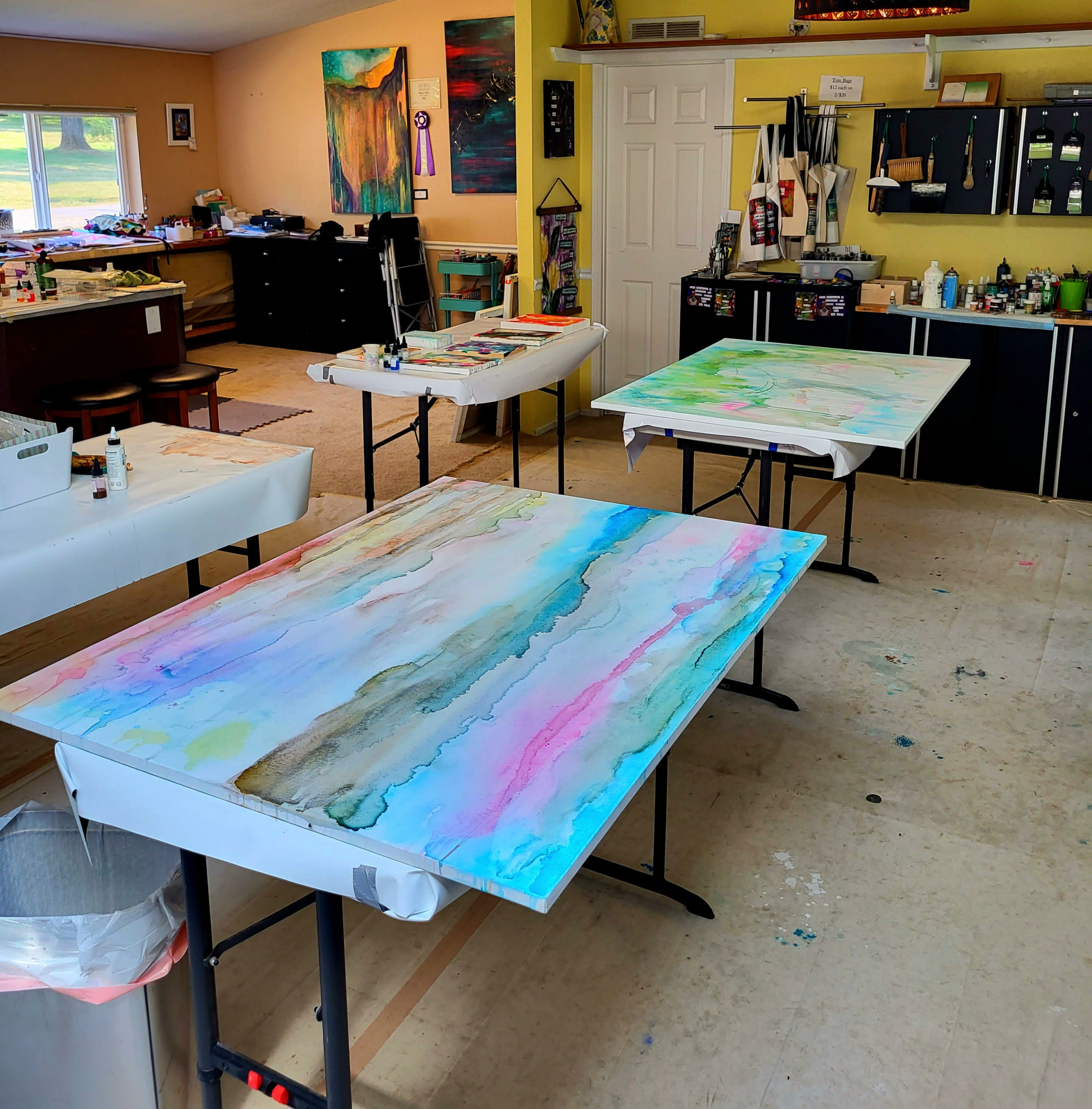
I believe it’s a joint effort between society and artists to recognize that artists have valuable skills that deserve fair compensation. The old stereotype of the “starving artist” is outdated. Where I live, there’s a growing emphasis on paying artists what they’re truly worth. For example, a local organization pays artists a decent wage for demos, classes, talks, and more. I recently did a 45-minute demo and was paid $150. I also gave a talk for another art association and received $75 for it.As artists, we need to make sure we aren’t giving away our time, because doing so can create the impression that we lack value. I’ve also transformed our old furniture shop into an art collective. I rent studio space to six other artists, and together we’ve turned a shared area into a gallery. It’s become a thriving creative hub that we share with the community and other local artists. We started opening up the studio and gallery on the second Friday of each month, inviting everyone to join us. We offer snacks, beverages, and a creative project that people can work on and take home—all at no cost. It’s our way of sharing the joy of art with the community.
Contact Info:
- Website: https://www.womenwineandwords.com/
- Instagram: https://www.instagram.com/artbytamaradinius/
- Facebook: https://www.facebook.com/womenwineandwords/