
We were lucky to catch up with Lynn Farthing recently and have shared our conversation below.
Lynn, thanks for joining us, excited to have you contributing your stories and insights. We’d love to hear the backstory behind a risk you’ve taken – whether big or small, walk us through what it was like and how it ultimately turned out.
Creatives are risk-takers by nature. I have never liked reading directions; I would rather jump in and do it. And then if I screw it up, I’ll fix it — sometimes getting to the finish line from a different direction or ending up somewhere a little different than I had planned, but that’s where the learning comes in — in the journey of doing. And in my opinion, that makes life much more interesting.
As far back as a young girl, I would cut my own hair, sculpting my design with scissors and no undo button. Many times, I ended up with a different look than I set out for, but hey, that’s the creative life!
In college, I didn’t know if I was talented enough to go to an expensive private art school where I would have had to foot the loans myself. In consulting with my father, he asked, “Well, do you think you are a good investment?” Hell yeah! Risk taken.
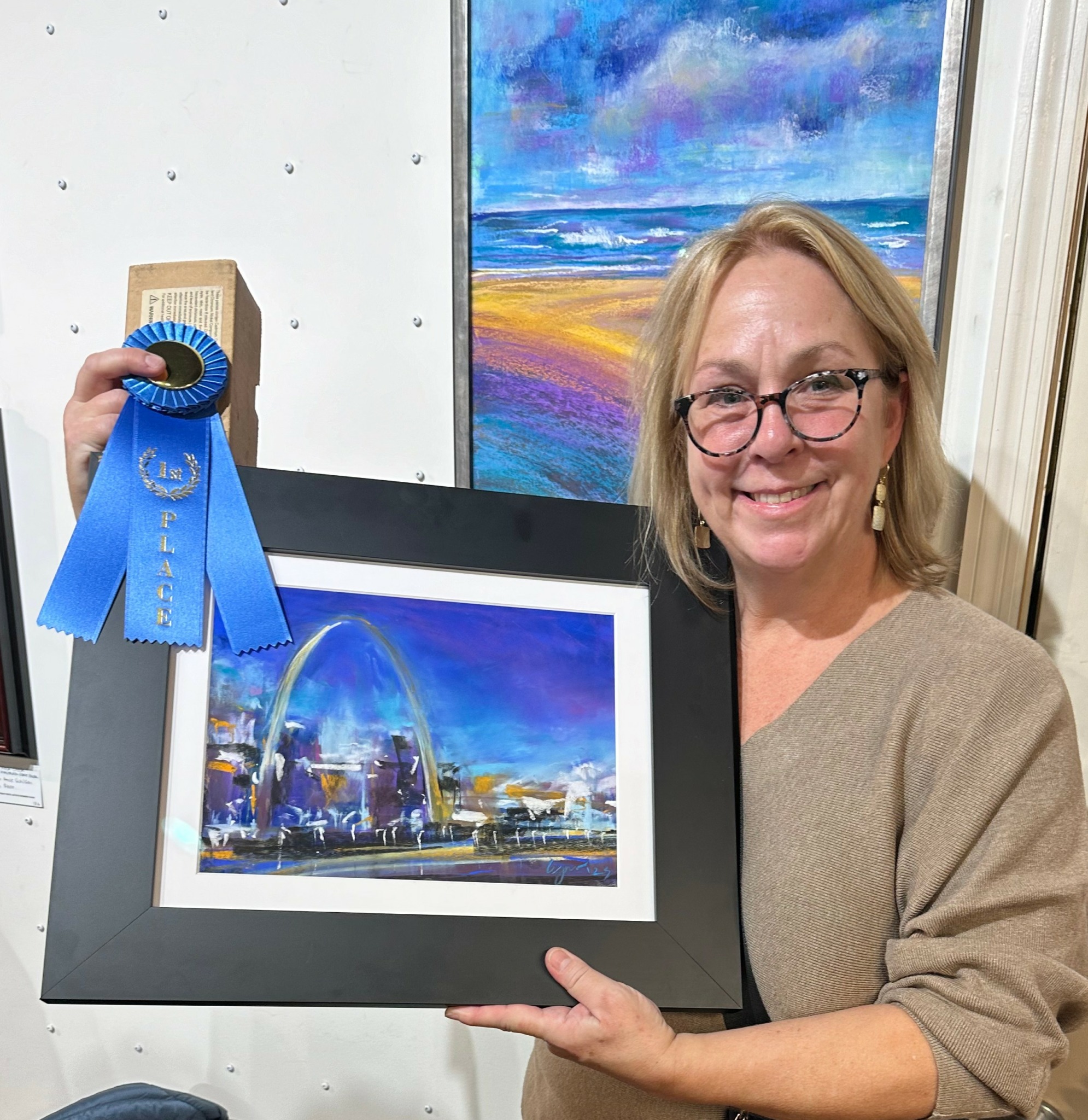
After a successful 18-year career in advertising trying to find a balance between the demands of the company and the needs of my family, I took another risk and quit to work for myself, by my own rules, creating the balance I wanted. Nineteen years later, I am still at it. Eventually, I will take the ultimate risk and quit the advertising world and do what I really love: making art full time. For me, making art is all about taking risks. It’s about making a bold mark on that blank canvas and knowing that if I screw it up, I will fix it. It’s about trying new things without directions, just going on the journey of doing and seeing where it takes me. I’ve had happy surprises with this approach in life and art is no different. And what fun it is!
Lynn, love having you share your insights with us. Before we ask you more questions, maybe you can take a moment to introduce yourself to our readers who might have missed our earlier conversations?
Edgar Degas said “Art is not what you see, but what you make others see.”
The creative part of advertising is the same. It is finding provocative ways to get people to see what you want them to see. And the best advertising is executed in a way that makes the viewer feel what you want them to feel. Advertising is not art, but through it, I have been able to hone many valuable skills like design, composition, color and the how to tell a powerful story through a well-crafted image.
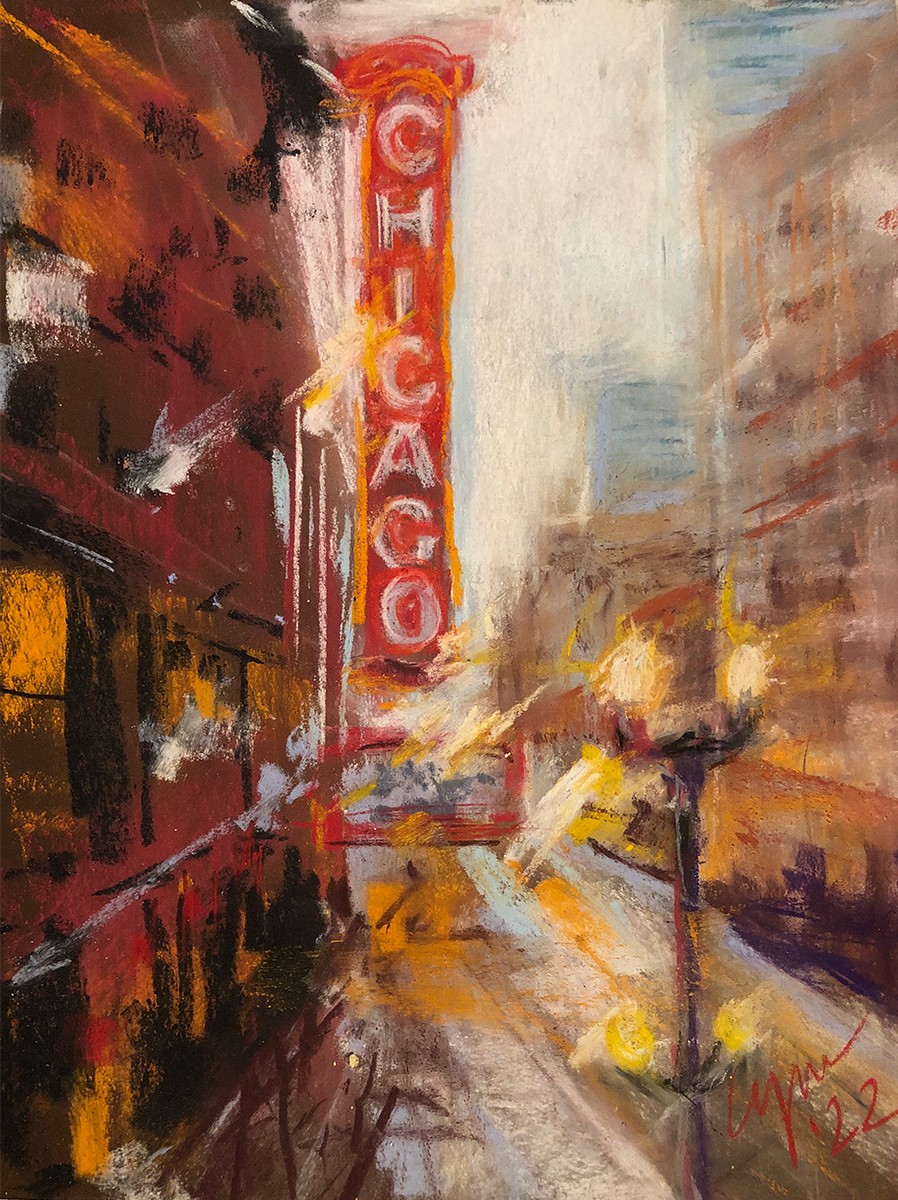
I graduated from the College for Creative Studies in Detroit with a concentration in art direction and design. It was there that I found my people: the creative thinkers and questioners. It was there that I was inspired by the masters. It was there that I found my husband and creative partner. I am grateful to have enjoyed a successful career in advertising that took me from Detroit, to Chicago, to St. Louis where I currently reside and work. I have won many creative awards and hopefully helped sell a few products.
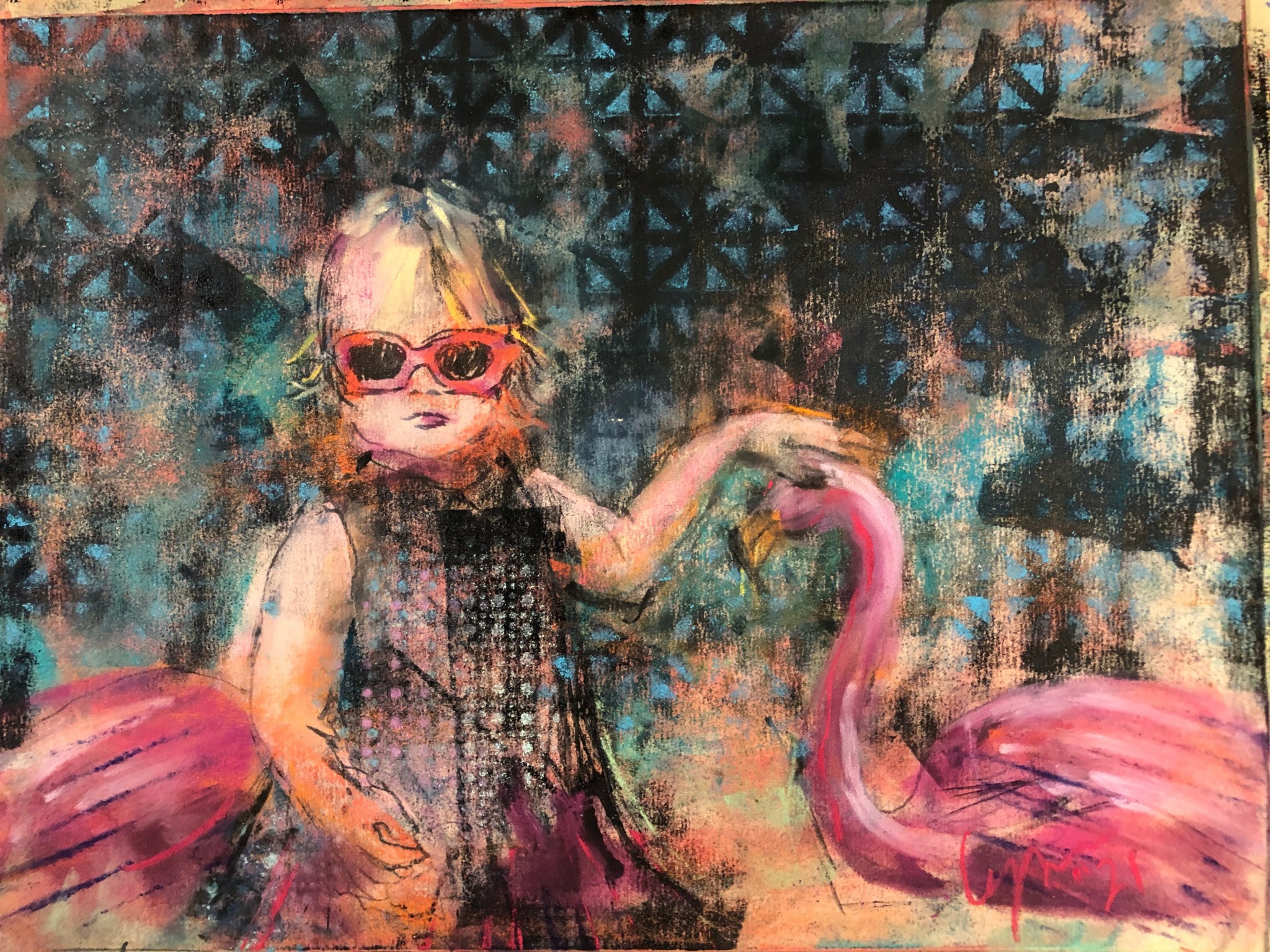
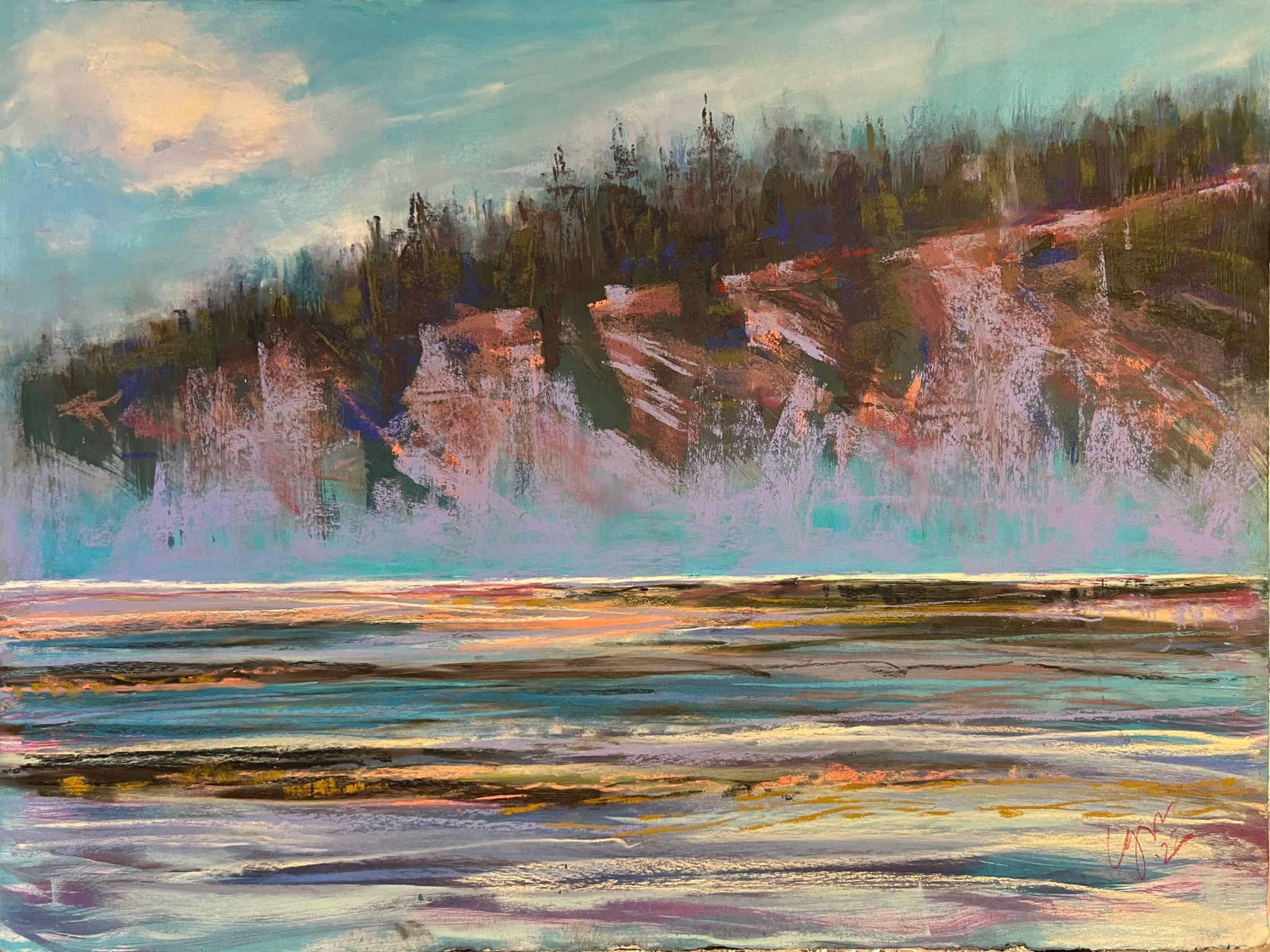
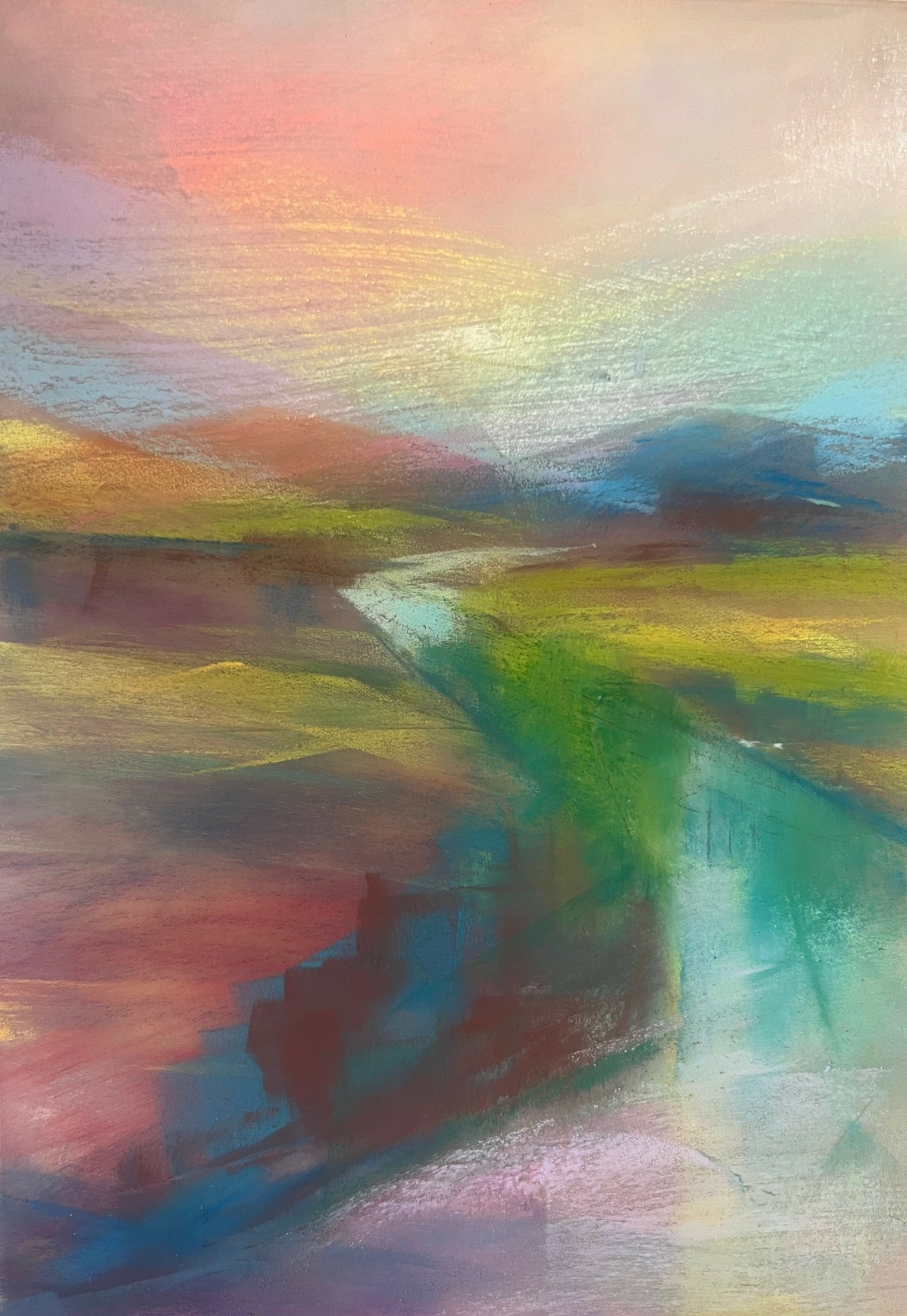
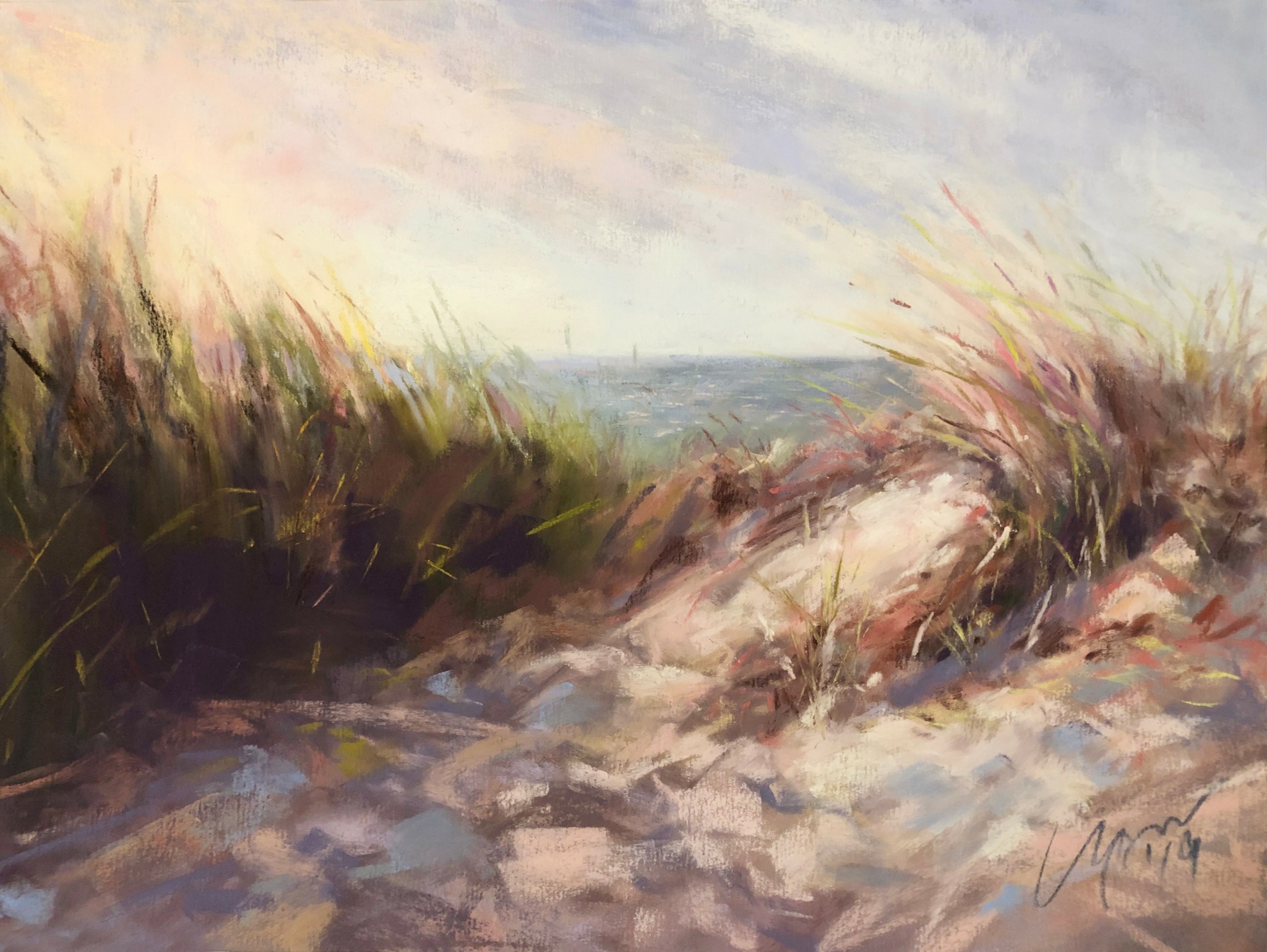
In this digital age where everyone is looking for influence and inspiration online, I find mine in the beauty of nature. And, with the rise of AI simulating beautiful places, I long to be in those beautiful places. Instead of designing on my computer, I want to hold the medium in my hand and watch its effect on the paper. It is so tactile, so pure. There is nothing between me and the mark on the paper. Most people do not understand what soft pastels are. They are not chalk, they are pure pigment held together with a binder; the same pigment that is used in oils, only they are in stick form. A pastel in hand can be applied with bold confidence or a light whisper. Colors can be mixed on the paper by applying others over them to create an endless variety of tones. The range and brilliance of color that can be achieved with pastels is like no other. I also like that with pastels, I can pretty much always “fix it”. No mark is permanent. It can be manipulated and moved around. You can add something to it and subtract something from it. It is this back and forth of doing and then fixing that fits well with my creative process. This is why I love the pastel medium.
I am grateful to the wonderful community of artists that work in and celebrate this timeless medium. Through my associations with the International Association of Pastel Societies, I continue to learn and be inspired by these amazing artists.
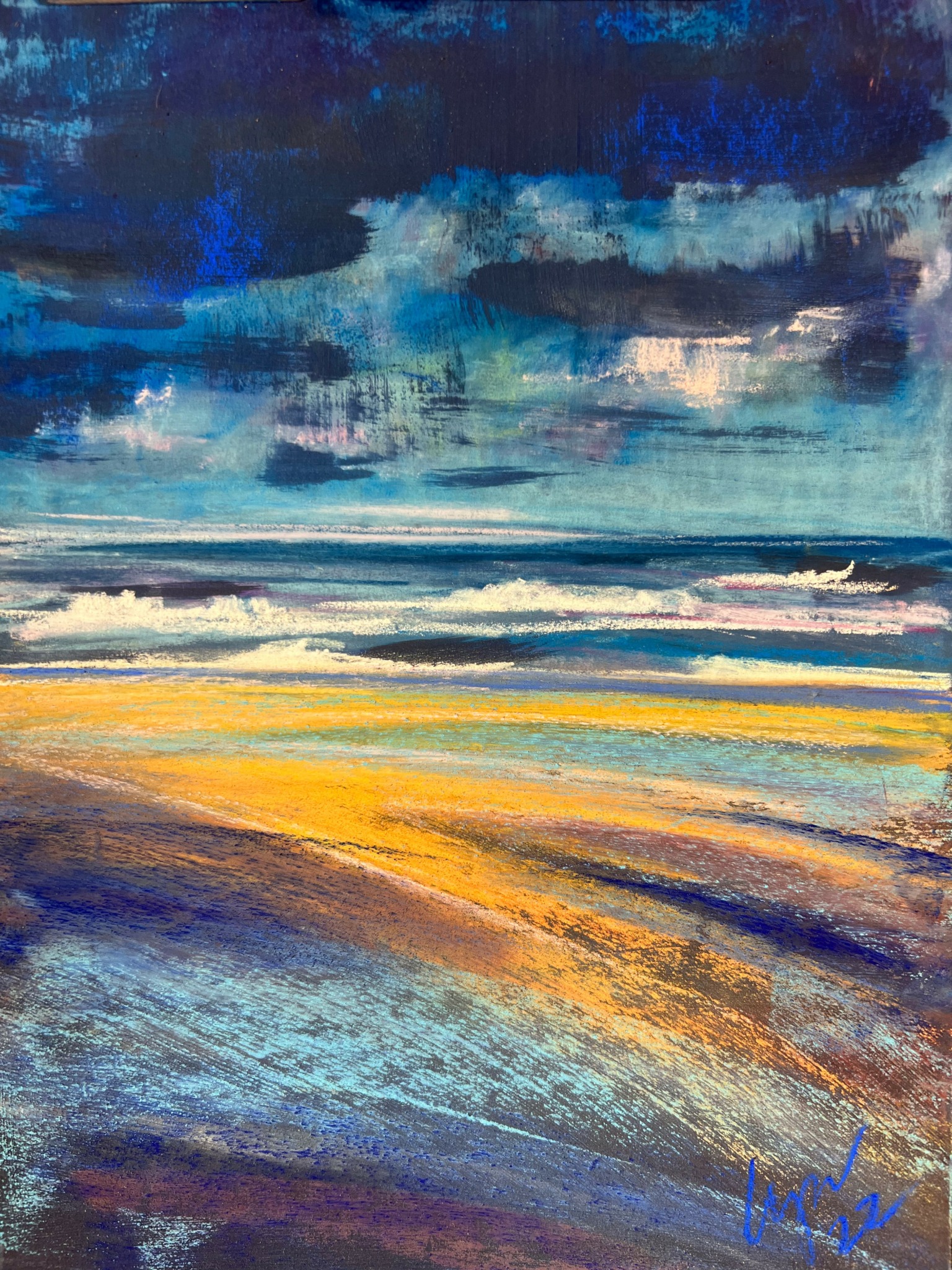
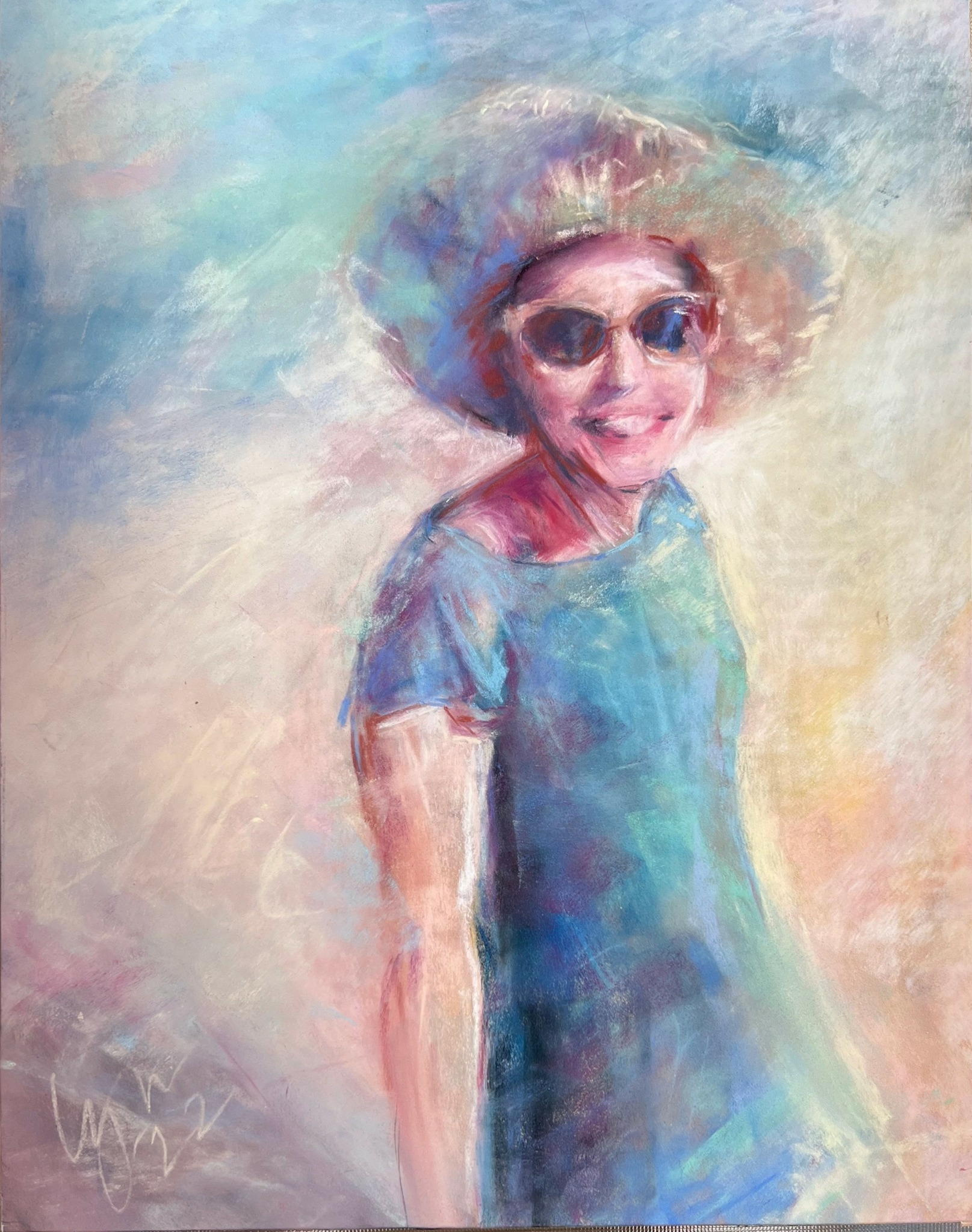
Growing up in Michigan, I have always loved the great outdoors, especially the Great Lakes. Nothing makes me happier than taking my pastels to the water and trying to capture the beauty and feeling of being there. Taking in the light and colors have never been more essential for me. Trying to capture that beauty forces me to truly be in the moment, studying it and really appreciating it. My goal in art is to convey the energy of the place or person while bringing a unique graphic interpretation of the subject. I hope that when a viewer looks at my paintings they will be reminded of the beauty in the world and feel energized by it. I want them to see and feel what I am feeling even though they may never have the opportunity to do so in person. Exploring the world though art is as essential as eating and sleeping for me. As more of life seems to be experienced on a screen, I hope to make viewers feel the energy of being there: the sand in their feet; the beauty of a vista; the soul of a best friend.
Looking back, are there any resources you wish you knew about earlier in your creative journey?
Younger entrepreneurs and creatives may wish there was a one-stop-shop resource that will catapult them into success. But the truth is, there is no “one resource”. The good news is there are many. And the even better news is that they are not always hard to connect with and they are likely all around you. You never know who will help you, make a connection for you, or give you a chance. So the key is to be open and never close a door or burn a bridge.
I’ve invested a lot of time building relationships, and it was those relationships that have kept me in business these past nineteen years. A project from someone I worked with in the past turned into two, then three …. and then a referral from someone else brought more work … and then someone I didn’t think even remembered me brought more and so it went. And I believe it is not just skill and talent that has kept me in business: having the right attitude may be the biggest reason. I call it business karma. When you work hard, are dependable, aren’t afraid to try something new, continue to re-think and look at things from a different perspective, dare to make a bold mark, and follow through to the finish, the work will keep coming back to you.
Creatives love to give back, and if approached correctly and respectfully, they will be generous with their time, advice, and connections. There are mentors all around who would love to share but are never asked. Be curious is what I would say. Ask them questions; ask them to critique your work. Dare to try things that are out of your comfort zone. Take a risk! Putting yourself out there for creative criticism is hard because our creativity is so closely tied to our ego. Listen, consider, question not only them, but yourself. But, in the end, trust your gut. Create your own voice and your own vision. And most importantly be gracious and appreciative to everyone who helped you along the way.
We often hear about learning lessons – but just as important is unlearning lessons. Have you ever had to unlearn a lesson?
The thing that I had to unlearn is that successful people are smarter and more talented than I am.
In working with my pastel mentors, I have heard more than one of them say, “When someone asks me how long it took me to paint this painting, I tell them the number of years I’ve been painting.” I have to remind myself that those successful painters that I admire so much aren’t necessarily smarter or more talented than I am; they have spent more hours perfecting their craft.
It always surprises me when talented people admit that they are under-confident at times. When I find myself doubting my work, I have to remind myself that most creatives are a bit insecure, and that’s normal. That’s being human. It helps when I tell myself that I am still learning and that somehow takes some of the pressure off thinking that the painting I am working on has to be perfect. When asked “When do you know the painting is done?” Many of my mentors have said, “When I start making marks that aren’t improving anything.” So that tells me that they have taught themselves to fight the desire of thinking that it’s not good enough or could be better and stop when it is fresh and not overworked.
Contact Info:
- Website: https://LynnFarthingArt.com