



We recently connected with Raja Marhaba and have shared our conversation below.
Raja, appreciate you joining us today. We’d love to hear about the early days of establishing your own firm. What can you share?
I really never ventured out to start a business. I was always in corporate – administrator in the financial sector. It was my former husband who asked me to establish a construction business with him. He told me if we work together we can make more money than me working in corporate. At first I was not too excited about the idea because I had a stable job and doing well. I wanted to have a voice in the company, not just become a “fixture” working under him. I was ambitious and wanted more. Joining forces with my former husband meant I will lose my independence and that was very important to me. He had an electrical contractor’s license and he is one of the most impressive electrical contractors I have ever known (and I am not saying this because we were married – he truly is). He is extremely well versed in the industry and especially trouble shooting complicated issues. He wanted to expand and become a general contractor and specialize in commercial, federal, and industrial tenant improvement projects. He told me we can expand and grow the company since there was a lot of opportunities, especially in the federal sector.
My experience has always been in the finance industry working for General Electric Corporation in New York City with Jack Welch’s team prior to marrying and relocating to California. I understood the corporate sector but had no experience in construction. As time went by, I found myself going to job sites, attending pre-con meetings, bidding on Request for Proposal (RFP) packages for the federal government, negotiating subcontracts, establishing relationships with vendors, assisting with the bidding process, working with the bond company, and meeting their requirements. In addition, I applied for small business minority program certification, joined networking organizations such as Young Entrepreneurs Organization, Birthing of Giants, National Association of Women Owned Business, National Organization of Professional Women, Small Business Administration, National Association of Women in Construction, and Associated Builders and Contractors. I was always willing to learn. That was key to my success in business and having an open mind, listening more than speaking. It is vital to listen to what others have to say, absorb, ponder and then execute an answer. Most importantly do not make decisions where emotions get the best of you. Take a break for a few hours or a day prior to responding to something that may have “ruffled your feathers”.
We created Martec Construction, Inc. in 1989. Back than women in construction were not given much credit. It took me a long time to earn respect in this industry. Being of middle eastern decent made it more challenging, but I learned how to weather the storms. Education is key for women in the construction industry, especially when communicating with men.
For the young professionals considering to start their own firm I highly recommend learning a little bit of everything in running a business. You do not need to be an expert, just knowledgeable in areas such as; corporation documents, by-laws, company minutes, finance (become familiar with the balance sheet and profit and loss statements, especially retained earnings), human resources, employee hand books, accounting, legal, insurance, taxes, job costing, retirement plans, various contracts with vendors, subcontractors, clients, and so on. Each partner in a corporation has his/her role, depending on each other to focus on their area of expertise is important. It is also vital to understand how a business is run so that the business can remain in compliance with local, city, state and federal regulations.
The challenge in working with the federal government is learning how to read their RFP packages, and include all the criteria set forth in them in order to qualify in bidding for projects. My first RFP with the federal government was challenging since it was approximately 200 pages long and intimidating. I learned how to break it out into sections, read and re-read for understanding and accuracy. Ensuring my company will meet the criteria stipulated. This was a very complex task. There was nobody to mentor me, teach me how to put an RFP together and submit. With the grace of God I learned and prevailed. Once we were awarded the project billing was another obstacle I had to learn about. In the construction industry, and working as prime contractor, means I had approximately 29 subcontractors for one project, depending on the complexity of the project. At times there were two or three projects ongoing simultaneously. I had to establish and negotiate contracts with all the subcontractors and vendors. I obtained releases for all portions of work completed by each subcontractor and vendor, processed subcontractor employee’s security clearance with the federal government, tracked every subcontractor employee federal badge and collected them once the job was completed. I was a fool to think invoicing the federal government meant one itemized bill and submit. Nope, that is not how it works. Invoicing the federal government requires obtaining invoices from each subcontractor and vendor, prevailing wage reports from each subcontractor for all the weeks they worked on the project, certificates of insurance, ensuring the subcontractors paid the proper prevailing wages to their employees, collecting lean releases from every subcontractor and vendor for performance and payment. Each invoice for projects were close to 100 pages.
I ran the office operations and my former husband bid and built to ensure the projects were completed 100% satisfactory to the client and all bonding requirements in building process were met. Together we became a powerful husband and wife team. Our weaknesses and strengths complimented each other. Trust was a key factor – without trust amongst the partners it is impossible to run a successful company.
As always, we appreciate you sharing your insights and we’ve got a few more questions for you, but before we get to all of that can you take a minute to introduce yourself and give our readers some of your back background and context?
As I noted above it was my former husband who asked me to join forces with him in construction. When I lived in New York I did not have much respect for contractors because most of them would sit on the church or synagogue steps checking out the ladies that walked by as they went to the neighboring restaurants for lunch. They would make all sorts of comments to the ladies, and I did not like that very much. It was a form of disrespect.
During my marriage and construction business I commenced to realize that it is the contractors who build the beautiful offices and houses we live in. If not for them where would we be? I went to job walks, preconstruction meetings, ongoing project meetings, and witnessed the projects being built from the rough phases to final. I saw first hand how contractors can take a space, demo it into a shell and start from scratch building out the space according the architectural plans. A tremendous amount of hard work, coordination, collaboration and cooperation takes place between many organizations and their employees to complete a project. This is not an easy task. On the ground floor I saw how hard the contractors and laborers worked to bring a project to completion.
What sets my company apart from others was our mission “Integrity, ethics, dependability, and commitment are what makes Martec the “one-stop-shop”, the “go-to-contractor” for excellent customer services.” Ethics, character, integrity are priorities in an individual’s way of living, communicating, networking, and building relationships. Transparency is equally important to maintain trust and growing established relationships in business.
My former husband and I worked very hard to build relationships with vendors, subcontractors, employees, government officers, project managers, architects, engineers, etc. Building your brand means maintaining your reputation, no matter how successful the company becomes, don’t lose sight of the big picture. Becoming a preferred contractor for the federal government was earned, NOT given.
Anyone wanting to establish a business must be disciplined to execute every project successfully. Employees are key to running a business and trusting them to do their job. Owners of a company sometimes have difficulty delegating responsibility to employees because they want to be in control of everything. It is impossible to run a successful company doing every task needed. It just does not work that way. Provide opportunity to employees, allow them to make mistakes, learn from them and grow.
Do not point the figure and put employees down for their mistakes. Take time to teach them and help them understand where they went wrong and develop their skills so that they can become an asset on your balance sheet. Owners of a company need to take responsibility for all of their employee actions. Many times my employees made mistakes, and sure I was upset, but then again I am the owner of the company and I am a leader. To lead is to present oneself in a light that encourages others around you to want to mimic your actions. Set the precedence in your corporate culture.
How did you put together the initial capital you needed to start your business?
Funding a business is not simple by any means!!
As a business owner I had to put up my Trust/Estate as collateral for the bonding company as insurance for the construction projects. Without bonding I could not bid nor perform the project. This is a huge challenge for small businesses. I had to personally guarantee payment for vendors. Obtain a line of credit and used my house as collateral. I was not comfortable with Angel Investors and Venture Capitalists. I did not want to partner up with an individual whom I was not very familiar with. Lots of things to think about when it comes to funding. There are many risks involved in obtaining funding to operate a business. I cannot begin to express the stress that was associated with putting all personal assets up for collateral. How much risk are you willing to take to grow a business?
Having a business plan is one way to project where the company should go and it includes, SMART goals which are Specific, Measurable, Achievable, Relevant and Time-bound. Years ago I won a scholarship to UCLA Business Development for Entrepreneurs Program which helped me create a business plan for my construction company. It was a five year plan to take me where I was to where I wanted the company to go, and what needs to happen to reach that goal.
Once projects were awarded our subcontract agreements always stipulated that our subcontractors do not get paid until the company got paid from the federal government. If office operations are run efficiently this task can be executed without a hitch. The federal government has a Prompt Payment Act clause under the Federal Acquisitions Regulation (FAR). In my case, this meant that the federal government would set aside funding for a particular project, and as long as I submitted all required supporting documents for billing I would get paid timely. This was huge in helping the company sustain until payment was made.
We often hear about learning lessons – but just as important is unlearning lessons. Have you ever had to unlearn a lesson?
The most important lesson I learned was that doing business with a significant other can be challenging. I worked with my former husband for over 30 years in the company. Throughout these years it was difficult juggling the marriage and business life. Most of our conversations were business oriented. As the years went by we had less and less in common on a personal level. We would have disagreements just like any other partnership in the business, and if we did not have resolve during the work day, well that rolled into the home life. It is not a perfect world and it took a lot of effort for both of us to make the marriage and business work.
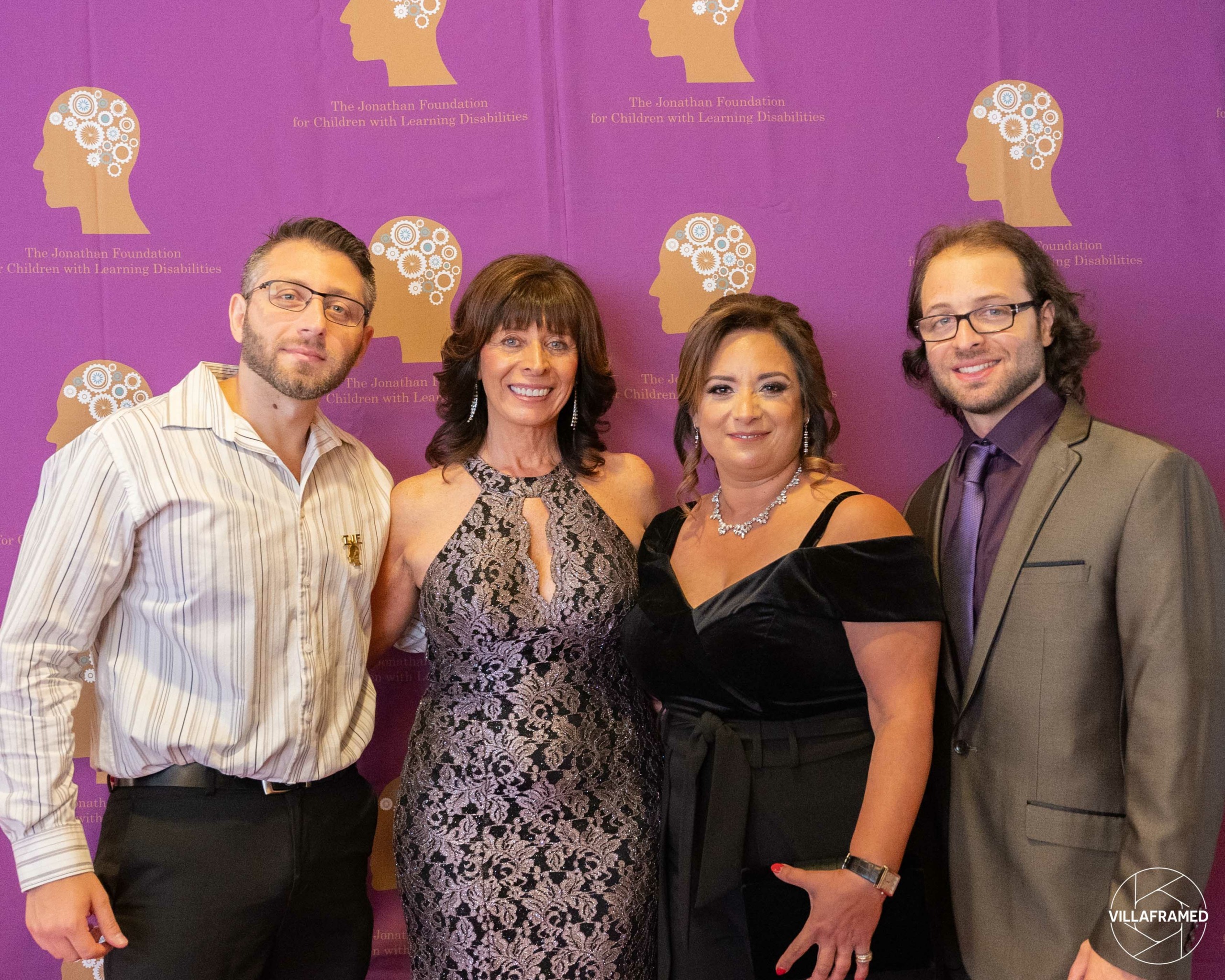
During the early part of our construction business our children were diagnosed with learning disabilities. The school did not want to address all the deficits for our sons, and I ended up initiating a Due Process (DP) against the second largest school district in the nation that took our family to 9th Circuit Federal Court. I was running the construction business and trying to save our children at the same time. That took a toll on the business and our family life. My former husband supported me with the DP, however, it contributed to our failing marriage. In 2001, I formed a nonprofit for special needs The Jonathan Foundation for Children With Learning Disabilities (TJF). https://thejonathanfoundation.org/. My former husband is a strong supporter of TJF.
Life throws us curve balls from no where and learning to navigate various challenges was extremely difficult. We are human, have feelings, needs, wants, and dreams. What is fair for one partner may not seem fair for the other. I am not sure we truly “listened” to each other. Maybe we “heard” what the other said but not “listen”.
When the marriage fell apart we were still partners in the business. We vowed not to hurt each other in the business or personally. We got through some of the most difficult times in our business as we were falling apart in the marriage.
I would not go into business with another significant other only because of my own personal experiences. Today my former husband and I have a tremendous amount of love and respect for each other as we continue to maintain our relationship.
Image Credits
Martin Villa, https://www.instagram.com/martinvilla_rec/ (picture of Omar Jr., Raja, Nicole Shelby (sister), and Jonathan)
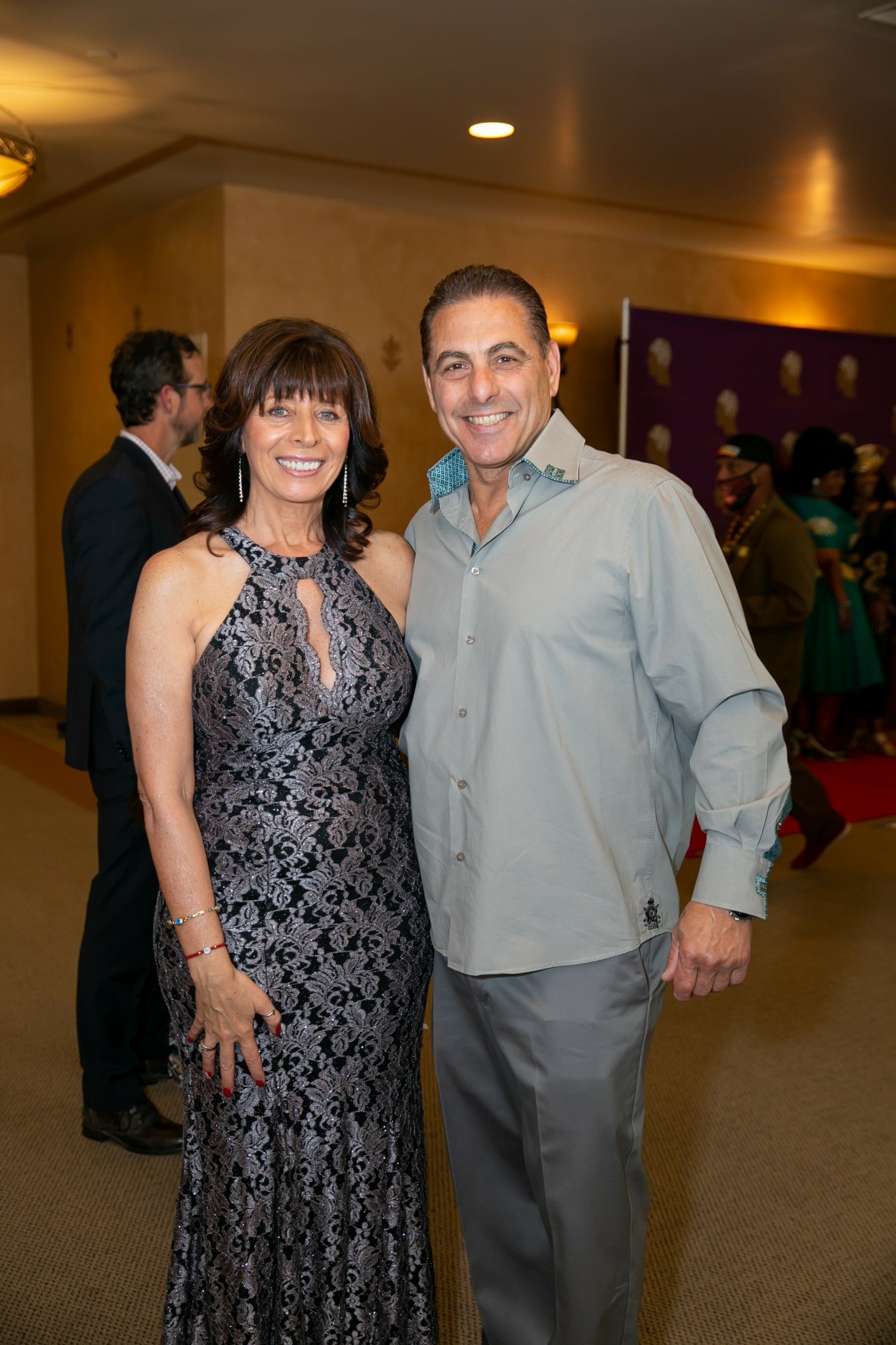
Karim Safar, https://www.barbellphotography.com/about (picture of Raja and Omar Sr.)