We caught up with the brilliant and insightful Kathleen Studebaker a few weeks ago and have shared our conversation below.
Kathleen, thanks for joining us, excited to have you contributing your stories and insights. How did you learn to do what you do? Knowing what you know now, what could you have done to speed up your learning process? What skills do you think were most essential? What obstacles stood in the way of learning more?
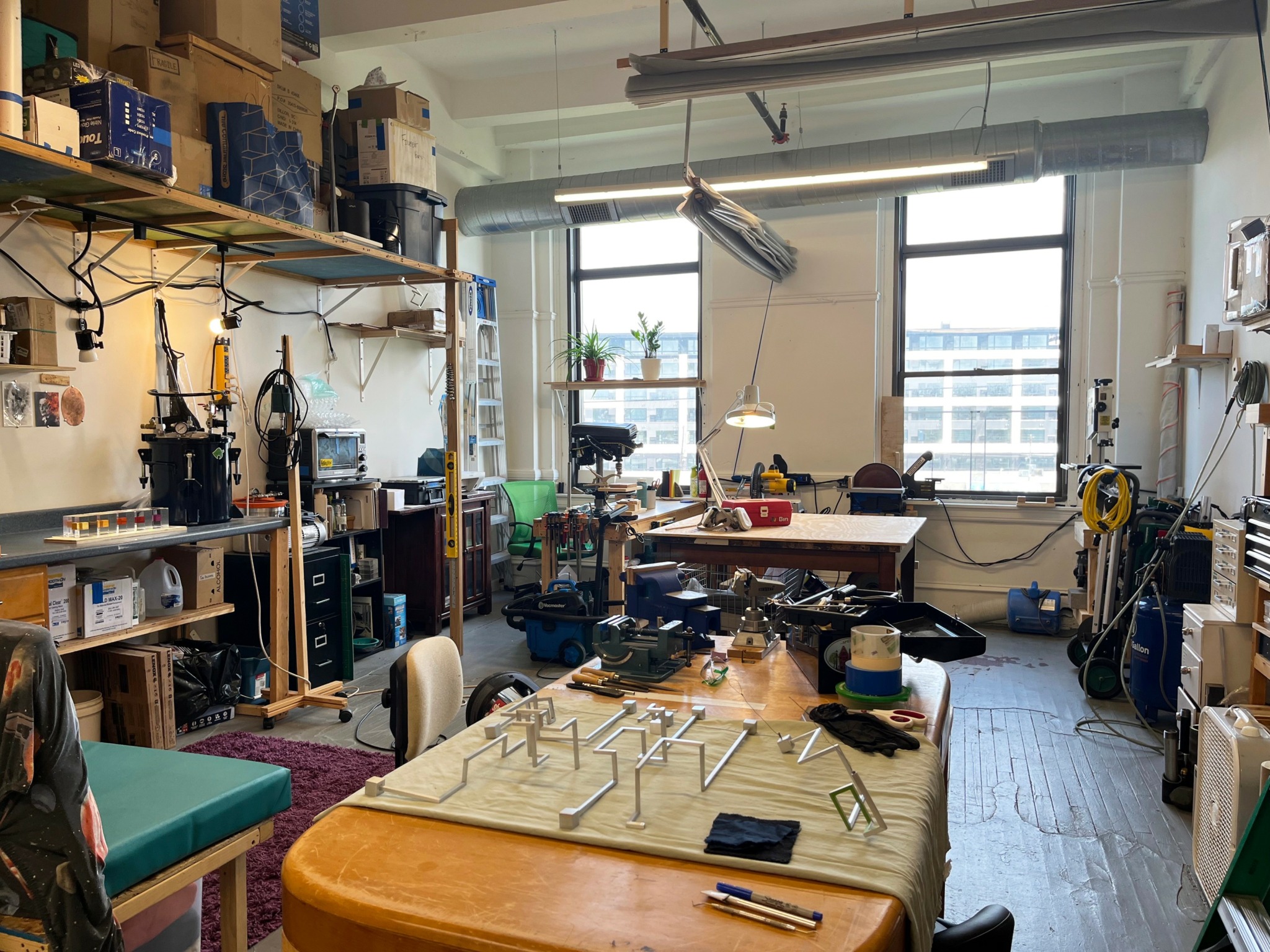
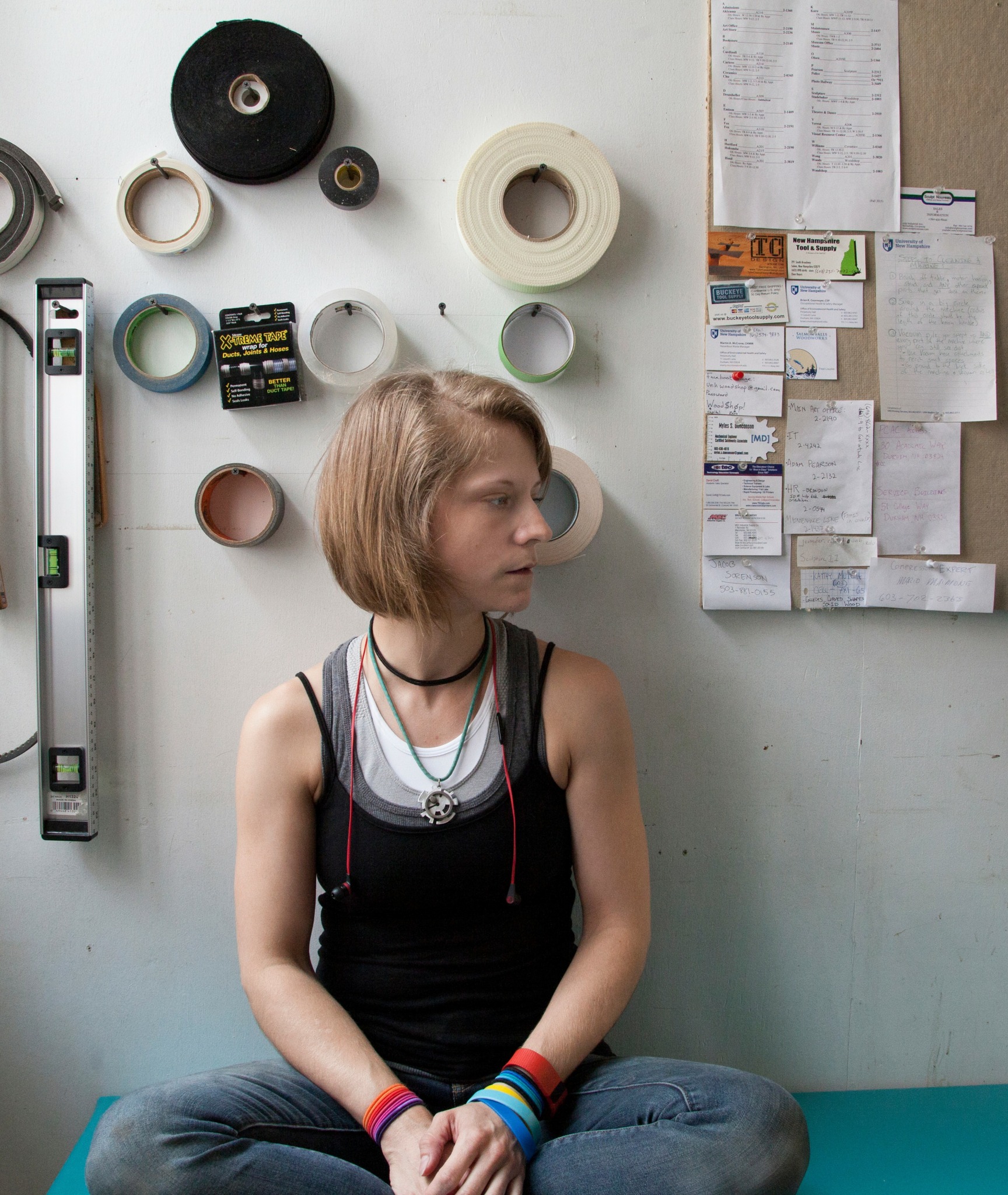
I learned fabrication from many different sources (as I imagine most craftspeople do). As an undergraduate in Memphis (TN) I majored in sculpture and focused mostly on wood. After earning my BFA I spent three years working at a custom glass furniture company (also in Memphis), where I learned how to be very (very) careful with my materials, and some important lessons about precision. For my MFA I moved up to IL, did a lot more wood working and really came to understand how to think in three-dimensions. I also began working with iron and steel, which had a huge impact on my aesthetic. After graduate school I moved to Louisville, KY for a job at a custom trophy company (I know that sounds odd, but I promise it’s a real thing; a whole industry in fact). Every day we had to figure out how to make different and complex objects using primarily nonferrous metals and cast resins. I often disliked the things I was making, but I realize now how incredibly valuable that was. It is specifically because I disliked what I was making, because I was required to make things that I would not have chosen to make on my own, that I learned so much. My most recent “real” job was at The University of New Hampshire, where I ran the wood shop for the art department and did a bit of teaching as well. At UNH I finally learned about traditional wood working: joinery and lamination and the like. I also maintained the equipment and learned a lot about mechanical function. After four years at UNH I decided to take a big risk: I left UNH and moved to Philadelphia to pursue a career as a studio artist.
Looking back on what amounts to almost 20 years of learning to be a fabricator, I’m not sure what I could’ve done to speed up the process, or that I would want to. I’ve spent 2-4 years each at a half-dozen very different kinds of shops in different parts of the country, each providing intensive education on different materials and methods, each incredibly valuable to my skill set. Without question I think the most essential skill is determination: the ability to keep on trying over and over and over despite innumerable failures and set-backs. I know how trite that sounds, but it’s true. Learning to be really good at a physical process is hard (be it sports, or making music, or making objects); it takes time and there are no short-cuts.
Since moving to Philadelphia I’ve become a small-business owner selling my own work. This has been a totally different kind of challenge and one that I find myself much less naturally suited to. For me, the biggest obstacle has been overcoming my mild social anxiety. It is simply not in my nature to approach random people and introduce myself, but it is absolutely necessary. When it comes to exposure (& eventual sales), it’s hard to overstate the importance of networking (both in-person and on social media).
Great, appreciate you sharing that with us. Before we ask you to share more of your insights, can you take a moment to introduce yourself and how you got to where you are today to our readers.
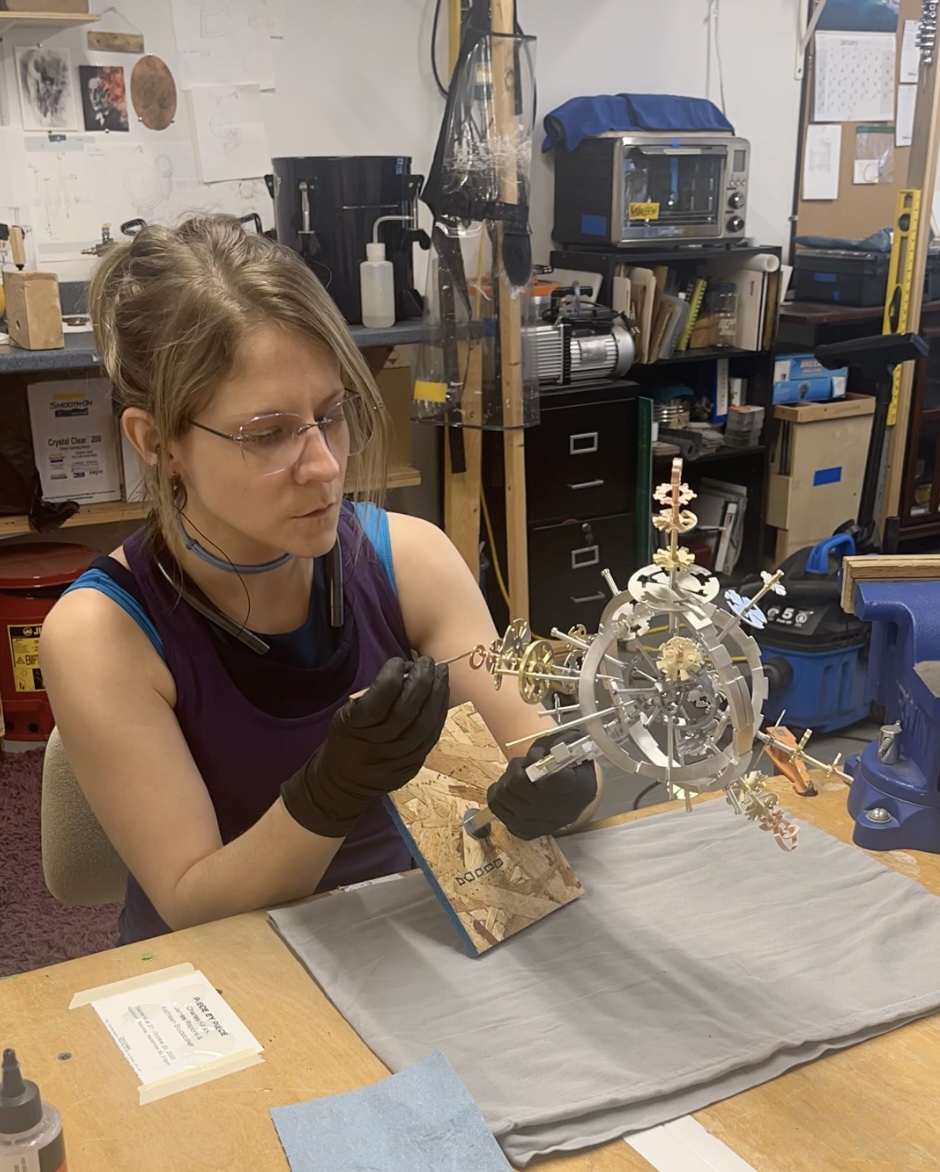
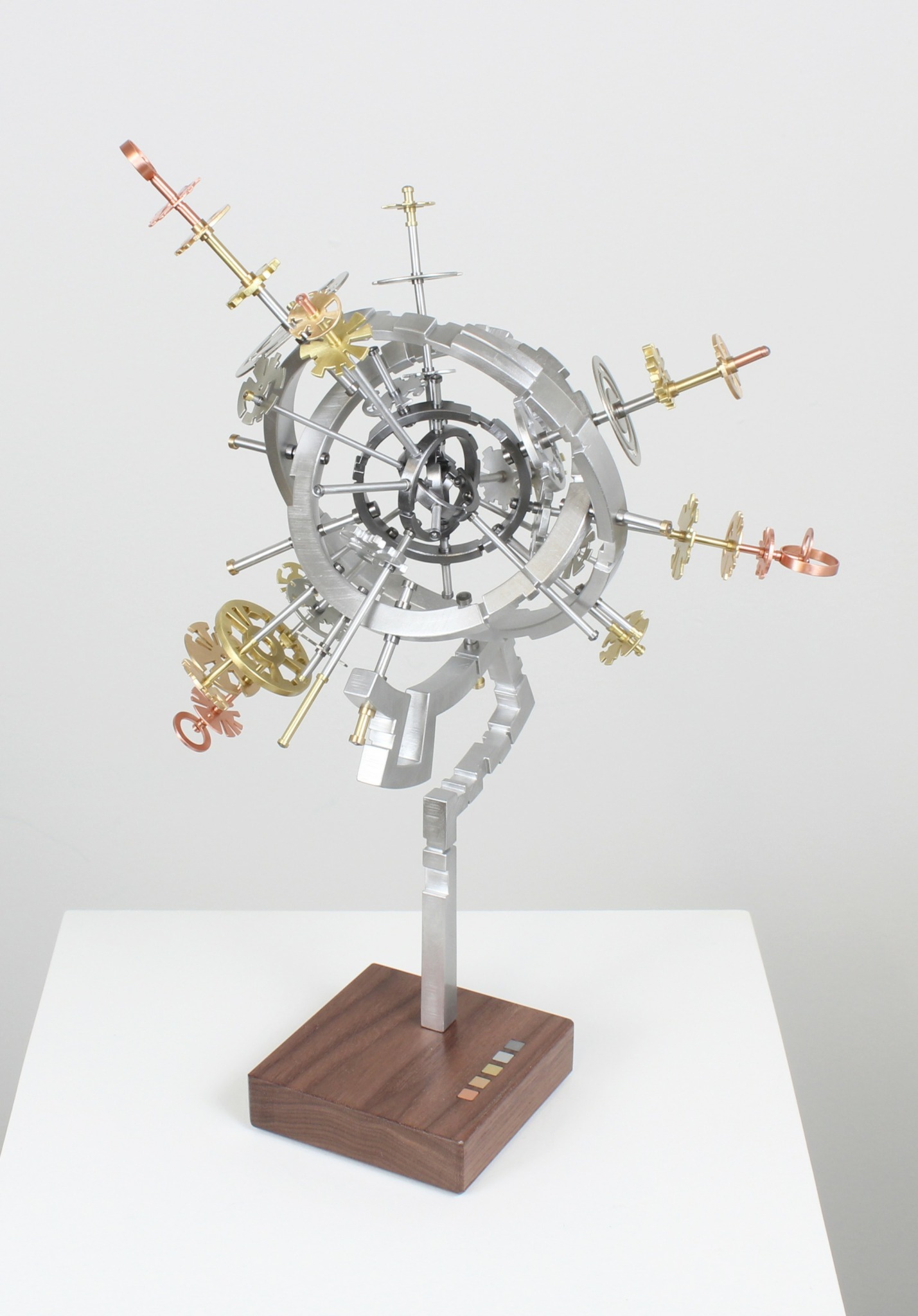
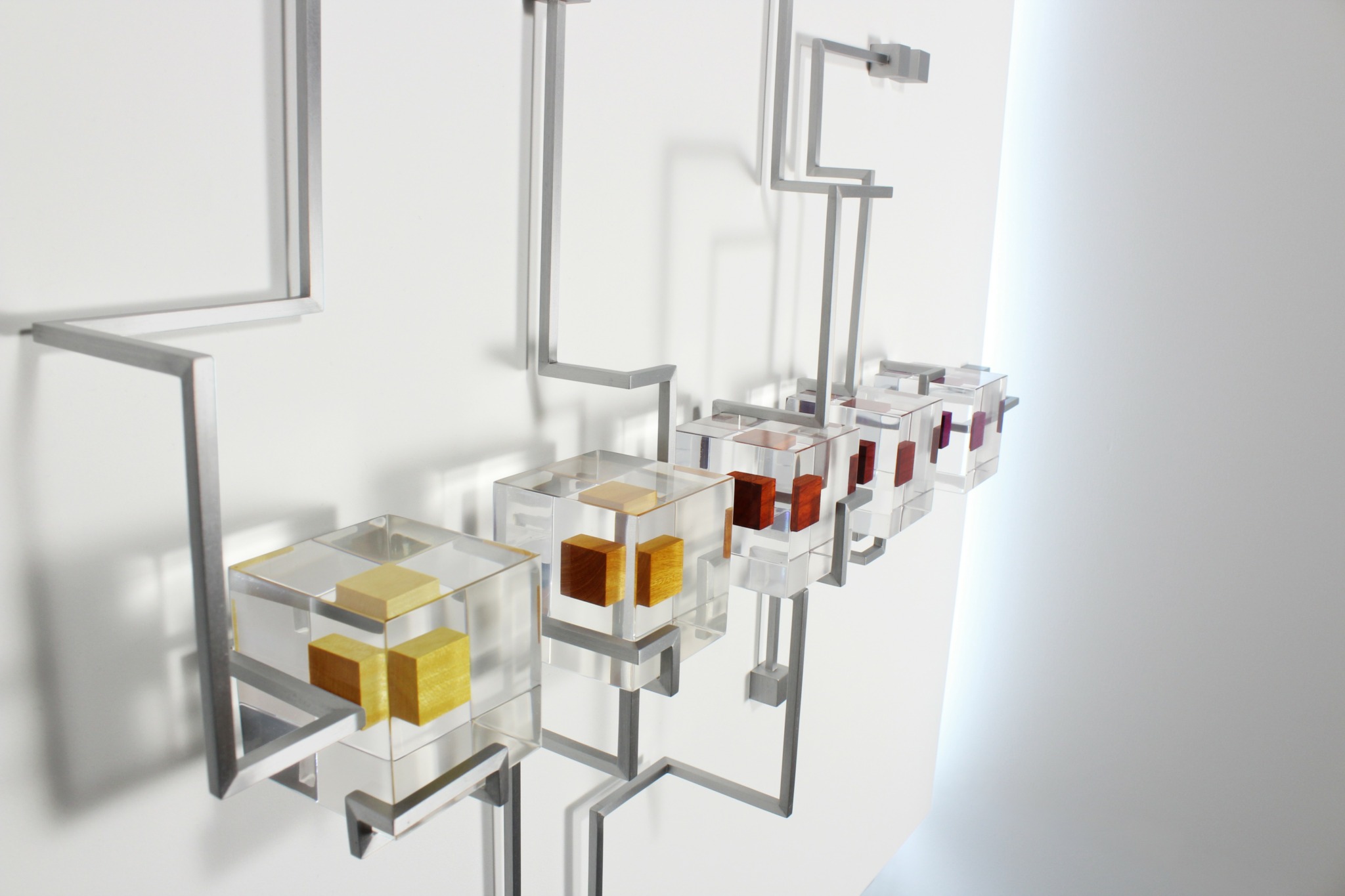
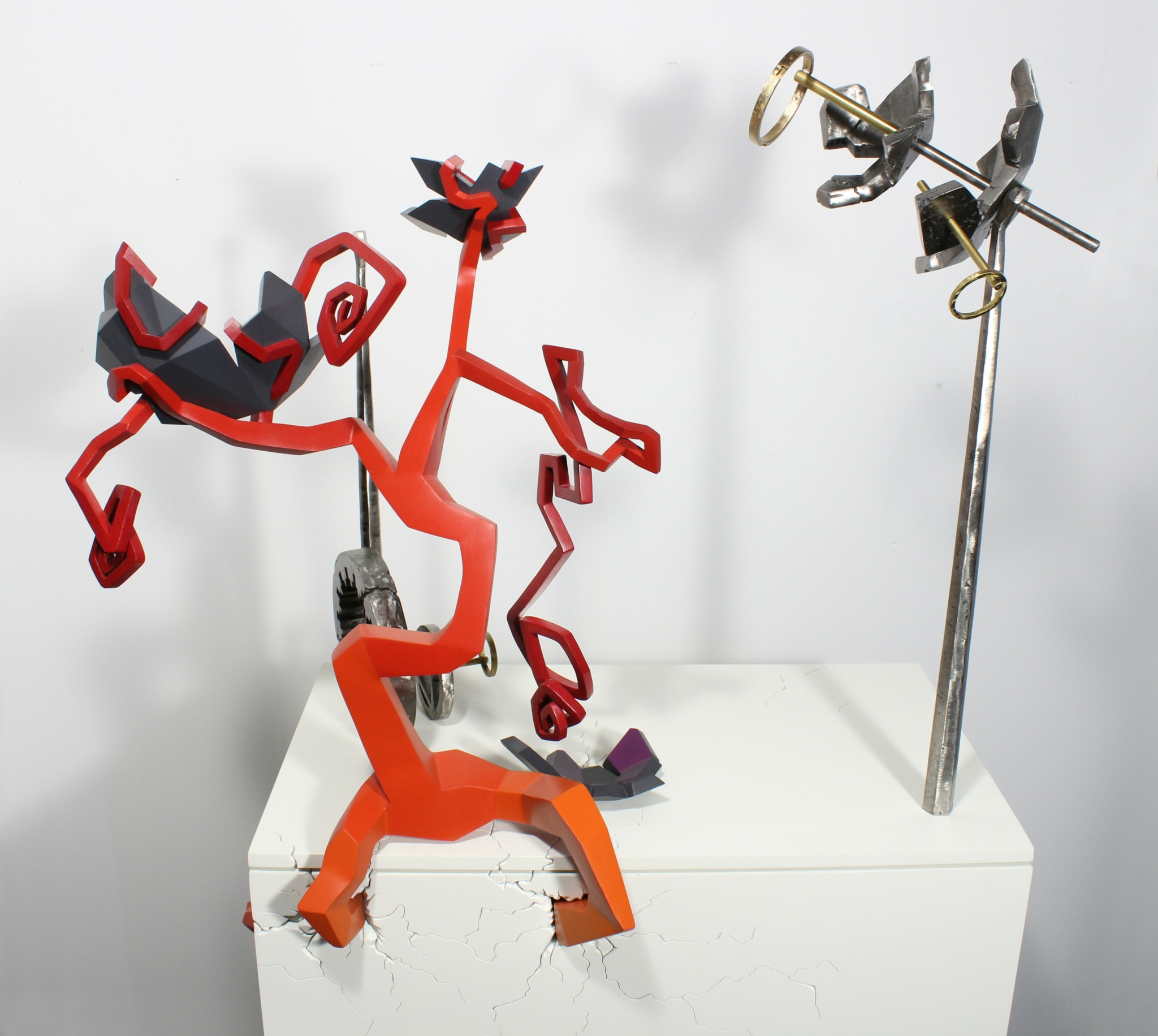
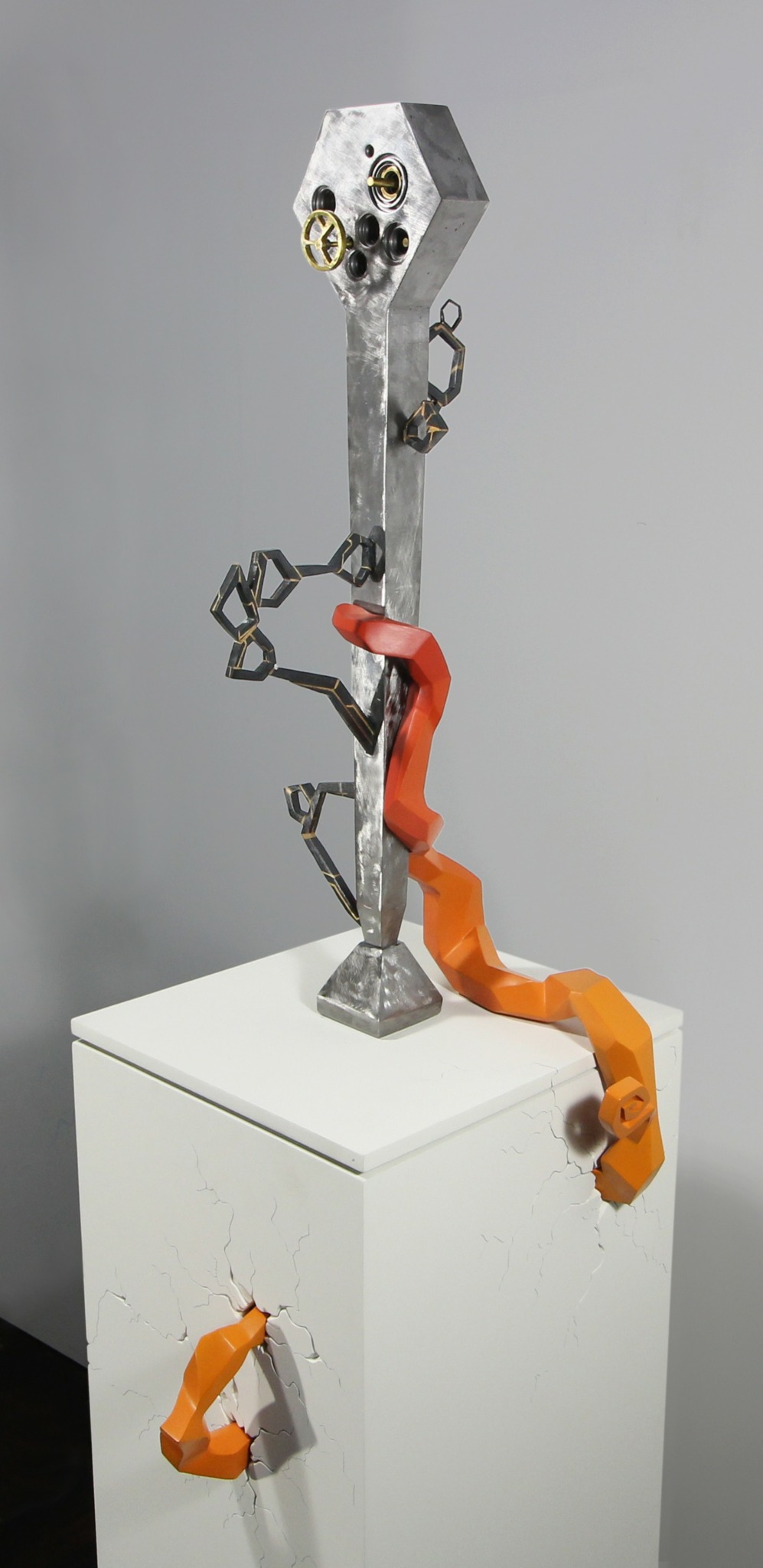
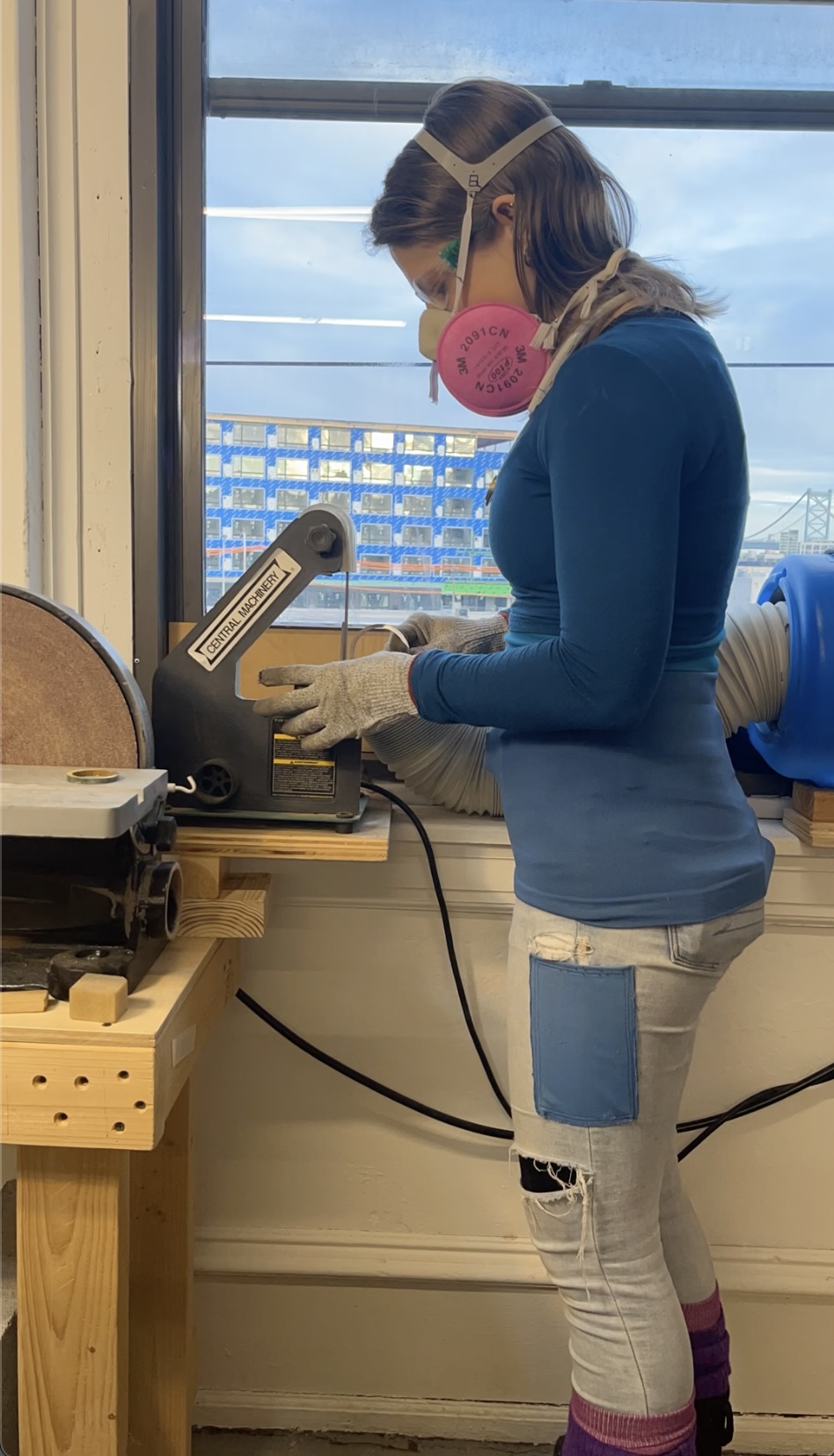
I am a sculptor. One thing I want potential customers to understand (this is a question that comes up regularly) is that I make everything myself. There are no found objects in my work. I make all the gears, (by hand), I carve up the rings, I even make my own nuts sometimes. I make objects designed to please the eye, and hopefully inspire a little speculation as to their meaning. My work always contains a fantasy element and often references technology (machines, circuitry), but the reasons for that are almost as unknown to me as they would be to anyone else. Over the years I’ve had a lot of different aesthetic/thematic foci, but my desire to make machines of one kind or another has currently crowded out all the others. I take a lot of pride in my craftsmanship, my fabrication abilities, and my level of finish. From my point-of-view, my skill as a “maker” is probably the most important thing about my work. Incidentally, this was not encouraged by any of my professors or mentors; artists are supposed to be impulsively manifesting their internal world, not nit-picking every little detail of a surface finish, but oh well. Over time I’ve come to accept that I am just not that kind of artist. I’m a careful planner and a perfectionist. And I love making, I love the process of creating a new and beautiful object with my own hands more than anything. I also love the problems that my work presents for me to solve (they are many and varied), figuring out how to get all the little pieces to come together just-so. My work requires a lot of precision, and the act of being precise brings me a feeling of great contentment and satisfaction. All of this is to say: I really like making stuff. It’s who and what I am. The fact that people out in the world would actually give me money for the things I make is wonderful and amazing, but it’s not why I do this. It is why I am able to do it, if that distinction makes sense, but it’s not why I want to.
Do you think there is something that non-creatives might struggle to understand about your journey as a creative? Maybe you can shed some light?
I’m not sure that there are any people who are “non-creatives”. I think pretty much everyone is creative in different ways (I think it’s an inherent part of the human condition), but I realize that there are many people who don’t see themselves that way, and of course there are a lot of people whose work does not center around their creativity. So, for those people: I think the thing they may not realize is that being an artist, as a job, is a very mixed bag. It is both a great privilege, and an awful burden. To be an artist is to mix one’s life and one’s work together until there is no separating them. It is simultaneously impossible to bring anything less than your “full self” to work, or to leave your work at the office. The idea of work-life balance is right out. My work is as personal and precious and meaningful to me as anything in my life. As a result, I put in an enormous amount of time and effort. Successes are nearly euphoric, but failures (of which there are many) can be heartbreaking. It is entirely possible that I could’ve been just as happy doing a different kind of job, something more “normal”. Maybe something in engineering or the sciences. I often daydream about having taken that path; about leaving my work at the office, working less than 60 hrs a week, making a reasonable amount of money (relative to the work put in), health insurance and retirement plans and all the rest of it. There is a lot to be said for that kind of life. In the end, I wouldn’t change it, even if I could, but it’s good to remember that there are many different ways to find happiness.
What’s a lesson you had to unlearn and what’s the backstory?
One lesson that was more-or-less drilled into me by every art school & professor was the idea that my work should not be driven by practical considerations. I should be making work to express my thoughts & feelings, to manifest my own vision. I always loved this concept and I absorbed it fully as a student; my work was ambitious and aspirational…it was also totally and completely impractical. Much of my school-made work is more-or-less unsellable; it’s too complex and fragile, too large. And now I find myself just carting it along from city to city and studio to studio, and I may well continue to do so indefinitely. The idea of working anti-pragmatically, without regard for salability or wide appeal, is lovely, and it made a lot of sense when I was a student, but it translates less well to the real world. As a small business owner I have to make money, which means I have to be pragmatic and make things that people will actually buy. Finding that balance, where I can produce work that feels authentic and true to myself, but is also practical, is an ongoing project.
Contact Info:
- Website: https://www.KathleenStudebaker.com
- Instagram: @KathleenStudebaker_Art < https://www.instagram.com/kathleenstudebaker_art/ >
- Facebook: Kathleen Studebaker < https://www.facebook.com/profile.php?id=100083601815665 >
- Youtube: https://www.youtube.com/@ktstudebaker