



We recently connected with Suzi Hunn and have shared our conversation below.
Suzi, looking forward to hearing all of your stories today. Looking back, what’s an important lesson you learned at a prior job?
“You’re not corporate enough.” The words were spoken in a hushed tone, as if to shield me from something. I was hurt, but this wasn’t the time for that. The shame spiral would come in the following days; for now, my focus was on my farmer’s omelet—and more importantly, saving my job.
I’d just completed my first assignment as a freelancer after two decades of full-time employment. I was invited to lunch by a project coordinator at the instructional design agency that contracted me to develop a corporate training course. I’d spent three months writing modules for their sales team, handed in the final lesson, and then received the lunch invitation. “You’re a skilled writer, but we feel you’re not corporate enough for this client,” she said.
I was caught off guard. In an attempt to make sense of it, I scanned my brain: I thought about the one-on-ones I’d had with the client’s representative, where we brainstormed ways to onboard the sales staff. I flashed back to the hours spent in front of my computer, giving up lunch breaks and weekends. But I couldn’t think of anything that explained her comment. So I asked for an example.
Apparently, a metaphor I used about planting seeds didn’t sit right with the company, even though the idea came from the client rep himself. “You should have known what to filter out,” she said.
Then there was my “overuse” of the word “authentic.” The team was concerned about what might happen if their sales training mentioned that word too often. Our lunch ended on friendly terms, but the agency never hired me again.
Looking back, that experience was a gift. I began to realize that companies aren’t the only ones who get to choose who they work with; the reverse is also true. As a business owner, you’ll receive your share of nos. When that happens, ask yourself whether the relationship was misaligned in the first place. If you’re asked to put your values on hold, you’re not standing in your power or serving your true mission.
Authenticity isn’t a bad word. Not only that, but it’s a top value I stand for, now that I’m a business owner and running my own show. Genuine connection, trustworthy dialogue, and empathetic sales practices drive my learning-strategy consultancy, Teach Your Thing. One of my proudest moments as a business owner came a few years later, when a new client hired me to shape his program into a training series for sales teams and coaches. Empathy, listening, and trust weren’t afterthoughts; they were fundamental to his program. After a few months, he became my first retainer client.
As we inked the deal, I reflected on how far I’d come. A few years earlier, I’d been let go for bringing authenticity into sales training. Now, I’d booked my biggest job yet for doing that exact thing. My client’s conscious sales training places authenticity at its foundation. When it comes to shaping your unique mission, trust that your people are out there. If you’re spending energy on projects that dilute your values, you’ll struggle to gain momentum.
Stand strong in what you believe in. This may mean you’ll have to turn down work that asks you to compromise, which feels risky. I’d never ask you to take a risk that puts you in a state of panic, but knowing what you stand for is a calculated risk, one that allows you time to consider the pros and cons before taking it on. As my business has progressed, I’ve gotten better at attracting the people who are right for me. Working with my new client paid off in multiple ways: It gave me energy, rather than draining it. Our work together turned out to be profitable for him and me, and it’s led to referrals for both of us.
As an entrepreneur and creative, yes, you can ditch traditional norms. Make your business work for what matters to you, and your people will find you.

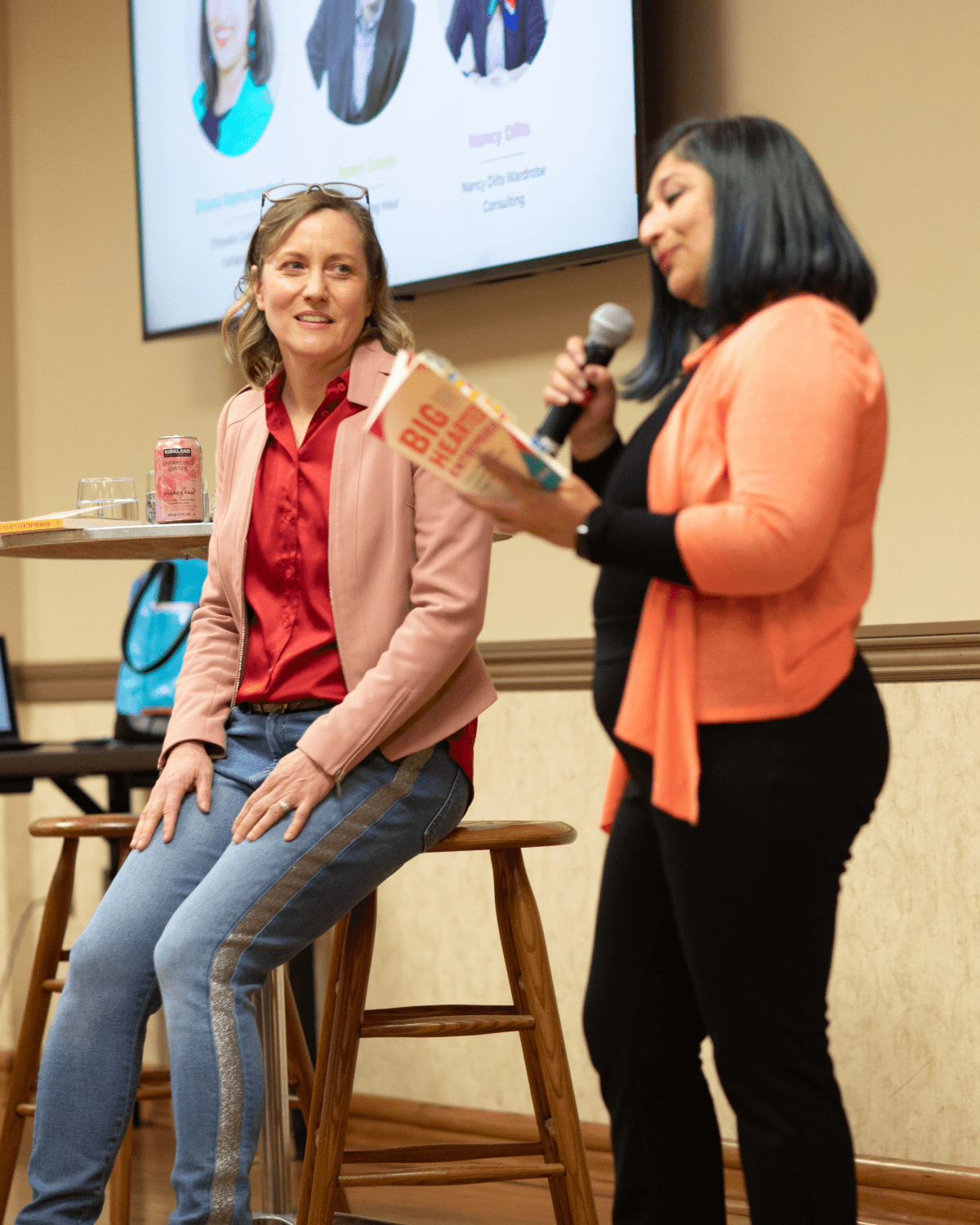
Suzi, love having you share your insights with us. Before we ask you more questions, maybe you can take a moment to introduce yourself to our readers who might have missed our earlier conversations?
HOW I GOT INTO THIS
I founded Teach Your Thing in 2017 to help big-hearted leaders and small businesses generate income and increase their impact by teaching what they know. I help subject-matter experts in a variety of fields distill their knowledge into programs like workshops, courses, and talks.
I got into this work when I admitted to myself that I’d hit a glass ceiling in a career I’d loved for 15 years. I’d long adored my work as a curriculum developer and trainer at a major museum, but left to start my own business as way way to reclaim ownership of my time and talent. Since then, I’ve discovered entrepreneurship can be a rewarding way to make a unique difference, while building a life of connection and fulfillment.
Just today, I had a moment of alignment in a networking meeting with a fellow business owner, who said, “I’m content. I didn’t even realize it until my brother-in-law, who’s chronically not content in his work, pointed it out.” We both paused to celebrate the fact that we’ve built careers where contentedness has become our norm. Is entrepreneurship easy or risk free? Certainly not, but neither is working for someone else, especially in today’s uncertain economy.
Before starting a business, I was terrified I’d never have clients. To my surprise, finding clients hasn’t been my greatest challenge: As a lifelong educator, I was pleased to discover my skills translated relatively quickly to branding, networking, and marketing. That said, some things I never anticipated would be difficult have taken years to implement, like finding the right business model for my goals.
I spent at least six years freelancer, trading dollars for hours and adapting my services to the needs of every client. While this model did bring profit, I wouldn’t call it sustainable–at least not how I did it: Too much customizing for too little money. Now, seven years in, I’m finally doing for myself what I do for clients: Turning my knowledge into a streamlined package that can be replicated and ultimately, scaled.
THINGS I WANT MY CLIENTS TO KNOW ABOUT MY WORK
I call my clients loving disrupters. They are leaders who love what they do so much that they’ve found ways to make their industry better, bring change to tired systems, and make life better for people in their community. I want them to know that instructional design is one of the most powerful tools they can leverage to reach more people, build a new income stream, or make a bigger impact.
There are many ways our society downplays education, but teaching what we know is crucial. I sometimes hear debates about whether “online courses are dead,” for example. I see where folks are coming from when they say this, but the real culprit is thoughtlessness. If there was a time when anyone could throw together a crappy class, bombard people with emails they don’t want, then watch the money roll in–that time is over.
Instead, I’ve seen it time and time again: Teaching what we know is a valuable way to leverage our hard-won knowledge. But knowing our thing isn’t the same as teaching it. It takes time to arrange your content thoughtfully, build the right container for it, and design for behavior change. If you’ve been yearning to share what you know with more people, don’t be hard on yourself for not getting around to it yet. It’s easy to let other things get in the way, but somebody out there needs what you know.
WHAT I’M MOST PROUD OF
I’m proud of the fact that I’ve built a life where I’m surrounded by people who inspire me. I nerd out about my clients all the time. They are good people doing amazing things in the world!

We’d love to hear a story of resilience from your journey.
I spent 15 years as an educator at a major nonprofit museum. There I cultivated high-level skills and was surrounded by curious, intelligent achievers. For us, doing things like speaking a national conferences was no big deal: It was part of our job as public servants, and we worked at a well-respected institution that’s a known leader in the field. But one thing we knew little about was personal finance.
Why do I point this out? A few years into my post-employee life as a business owner, I got a call from a special agent with the Minneapolis FBI. (Yes, it was as shocking as it sounds, and yes, it came completely out of the blue.) “I’m working on an investigation,” she said, “and we believe you may be a victim in the case.”
Fast forward to now: My former financial advisor is in prison, serving out a 7-year sentence for defrauding me and at least 20 of his clients out of our nest eggs. In my case, he’d rolled my retirement savings into an account that he controlled, then spent it. This was the entirety of the retirement funds I’d spent more than 20 years earning, largely through my years at the museum.
I sat in a wood-paneled courtroom and watched a federal judge hand him his sentence. I delivered a victim impact statement, an act that still makes me nervous to think about, but that I felt was necessary in a trauma that had been deeply disempowering. There, at least, I had an opportunity to show I had a voice and use it.
I later received a small percentage of my funds back from assets the government seized from this individual and distributed among his victims. It’s likely that’s all I’ll ever recoup.
As you can imagine, this crime devastated me in many ways. (Did you know there are therapy clinics entirely devoted to survivors of crime? I know this now, because I was a client of one such clinic in Minneapolis, for more than a year.)
That said, the experience also led to one of my greatest journeys of resilience. Among other things, the experience catalyzed me to write a book. If you are a survivor of any kind of crime or abuse, I encourage you to find and use your voice, in whatever way is healing to you.
I wrote my manuscript while in trauma therapy related to the theft. My therapist’s goal for me was what she calls “integration,” meaning I choose how to integrate this event into my life and story. (As I learned, it’s common for survivors to bury their experience or allow it to dominate in unwanted ways.)
As I did this deep emotional work, the manuscript went through its own evolution. Even now, it’s amazing to me how the book turned out to be a physical manifestation of the therapeutic work. In the end, my book went from starting with the story of the theft–literally, its introduction began with the FBI call–to being mentioned only minimally, about halfway through the book.
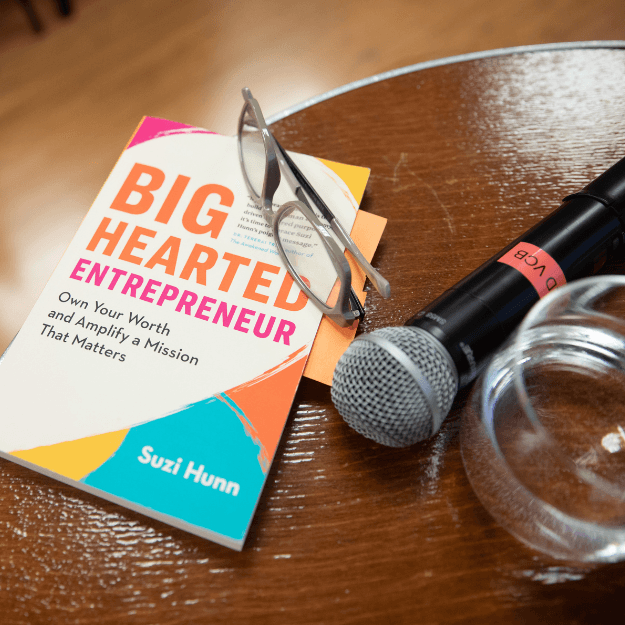
What I discovered is this: My story is much bigger than being a survivor of this crime. I have, in fact, a lot more to say–about entrepreneurship, building community, and teaching what you know. Yes, the disempowerment of the theft sparked me to *start* writing. But as it turned out, the book inside me was the culmination of more than 20 years of career and personal growth: Big-Hearted Entrepreneur: Own Your Worth and Amplify a Mission that Matters.
We often hear about learning lessons – but just as important is unlearning lessons. Have you ever had to unlearn a lesson?
Over and over again, I’ve had to unlearn the notion that as workers, we have to choose mission OR money. As a woman, and educator, and a nonprofit employee, this idea was deeply engrained in me: Because I cared about the work I do, I shouldn’t care about or want money, because I got to work from the heart! I thought wealth meant greed, and I didn’t want to be associated with it. The financial services industry reinforced the idea that my income as a museum educator wasn’t worth their time.
I now know that big-hearted leaders have as much right to wealth in all its forms–time, talent, energy, wellness, and yes, money–as any finance bro or traditional investor in a suit. I have devoted my career to using teaching and learning as a tool to help purpose-driven subject-matter experts own their worth and amplify missions that matter to them.
Contact Info:
- Website: https://teachyourthing.com/
- Instagram: https://www.instagram.com/teachyourthing/
- Linkedin: https://www.linkedin.com/in/suzihunn/
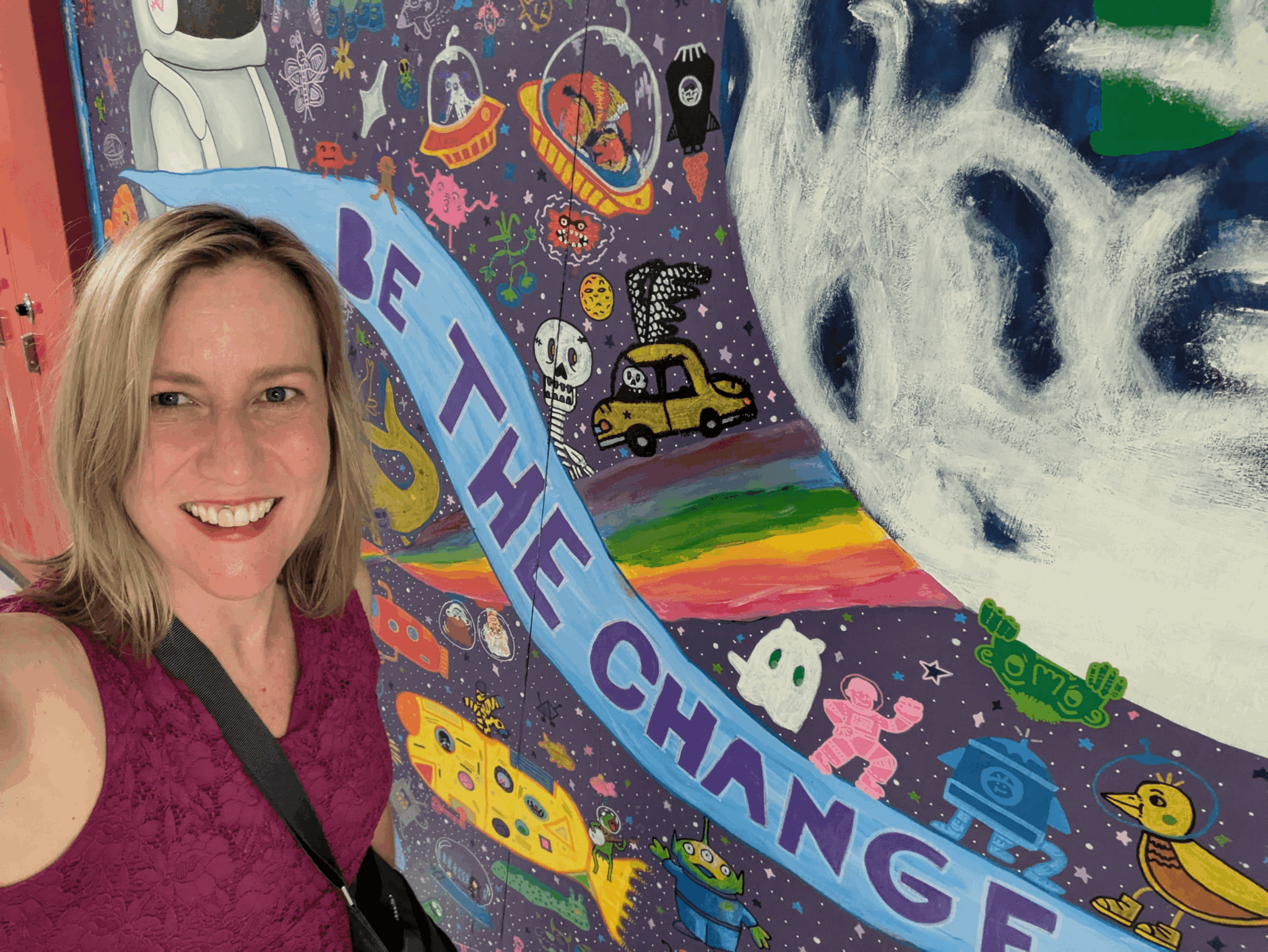
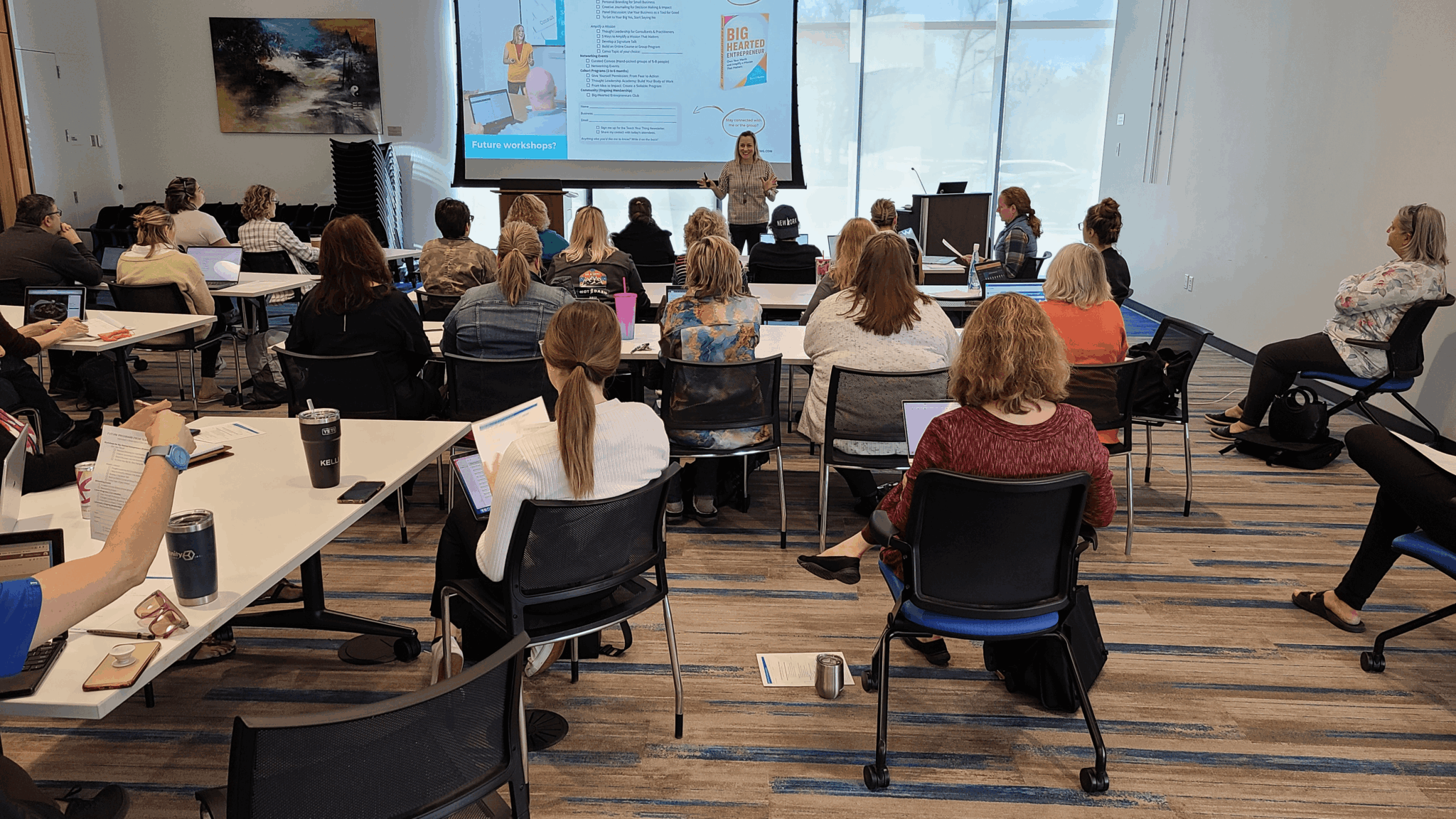
Image Credits
Photo by Shannon Svensrud of Storied Life Photos (Photos 3 and 5)
Photo by Angela Divine Knox (Photos 1, 2, and 4)