We caught up with the brilliant and insightful Emma Kanne a few weeks ago and have shared our conversation below.
Alright, Emma thanks for taking the time to share your stories and insights with us today. What did your parents do right and how has that impacted you in your life and career?
My dad has never done one of the cruelest things a parent can do: have aspirations for their child’s mind. The only expectation he has of me is to answer the phone. If I don’t, I receive an endearing voicemail, albeit with a tinge of irritation—always the same. It starts off passive, shows his lighthearted aggravation, then ends with him reconciling his annoyance and telling me he loves me. “Hey Emma, it’s your loving father, Dad. I was just calling to say hi, but you never answer the phone. Anyway, give me a call back. Love you! Dad.”
In his company, I know not to expect any talk of making more money or finding stability. Instead, he shares stories that reveal the vulnerability of his own life, his fear of time passed and passing. Phrases that begin with “You should…” are not in his vocabulary. His care for me has been shown in giving me the freedom and support to find my own ending to those two words. With that, I have confronted more questions than answers. When I called him five years ago to tell him I was leaving my studies of Business and Finance at Fordham University to move to Paris and pursue Art, it was no surprise that he said, “That’s great!”
My dad is 76 years old, and in his retirement, he has a dating life more interesting than mine, takes guitar lessons, reads Patti Smith, still makes efforts to learn how to use Apple Music, and eats too many Trader Joe’s chocolate-covered almonds.
The man knows nothing about contemporary art, and very little about my own practice. We don’t engage in lengthy conversation about the philosophy I consumed that day, or why I chose to abandon my painting practice and begin a new practice in conceptual art. Regardless, when I send him pictures of my work, I know they’ll be proudly shown to his friends or even to a stranger in passing. I thank him for the freedom he has given me to contemplate nothing other than what to do with my days on my own terms. And, of course, to answer the phone.
As always, we appreciate you sharing your insights and we’ve got a few more questions for you, but before we get to all of that can you take a minute to introduce yourself and give our readers some of your back background and context?
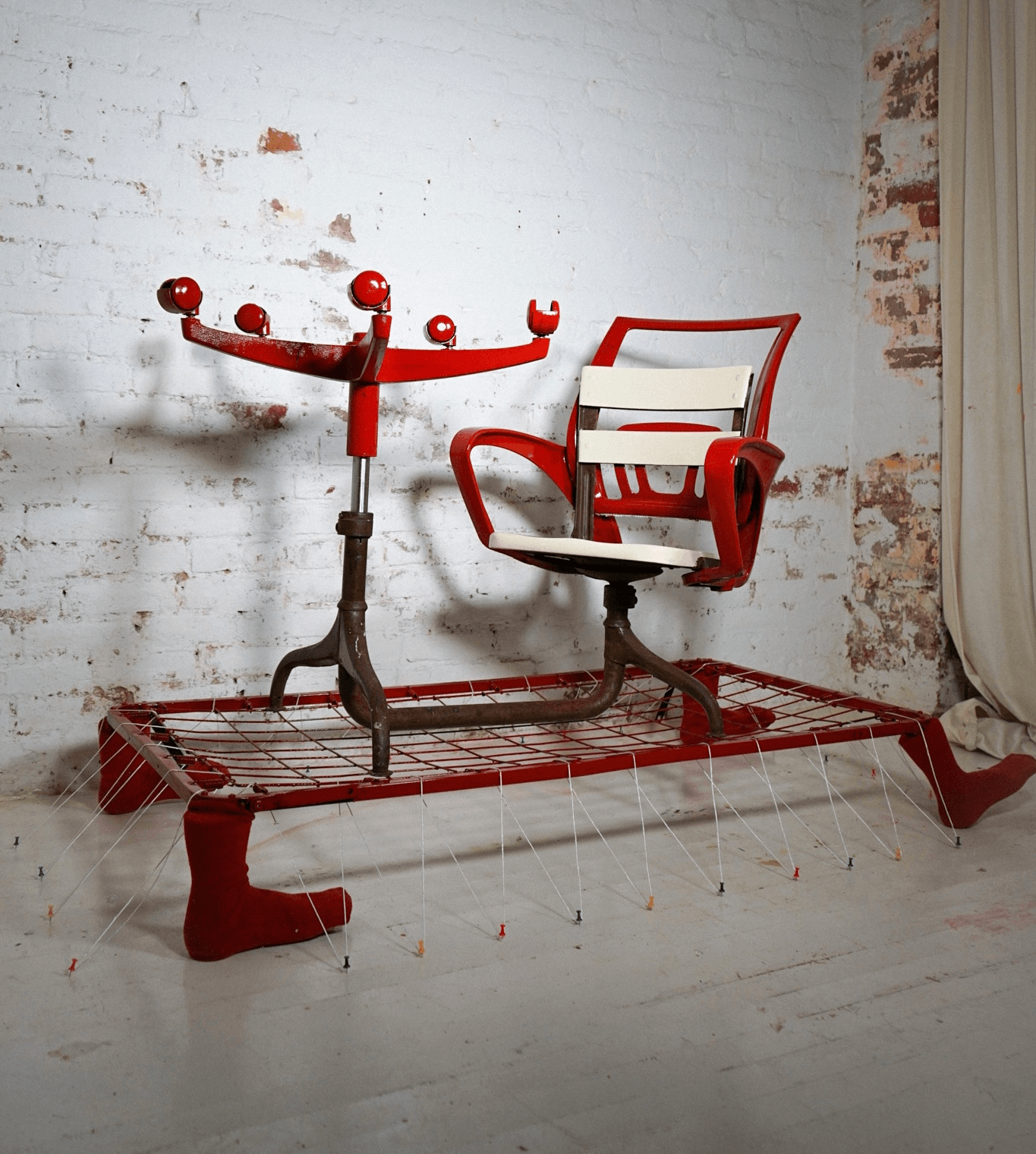
While examining my freedoms, I have inched closer to an examination of my own un-freedoms. Freedom is a word that glued itself to my repetitive thinking while reading philosophy, always feeling betrayed by my expectations of solutions that would never adequately come. If we are not free because we do not control the external arrangements that dominate our lives, solace can be found in determining my own rules of play in the studio and gamifying commodities as a way to cope with the experience of being bound to the absurd. I create installations, kinetic sculptures, and public interruptions in order to untie knots in my thinking and not be so overwhelmed by the terms should and can.
The notion of placement and fitting within something, reconstructing and resizing oneself to fit a container instead of creating a new one—underpins my work. My research delves into the confusion of modernity, the various modes of domination over man and nature, the commodification of the previously non-commodified, and the significant social functions of religious and capitalist institutions that shape our concept of reality.
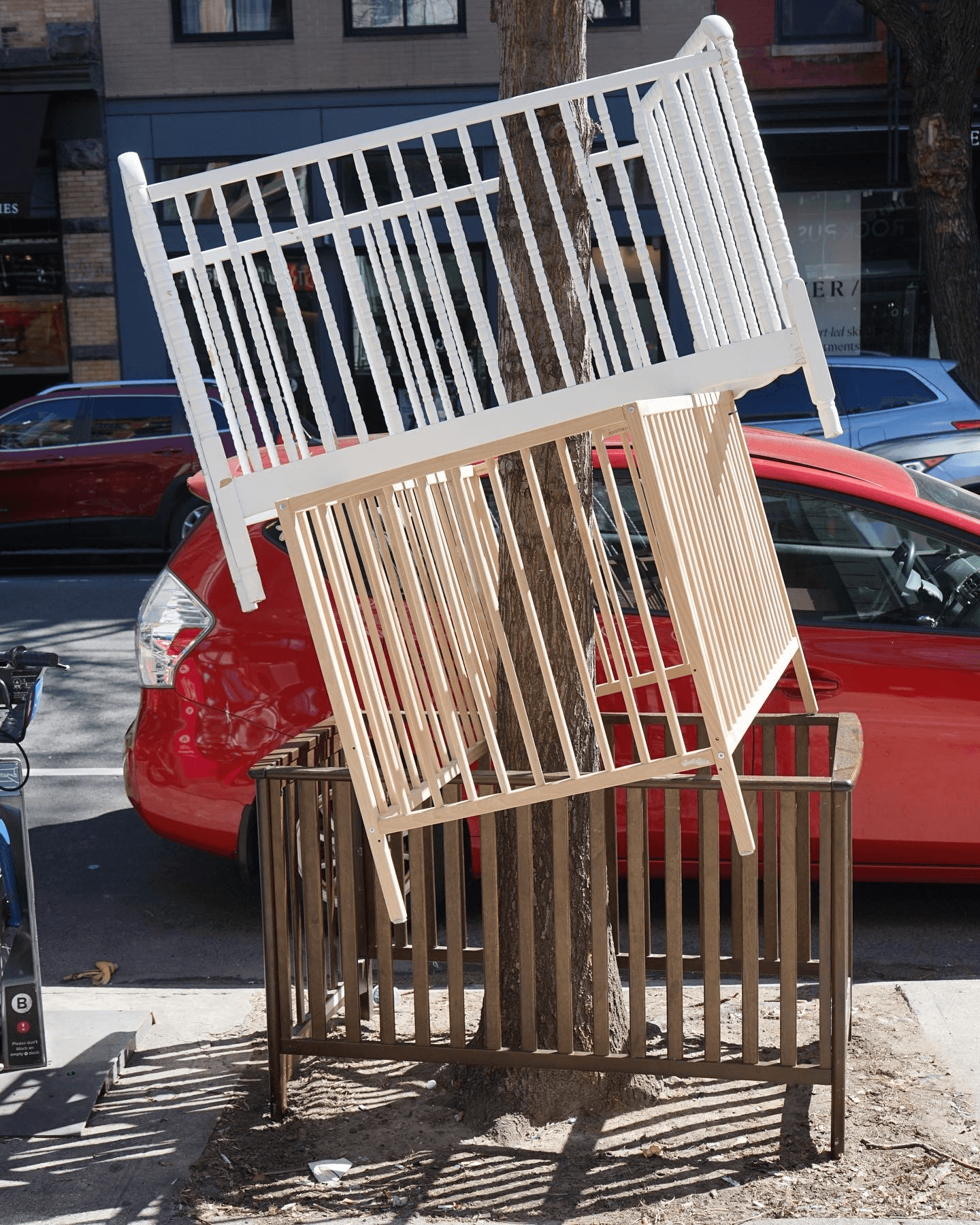
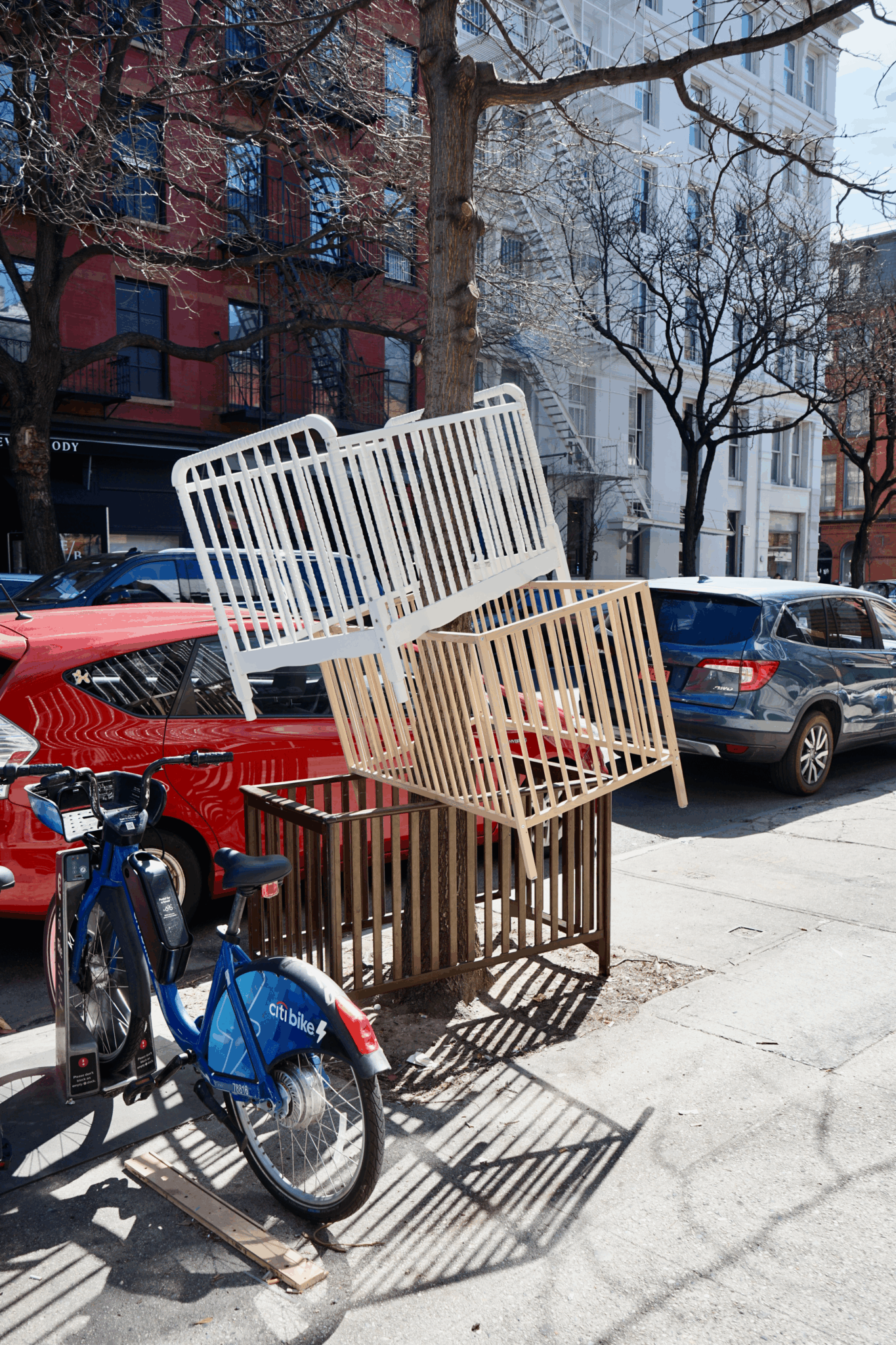
Projecting the subjective human onto nature, trees in New York are typically enclosed with a protective iron fence. Where life remains, does there have to be parameters for dictating growth? In the installation, I JUST WANT TO CRAWL BACK INTO BED, the iron fence has been replaced with three baby cribs, emphasizing the similarities between man and natures isolated uniform life and challenging the possibility of creating new containers for one’s existence.
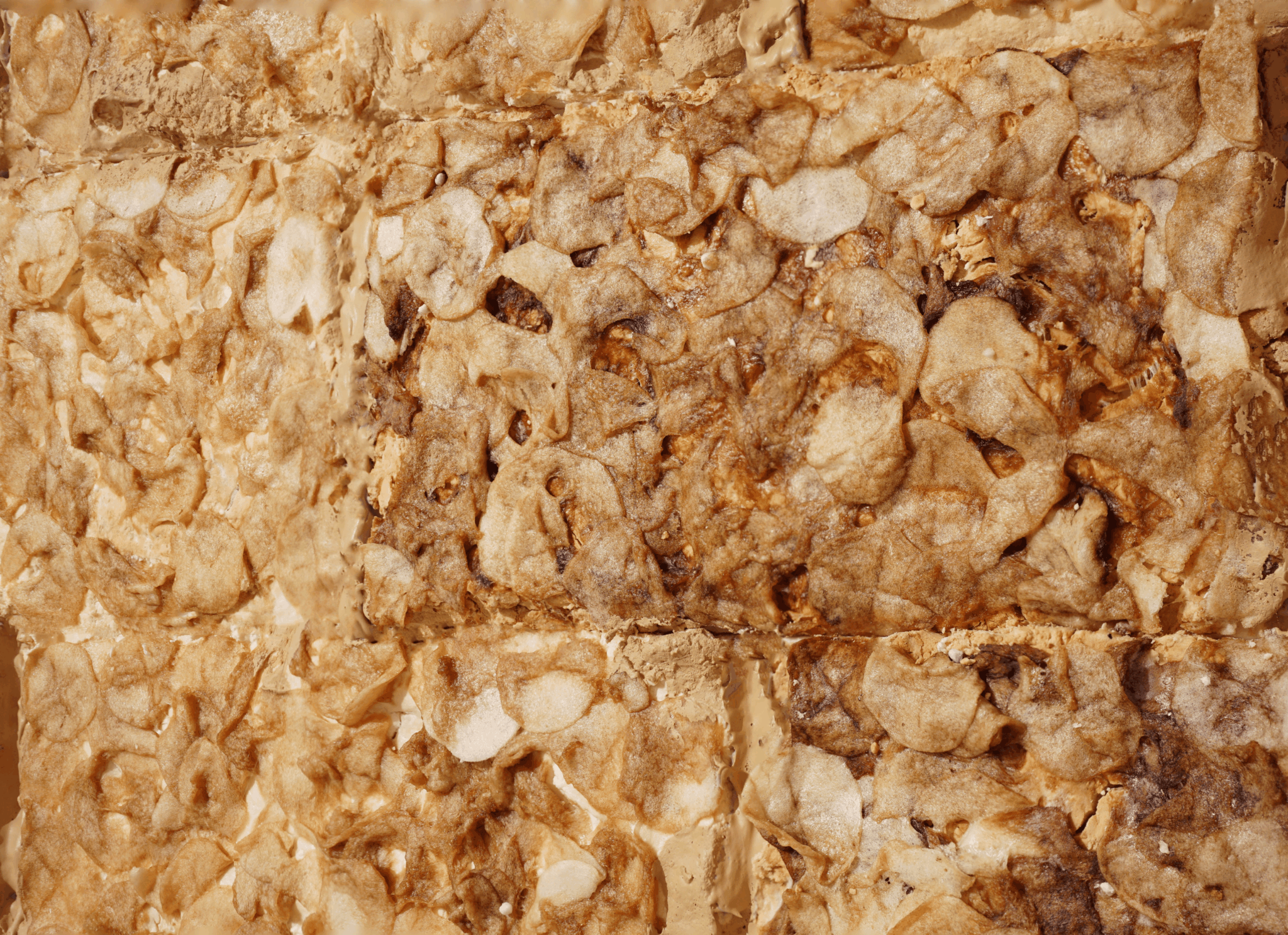
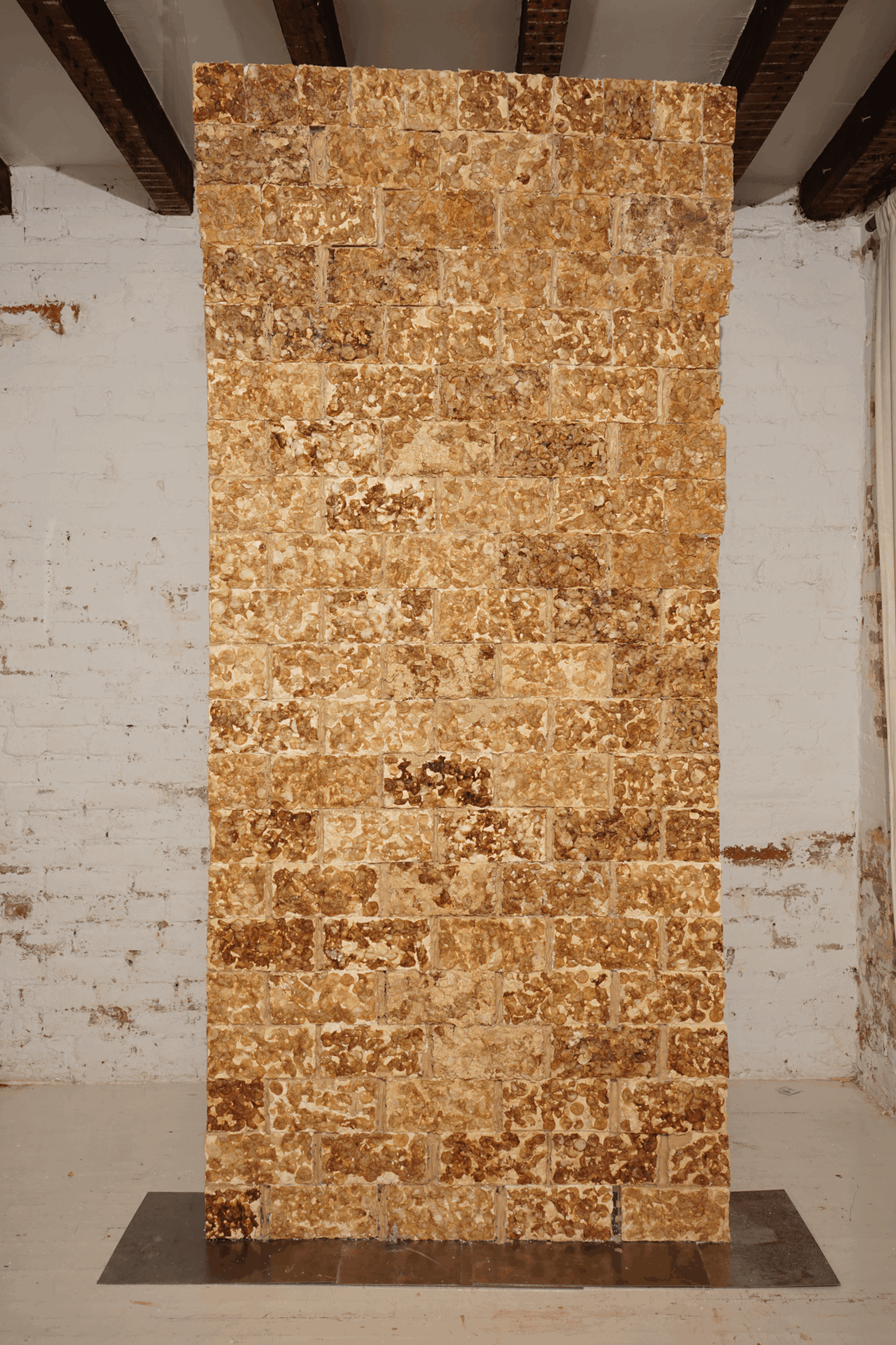
In Final Act of Regurgitation, a wall is erected out of eucharist wafers: the body of Christ materialized as a thin circular piece of bread within the Catholic Church. I purchased the unrealized body of Christ on Amazon and then, chewed, and mushed over 10,000 individual eucharist wafers that were then hardened into bricks. Each brick is a reckoning with “the body” I was indoctrinated into consuming as a child. Expelling the years of sanctity with an action of spitting out what I once swallowed, the building of the wall takes on an act of rebuilding, presented as a threshold. Questioning the role of rituals in myth making, and the rights involved with participating in them, I seek to understand how religion informs reality and investigate how a child’s agency is involved. My research investigates how traditions such as the belief of eating the flesh and drinking the blood of Christ continues through normalcy and repetition.
Through these highlighted works, I continuously creep closer to answers contextualizing freedom, while concurrently discovering that some questions are left to linger in the quiet corners of my studio. Not abandoned, instead, they fuel the continuous search.
How can we best help foster a strong, supportive environment for artists and creatives?
Ask them questions, meaningfully engage in their practice, and extend care. Sometimes it can be a lifeline to the continuation of work.
Are there any books, videos, essays or other resources that have significantly impacted your management and entrepreneurial thinking and philosophy?
“If Books Could Kill” A podcast hosted by Michael Hobbes and Peter Shamshiri, where they criticize bestselling nonfiction books such as Freakonomics, Atomic Habits, The Secret, and Outliers. If you want to laugh at our collective gullibility and the ways we attempt to self-optimize with the assistance of “airport-books”, I highly recommend.
Psychopolitics: Neoliberalism and New Technologies of Power by Byung Chul-Han
“A passionate critique of neoliberalism, trenchantly describing a regime of technological domination that, in contrast to Foucault’s biopower, has discovered the productive force of the psyche.”
Radiohead’s “Just” music video.
The “Very Short Introduction” book series. My favorites are “Critical Theory” and “The Psychology of Music”
Contact Info:
- Website: https://emmakanne.art
- Instagram: https://www.instagram.com/emmakanne/