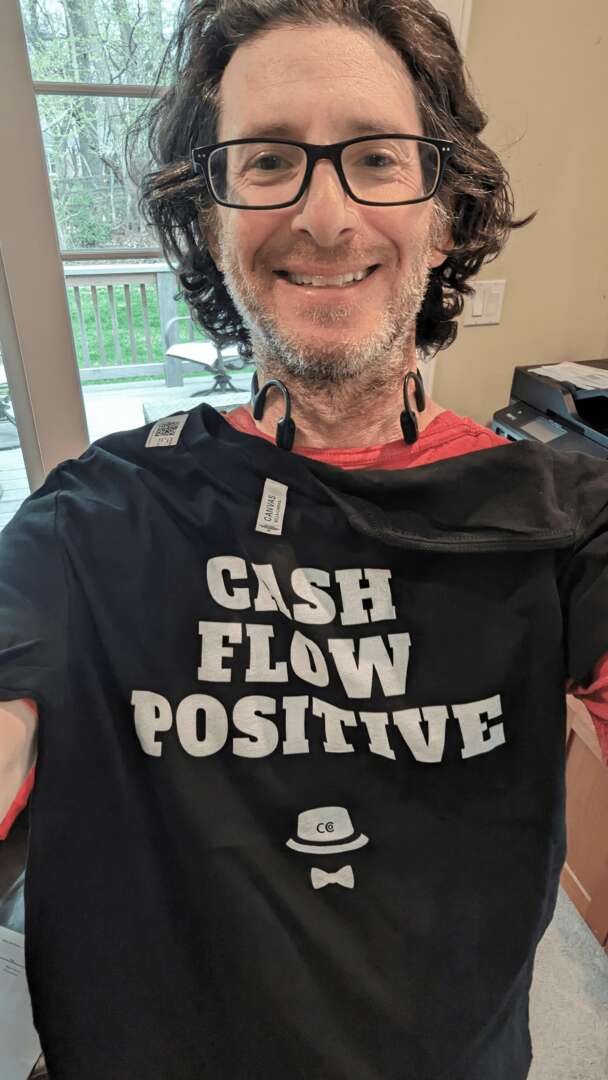

We caught up with the brilliant and insightful Andrew Sachs a few weeks ago and have shared our conversation below.
Andrew, thanks for joining us, excited to have you contributing your stories and insights. One of the things we most admire about small businesses is their ability to diverge from the corporate/industry standard. Is there something that you or your brand do that differs from the industry standard? We’d love to hear about it as well as any stories you might have that illustrate how or why this difference matters.
Mauloa structures its investments differently, the exact opposite, in the following 5 ways:
1) No control. Unlike most PE firms, Mauloa makes non-control investments, perfectly content owning less than 50% of the equity and not having the ability to throw management out.
Kevin O’Connor, co-owner of O’Connor Plumbing, said, “Mauloa’s refreshing approach to growth capital allows us to maintain control of the company while leveraging their operational expertise and formidable network, in order to make a great community business even better.”
2) No debt. Unlike most PE firms, Mauloa does not lever its companies and does not rely on debt to manufacture returns.
Danny McKearan, owner of Ducky Recovery, said “Mauloa allowed us to prosper because we weren’t forced to put debt on our company, which allowed us to maintain a strong balance sheet and to grow organically.”
3) No exit timeline. Unlike most PE firms, Mauloa does not force owners to sell their companies, leaving them in control of their own destiny.
Bob Brody, Chairperson of AlphaStaff, said “Most PE firms would have forced us to sell by now. Given its investment structure, Mauloa cannot, and we continue to mutually benefit from our ability to invest for the long-term.”
4) Annual distributions. Unlike most PE firms, Mauloa generates annual distributions for both its investors and business owners.
Donnie Gross, founder of TLK Group, said “Thanks to our aligned incentives, Mauloa helped us grow cash flow, allowing all parties to enjoy annual distributions.”
5) Size and structure. Unlike most PE firms, Mauloa is not in it for the fees; we are intentionally a smaller fund, to access a larger investment universe. But we are agile and can scale up from $10 million to $100M investment per company, if necessary, by using sidecars.
Andrew Schwartzberg, a Mauloa anchor investor, explained, “Having been a limited partner in large PE firms, it’s common to pay exorbitant fees, without strong returns to show for it. Mauloa is the opposite, generating annual cash flow via distributions and utilizing a hybrid fund structure to reduce fees.”
Through this approach, Mauloa focuses on creating value for all stakeholders by helping build great companies that are excellent places to work while improving people’s lives, which collectively strengthen communities and the U.S. economy.
Andrew, before we move on to more of these sorts of questions, can you take some time to bring our readers up to speed on you and what you do?
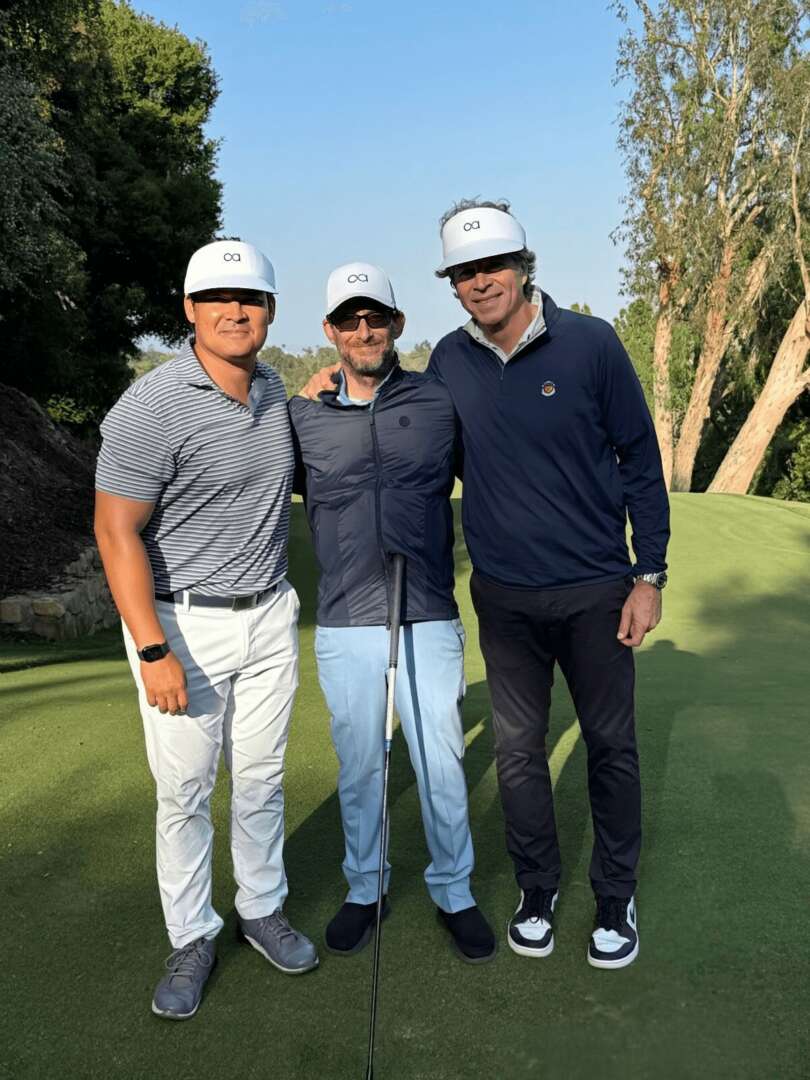
I was born in Los Angeles and grew up in San Diego, attending La Jolla Country Day School and playing Torrey Pines Golf Course for $5. My dream was to become a professional golfer, and I often battled with a young Charley Hoffman at Stone Ridge Country Club. However, destiny had other plans for me, and I was fortunate to be blessed with a talent for math and problem-solving.
I attended Georgetown University’s School of Foreign Service and earned an MBA through a five-year program, along with a General Course degree from the London School of Economics. Initially, I envisioned a career as an economist or lawyer, but my path took an unexpected turn when I started my career in private equity at Morgan Stanley Capital Partners in New York. At the time, it was the second-largest buy-out fund in the world, led by Alan Goldberg and Frank Sica. My time there was brief because my first cousin, Kevin McCollum, a budding Broadway producer, won his first Tony with RENT. Together, we launched KMS Investments, marking the beginning of my entrepreneurial investment career.
The next chapter was Capital Investors II, an early-stage venture capital fund with LPs that included many of Greater Washington, DC’s leading entrepreneurs and financiers. Founded by Senator Mark Warner and Russ Ramsey, the fund also boasted names like Marc Andreessen, Ted Leonsis, and Michael Saylor among its backers. At Morgan Stanley, I was fortunate to learn and become immersed in the traditional private equity model, with a strong focus on free cash flow and valuation. At KMS Investments and Capital Investors, I experienced the exhilaration of early-stage venture capital, complete with its extreme ups and downs.
Subsequently, I co-founded Bethany Partners, LLC, a private equity boutique, with Joshua Freeman of Carl M. Freeman Companies. We embraced a simple thesis: investing in local, growing companies with quality management teams. Less than five years into our journey, the world lost a remarkable spirit, and I lost a friend, mentor, and business partner when Joshua was tragically killed in a helicopter crash. This was the time when Sachs Capital (now named Mauloa) was founded.
Prior to Sachs Capital, I ran three funds, investing in numerous companies using varying investment strategies. This journey ultimately led me to the idea of applying the venture capital investment structure to smaller, profitable private equity companies. I thought of it as “venture cash flow investing,” and I loved it because it aligned and incentivized all stakeholders, with our capital in a preferred position to protect the downside. This approach included minority governance protections, allowing owners to keep control of their destiny while generating annual cash flow to LPs.
Over the first 15 years, mostly through failures and my continuous learning through YPO, I refined my investment strategy, eventually realizing that regardless of one’s quantitative prowess, an investment’s success is mostly driven by the character of management. Not coincidentally, this realization coincided with changing our name from Sachs Capital to Mauloa, which means “Endless” in Hawaiian. I deeply believe small to middle-sized businesses are the backbone of America’s $27 trillion GDP. Mauloa believes that providing strong owners and entrepreneurs with patient growth capital makes our country stronger. The current ecosystem for private equity is the complete opposite: short time frames, lots of debt, and a focus on investors rather than employees, with IRR as the main indicator of investment success. Mauloa supports “authentic” American capitalism and seeks to build endless streams of cash flow by investing in and supporting companies and their people for the long run.
Today, Mauloa has raised half of its new fund and made its first investment in a third-generation commercial plumbing company that focuses on re-occurring maintenance. The fund is structured, like our previous funds, to enable sidecars that provide our existing LPs with opportunities to invest additional capital on a company-by-company basis. In addition, this mechanism allows Mauloa to write large checks if an opportunity arises.
MAULOA WAY TRADITIONAL PRIVATE EQUITY
No debt Lots of debt
Annual cash distributions No distributions
Endless investment time-line Around 5 years
Support existing management Replace management
Care about employees’ future Employees are expendable
Decisions made for long-term company success Decisions made for short-term investor gain
Proprietary deal flow Auctions
Non-control investment Control investment
What do you think helped you build your reputation within your market?
I am extremely proud of my business reputation, bolstered by nearly three decades of experience and almost 50 investments in the industry. I am fortunate to have a long list of entrepreneurs who readily share examples of my business acumen, integrity, and strong sense of partnership. My approach to business has never been about seeing it as a zero-sum game; instead, I emphasize direct and honest communication, making decisions that are in the best long-term interest of the company, and consistently seeking win-win solutions to complex challenges.
I am a firm believer in business karma. Throughout my career, I have endeavored to support others on their entrepreneurial journeys, regardless of any direct relationship or potential compensation. I often remark that “I have never had a bad meeting with an entrepreneur or business professional,” because you never know where their path might lead. Even if there isn’t a direct fit with Mauloa, I recognize that entrepreneurial success is a significant driver of our country’s economy, and I am privileged to enjoy participating in this dynamic field.
Are there any books, videos or other content that you feel have meaningfully impacted your thinking?
There are many books that have impacted my thinking and I believe one must be a life-long continuous learner. Below is a list, in no particular order, but I recommend you read many different books with different view points and my list could be much, much longer. Critical thinking and knowledge are vital.
1) The 15 Commitments of Conscious Leadership
2) PEAK- Secrets From the New Science of Expertise
3) The Checklist Manifesto
4) Warren Buffett’s Ground Rules
5) The Outsiders
6) The Science of Success
7) The EOS Life
Contact Info:
- Website: https://www.mauloainc.com
- Linkedin: https://www.linkedin.com/search/results/all/?fetchDeterministicClustersOnly=true&heroEntityKey=urn%3Ali%3Aorganization%3A76980011&keywords=mauloa&origin=RICH_QUERY_SUGGESTION&position=1&searchId=60845c41-3c92-4eb6-9a96-1bf6299f8c4d&sid=Bi*&spellCorrectionEnabled=false