

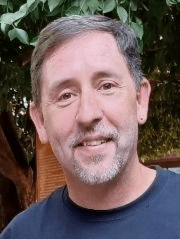

We’re excited to introduce you to the always interesting and insightful Mark Lucero. We hope you’ll enjoy our conversation with Mark below.
Mark, thanks for joining us, excited to have you contributing your stories and insights. If you had a defining moment that you feel really changed the trajectory of your career, we’d love to hear the story and details.
After completing graduate school I worked in the mental health field for about 7 years without feeling like I had quite found my place. Then, in 2012 I attended a day-long series of lectures by Grief Educator Dr. Alan Wolfelt. I was so moved by the depth of his knowledge of grief, and his passion for bereavement care that I decided to commit to earning a Certificate in Death and Grief Studies from The Center for Loss and Life Transition in Fort Collins, Colorado. The training I received there was outstanding and completely changed the trajectory of my mental health career. I went on to establish my own counseling practice specializing in grief and loss counseling and a nature based therapy called Hike-o-Therapy.

Mark, love having you share your insights with us. Before we ask you more questions, maybe you can take a moment to introduce yourself to our readers who might have missed our earlier conversations?
Becoming a grief counselor was, for me, a long and winding road. While traveling this road, I accidentally became a custom cabinet maker which resulted in a 12 year detour away from working in mental health. My journey began with graduate studies in Counseling at the University of Utah where I earned a Master degree in counseling and came OHH soo close to earning a PhD in Counseling Psychology. I was unable to complete my dissertation which was heartbreaking but the education I received was excellent nonetheless. I had a great deal of difficulty finding my “home” in the field of mental health and worked for various agencies for about 7 years when a dear friend and hospice chaplain, Dave Bieniek, suggested I accompany him to a daylong lecture series on bereavement care by author and educator Dr. Alan Wolfelt. This day changed the trajectory of my life and career. I had found my “home” in the field of mental health. Dr. Wolfelt became my mentor in training to be a grief counselor and over a period of 2 years I completed 150 hours of training with him to earn a Certificate in Death and Grief Studies from the Center for Loss and Life Transition in Fort Collins, Colorado. Beyond the certificate I went on to complete 60 additional hours of training with Dr. Wolfelt because the training was just that good!
I love this work. It is what I was built to do. I guide my life with the three core values of Generosity, Gratitude, and Compassion and working in bereavement care allows me to bring all of these values forward as I provide care and support for my grieving clients. I often say that I get paid to listen to love stories. Over the course of my life I have cultivated a deeply felt sense of spirituality. My undergraduate degree was in Religion & Philosophy. Working with people in grief often moves into examining profound spiritual and existential questions. Some of the most challenging questions we ask in life come at times of deep sorrow and profound suffering. I love this aspect of the work and have the flexibility to work with clients who come from a wide range of faith traditions or none at all.
I love to make use of nature in my work with grieving people. Living on Whidbey Island I have access to miles and miles of deeply forested trails and almost unlimited stretches of beautiful bluffs and coastline. One facet of my counseling practice is called Hike-O-Therapy. I take my clients out into the forests to immerse in the healing gifts and lessons that nature offers. It is often very liberating to move out of the counseling office and be nourished by all of the sensory generosity of nature. The motto of my practice is “We Make The Path By Walking”. The motto comes from a line in a poem by Antonio Machado. He says, Traveler, there is no path. We make the path by walking. After suffering a profound loss many people do not see that there can possibly be a path forward for them. Together we take small steps forward as the path slowly reveals itself. Walking this path is like driving at night. Your headlights only shine so far but you don’t stop. You keep on going in the belief that you will find your way.
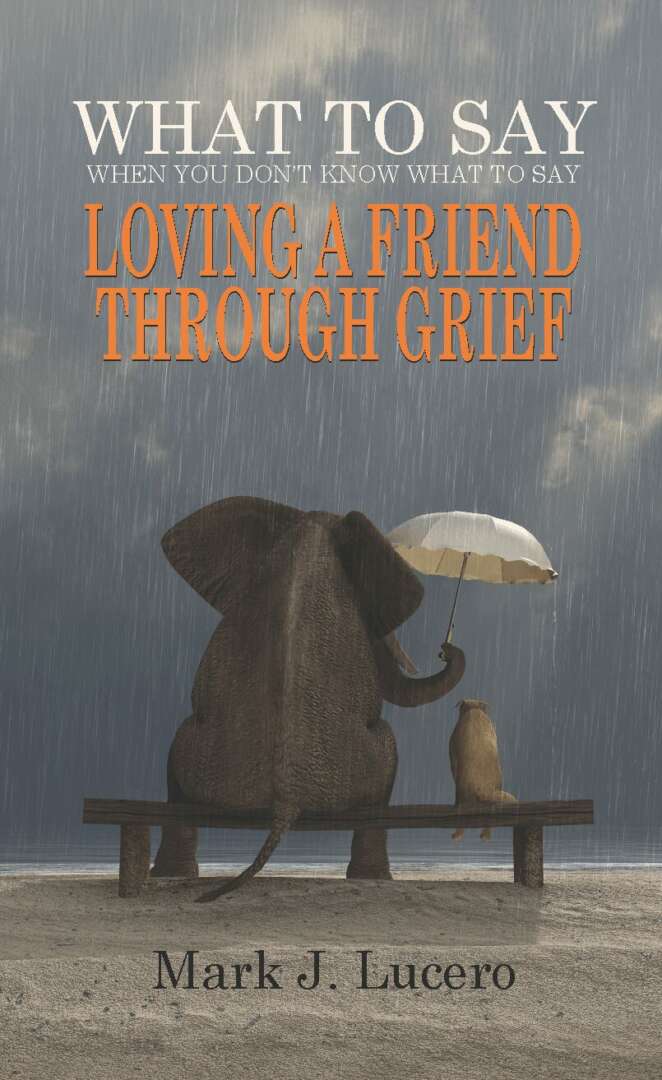
I recently published a book about how to provide meaningful care and support for a friend who is grieving. Most people when faced with the challenge of supporting a friend after a loss will say something like “I don’t know what to say”. The title of my book is “What to Say When You Don’t Know What to Say: Loving a Friend Through Grief”. The book is a compact guide to providing meaningful support to a grieving friend or family member, including a chapter on “What Not to Say”. I wrote the book to counter the strong force in our culture to avoid the subjects of death, grief, and strong emotions. Suffering is woven into the very fabric of what it means to be human and I am convinced that we must learn the hard lesson that suffering is not our enemy. In fact, I believe there is no path to wisdom that does not cross the desolate territory of suffering. Being a companion to those who are suffering is the highest calling of my life.
What’s a lesson you had to unlearn and what’s the backstory?
I was 36 years old when my dad died. Over the course of about 8 months from the time of his cancer diagnosis to the time of his death I spent the first three months in complete avoidance. Finally, after three months of silence my dad who lived a few states away called me and said “Mark, why haven’t you called? I haven’t heard from you in months.” I said “Dad, I didn’t know what to say. I don’t know how to deal with your sickness and the fact that you are dying”. I had chosen the time honored approach of avoidance. I wish I could say that I did better after that phone call but I did not. For most of my fathers decline and death I remained distant, too fearful to be present to him in his last days of life. I regret my choice to avoid the reality of his mortality to this day. The lesson I learned, eventually, is that avoidance only deprives me of the sacred privilege of participating with and being present to the suffering of those I love. The regret I have felt over my failure to be present for my father in his last days has been part of the fuel that has guided me toward the work I do now. I cannot undo the past but I can lean into the growth my failings have offered me and be a comfort and presence to those who need to be cared for and witnessed in their suffering.
Putting training and knowledge aside, what else do you think really matters in terms of succeeding in your field?
Training and knowledge are extremely important for working as a grief counselor, Beyond that there are a few things you must be able to do. First, you must be able to sit beside a suffering person without moving too quickly to solutions or trying to alleviate their suffering. Grieving people need to be seen. They need to be witnessed. Their suffering asks only for acknowledgment. Seeing their suffering is a very healing act. Second, you must have a very high tolerance for ambiguity. You must be able to sit with your own discomfort of not knowing exactly which way to go. Grief likes to move slowly. All of the symptoms of grief are designed to slow us down in preparation for what is almost always a long convalescence. Sitting in attentive silence as a client’s eyes gradually adjust to their darkness is a true kindness. Finally, you must be able to hold silence. You must recognize the eloquence of silence. This is especially important when tears are falling. There is almost no language more articulate than tears. We must learn to sit quietly enough with them that we can hear them fall. Words can be an ungentle presence when deep emotions are being expressed. Holding silence is key to providing care for someone in grief.
Contact Info:
- Website: https://www.WeMakeThePath.com
- Facebook: Pathways Counseling
- Other: https://www.Hike-O-Therapy.com