

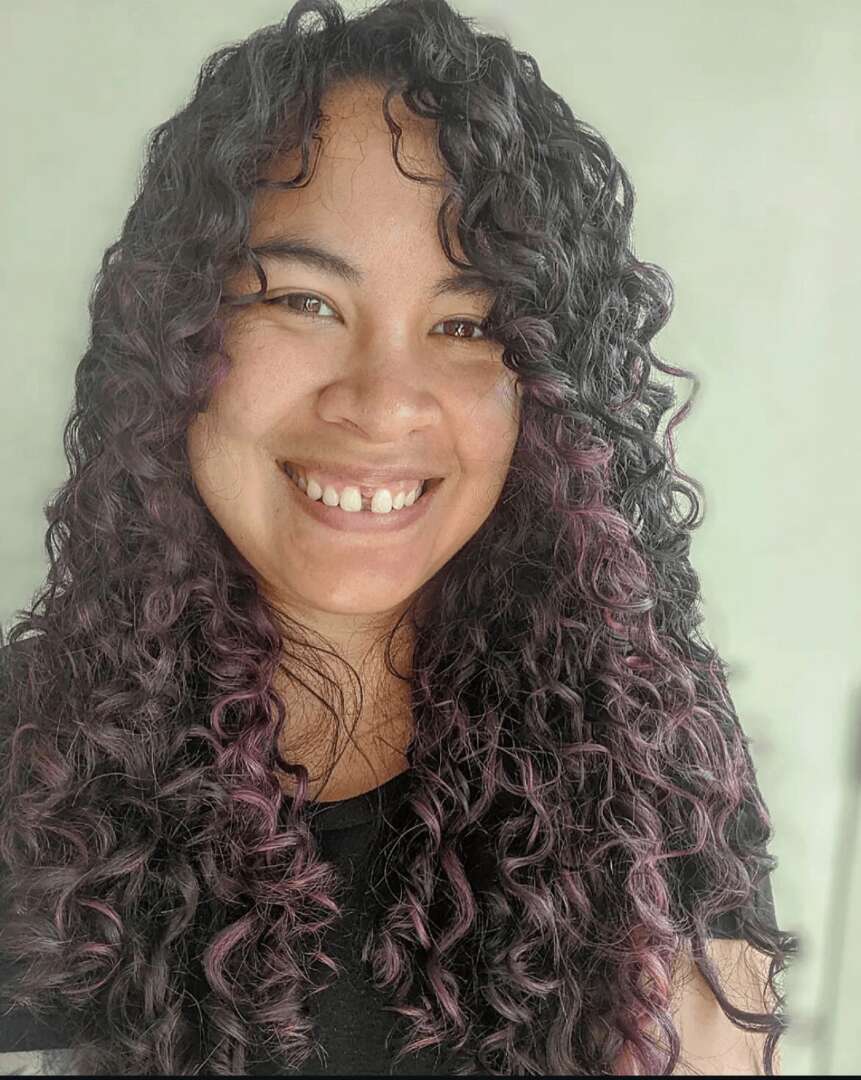

Alright – so today we’ve got the honor of introducing you to Francine Bejarano. We think you’ll enjoy our conversation, we’ve shared it below.
Francine, appreciate you joining us today. Can you talk to us about serving the underserved.
Becoming a therapist was a journey on its own. One that opened my eyes to the various amount of differences in identity and experience each person has. I began to see how my own ethnicity, socioeconomic class, and a myriad of other characteristics played a part in how the world saw me and how I saw the world. One of the things I regret the most in my upbringing is that my parents, who emigrated here from South and Central America, assimilated into American White culture instead of attempting to bridge their culture with American culture. I was raised not knowing my own identity and cultural background and felt immensely out of place for the majority of my life.
My program highlighted that the field of therapy has not been meant to serve the underserved and has been built for the affluent population, which is typically White. Folks of color and lower socioeconomic class have a more difficult time accessing care and finding clinicians who not only share physical similarities (race & ethnicity) but similarities in experience based on institutional oppression, racism, classism, and trauma. I decided I wanted to work with the BIPOC population, the population who was not handed life on a platter to them and had to work harder than the typical privileged White man or woman to live and succeed.
Not only do I want to be a therapist for this population but I also aspire to become an clinical supervisor as well. My goal is to serve therapists entering the field who identify as BIPOC so that they can have a mentor who has lived through similar experiences working in this field and also serve those in the BIPOC community. My experience trying to find a BIPOC supervisor who is also a marriage and family therapist has been unsuccessful. I don’t want others who enter the field to have the same experience as I’ve had.
Awesome – so before we get into the rest of our questions, can you briefly introduce yourself to our readers.
When I was in high school I knew I wanted to help people, I wanted to be in a profession that listened and offered advice. I was the friend in my group who everyone came to for support and I loved it. My parents emigrated to the United States in the 80s and while both were educated, neither one of them knew how to maneuver through the system of higher education in the United States. While I was in high school there was not a lot of discussion in my family about going to college, there was however an assumption that it would be impossible since my parents were now divorced and were individually struggling to make ends meet. So, I joined the workforce right out of high school. I bounced around for about a decade working in telemarketing to real estate. As I was turning 26 I had a chance to move away from my hometown and start over in Colorado. After a year of enjoying my life and exploring the state I decided I did not want to work a “job” anymore I wanted a “career”. I heartily disliked what I was doing and I wanted to fulfill that dream I had when I was a teenager, to help people. I spent the next 10 years working full time and putting myself through undergrad and grad school to ultimately become a couples and family therapist.
This little chapter in my life is my proudest while also the most emotionally and mentally challenging thing I’ve had to endure. During my graduate program, I learned how being a person of color, a Latina woman, made this journey even harder. Looking back considering the knowledge I have now, I can see the lack of privilege and the hardships I had to overcome by myself for myself with no one else’s help. It has given me a whole new outlook on our society and the way we view and treat others. Even coming out of the program and into the field of therapy I can see how underrepresented it is. This field is overflowing with White female clinicians with whom I struggle to relate and feel seen and heard. This story, my journey, has inspired me to work with others like myself. Whether that be clients now or supervisees in the future. I want to be the person I needed when I was younger.
What’s a lesson you had to unlearn and what’s the backstory?
As I stated before, my parents emigrated here in the 1980s from Central & South America. When they started their life in the United States and as myself and my sister grew up they assimilated into the American culture, completely leaving our own Latina culture and heritage in the past. I grew up thinking that I was just a tan White girl with curly hair. Even though people all around me from grade school to adulthood would often comment on my skin tone and natural hair. It has been an incredibly confusing ordeal to continue to live through. During my first semester of graduate school, we took a class on multiculturalism and identity. It was the first time in my life I struggled to identify with who and what I was. I wasn’t White, and I did not feel Latina, I could pass for White if I straightened my hair but I looked very Latina when I wore my hair curly. Through that semester I had to unlearn that I was what I was always told or even untold through assumptions and crude comments, I was not a White woman with a nice tan. I am a Latina woman who has been told to hide who I truly am since I was a child to fit in. That first semester of graduate school is now 4 years ago and while I do believe I’ve come a long way, I still grapple with how to show up as my most authentic self.

Let’s talk about resilience next – do you have a story you can share with us?
I believe the story of my journey in higher education has been my greatest show of resilience thus far. From start to finish it took me 10 years in total and there were no breaks in between. Far longer than I had hoped. I started attending a community college in the spring semester of 2014 and moved to the University of Colorado-Boulder 2.5 years later. I did not have the privilege of someone else paying for my education and I was living by myself, so I worked full-time while taking late afternoon and evening classes. I remember during this community college and university phase I was working 40-60 hour weeks sometimes due to my job being so demanding and needing extra money to support myself and pay for my school. When I look back during that period in my life, I can see how difficult it was for me to juggle everything and not have anyone supporting me financially or even emotionally. There were multiple points during this time that I wanted to give up, that I wanted my life back; I wanted to go on vacations and spend time with friends endlessly. But whenever I felt like giving up I told myself it would all be worth it in the end. I never thought I would get into graduate school, that dream felt so far out of reach. There were many times I wanted to give up during that time as well or thought I wouldn’t make it through because I had been running on fumes for years. Because I was able to do all of that, I know now that I can handle anything that life throws at me.
Contact Info:
Image Credits
Personal photo- Francine Bejarano
Website photos – Canva AI creations