Alright – so today we’ve got the honor of introducing you to Zach Valent. We think you’ll enjoy our conversation, we’ve shared it below.
Zach, looking forward to hearing all of your stories today. Learning the craft is often a unique journey from every creative – we’d love to hear about your journey and if knowing what you know now, you would have done anything differently to speed up the learning process.
I developed and learned my craft through a combination of formal education, working in construction, working for other artists, and a lot of independent research. A sculptor’s skillset is unique because we tend to adopt a hodgepodge of toolkits and processes while developing a brand or identity. Sculpture isn’t medium-specific like other studio arts. It is more of an understanding of materials and space, and many sculptors use multimedia to make art. Sculpture can be made from traditional materials like stone, bronze, wood, or clay but also less expected mediums like textiles, plastics, and found objects. There are even sculptors who produce works in light and sound. I work primarily with concrete and steel but often incorporate various other materials.
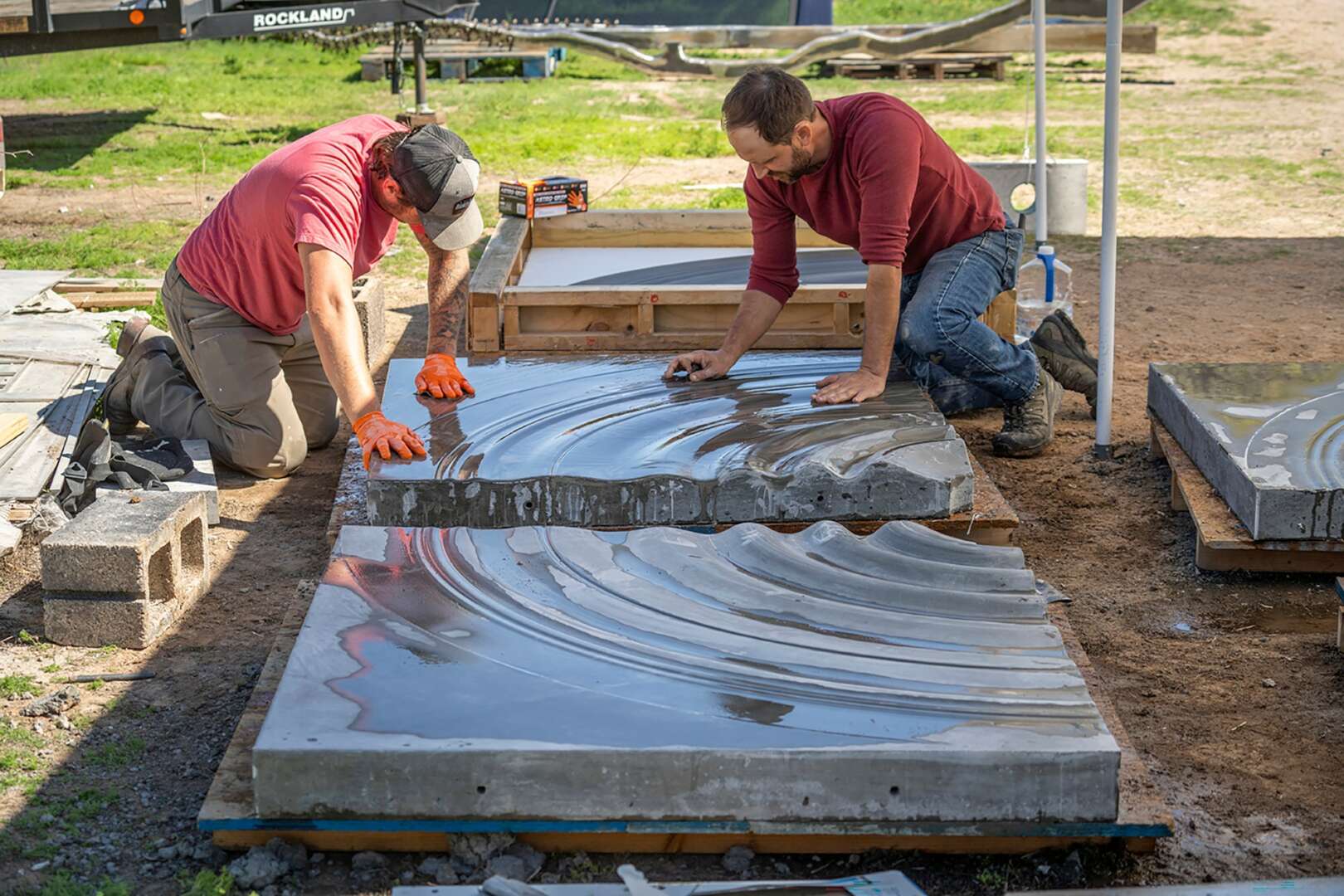
Even before I went to college, I had strong foundational knowledge of concrete and steel from working in construction, but I didn’t start out making sculptures. It was a much longer journey to get to where I am now. I was first a painter. Then, I became interested in ceramics, steel fabrication, and blacksmithing throughout college. Along the way, mold-making became a core component of my craft. For several years, I focused on metal casting and foundry work, where I first became interested in mold making. The transition into working with concrete didn’t happen until my senior year of college. While my initial decision to use concrete as a castable material was economically influenced, it quickly became my preferred material because it was more aesthetically in line with my art than other castable materials. Today, many of the artworks I make could not have been done without the process of mold making, and concrete is still my favorite material to work with.
Looking back, I wish I had committed to being a professional artist much sooner. There is a lot to learn, and I am still learning new things all the time, but I would be further along had I started at a younger age. I also should have taken more risks and been more ambitious earlier in my career, but the idea of failure has always intimidated me. In hindsight, failure has been a great mentor, and I have learned the most when I am forced to find a solution to a problem rather than accept failure.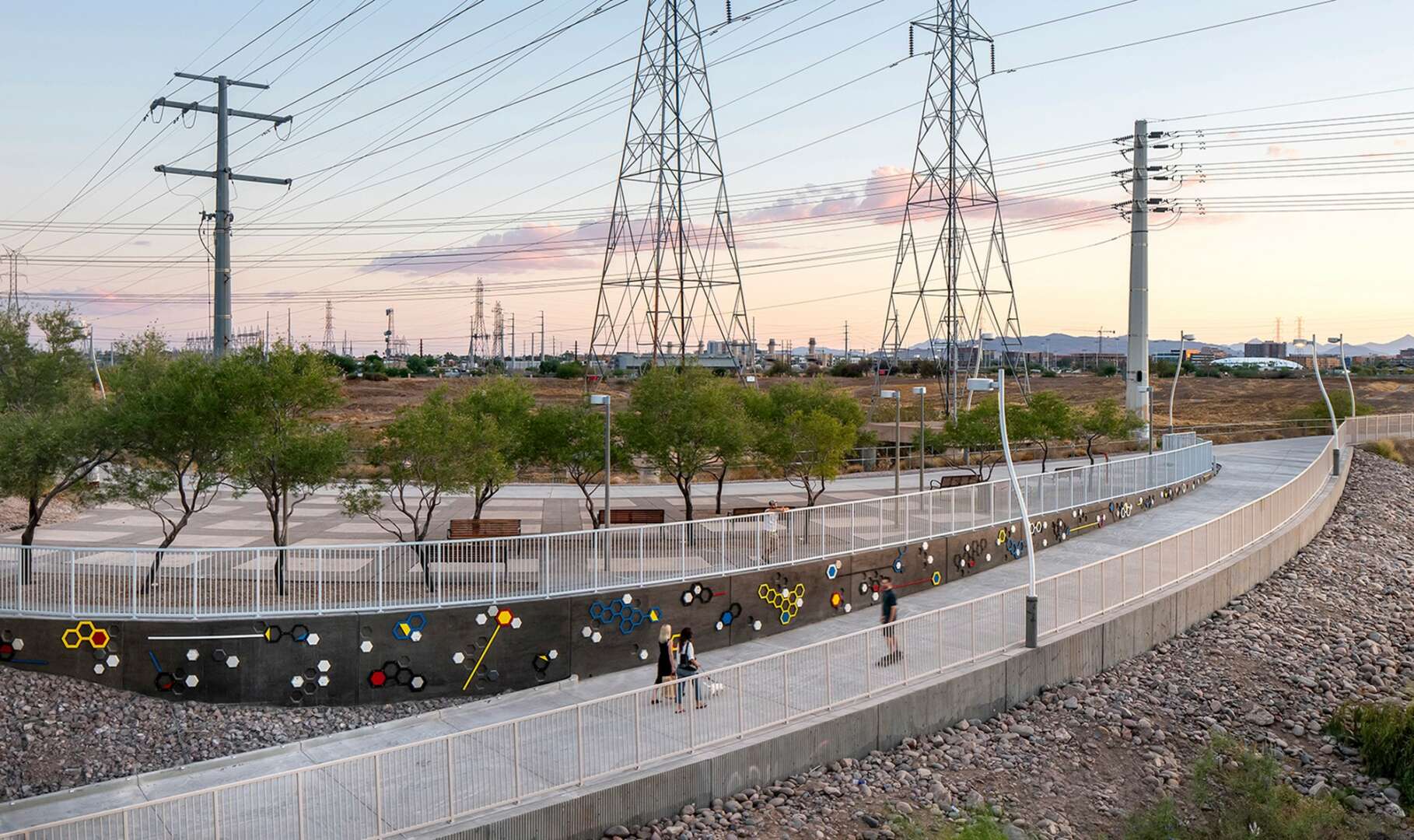
Zach, before we move on to more of these sorts of questions, can you take some time to bring our readers up to speed on you and what you do?
I am an artist specializing in cast concrete and steel sculptures, and I create artwork that ranges in size from small handheld objects to large-scale public artwork. I was in my early 20s before I realized I wanted to pursue art as a career. I had been making art all my life but never imagined it would be my profession. After high school, I had no intention of going to college. For several years, I worked in construction during the day and at a local restaurant, waiting tables at night and on weekends. Eventually, I enrolled at the local community college and took some art classes for fun. Art instruction in college was much different than I had expected, and I quickly became fascinated with the prospect of a career in the arts.
Throughout college, my views on what a professional arts practice looked like morphed. I think initially, I believed I would go on to be a full-time studio painter represented by numerous galleries. Then, I became deeply involved in ceramics for several years and dreamed of being a production potter. Towards the end of my bachelor’s degree and into grad school, I was focused on being an educator. I fell in love with the academic environment, which I still value and continue pursuing today. However, upon moving to Arizona and while in grad school, I began working as an assistant to other artists. During this time, I learned a lot about the inner workings of art-related business, networking, marketing, and how to find commissioned opportunities.
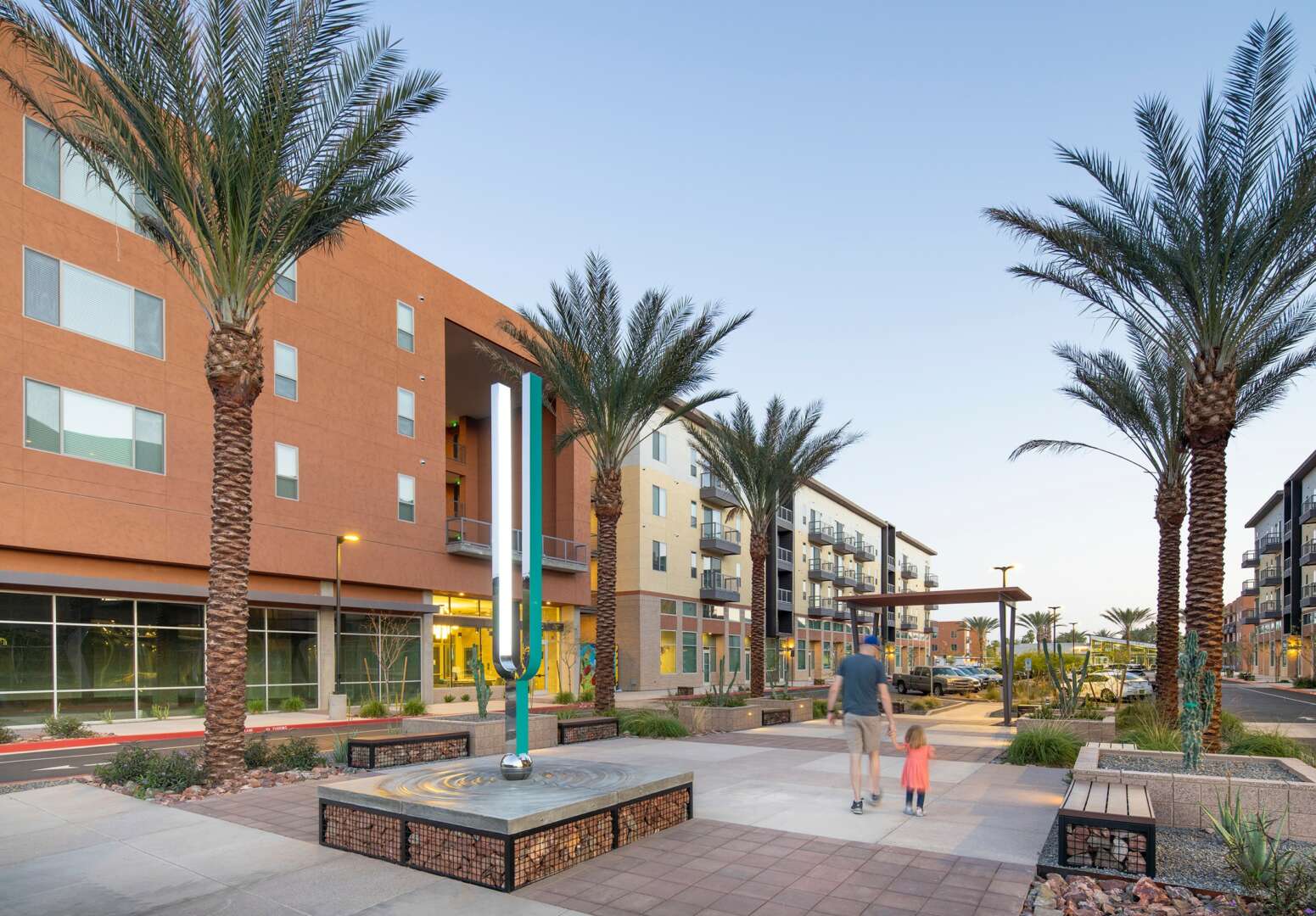
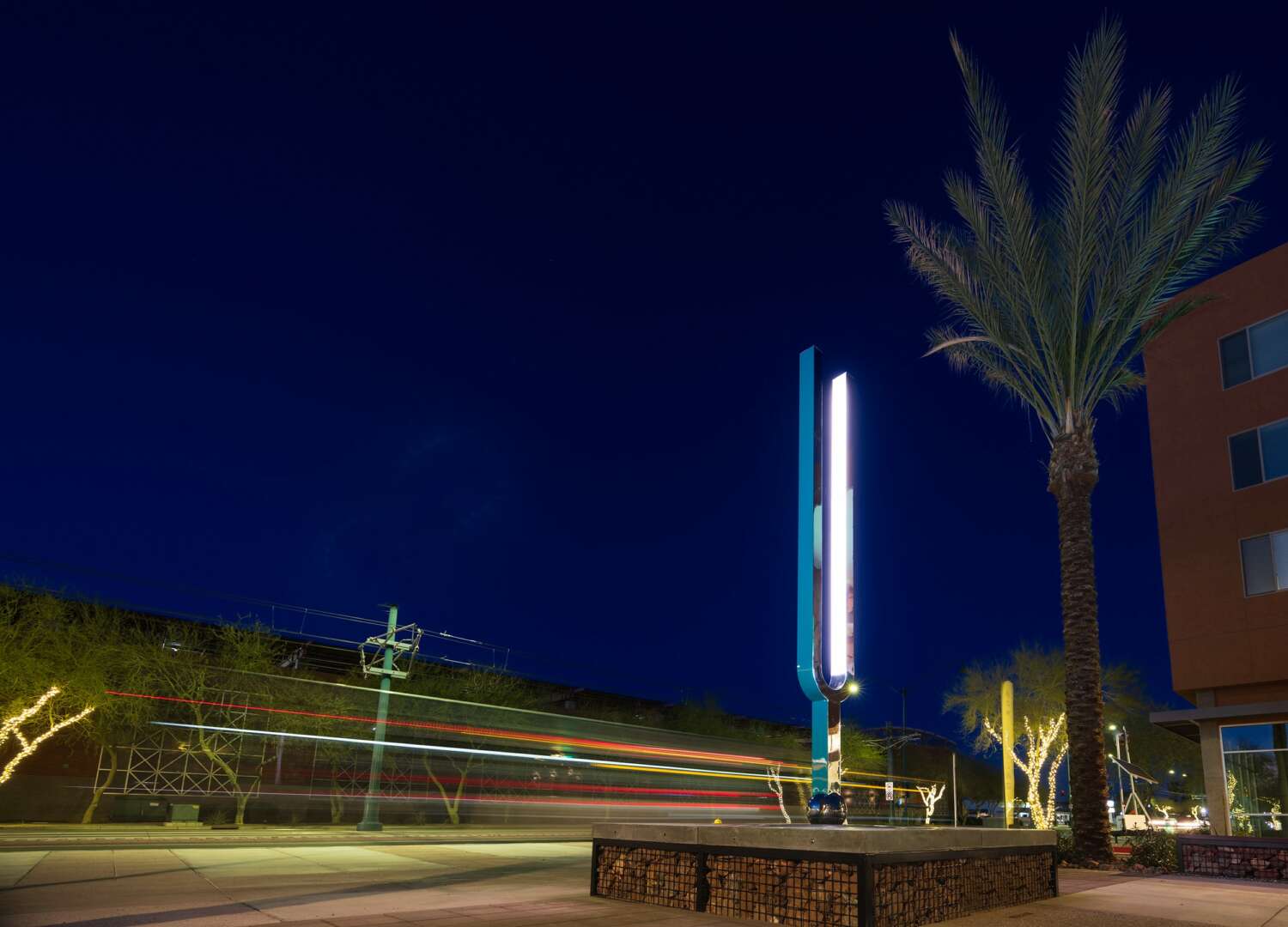
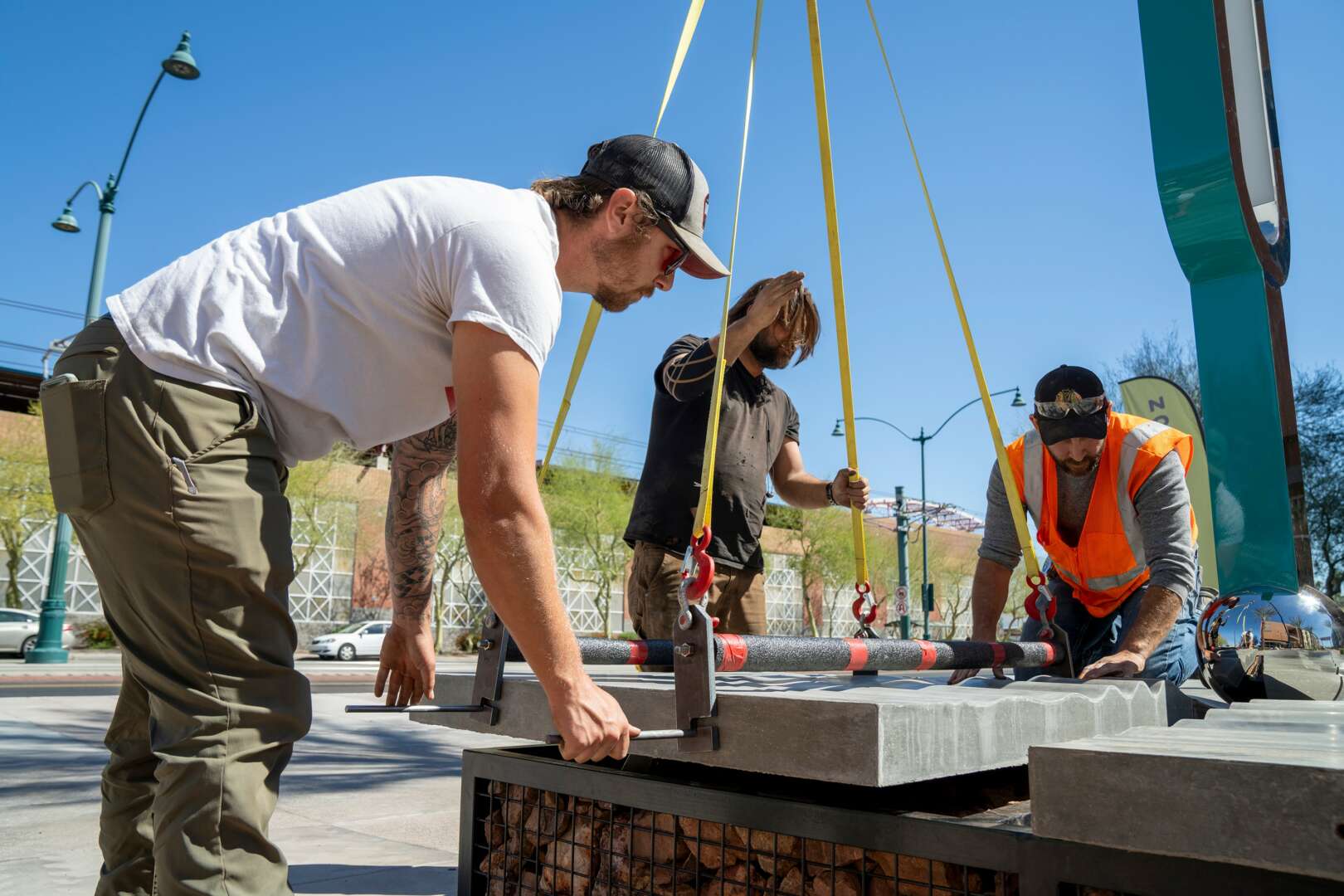
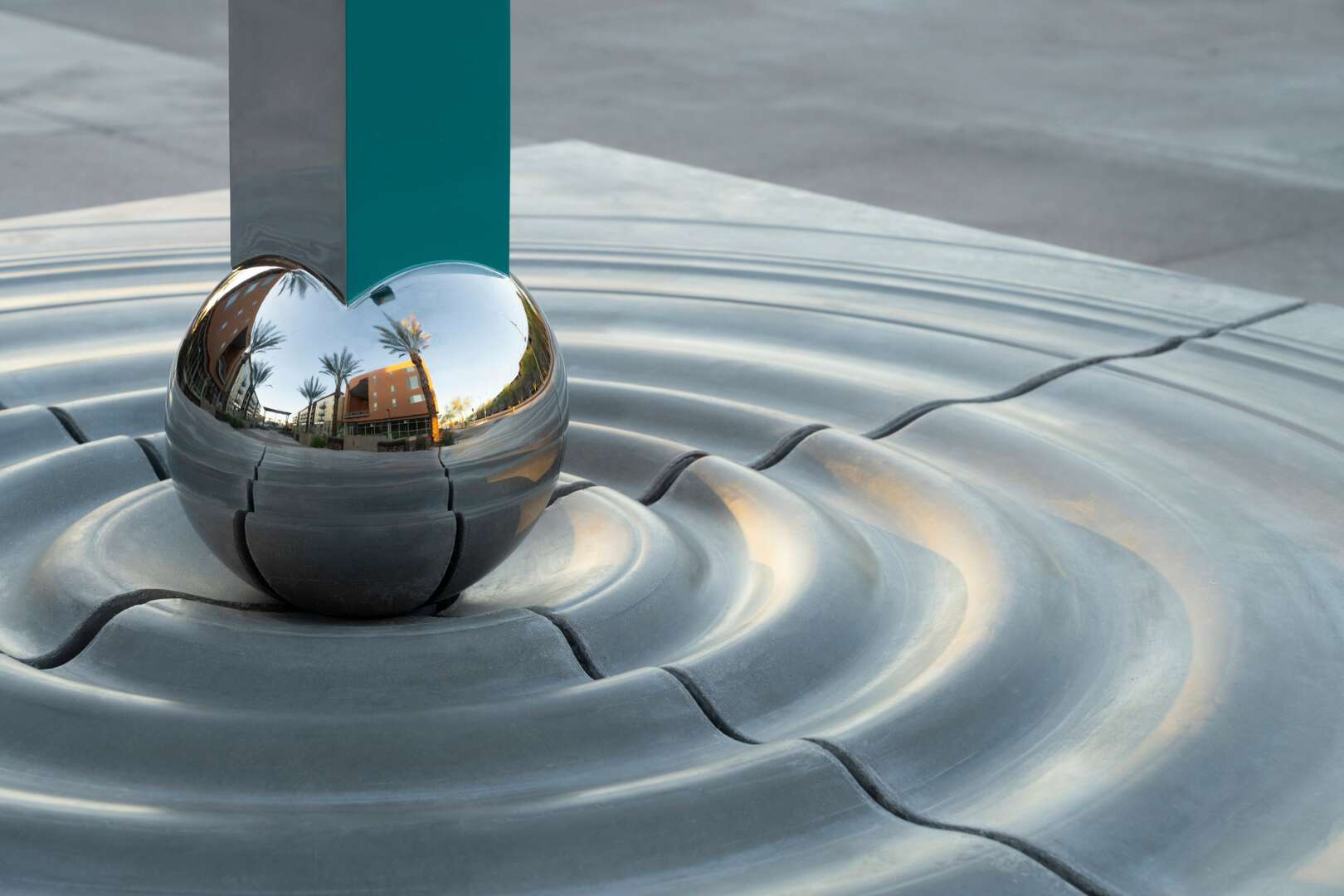
In 2018, I established Zach Valent Studio LLC. While my leading service is custom-created sculptures for private and public spaces, I have also provided services in art restoration, mold making, sculptural concrete casting, and metal fabrication. Over the past few years, I have focused on completing several large commissions. In March 2024, I completed Harmonic, my most ambitious sculpture yet. Harmonic is a privately funded public-facing sculpture located one block east of the Mesa Art Center at the newly built Melody on Main luxury apartment complex. This sculpture is constructed from numerous parts that all fit together with an extremely tight tolerance. At the center is a fifteen-foot-tall polished stainless steel tuning fork that lights up at night. At the base of the tuning fork are four hefty precast concrete tiles that display a sound wave moving outwards. All of this sits atop a reinforced steel gabion base. Many people were involved in making this sculpture a reality, and I couldn’t have done it alone in such a short time frame. Harmonic was designed, fabricated, and installed in less than six months.
I get a lot of enjoyment from completing large-scale commissions, and I am most interested in working with municipalities. One of my favorite aspects of public art is the monumental scale of the projects. These things often take years to complete. There is so much coordination with developers, architects, engineers, and community members. The depth of the design work through fabrication and installation logistics keeps you on your toes. And even more exciting to me is that every project is different. Each commission comes with a new set of rules and parameters. Site specifics often dictate what the final product will become, and while my style and aesthetic can be recognized, each new artwork is usually unique to that specific project.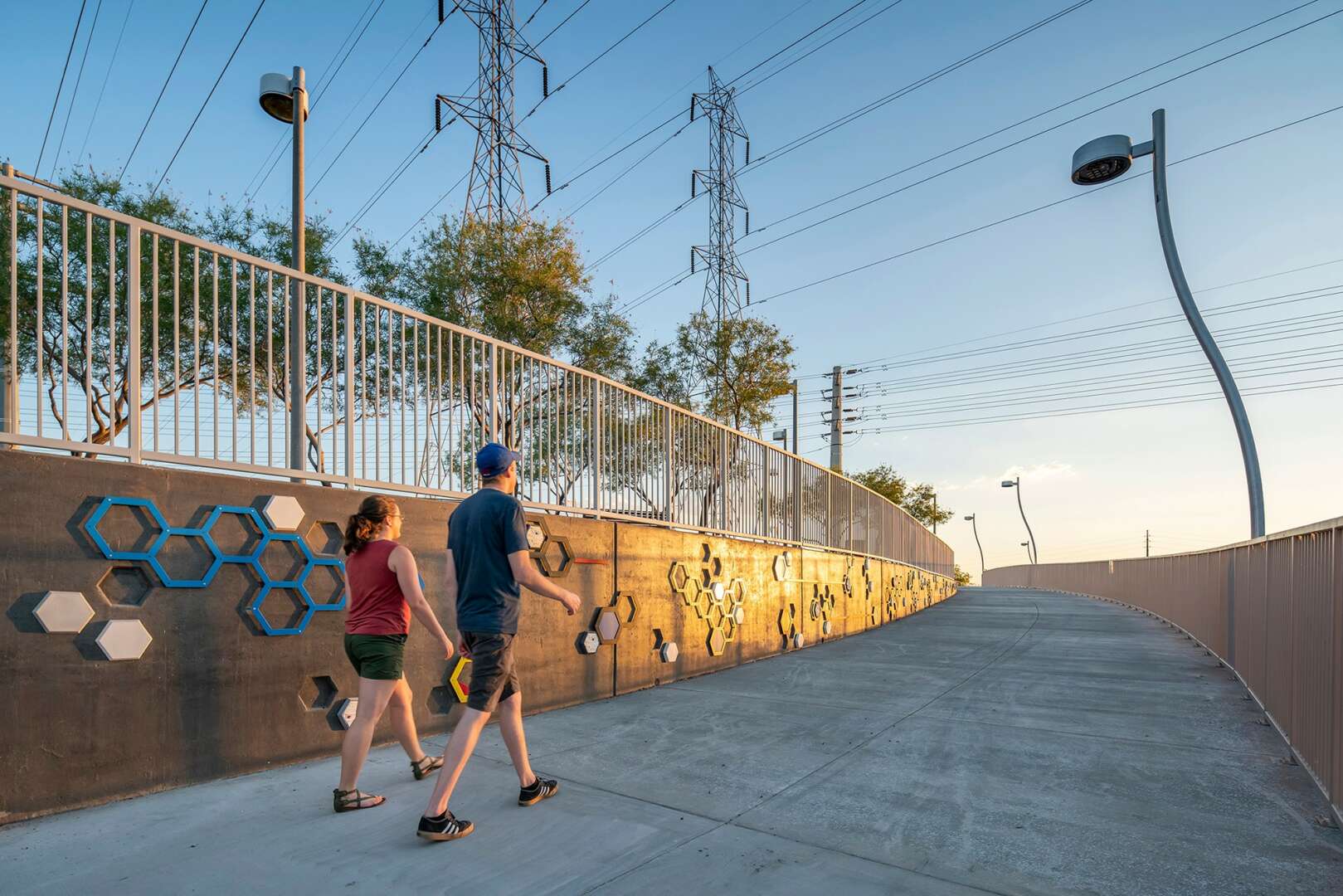
In your view, what can society to do to best support artists, creatives and a thriving creative ecosystem?
The Phoenix metropolitan area is a beautiful example of a flourishing creative ecosystem and what can become of a community that supports, employs, and promotes its artists. However, even in a community as great as ours, there is a lot of stigma around identifying oneself as an artist. Society could better support creative ecosystems by understanding and educating the vastness of what a career in the arts can be. The future and growth of any ecosystem depend upon the next generation. For many young individuals, this frequent negative sentiment towards artists is enough to steer them away from what they may be good at. I hear people all the time say they wish they would have chosen a creative career path over becoming something else. Most often, their reason for choosing another occupation is pressure from friends and family to pursue a more “respectable” and “lucrative” profession. The reality is there are countless avenues artistic and creative-minded individuals can pursue that will not only be mentally rewarding but financially lucrative as well.
We need to keep in mind that just because someone says they want to pursue a creative career path does not mean they will go on to be a “starving artist.” In fact, all the full-time artists that I know are feeding themselves quite well. However, many of my colleagues and peers who received studio art degrees now work as arts administrators, special event coordinators, curators, and educators. Some have found jobs working with architecture and design firms, and others work as commercial photographers, graphic designers, and illustrators. Some more entrepreneurial-minded artists I have met own craft-based businesses, fabrication shops, commercial art galleries, restaurants, music venues, and production companies. These people are all essential components of a thriving creative ecosystem and a desirable and ideal community to live within.
Art is the foundation of cultural and human expression. It is a critical factor in historical preservation and can be a vehicle for social change. It’s all around us! Looking back at many of humanity’s most outstanding inventions and achievements, it becomes easy to understand why supporting and encouraging the next generation of artists and creative minds is necessary. Consider the value of history’s most wondrous architecture or the aesthetic and function of every tool and device you use daily. Think about your clothing, the music you listen to, and even the food you eat. Even when we look at unexpected aspects of society, like city planning, transportation, and landscaping, notable creative components often stand out. From visual and performing arts events to annual festivals and community engagements, the world’s most romanticized and visited cities are known for their creative culture. Behind all these great things are individuals who dared to be different, sought after change, and sometimes pursued and achieved the impossible.
Support for artists and the creative ecosystem often means accessibility to arts education, more available networking opportunities, exposure to broader markets and industries, creative Job opportunities, financial support, affordable workspace, and much more. However, for these types of programs and opportunities to continue existence and have a community-wide impact, there needs to be a growing population of creative professionals to engage with them. Suppose society can better understand and articulate art’s positive impact on our lives. In that case, we can better guide our creative youth into pursuing a successful art career that contributes to and supports a thriving creative ecosystem.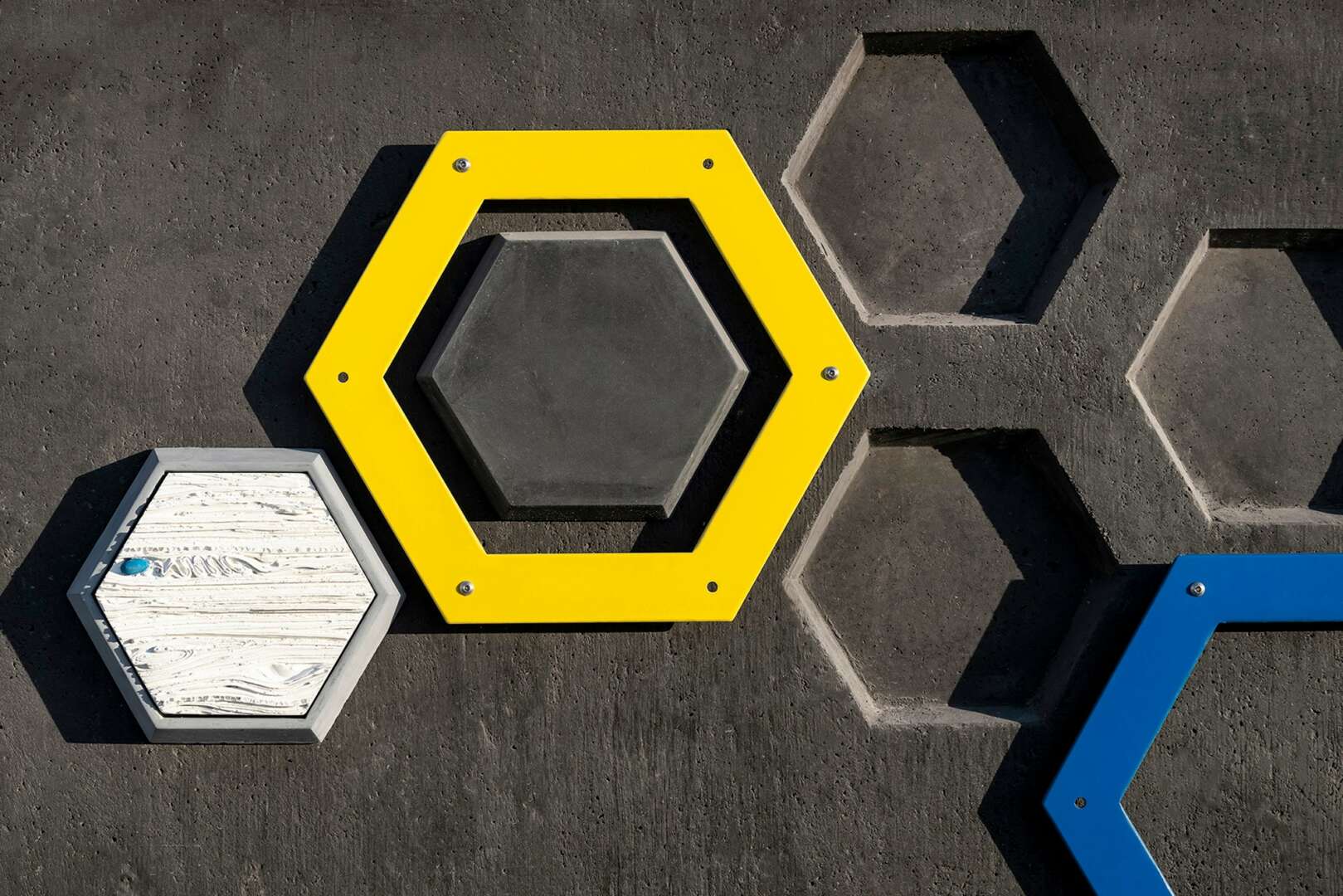
For you, what’s the most rewarding aspect of being a creative?
I enjoy working for myself. It’s hard work and very stressful at times, but I garner a lot of reward from being my own boss. Beyond factors like financial potential, making your own schedule, owning lots of excellent tools, and personal growth, I experience unparalleled gratification when I sell an artwork I have made. It’s even more exciting when a large commission is permanently installed in a public space. Building a business around fine art is much different than other enterprises because art is widely considered a non-essential product. The value of art is also highly subjective. Making one-of-a-kind objects rather than replicable products can be challenging to market and find your audience. People often overlook the cost of materials, extensive labor, and all the blood, sweat, and tears it takes an artist to develop their craft. It is definitely not easy. However, when someone contacts me and requests to buy my art or commissions me for a one-of-a-kind sculpture, I am reminded of the value of being an independent artist. It is a very rewarding feeling and is often what keeps me going.
Contact Info:
- Website: www.zachvalent.com
- Instagram: @zachvalentstudio
- Linkedin: www.linkedin.com/in/zach-valent-01116b102