

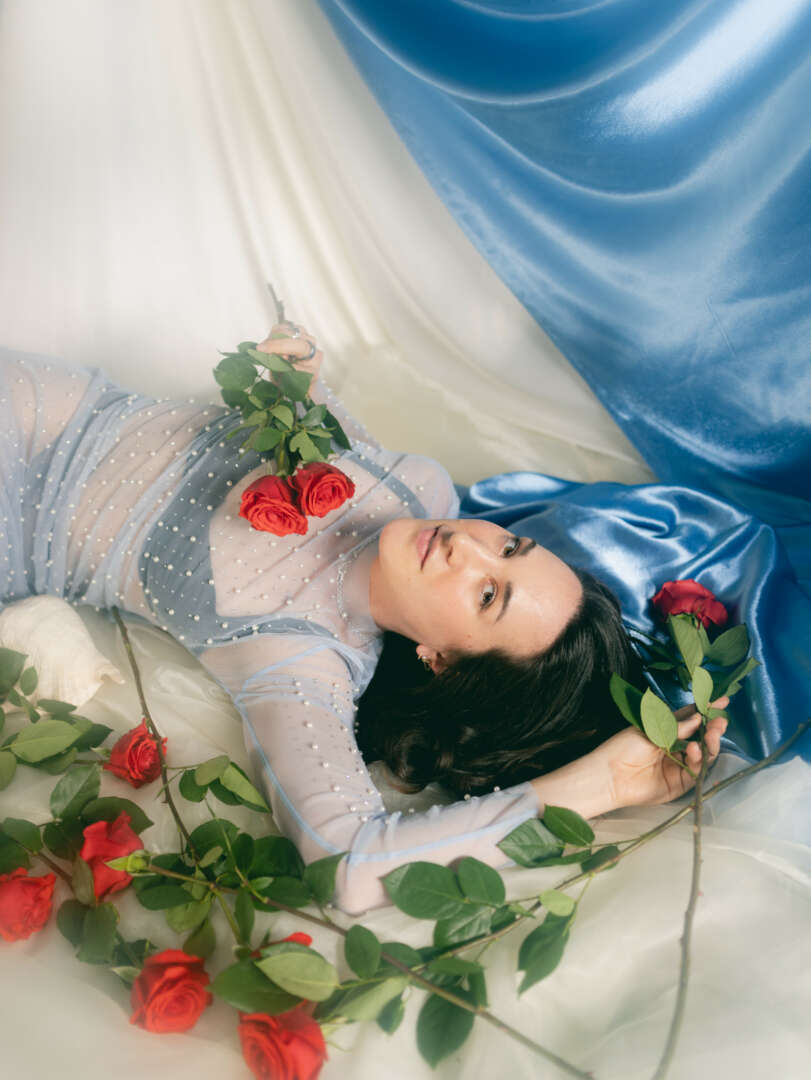

We’re excited to introduce you to the always interesting and insightful Katrina Lillian Sorrentino. We hope you’ll enjoy our conversation with Katrina Lillian below.
Katrina Lillian, thanks for joining us, excited to have you contributing your stories and insights. We’d love to hear the backstory behind a risk you’ve taken – whether big or small, walk us through what it was like and how it ultimately turned out.
The path of the artist is about taking consistent and calculated risks – risks in your ideas, believing in them when no one else does, risks with your time and resources, often having to be the first one to put energy and investment behind them before anybody else sees what you are really trying to do and say.
The first big risk I took with my work was right after college. My friend Isabel knew that I had switched to focusing on documentary film production my senior year at NYU. She had just befriended a community of translatina women in LA through one of her mom’s childhood best friends. Her mom’s best friend was their pro bono political asylum lawyer.
I think we flew out to LA with $5,000, two DSLRS, two camera ops, one sound op and one producer. And we filmed a feature in two weeks. That film was eventually sold to Univision and Participant, where it aired on national TV. But for many years, we had to believe in it as it got dusty on hard drives in my Brooklyn apartment.
In graduate school I took a lot of personal risks in my art. Due to religious influences I got married young and at the time of my MFA my constructs were falling apart. So, I decided to turn the lens on myself and make work from the process. My art was where I wrestled with and processed my crumbling relationship and emergent identity. It was painful, vulnerable, and heavy but ultimately transformative.
That work of turning the lens on myself continues to inform the work that I do in documentary as well as my personal work. It led to an autobiographical documentary that I made during covid, using only iPhone footage and interviews conducted over zoom about an abusive relationship that I got into after my divorce. That film went onto premiere at DOCNYC this past year and has toured festivals all over the world. That work in grad school also led to me step out of the documentary medium and play in comedy, writing my first ever TV show pilot about my journey deconstructing from Evangelical Christianity.
So risk begets confidence, confidence begets action, and action continues to forge my path.
In my experience, there is never not risk on this path, there is just the amount of risk that you can stomach. Some people comment on how brave I am but the truth and the secret is, I have been making things that terrify me for a long time. So when I release something that other people think is edgy, it’s just at the perimeter of my comfort zone, otherwise I wouldn’t be able to release it.
As always, we appreciate you sharing your insights and we’ve got a few more questions for you, but before we get to all of that can you take a minute to introduce yourself and give our readers some of your back background and context?
I am a filmmaker and performer.
I grew up as a dancer, which is where I first learned the language of emotion and how to translate it into movement. I developed achilles tendonitis when I was 13 and unfortunately had to scale back dancing, which led me to filmmaking. As a performer I initially wanted to be in front of the camera but I was extremely insecure and hid behind the camera for many years, making very experimental films.
That led me to NYU where I was one of the few female cinematographers in my class. Cinematography led me to Cuba and once I lived in Cuba I had to make documentaries. I loved hearing people’s stories and translating them through the medium of film. That led me to travel all over the world, telling human stories of injustice. I focussed a lot on anti human trafficking and women’s rights.
That expanded my world in incalculable ways but it also caused burn out, which led me to pause and pursue my MFA in Photography. I wanted to strip back the medium to its most elemental – image and subject. However, when I got to my Masters, questions also started to emerge about the larger construction of documentary and the ethics imbued into the history of the medium. That caused me to turn the camera on myself, which led to even bigger questions about representation, authenticity, performance, and subjectivity vs. objectivity.
Since completing my Masters at ICP-BARD in 2016 I have worked as a documentary filmmaker (producer, director) and photographer. But I have also been returning to who I am at my core, which is a performer. Since then I have been acting, mainly in comedy, releasing my first podcast (NXN Podcast) and writing my first TV show.
Is there something you think non-creatives will struggle to understand about your journey as a creative?
Non-creatives like to understand what it is that we do and in so doing, often put us into boxes. But as an artist, that’s a ridiculous concept to me because I believe it’s essential to select the medium that each individual work requires. For example, my main tools have been lens-based ones, but I have staged live performances and created solely auditory experiences because those were the most appropriate tools to explore the idea.
I also feel like the term artist is not taken fully seriously. I do identify as an artist through and through. I believe that title denotes someone who channels a message, an idea, an experience, through the arts. My experience as an artist has ultimately been about my journey to understand and connect with life. I then gravitate towards the tools or vehicles of expression that will most support me share that journey with others.
In my work, I most recently released a podcast, which feels like a big departure from anything else I’ve created to date. But due to what I am exploring in the podcast (deconstructing from religious systems) I couldn’t think of a better way to create that than than through candid conversation and comedy. So my message to “non-creatives” is, accept our ever-evolving and flowing identities (and also, you’re likely more creative than you realize – I believe that everyone can create).
What do you find most rewarding about being a creative?
The most rewarding aspect of being an artist is the purpose and fulfillment it gives me. When I release something that I know I took to its end – that I poured into, that I made the best that I could with the resources and time that I had and I share it with the world, there is a feeling of completeness, of wholeness, of accomplishment. The feedback I receive from the finishing of that work and the closing of that circuit begets so much learning and introspection that I take with me and apply to my next project. It is the most potent vehicle for personal growth that I have discovered, which is what keeps me going. I am motivated by the desire to constantly grow and see what I am capable of.
Contact Info:
- Website: https://www.treentreen.com
- Instagram: @treentreen333
- Youtube: https://www.youtube.com/@nxnpod
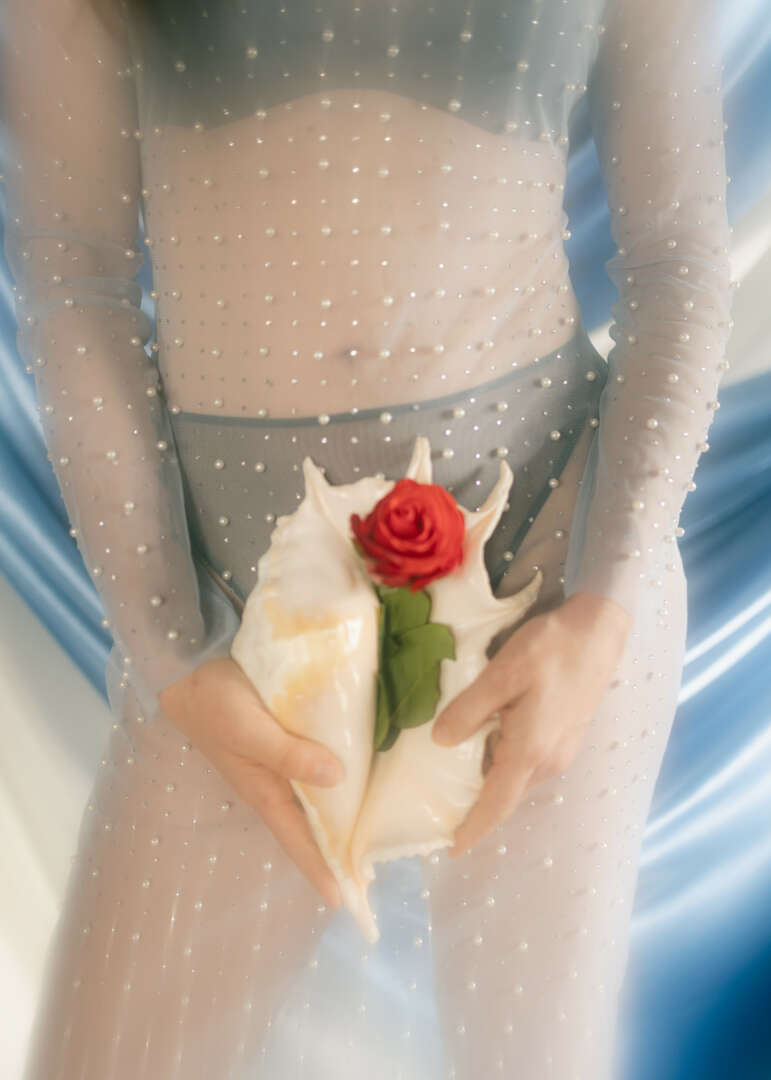
Image Credits
@ontiveros.co – Gregory Ontiveros