



We’re excited to introduce you to the always interesting and insightful Sabrina Ko Bowers. We hope you’ll enjoy our conversation with Sabrina below.
Sabrina, thanks for joining us, excited to have you contributing your stories and insights. We’d love to have you retell us the story behind how you came up with the idea for your business, I think our audience would really enjoy hearing the backstory.
Like many companies, Audenticity’s origins are rooted in a problem I faced in my life.
In 2016, I had a child. As anyone who has started a family knows, those first few years are both wonderful and overwhelming at the same time. In addition to trying to figure out the whole parenting thing, there is a constant stream of new products that are needed or claim to make your life easier.
I was a working professional juggling a newborn and trying to make decisions about what to buy at the same time. I was constantly going online looking for answers but I often found the most useful recommendations coming from close friends and the broader community of parents online. We were passing around Google Sheets with 200 rows of recommended products from one mom to another.
I thought there must be a better way than spreadsheets for the average person to recommend products and for brands with unique and effective products to reach their customers through personal recommendations.
As I dug deeper into how to solve the recommendations problem, I also realized that many small brands were lacking the growth tools that tech businesses take for granted. Prior to founding Audenticity, I was head of Product and Growth at an edTech company. I had a sizable PM and engineering team that helped grow the company into a unicorn. Small businesses are often lucky to even have a marketing person on payroll, let alone their own tech team to implement growth hacks and experiments. I realized that I could bring some of the same growth tactics and make them available to smaller product companies that did not have a Silicon Valley tech team on staff.
These two problems – finding quality products as a new mom and growing small businesses without the resources of a VC backed software firm – came together and Audenticity was born.
Great, appreciate you sharing that with us. Before we ask you to share more of your insights, can you take a moment to introduce yourself and how you got to where you are today to our readers.
I’ve been in software product development since I graduated from Berkeley in 1999. In my last role, I headed up Product as well as Growth, where I owned the user experience from the time a user landed on our homepage all the way through to purchase.
Referrals ended up being a big win for us. We were able to drive roughly 10% uplift in sales at one-third of the cost of acquisition. People who were referred by someone were 13 times more likely to convert. People trust other people, more than they trust ads.
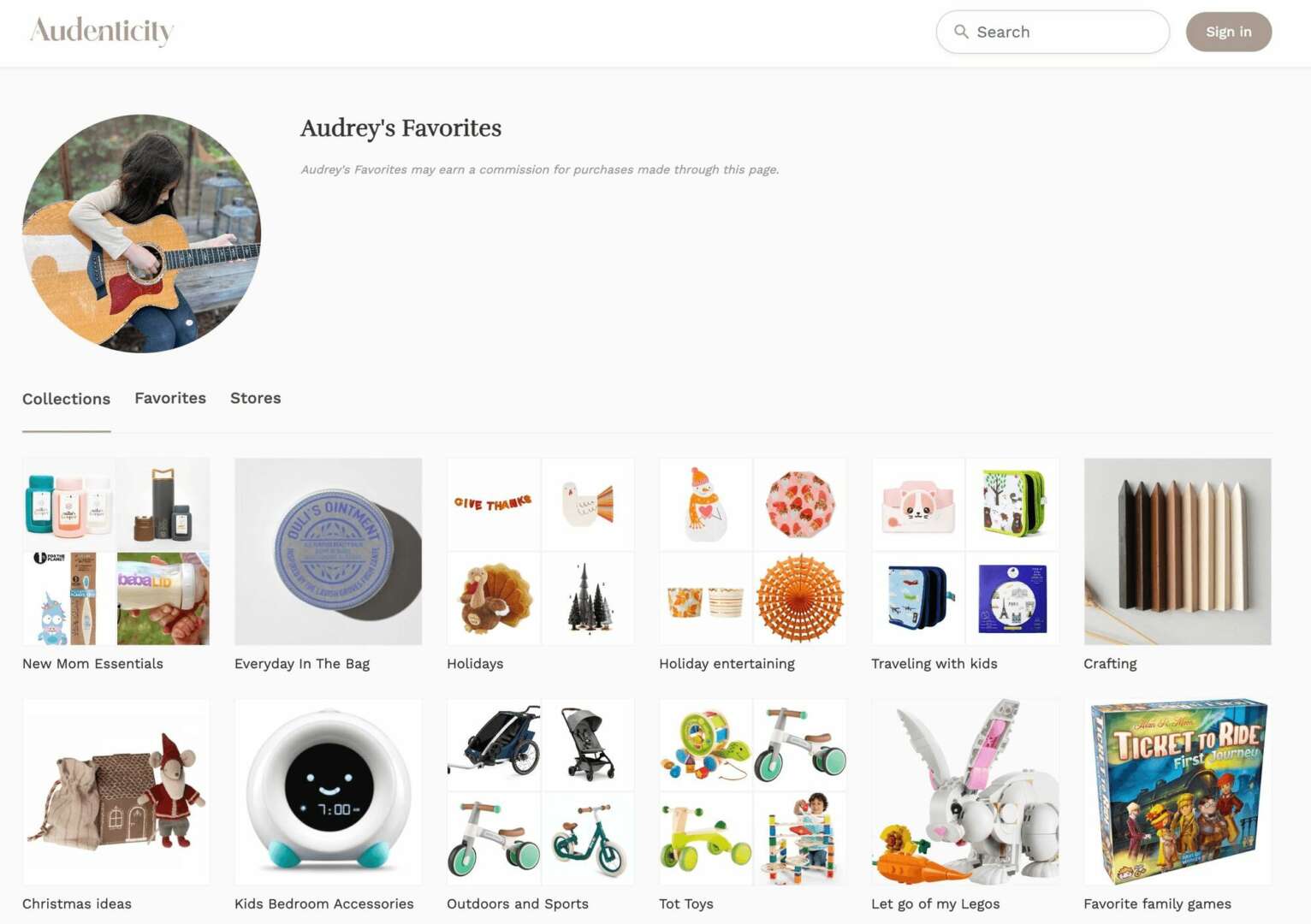
With Audenticity, we aim to bring our knowledge from running all these A/B tests to smaller brands – from those just starting out to those who are established but looking for more growth but can’t afford their own tech team. New and medium-sized brands need all the help they can get to compete against established players. So we offer tools similar to those I have used to grow previous software companies to unicorn status – providing a way to track, incentivize, and amplify word of mouth.
In my view, referrals, affiliate links, and influencer marketing are all “word of mouth” – just through different channels and at different scales, but they all involve someone recommending either a brand or a product. We offer…
* A referral program where a brand’s existing customers get links that they can share
* An affiliate program where blogs, media, content creators and influencers can get links to any product/brand on our platform to share
* Influencer marketing where brands can recruit influencers from our thousands of mom content creators or reach out to invite anyone they want to work with. Brands can run gifted collabs where advocates apply for free product in exchange for doing a post. This is a great way for brands to build brand awareness and/or receive content that they can use for advertising purposes.
* Professional services: For brands that don’t have a marketing department or don’t have the time to run their own gifted collabs, we offer Professional Services Packages where we do all the work for them.
* Operational efficiencies: handling all the mundane stuff like payments, tax documentation, and tracking, so brands can concentrate on building relationships with their customers and creators.
Audenticity is a software platform that allows Brands to self-serve and run their programs without having to do all the tech work to support it. But we also aim to meet our clients where they are, so we offer Professional Services packages and even do the occasional consulting or website development for our clients when needed.
Our current brands and advocates (anyone who promotes a brand) are focused on kids/family/parenting and adjacent lifestyle categories such as clean beauty/skincare or home and kitchen.
What sets us apart from others is that we’re here to support businesses throughout their journey – from just starting out, through scaling, and finally to sustaining success. That means we don’t have huge sign up fees in order for Brands to get started. In addition, integration is super simple and straightforward. For those Brands with Shopify sites, there’s no code needed – just install an app and you can get started in 5 minutes.
On the flip side, we’re also extremely inclusive to content creators. Our sign up process is fast and easy, not a six page sign up form that requires you to have a social media account and your own website and an email address from your website domain. Once you’re in, you have access to all our brands and products without further approvals.
I’m really proud of the product we’ve built (surprise, surprise, a product person who is proud of their product!). Our website, iOS app, and tracking technology were all built in-house. We’ve had brands switch their established content creators to us from other well-known affiliate networks because we track better and advocates get the commissions they are due. We’ve had brands comment on how easy-to-use our system is and how pretty and intuitive our interface is, and they’ve asked us who built our app, but of course the answer is us!
Some of the main problems we solve for brands are:
* Brand awareness: Almost all brands that are starting out have no brand awareness, which is the first step towards sustainable sales. If no one knows about you, no one is going to buy from you. Consumers don’t trust new brands, so you have to build trust by having others talk about you. When you gift a product to a content creator and they review it and share it out to their followers, you’re effectively borrowing their audience and leveraging the trust they’ve built with their audiences. In most cases, their audience will be bigger than the Brand’s. When the content creator gets a sale for you and they earn a commission, now they’re incentivized to do it again.
* Tracking sales to incentive advocates to promote: Tracking sales and attributing them back to someone who recommended your brand or product is hard work from a technology perspective. And it’s only gotten harder with the rivalry between Meta, who owns Facebook and Instagram, and Apple.
* Managing costs: There are lots of ways that Brands can build brand awareness and sales, such as PR and advertising but they tend to be a lot more expensive with a lot more commitment. Even advertising can be more cost-effective if you use UGC or you partner with content creators for whitelisted content.
Any advice for growing your clientele? What’s been most effective for you?
Answering a slightly different question: What has been the most effective strategy for brands growing their customer base?
I’m going to say “word of mouth”, of course, particularly incentivized word of mouth. Harvard Business Review did a great podcast featuring ButcherBox called “How to Build a Start-Up — Without VC Funding” where Mike Salguero, the CEO and founder, discussed his growth strategy of investing heavily in influencer marketing. It’s absolutely worth a listen.
Many Brands think influencer marketing is out of reach. They’ve heard about celebrities charging $1m+ per post and even regular influencers charging $700 per post.
However, nanoinfluencers are a great way to start working with influencers because 1) they are often happy to create content in exchange for free product and a commission and 2) they are often way more cost-effective. MIT Management Review recently published an article “The Long Tail of Social Media Influence” where they analyzed data across almost 2 million purchases, and they found that “influencers with lower follower counts (referred to as nano-influencers) delivered dramatically better per-follower returns on marketing investments than macro-influencers.”
Another mistake Brands make is that they concentrate only on TikTok and Instagram. Some people say blogs and websites are dead, but I still see a lot of Instagram nanoinfluencers with blogs and websites and those tend to convert extremely well over the long-run. Instagram stories and TikTok are more one-time hits, but blogs and websites tend to convert over and over again for months on end.
I recommend Brands research and find bloggers, websites, and YouTube influencers that match their niche perfectly. Then contact them through an email or DM them on Instagram, telling them the benefits of the product, offering them a free product and inviting them into their easy-to-join affiliate program. They should then follow up with sending the product and then follow up periodically until they see the content posted. Brands can offer a promo code immediately to the content creator to share with their followers, or they can do it later only for their best-performing content creators.
Working with influencers allows brands to effectively “borrow” the audience of the influencer and reach a whole new audience. Many brands make the mistake of paying a company to do their own social media for thousands of dollars per month, but if you have a limited follower base, the Brand is just talking to the same people over and over again. It is much more effective to get others to talk about you on THEIR channels, not YOURS, so that awareness of your brand spreads out.
Do you sell on your site, or do you use a platform like Amazon, Etsy, Cratejoy, etc?
Answering a slightly different question: Ecommerce: What are the pros and cons of using platforms like Amazon, Etsy, Shopify? What do you recommend?
Amazon and Etsy vs. Shopify is the Brand equivalent of TikTok and Instagram vs. a blog/website/email list for a content creator. With the prior, you get a massive distribution channel (if you’re lucky) because they have a huge audience. Think of it as renting space and living by their rules. With the latter, you have to build it yourself but it belongs to you. It’s your customers, it’s your followers. People are there for you, not for an algorithm that churns out the “best for [insert platform name]’ based on you and your competition.
Amazon gives customers Prime delivery and free shipping and it gives Brands access to those customers, their delivery and logistics, and even their affiliate program. I’ve seen Brands join Amazon because they want access to those customers, but in order to access those customers, they will need to pay all Amazon’s fees plus advertising fees, which puts them at break even or even at a loss. But customers want to shop at Amazon so they do it.
What’s even more worrisome with Amazon is the sheer number of copycats. If your product succeeds on Amazon, there will be a lot of copycats that will offer the “same” product without your brand name at a lower cost. Amazon says that they will remove copycats if the Brands report it, but looking at Amazon’s site, I wouldn’t say this has been an effective tactic. At the end of the day, if you’re Amazon, you want customers to make a purchase. Does it matter what brand or seller makes the sale?
With Amazon and Etsy, the Brand doesn’t own the customer. You don’t have access to their email and you can’t ask them to review you on your site, create a post, share with friends, give them offers to repurchase. You cannot market to them again. It’s a transaction, not a relationship with your customer.
With Shopify, you own the customer. The purchase happens on your site, you get the customer’s email address. You can upsell during checkout so the customer buys more from you. You can ask them to do all the things, or none of the things, but it’s in your control at your discretion.
You have to create the traffic to your own website, but you can get much more out of it – through increasing the order size, getting repeat orders, and getting referrals from that customer.
Shopify offers so many tools that Brands can take advantage of, without having to do any, or very little, coding. For example, Audenticity has a Shopify app that makes our solution for brand advocacy campaigns – referrals, affiliate marketing, and influencer marketing – a no-code solution.
If you want to build a business that you own and control, go with Shopify. It’s more work than Amazon and Etsy, but it’s yours.
Contact Info:
- Website: https://www.audenticity.com/
- Instagram: https://www.instagram.com/audenticity/
- Facebook: https://www.facebook.com/audenticity
- Linkedin: https://www.linkedin.com/company/audenticity/
- Twitter: https://x.com/audenticity
- Youtube: https://www.youtube.com/@audenticity