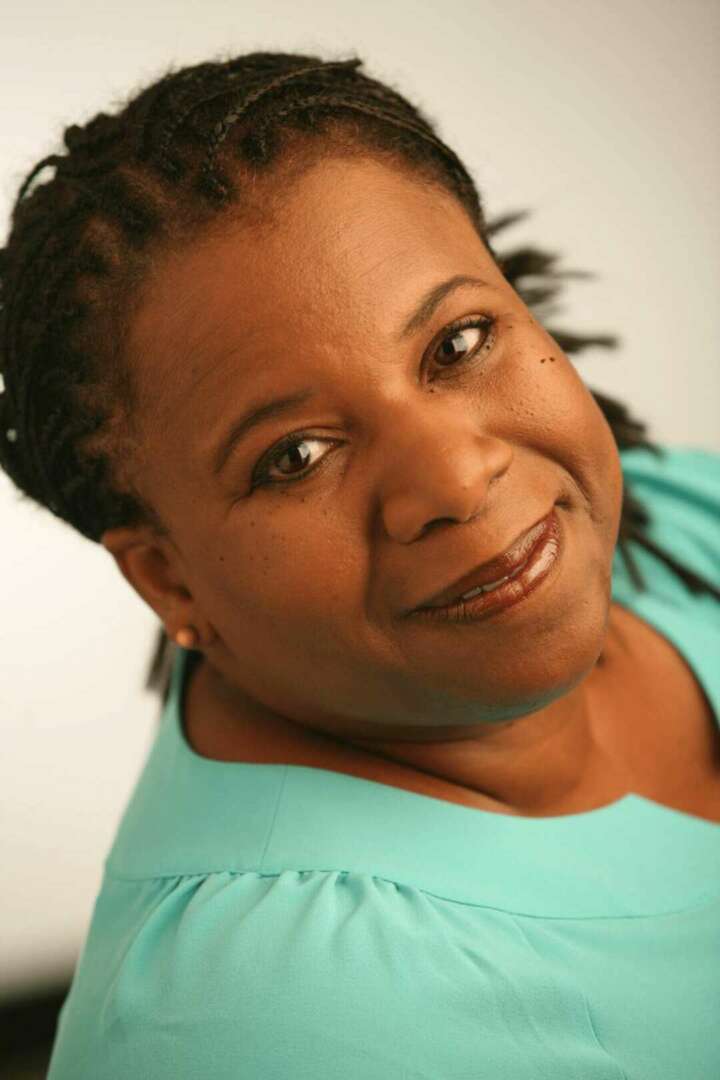

We recently connected with Mildred Inez Lewis and have shared our conversation below.
Mildred Inez , appreciate you joining us today. Can you talk to us about a project that’s meant a lot to you?
I’m fortunate to have had podcasts, plays, short films and a feature produced. WE JUMP BROOM was “just” a short play I wrote for PlayGround-LA. It tells the story of two enslaved women who decide to marry after learning of an impending sale. Published in Smith & Kraus’ 2023 Ten-Minute play anthology, it won recognition from the Samuel French OOB Festival and Albuquerque’s Fusion Theatre. It’s been produced in Los Angeles and New York and studied at colleges including Loyola Marymount.
I regularly get emails and letters about the piece. The impact it continues to have on audiences and students is remarkable, and heartening. This is why we day job and hustle, workshop and seminar: to create meaning for others.
Before the pandemic, I decided to explore slavery. I challenged myself to explore its wounds without onstage violence. WE JUMP BROOM came out of that exploration. I challenged myself to show the brutality of slavery without putting actual violence on stage. I prioritized joy – not “easy to come by” joy, but “hard fought for, prickly” joy. These women decide to marry after stealing away to make love. The play shows how the violence of slavery permeated even the most intimate parts of slaves’ lives without crushing their humanity.
One person wrote: “A tender and unblinking short play of two women finding solace and love in one another whilst beset by the worst of humanity. Powerful, moving, and rich in character, this is just a powerhouse all-around.”
The royalties from this play are never going to pay the mortgage. But the response to it has repaid my soul a thousand times over.
Great, appreciate you sharing that with us. Before we ask you to share more of your insights, can you take a moment to introduce yourself and how you got to where you are today to our readers.
After Oberlin College, I started as a director in the Playwright and Directors’ Unit at the Actors Studio and Circle Rep LAB, focusing on new plays and classics. I then graduated from UCLA’s film school. where I won a Samuel Goldwyn Writing Award. Since then, I’ve written and directed for digital, audio, stage and screen. Recent adventures include being nominated for an Ambie Award for my podcast $10 and a Tambourine as part of the Antaeus Theatre’s Zip Code series, and being part of Orchard Project’s 2023 Audio Lab. I hold playwriting commissions from A Different Myth (Asheville, NC). Lifeline Theatre (Chicago), Lucille Lortel (NYC), and SCI@SPARC (Livermore CA). Finally, I’m shopping two dramedy pilots XO MICKEY (inspired by Mickey Guyton) and i-CLASS.
I’m most proud of creating three dimensional, diverse characters in complex, genre bending worlds. As much as I want to create great work, I also want people to have a damn good time when they’re watching my stuff. I also care about process. If you want your work to liberate and inspire, you can’t treat people badly. Eventually those seams show.
In your view, what can society to do to best support artists, creatives and a thriving creative ecosystem?
Artists and creatives are ultimately employees and small business owners, parents, caregivers, and citizens. We’re not special. We face the same precarity others do. This was laid bare during the recent strikes. We need society to create and maintain a thriving economy with meaningful support, especially for those who are going through it. We collectively need to fight to keep our democracy. If books are censored and education is watered down, where are future readers, viewers and audiences coming from?
Is there something you think non-creatives will struggle to understand about your journey as a creative?
A lot of people vastly underestimate how much creatives are in “business”. I’m not just talking about marketing. Creatives regularly have to pivot to new technologies to practice our craft. That requires investment and training time. No company pays for that. We have to anticipate and respond to shifting tastes. Distribution systems shift like the tides. That makes you not just responsible for continuously creating new content. You also have to keep updating your business strategy. Risks are shifting away from studios, galleries and representation to individuals. How many followers do you bring to the table? Hovering over all this are the challenges presented by A.I. How will people value and think about all art post A.I. integration?
Contact Info:
- Instagram: @themil10
- Twitter: @TheMil10