

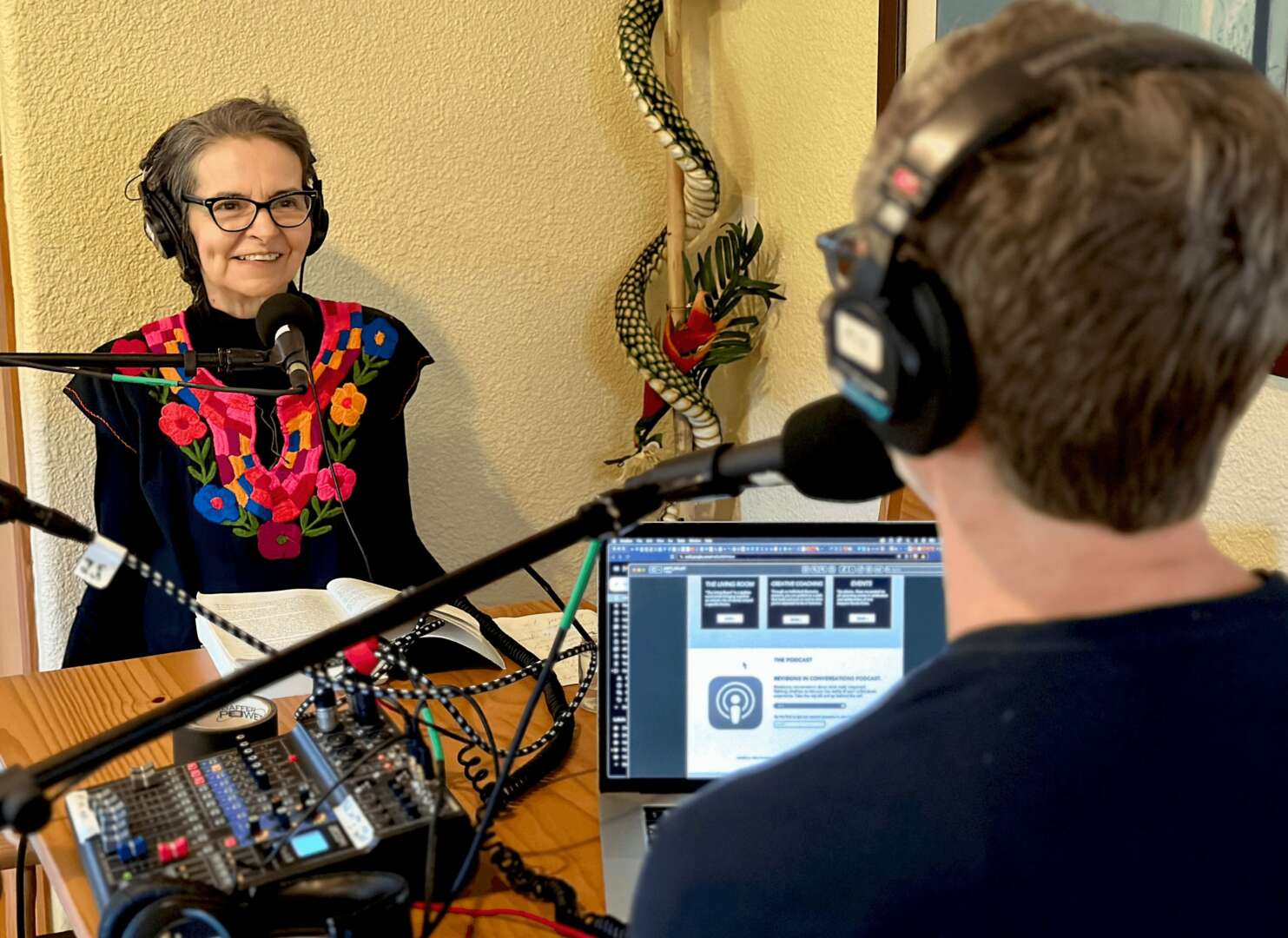

We recently connected with Amparo Garcia-Crow and have shared our conversation below.
Amparo, thanks for joining us, excited to have you contributing your stories and insights. Going back to the beginning – how did you come up with the idea in the first place?
In my world, I speak three languages— I speak English, Spanish and Dream.
In the dreamtime, I am often clairvoyant, clairaudient, and frequently get introduced to people before I meet them in real life. My dreams announced the conceptions and even births of my children. I meet significant lovers and friends in my dreams weeks months sometimes even years before I meet them in real life. I often get prepared for the loss and deaths of certain friends and relatives. Often my dreaming body tells me what it needs. Sometimes when I’m going to encounter some physical illness or psychological injury it often tells me how to deal with it to support healing. Many times when a heartbreak or difficult passage awaits I get a “rehearsal” in order to meet it more gracefully—not change it—meet it. Upon meeting it I can then be guided to the only “change” possible, the changing of my mind. Surprisingly I often meet myself as other people, genders and races. From the “scenery” around me, I appear to have existed in other centuries and civilizations which now influence my current situations and relationships. Sometimes recurring allies and guides appear who offer me very particular instructions.Having survived more than one near death experience, I have often been guided by out of body impressions which some call clairaudience. From this form of extra-sensory perception, I often acquire information I attune to through an “inner voice” or voices separate from thought. Below please find a short excerpt from my memoir PROPHECY OF MY UNDOING which provides some background about my childhood, which was when I first began to track these experiences:
AMPARO’S PROLOGUE: THE PRICE OF ADMISSION
Right as we turned onto Highway 44 which leads directly into my hometown, Charlie pointed to a field.
“Is that what I think it is?” He asked.
Closed since the late 1950s, the remnants of an old drive-in movie theater quickly approached. The giant screen sat in ruins looking like a towering artist’s easel in the middle of a field surrounded by rows of cotton. What remained of the original admissions booth was where my attention went.
“I nearly died. . . right there,” I said, pointing to the turn off into the drive-in. “For real?” Charlie asked. With me, he knew it might be metaphorical.
“For real! Most of the plays I’ve written originated right there. My parents had recently rented a house near the hospital where they worked in the neighboring town Alice, Texas. On this particular Sunday, they both had the day off which was rare. Instead of visiting family and relatives like my mother had chosen to do, my father opted to hang out with buddies at one of his favorite beer joints instead. The problem was— my father never made it back to pick us up. It had gotten late. I had school the next day. My mother, less than thrilled, got her sister to drive us to the bar. Determined to catch my father ‘up to no good’, my mother prepared herself for a standoff all the way there. When we pulled up to the seedy corner dive, my mother angrily leaned over my aunt
and started honking aggressively. Finally, the barkeeper who didn’t look very happy with us shouted, “I’ll get him, just calm your horses!” After a long moment, my father finally appeared looking rather apologetic, beckoning us to follow him to where he parked the Chevy nearby. “I’ll drive,” he said. Why my mother allowed him to drive, I will never know? He could barely stand up. The argument that followed was so absurd, the best I could make of it was that my mother felt humiliated after hearing an elder uncle talk ‘behind her back’ about my father. Instead of believing the uncle she screamed at him “Anda hombre, eres puro hoto!”
“Hoto. . . ?” Charlie tried to translate the Spanish, but was stumped.
“It’s a derogatory slang word for gay, kind of like faggot?” I explained. “She was confronting the uncle in front of everybody! She then confronted my father by screaming at him too, ‘Are you sucking his dick. . . too?’ What are you talking about?” My father said almost under his breath. “My uncle said you’re doing sexual favors for drinks at the Alibi Club?”
The Alibi Club was my father’s favorite bar in downtown Alice, Texas near the hospital were he worked. Women did not frequent bars in those years so whatever favors my father was doing, it was for men? In that moment, my father did not deny or admit to any of it. Yes, he had too much to drink again. But when my mother reached over to swat at him, he lost control of the car, causing it to spin out of control like a hurling Tilt o’ World, barely missing the pile-up that screeched to a sudden stop in front of us. When the car finally came to a complete rest, I saw the admission booth lights towering over us. We had somehow managed to avoid crashing into it as well. And that’s when I heard a voice say, “You are going to have to write about this, Amparo, otherwise no one is going to believe it!” “This” wasn’t just the car accident we had avoided. The voice implied the South Texas stories and relationships I was observing. And while the voice didn’t frighten me with its declaration, it did surprise me. My first response was to argue with it, “What do you mean write? Nobody writes down here in these parts! They farm, do other people’s yards, they cut hair, work at the fruit stand, work at the hospital, milk the cows or—God forbid—they suck other peoples dicks!”
Charlie looked at me in disbelief, but when he saw me laughing about it, my dark humor gave him some relief too. We both knew it wasn’t funny but laughter at least was the catharsis we both needed.
“Maybe there’s a price of ‘admission’ for everything we do in this life?” I mused. “My price has certainly been to “admit” to all of it!”

Amparo, before we move on to more of these sorts of questions, can you take some time to bring our readers up to speed on you and what you do?
Looking back at my evolution into producing, directing, acting, and writing plays, stories, and songs, my journey into experimenting with the aesthetics of ‘Identity’ had everything to do with the diverse mentors I met at crucial turning points in my training. Fortunately for me, the serendipitous moments with various mentors guided me to consider the pros and cons about truth telling, especially when I depict Mexican-American characters to an audience as a storyteller. The burden of representing LatinX characters in “a good light” is a complex one, especially when the worst of the stereotypes portrayed on the stage are sometimes true.
As an art maker, how I have spoken my truth as a story-teller when depicting the worst of our LatinX communities in the process has often presented the chicken and the egg conundrum – meaning, which came first? From the start, has theatre defined my awareness of identity, or has my need for awareness of identity made theatre of me?
When I moved to New York City in the early 1980s as an aspiring performer, I was hopeful when I finally got a call from a reputable New York talent agent to discuss possible representation. Unfortunately, I was quickly broadsided when the agent, after reviewing my résumé said, very matter-of-factly, “You’re not going to work!”
What?! Why? The agent, a woman in her late 40s with a Jane Fonda hairstyle, told me I had a very impressive resume but as far as commercials, television, and film were concerned, I was “too exotic.” I had never heard that particular ‘Identity’ category, so I asked for clarification.
“There are no roles written for Hispanics other than walk-on parts. Or in the case of film and television, I can only send you out for day player parts, and those are not worth the time or effort it will take either of us to pursue! And frankly, you don’t look like those parts either!” Meaning, I was too tall and thin (5’8 in height, 108 pounds), and my skin wasn’t dark enough. For what, exactly, I wondered.
She said, “The housekeeper roles. Maybe even the prostitute roles.” I was stunned. Surely she was mistaken! Because she had not mentioned theatrical work in her response, I was at least still hopeful. As Aristotle had so aptly described it, theater at its core historically thrived on the audience “suspending its disbelief.”
In my personal experience, the theater was more inclusive, or so I wanted to believe. Up until this moment, I had not yet experienced systematic racism as an artist of color. As a theater student in the 1970s, I had been cast in very diverse leading and supporting roles, competing for them in a large drama department. When I attempted to point that out to the agent, she shook her head. Like a doctor having to deliver terminal news, she said, “I’m sorry, there’s nothing I can do to help you.”
By the fall of 1983, when it became clear that I could no longer afford to live in New York without having to work full-time at non-related jobs that prohibited my creativity for the original new work I wanted to devise, I applied to graduate school in theatre history and criticism at the University of Texas with a focus on directing. Thankfully, I was accepted and received a full-time fellowship, paying my way back home to Texas. At least with that academic aim, I reasoned, I could buy more time to get better at the craft!
It wasn’t long after this that I started booking professional gigs as an early career director. One of the plays won me a Theatre Communications Group (TCG) fellowship as an early career director to support my interest in the development of new work. Designed to assist avant-garde artists in developing professional affiliations, the fellowship financially supported my interest in working with artists of color. To facilitate those goals, TCG paid my travel to New York City and introduced me several working artists I had read about and admired in my graduate theatre history classes .
Soon after I started receiving inspiration and instruction through a process that the ancient masters called transmission. Transmission is when a master/mentor embodies fully who they are and what they do. By proximity, they naturally pass their mastery energetically. That certainly began happening to me. s a newbie to the writing process, I started to doodle during my break times as a TCG fellow assisting professional playwrights, directors and their actors. Turning journal entries into self-paced workshops, I started to sketch dramatic characters in nonstop, ongoing dialogue in my notebooks and doing this practice, I wrote my first play . . . accidentally. I had not consciously planned to write what became “Cocks Have Claws and Wings to Fly. ” Then, when I saw a flyer inviting new play entries for consideration at the Hispanic New Play Festival from South Coast Repertory Theatre, I sent them my first effort. When the play was invited to be one of the three plays chosen for development, a Chicago theatre producer was present at the play’s first reading and he offered me my first world premiere production at his theatre the following year.
At the same time, I submitted my play to the newly founded Michener Center for Writers, an interdisciplinary master of fine arts program in fiction, poetry, playwriting, and screenwriting at the University of Texas. Since this was the only writing sample I had, I was genuinely surprised to receive one of the coveted three-year fellowships to the program and soon began writing in various genres, including musical theatre.
During all these phases of development, the thing I always had going on the side, was performing vocals for original rock and pop bands. I was good at writing lyrics and improvising melodies, so when paired up with talented musicians who were masters of their instruments, our collaborations provided noteworthy. When not working in the theatre or attempting to make films, I booked music gigs and got invited to be part of the first SXSW Music Festival. One year, I even had both a new film premiere and a music showcase— as part of the same festival.
Soon after completing my second Master’s degree in Creative Writing through the then called Michener Center for Writers, I was offered a tenured-track (multi-disciplinary) professorship at the University of Texas . Now a single mom as well, this helped provide the financial support during the 1990s and up until the early 2000s that I needed. Other creative possibilities, like my young son being getting invited to participate as an actor in the acclaimed Disney Studios showcase in Los Angeles, required that we move to Los Angeles to facilitate the opportunities suddenly becoming available to him. And because he was under-age, I needed to accompany him so I soon after had to resign my professorship and once more follow the dream of creating a sustainable, professional career in film and theatre in Los Angeles. This leap of faith proved life changing in many unexpected ways. (This young son is now 37 years old, and known as the Americana music artist SHAKEY GRAVES.)
All to say, all of the accomplishments products, services and creative works I provide (and have provided) have always been stepping stones towards the “next” project or opportunity and that then becomes the experience to build on next whether its teaching, coaching and mentoring others– which I have returned to time and again to. Now as a 66 year old, it is more important to enjoy and serve the fellowship of all these ventures.
Presently (and for the last 12 years) I am the founder and co-host of the monthly gathering in Austin, Texas called THE LIVING ROOM STORY-TIME FOR GROWN-UPS which provides the community building and creative ‘story’ coaching that I have always loved creating, inspiring and contributing towards—regardless of what genre I am working with at that time.
Can you share a story from your journey that illustrates your resilience?
I was diagnosed with Parkinson’s in 2011.
As someone who had been practicing ecstatic dance since 1993, maybe I had managed to initially slow down the onset of my Parkinson tremors by not only dancing for several hours a week but facilitating and guiding ecstatic dance in Austin to a diverse community of movers—that were diverse in age, race and backgrounds.
Maybe. . .just maybe. . .the Parkinson’s is NOT going to keep me from my creative ventures as it does some individuals.
Too ashamed to admit my obvious (and sudden) physical and emotional helplessness to even myself, (especially during isolation during the pandemic) —I wanted to power through all of it like I had done so many other times in my life!
I had bought into the “marketing” at every corner that had me believing that “anti-aging” responses were all mail order miracles! Appearing younger and happier—physically and stamina wise—was what the ads of every type sold to me as a woman since the day I had first learned to read. I had also practiced one too many new age “glossing” over techniques to avoid conflict at all costs. Thankfully as soon as I was able to cry regularly and accept the diagnosis, I could start moving forward with my life again. I could finally give up “putting on a show” about resilience and finally surrender to the healing opportunities at hand. I sincerely “needed a hand” especially since both my hands were now more visibly impaired. But—like a cornered animal that’s been wounded, I growled at the loving and helping hands my family extended to me till my son gently said to me
“Mom. . . We are here to help each other ‘be’ the best version of ourselves—till we cannot be that anymore,” We need to get you the help you need.”
Like a smelling salt that brought me back from my despair, I could finally allow the “little girl” in me to receive the abundance of the love available, I no longer had to distract myself with the “busy-ness” I had made a life of in order to feel better about myself. But first the “big girl” in me had one more battle. Because I had definitely become mentally ill during the covid isolation, I researched my mental and emotional symptoms in depth, I discovered the work of Dr. Daniel Amen online.
Dr. Amen is a physician, adult and child psychiatrist, and founder of the Amen Clinics. Having the world’s largest database of brain scans for psychiatry, his work was insightful about what was troubling me. Because his mission is to end mental illness by creating a revolu- tion in brain health, his clinics measure blood flow and activity in the brain to accurately diagnose and treat a patient’s needs. His work seriously considers the effects of toxins like mercury poisoning and the brain trauma caused by even simple “fender-benders” citing in his published work significant information about the depression, anxiety, mood swings, irritability, sleep disorders and the coordination/balance problems I was definitely experiencing.
Sure enough when my brain scan came back from the clinic, it confirmed the brain injuries that were constricting the blood flow in my head.
And while the Amen clinics are not opposed to medications for the mind, and prescribe them when necessary, they ARE opposed to medications being the first and only thing you do to help your brain and your mind.
In my case, they did not recommend medication but the most significant recommendation the clinic did give me that helped me the most —were the 40 hyperbaric oxygen treatments they prescribed.
Because the hyperbaric oxygen treatments fill the blood with enough oxygen to repair brain tissues and restore normal body function, I began to feel 100 percent better, as in almost normal—and almost instantly.
And—the improvement has not stopped since.
And—because the research indicates that Parkinson’s patients are described as ‘honest’—the honesty that research attests to however, may not be because patients choose not to tell lies, but rather (and I am quoting the actual research)
“Parkinson’s patients actually have difficulty lying DUE to cognitive deficits resulting from pathological changes in certain brain regions.” (end of quote)
So as I come to the end of my talk with you this morning, the question you too might be asking is —
when
did telling the truth become a neurological disease? Telling the truth—in my point of view— is a honorable privilege, regardless —
And that— is where the Power for Parkinson’s community in Austin has proved so healing for me. I am actively involved with what they offer. Alongside them, I exercise daily and extend the story-telling to that group of diverse individuals. And because 90% of people with Parkinson’s lose their ability to speak (besides their mobility)— the disease can make our voices low-volume with a monotone expressionless quality and the speaking can come out in short bursts with inappropriate silences in between the words— the remedy is to keep talking anyway,
and—if possible—keep singing, dancing and performing as well—which I do–fiercely regardless of how different I might sound and appear–even to myself– doing it!
We often hear about learning lessons – but just as important is unlearning lessons. Have you ever had to unlearn a lesson?
I think I have touched on some the backstory, yes?
Contact Info:
- Website: https://amparogarciacrow.com
- Other: https://distrokid.com/hyperfollow/amparogarciacrow/amparo-garcia-crow-releasing-1984-1994