

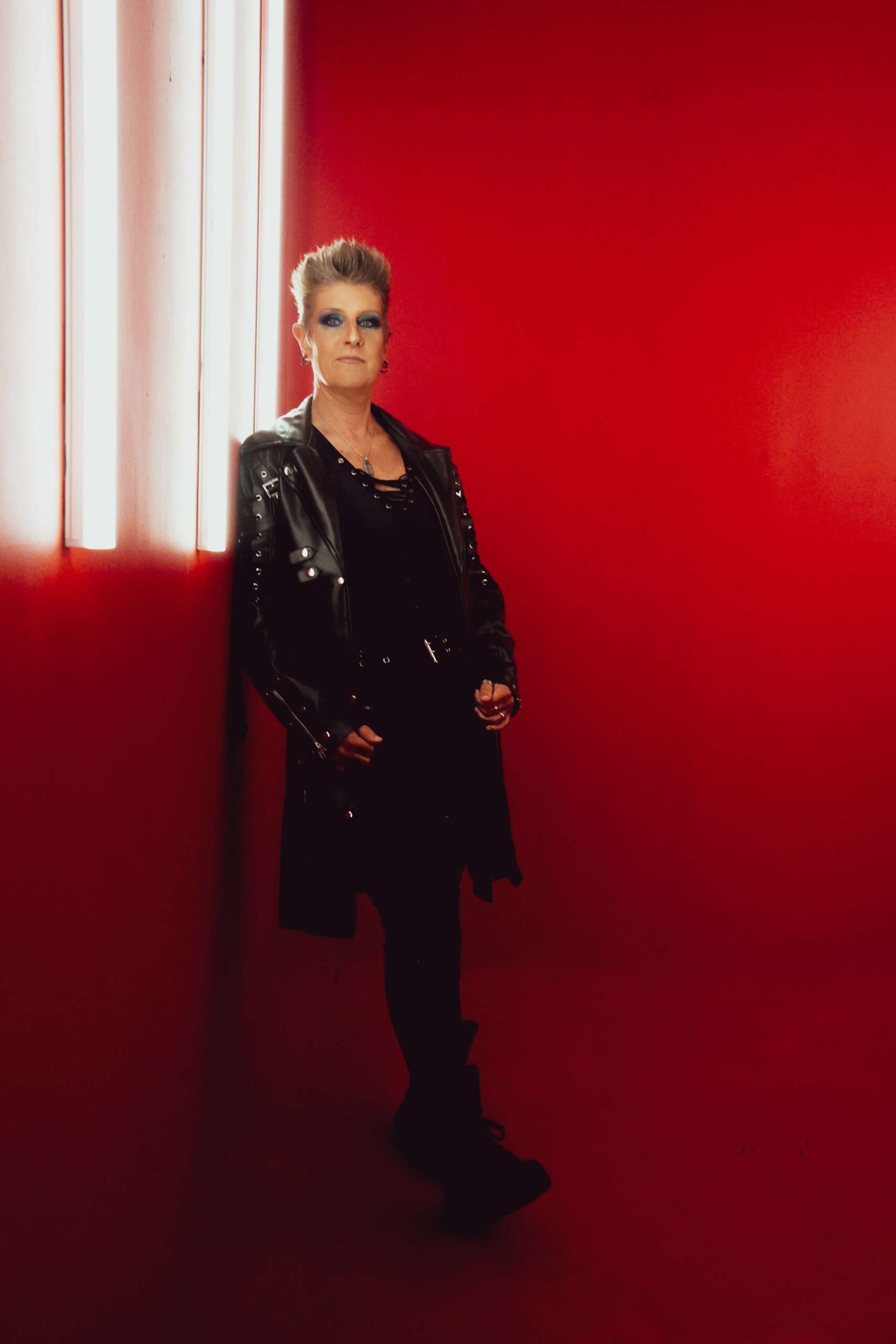

We caught up with the brilliant and insightful Astrum Lucis a few weeks ago and have shared our conversation below.
Alright, Astrum thanks for taking the time to share your stories and insights with us today. When did you first know you wanted to pursue a creative/artistic path professionally?
It was the summer of 1981. My family had just relocated from rural New Jersey to the San Francisco Bay Area. I was heading into the 8th grade. MTV just launched, and loving music, I was glued to it most of my waking hours. At the time I was playing alto saxophone in the school band and taking lessons from Neal Schon’s (guitar player for Journey) father, which meant nothing to me then, but everything to me now.
The all girl band The Go-Go’s were starting to hit big and I saw their video for “Our Lips Are Sealed” on MTV. That moment radically changed the course of my life. I had no idea that I could pursue music as a career, but seeing these 5 women do it gave me permission to chase the dream. And so I convinced my Dad to buy me a drum set, and I started taking lessons, and told everyone at my school I was going to be The Go-Go’s next drummer.
Astrum, before we move on to more of these sorts of questions, can you take some time to bring our readers up to speed on you and what you do?
After seeing The Go-Go’s on MTV and deciding to pursue “Rock Stardom”, the real challenges began. By 15, I was in my first band and thought I was on my way. We recorded a 3-song demo and played our first show as one of the opening bands for The Circle Jerks. I thought I had arrived. But life took a different turn and I had to quit the band because my family relocated once again. There was a lot of relocating over the years, which was hard on me as an only child. But I kept after music every place we landed.
By my early 20s I formed a band and we self-released 3 EPs and played a ton of shows in the Houston, Texas area. The band lasted about 3 years before addictions and internal conflicts tore the band apart. That put me on a path of taking a break from my music career to attend university.
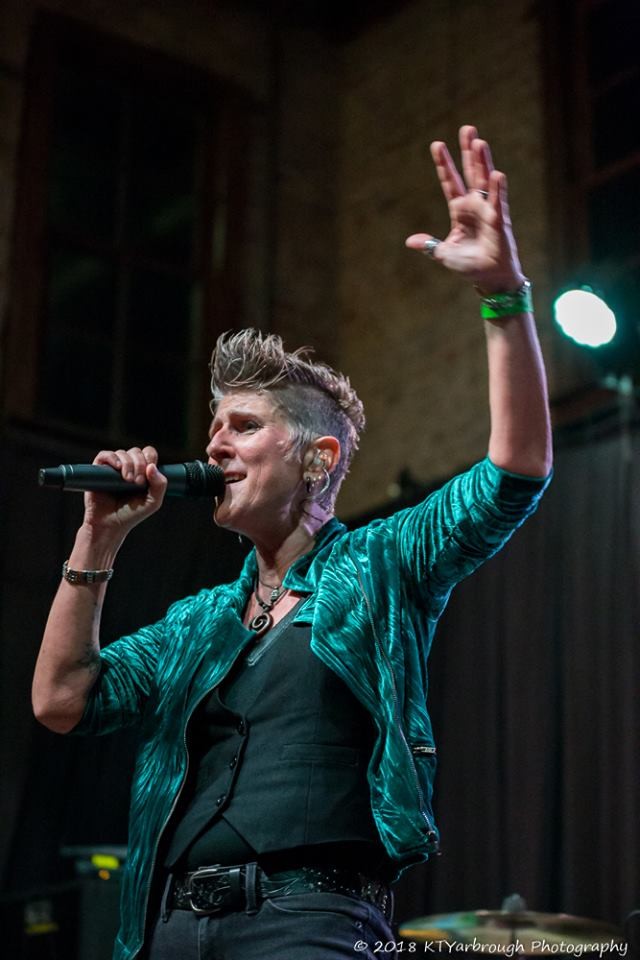
But as any true artist knows, there is never really a break from your calling. So I became a solo artist and started writing and recording my own songs. As a solo artist, I self-released 8 singles/EPs/albums from 1997 to 2009. In late 2009, I changed my name and started my current project, One World (R)evolution.
Now sober and on a path of personal/internal development, I set out to change the world through my music with my new project. Remembering how music was my saving grace so many times throughout my teens and early adult life, I knew I wanted to be that source of connection for my fans and listeners.
My lyrics became focused on offering solutions to problems. I wanted to offer people new ways of looking at life and new ways to move through the many challenges we all face. One World (R)evolution set out to evolve the consciousness of humanity through music. Even the name was carefully thought out, putting the “R” in parenthesis to signify “revolution” is two words, evolution and revolution, and we can’t have a true revolution unless we first evolve our self-awareness and consciousness.
One World (R)evolution released a full length album, “Love Is The Answer” in 2017, and is currently releasing new material as singles. All with the intent of inspiring, uplifting, and empowering greatness is humanity.
In your view, what can society to do to best support artists, creatives and a thriving creative ecosystem?
The best way to support artists and creatives is to financially support their work. Buy their music/art, buy their merchandise, attend their shows/events. If they have member platforms like Patreon, become a member and support them there. It’s extremely expensive to pursue a career in the arts. It’s more than just creating great art and putting it out there.
In today’s music business, the artist really struggles because streaming platforms don’t pay a whole lot, and people can listen to free music everywhere. For example, Spotify pays roughly $0.007 per stream. If the artist is signed to a record label, a majority of that $0.007 goes to the label. Labels, managers, booking agents, venues all cut into the artists profits as well. Labels are also basically just big banks. When a label gives an artist an advance, that all needs to be paid back from the artists profits before the artist can get their cut, which is at best around 10%.
Independent artists do much better, but then they also get stopped in their tracks because signed artists can’t tour with unsigned artists, and the bigger agencies pair their artists together and won’t take on unsigned artists. The indie really has to be a one stop shop and have a strong fan base to survive living outside “the clique”.
It’s also important to subscribe, follow, like, comment, all the things, on an artists social media and streaming platforms. These are the new numbers that matter and propel an artist forward.
Are there any books, videos or other content that you feel have meaningfully impacted your thinking?
I’ve always been big on personal and internal development. About 10 years ago I discovered a training system for high achievers called Inner Matrix Systems. The company is founded by Joey Klein. IMS has been a total game changer for every aspect of my life. The trainings really help me to break through limiting beliefs and success blockers so that I can continually be making progress towards my desired outcomes. I’m almost as passionate about IMS as I am my own music career and I’m always gifting Joey’s book, The Inner Matrix, to people.
Contact Info:
- Website: oneworldrevolution.us
- Instagram: https://www.instagram.com/one_world_revolution_official/
- Facebook: https://www.facebook.com/OneWorldRevolution/
- Linkedin: https://www.linkedin.com/in/astrumluxlucis/
- Twitter: https://twitter.com/owrofficial
- Youtube: https://www.youtube.com/channel/UCiK484kI86lkR5dWj0dWVlg
- Other: https://oneworldrevolution.komi.io/
Image Credits
Main picture: Stacey Lovett Live concert photos: Kim Yarbrough