



We caught up with the brilliant and insightful Staci Mize a few weeks ago and have shared our conversation below.
Staci, thanks for joining us, excited to have you contributing your stories and insights. Are you able to earn a full-time living from your creative work? If so, can you walk us through your journey and how you made it happen?
This is a tricky one, because I think it is always the goal but genuinely so rarely achieved. And I think what’s even more rare is hearing that it is perfectly okay to not achieve this one. I feel like we too often demonize the concept of a day job, but day jobs are not only common, they’re good! And some of us rther enjoy our day jobs AND being an artist.
I think the biggest lie we’ve been fed is that we need to be starving and broke and then we can one day “make it” and all our problems will be solved. Not so much. The starving artist trope is so played out and overrated. I remember a professor once, while I confided in them that I was a little stressed and over worked because I was a full time graduate student in directing while simultaneously working full time in software, that we make our best art when we are exhausted and on the brink of a breakdown. I personally couldn’t disagree more. Personally, I’ve found that myself and the other artists I’ve worked with have done their best work while they aren’t scared about their bills, losing sleep, starving themselves and subsequently binging on fast food in the middle of the night… Now that is not to say I haven’t also benefitted from stepping away from jobs that didn’t serve me as an artist. I quit working in software because it was no longer conducive to my lifestyle as a director, that year I made 22 projects. But again, this past year I did primarily gig work and I spent the majority of time so anxious about where my next check was coming from that I had zero creative energy to spend on the things that made me truly happy.
All this to say, the older I get the more I see fallacy in the proposition of suffering for one’s art. Look around us – haven’t we suffered enough?
Get the day job. Get health insurance. Join your unions. Protect yourself from the elements to allow yourself the space to creatively thrive.
Great, appreciate you sharing that with us. Before we ask you to share more of your insights, can you take a moment to introduce yourself and how you got to where you are today to our readers.
I originally found theatre through my late mother. My mom, a singer and actress herself, was diagnosed with Multiple Sclerosis and became disabled early in adulthood. She initially stepped away from performing in order to focus on having kids. However, with every pregnancy her disability got so much worse that she eventually lost her ability to even sing.
I initially decided to pursue the craft as a way to connect with her, for her to live vicariously through me. But… eventually I began to see all the ways that she should have been able to still be a part of the practice. There has been so little progress in the world of theatre related to inclusivity of the disabled community. So in turn my work rapidly became focused on inclusivity, accessibility, and social action.
I decided to study theatre in college because my family was very poor and there was no way my parents could afford to send me to college and they couldn’t cosign a loan, nor could I take one out myself as I was underage. I auditioned for multiple schools and got full ride scholarships to a few, which I gladly took knowing I probably wouldn’t be able to find work after “majoring in unemployment” as I always joked. I didn’t realize that theatre would be the only thing I studied that would keep my overactive, neurodivergent mind active enough to feel satisfied at the end of each day. I received one degree in musical theatre, another in acting, and my terminal degree in directing.
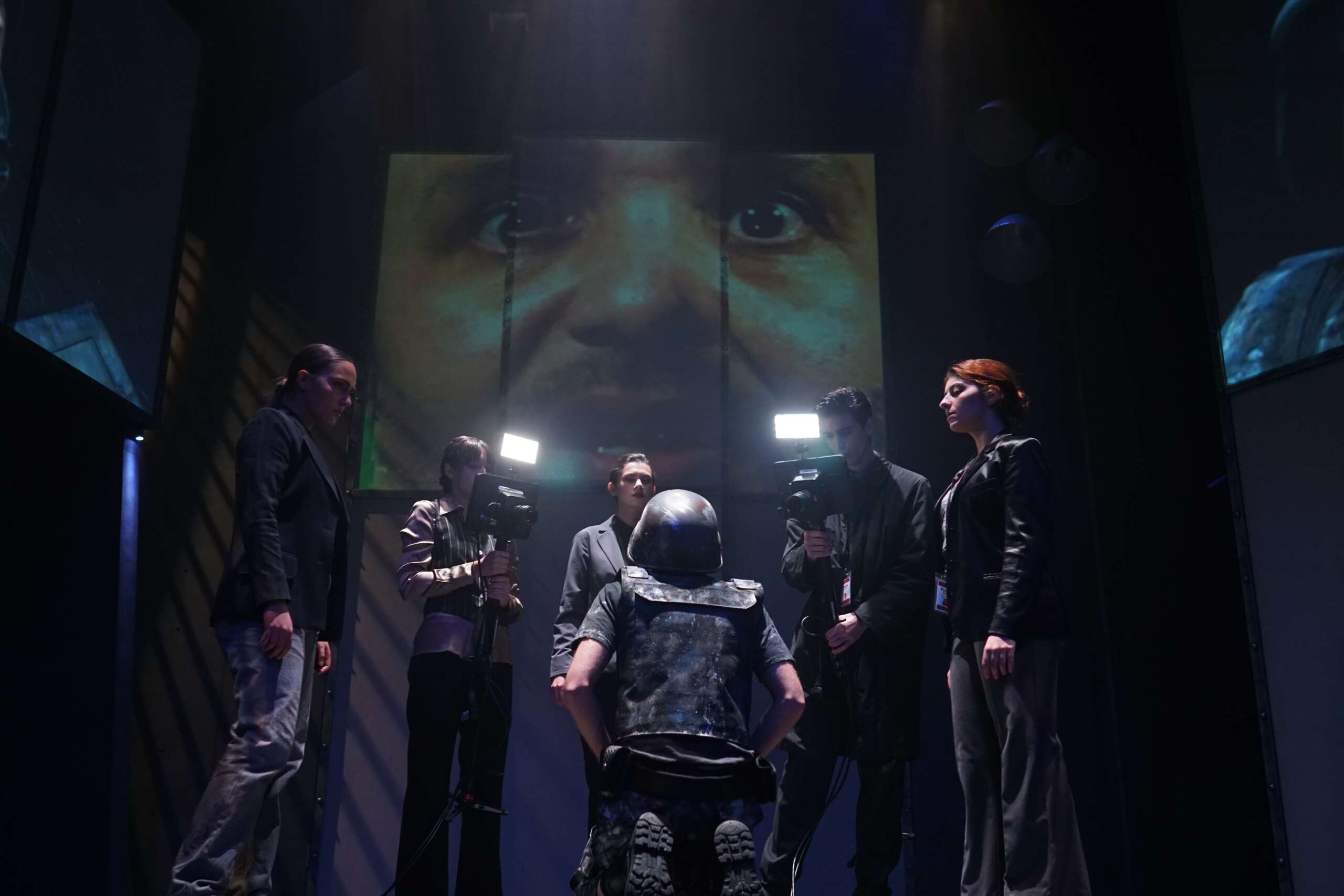
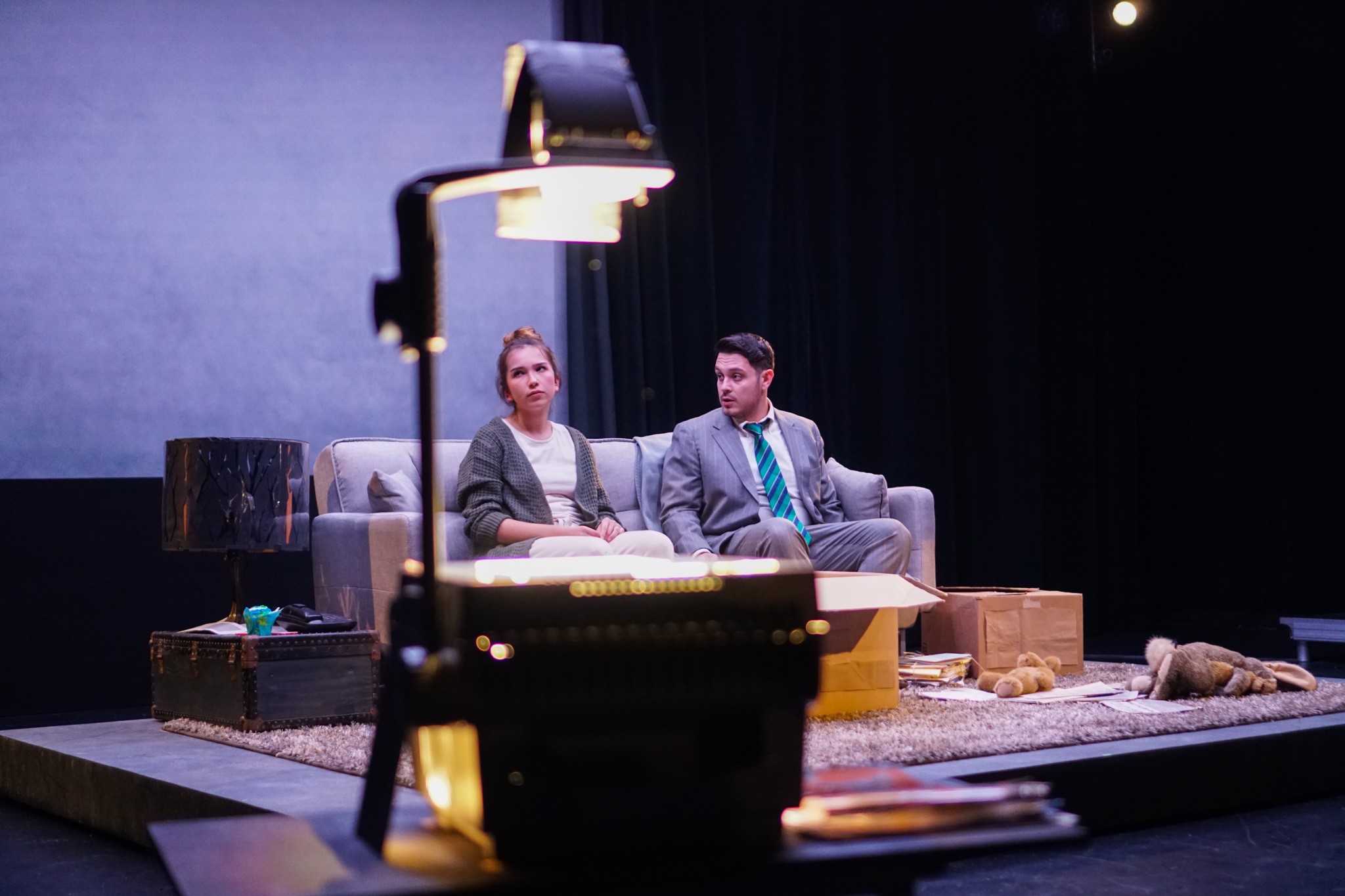
During my time in undergrad, I was intensely focused on devising new works, working on shows such as 600 Highwaymen’s “The Fever” and Manual Cinema’s “Frankenstein”. Additionally I worked at The Public Theater in New York in production management for their devised theatre initiative and the Under the Radar Festival. Devising rapidly became my preferred method of working, intentionally putting myself in aggressively collaborative environments and creating work from the ground up. This is something that has lasted until my present day, constantly chasing the opportunity to work on new works with playwrights and designers who are interested in rarely “staying in their lane”
I always like to tell people my main goal in art and life is to always be collecting new things fro my skill bucket – add some clowning, some musical theatre, software engineering, some choreography, some philosophy, some cinematography, sugar, spice, and everything nice in a bucket only to shake it up and see what comes out.
I think that last part sums up where I’m at in my career. I shook myself up, moved across the country a few times, experienced some personal tragedies and incredible wins, and now I’m seeing what comes out of it – whether that be directing new works, operas, films, or works that involve all three.
Is there mission driving your creative journey?
The biggest thing for me has always been inclusivity and accessibility and how we can question who we are inviting to take part in our art. This is a little different than wondering who are audience is. Rather, this is questioning who are we literally allowing to take part in art based on where it is created/performed, how it is presented, and by whom it is presented.
While working in Poland, I encountered a brilliant director who told me they begin with access in mind whenever they are creating a new work. This is in opposition to the classic approach of creating your work and then figuring out how to make it accessible to all people (ie adding supertitles, audio descriptions, signing performers, etc). Similarly, I’ve found that when you design or create anything with access in mind, all will benefit. There is a famous story of this happening to the company Oxo when they produced a potato peeler with a wider grip to accommodate people with dexterity struggles. They rapidly discovered that it was outselling their traditional handles multiple times over. Similarly, when presented with the option to use a ramp or stairs, most people will use a ramp even when the distance is greater than using the stairs.
I guess what I’m saying is that the core of my creative focus is to give humanity the chance to access culture freely without barriers to entry. Theatre is, after all, one of the oldest art forms known to man. It is absolutely absurd to gatekeep something so ingrained in the human experience.
What can society do to ensure an environment that’s helpful to artists and creatives?
I mean, in my case it’s simple really. Go see art! Be a consumer of art! Get excited about facing your humanity in new, challenging, and important ways! Especially now while so many are battling against AI, I see the future of creators is in the liminal space of living art.
Furthermore, if you are a person commissioning work – pay your artists. And pay them a living wage! Show respect for the craft you’re asking them to give to you by respecting their time and livelihood.
And, for fellow artists, the best way to support it is to keep creating. Never stop – push through the droughts, the famines, and just keep discovering. Don’t feed into jealousy or pettiness – just create and applaud your fellow creators along the way.
Contact Info:
- Website: https://www.stacimize.com/
- Instagram: https://www.instagram.com/mizermelon/
- Linkedin: https://www.linkedin.com/in/staci-mize-2091839b/
Image Credits
Taso Papadakis, Makela Ypez, Yuval Zehavi