



We caught up with the brilliant and insightful Robert Crombie a few weeks ago and have shared our conversation below.
Hi Robert, thanks for joining us today. Earning a full time living from one’s creative career can be incredibly difficult. Have you been able to do so and if so, can you share some of the key parts of your journey and any important advice or lessons that might help creatives who haven’t been able to yet?
I had done about 20 paintings back in 2001 and I was asked to do a solo show at a local library. Four pieces sold on the opening day. I was very surprised and inspired by the sales. I caught the fever. Pretty soon I was turning out painting after painting after painting. I started entering juried shows and actually won some awards!
I started moving toward a more professional method of doing business by getting business cards made and then I had a friend create a very inexpensive website for me. There was no social media to create a Professional Page with at that time. I do think social media is a very important tool for all of us even if we have a website. Almost everyone I know including myself, check people out on Facebook or Instagram first. I have my website mentioned on both of those media channels.
A very attractive website is important. It makes an artist much more valid, professional. Whether you’re selling 60 paintings a year or 10, you want to have a site that conveys success. Our artwork will speak for itself. People will either be attracted to it or not. But the way we present it will either appeal or not appeal to buyers as well.
It’s also very important to not oversell. Don’t push. People know if they like or don’t like something. We all want to make our own decisions without being directed. So many times it’s what you don’t say that’s more important than what you say.
Robert, before we move on to more of these sorts of questions, can you take some time to bring our readers up to speed on you and what you do?
I retired 3 years ago from the printing industry. I was an Account Manager which was perfect for my schedule and need for variety and creativity. I painted after work and much more on weekends. I had little time for anything else. I kept doing outdoor shows and applying for juried shows. Then it was time to say good bye to all of that and paint full time.
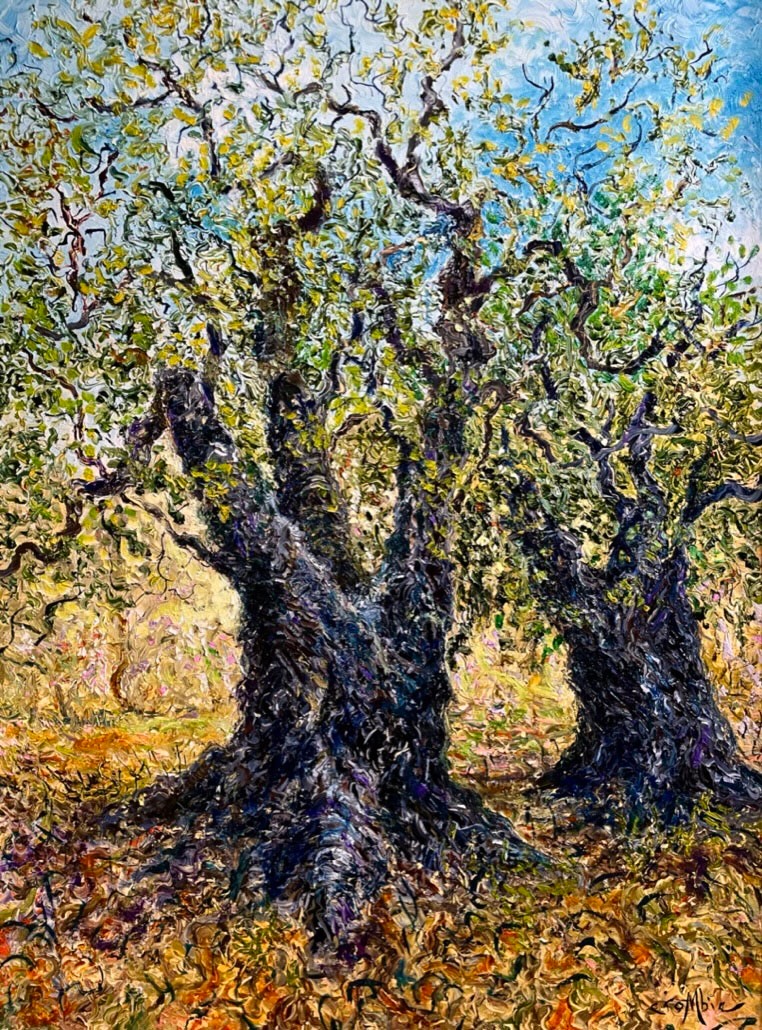
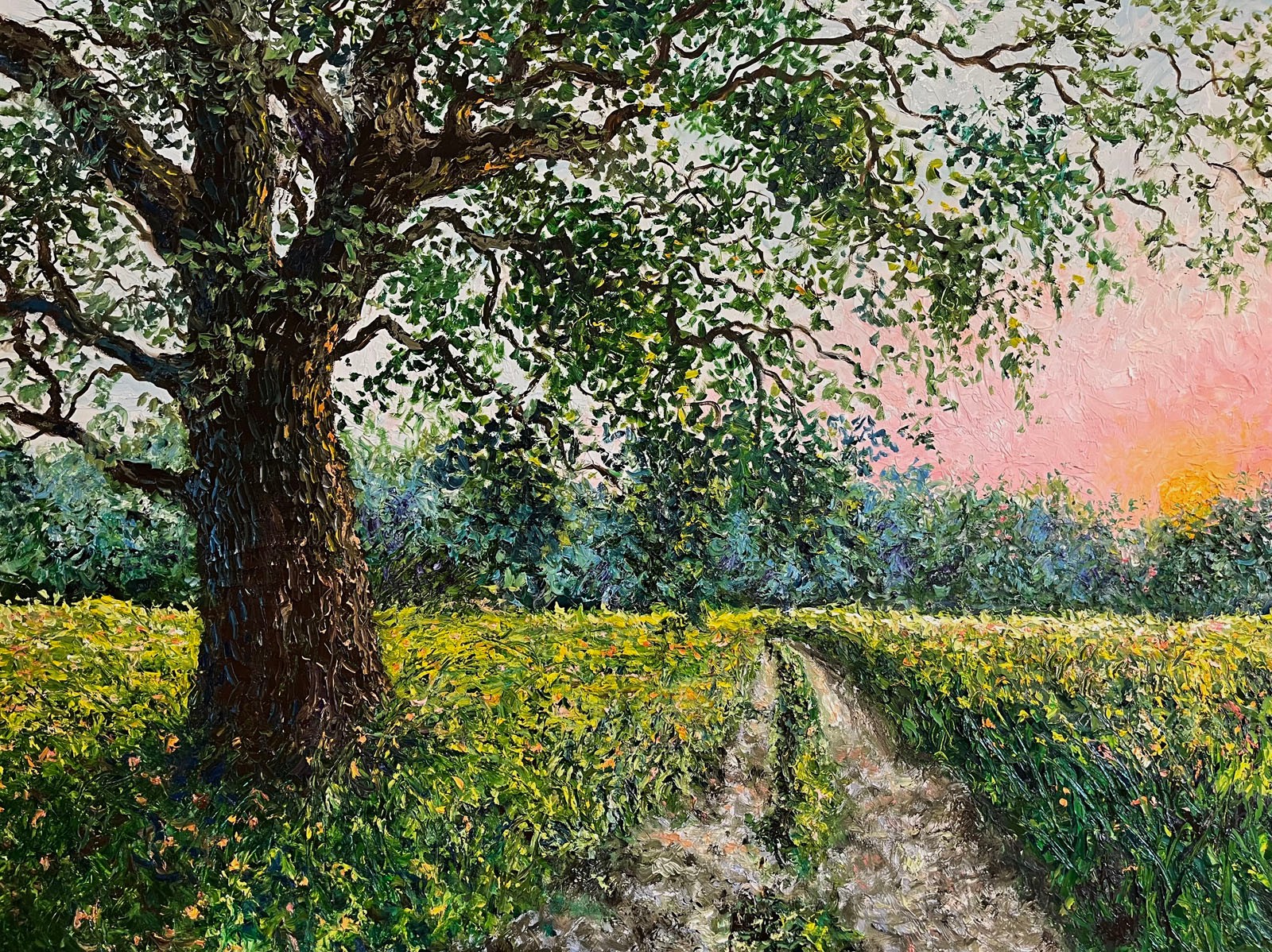
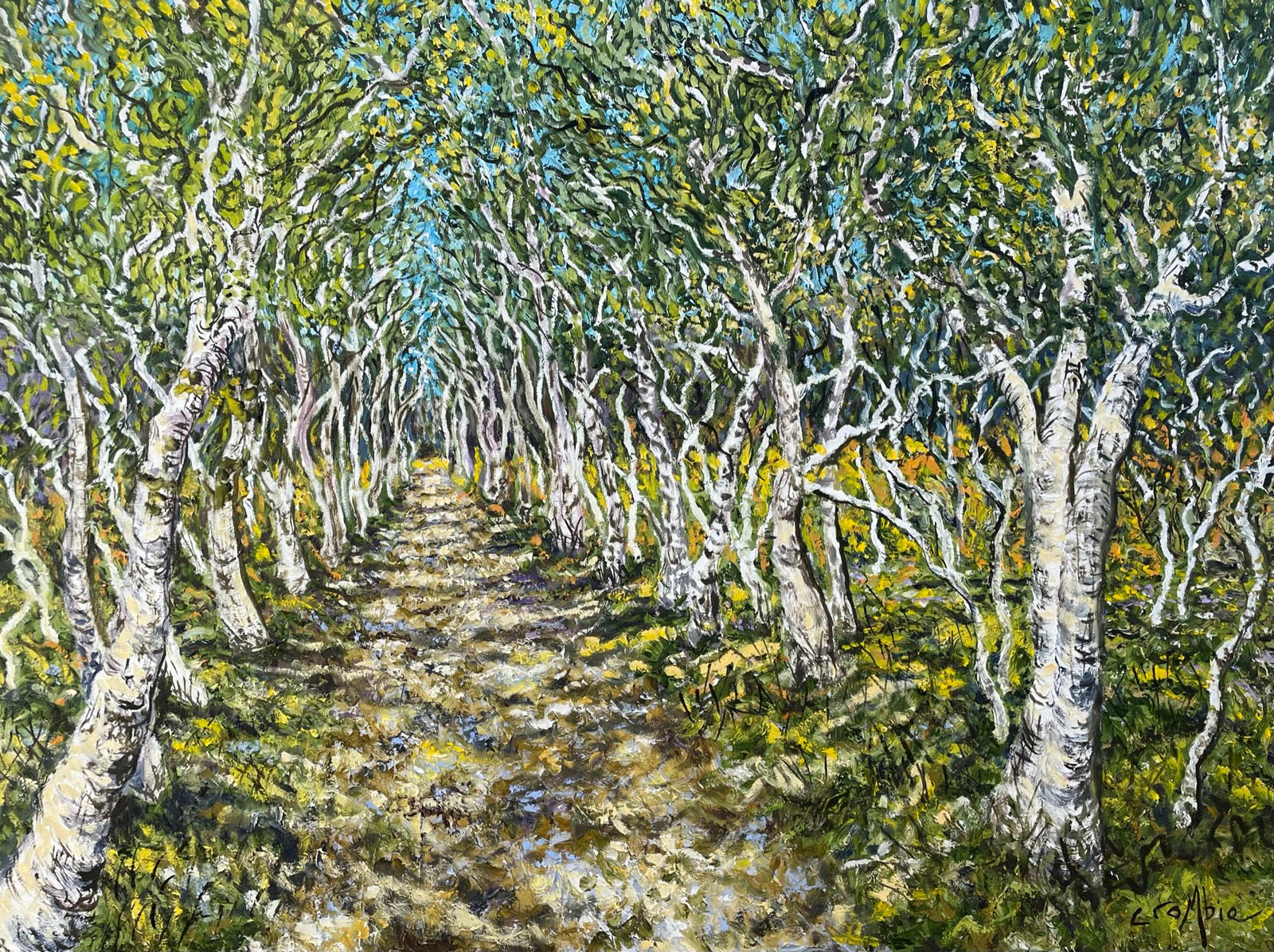
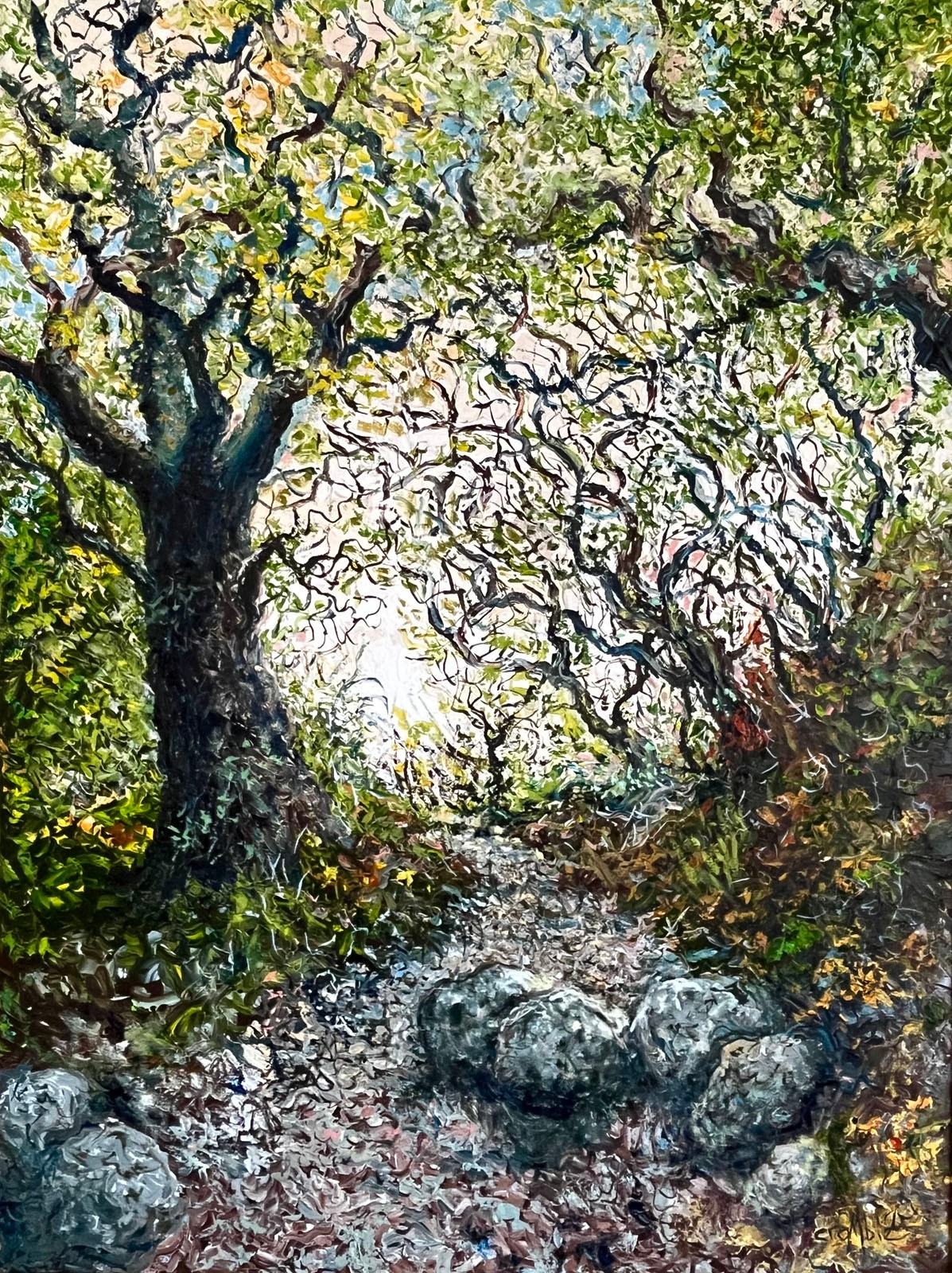
Early on, I realized I had an obsession with trees and rolling meadows. I would go out on a Sunday to the countryside around me and shoot dozens and dozens of pictures that I thought might make nice paintings. I still liked working with the large canvases and that helped with regard to how I wanted these landscapes to be received visually. Years later I traveled to Provence (12 times) for subject matter and inspiration. It was magical. It still is!
It took me quite a while but, I began to learn how to work with wet paint over wet paint. I became proficient with a brush as well as pallete knife. Sometimes I think buyers want to know that the painting they’re looking at took months to do. I’ve gone very slow with some pieces and I just don’t care for the look when they’re done. They look stiff, they have no flow and the magic of discovering something new, again and again, was lost. For me, they look overworked when I spend too much time. In my paintings, sometimes windows lean to the left or right. Sometimes rooftops aren’t perfectly level. My trees bend left and right. A perfectly straight path becomes bent and crooked and sometimes a bit ragged. For me, the more crude the piece is, the better I like it. It has character. It has guts. It has beauty with all its imperfections.
I think people see the emotion. They feel the character of each painting. So many times I hear that they feel a connection, that they speak to them. I couldn’t receive a bigger compliment. People want to feel connected or moved. Otherwise, what’s the point of doing art?
For you, what’s the most rewarding aspect of being a creative?
There are so many! A lot of other painters might agree that the beginning and middle of each piece can be frustrating. Not so gratifying. These paintings don’t just “happen”. I know in my heart that I have a gift. A gift of artistic talent. I believe that if we all work hard at our individual talents, the results can be mind blowing
There are so many rewards! I recall countless times during each work day that I would think about the canvas I had on my easel at home. I would problem solve in my mind as I went about my day. I would think about the blue sky and that maybe it needed to be a little deeper. I’d think about the branches on the tree I was working on and that they needed to be a bit thinner. I was critiquing my own painting in my head.
As an obsessive, anxious artist, I soon realized that when I was painting, I wasn’t worrying. I wasn’t thinking about anything other than what was going on with the canvas in front of me. It was an escape to a heavenly place. The more I escaped the better it looked and the better it looked the better I felt. There were so many times toward the end of the painting that I would stand back and almost be in tears at what I was seeing on the easel. I couldn’t believe that I had done what I was looking at. In my mind, painting is a partnership with God. There’s no other way for me to explain this joy, the success, the beauty and intensity of what I do.
It’s such a connection, a love for and proud moment when you stand back to critique your own piece and just smile inside. It all makes sense. It speaks to you personally. Art moves us all.
My reward is emotionally, spiritually and in knowing others are moved by what I do. It makes them happy. So nice to be able to do that for others! Creating art is truly therapeutic. I honestly don’t know what I would do if I couldn’t escape the way I do with painting today. It has literally changed my life in a very profound way.
Let’s talk about resilience next – do you have a story you can share with us?
About a year or two into painting, I’ve began to enter juried shows. There are a lot of artists out there! Some shows would get 400 to 600 entries and they had to whittle that down to 50 or maybe 60 pieces, watercolor, acrylic, oil, drawings and mixed media. Sometimes we could enter one other times we could enter two or three pieces I always enter as many as I could hoping for better odds and possibly one of them sparking the jurors interest and approval.
I don’t care if you’ve been painting for a year or for 23 years, when you don’t get accepted to a jury show, it stings. You’ve put your heart and soul into that piece. It’s one you really love. You feel certain that it’s going to get in the show. You really don’t care if you get best of show or place first second or third! You just want to be in the show!
Then the day comes where you get notification that your peace was accepted or, not approved. Not being accepted can be very difficult for many of us. We may be driving our painting back home swearing that we never want to paint again. “We are no good”. We have failed. If that sounds familiar to you, it does to me as well. We have to remember that art is a very subjective thing. Not everybody’s taste is like ours. If you were the juror in a show, you would be making the decisions of what would get in and what would not get in. It’s just that simple. Someone makes a choice and we have to live with it. It doesn’t mean we are bad painters or that our work is terrible, it just didn’t suit the taste of the juror.
So every time I enter a show, and I don’t get in, I have to put it on a personal level and say if I was juror for an upcoming show, there would be a lot of artists that would not get in and that was because of my judgment, my taste. I have to get back to the easel and move on.
Contact Info:
- Website: rhcrombie.com
- Instagram: Rob Crombie
- Facebook: Rob Crombie, Fine Artist
- Youtube: Rob Crombie