



We recently connected with Désirée Eckert and have shared our conversation below.
Alright, Désirée thanks for taking the time to share your stories and insights with us today. Can you talk to us about how you learned to do what you do?
Before I was a hypnotist, I worked professionally as a celebrity tailor and theatrical costumer. I started sewing at a young age, went to high school arts programs, then studied at two of the top fashion schools in New York (Parsons School of Design and Fashion Institute of Technology). From college, I went right into working in theatre, eventually getting an agent for celebrity and photoshoot work. Having trained in tailoring, costumes, and also fine jewelry, I definitely view hypnosis as a craft.
My years of work as a tailor prepared me for being a hypnotist in ways I couldn’t have imagined. Not only that, it made me a better hypnotist. When I was tailoring on photoshoots and coworkers would learn that I was also doing hypnosis on the side, they’d have a bewildered look, like it was totally out of left field. But over time I realized that for me, tailoring and hypnosis are actually the same thing. I didn’t have to change the way I worked at all.
Being a tailor, and also working as a wardrobe supervisor in the New York City theatre scene, getting up-close and personal with actors was the main part of my job. Fittings are a very intimate environment where all of their perceived flaws are revealed. There can be a lot of insecurity on the part of the client, especially when it comes to celebrities.
In both hypnosis and tailoring, I’m holding a space where the client feels safe, and collaborating with them to bring their desired outcome into the material world. It’s always a collaborative effort and a bespoke experience.
My first hypnosis training was expensive, and a highly regarded one at the time, but I didn’t come away with tools that I could use with clients like I would if I was in a fitting with them. The process I learned was more one-size-fits-all. I wanted to do bespoke hypnosis, so I spent a couple years reading about neuroscience, and how the changes hypnosis is known for generating actually come to be. That made me feel so much more skilled in the craft and expert in its application.
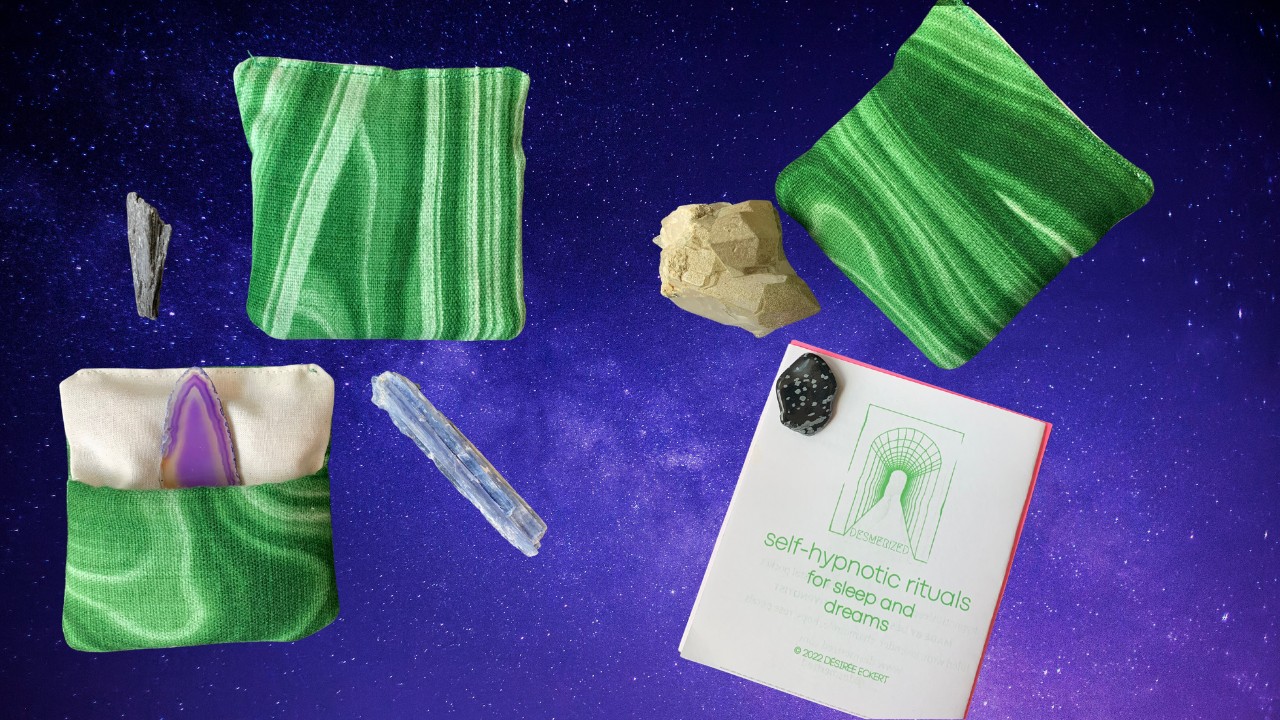
I also use my sewing skills to now create hypnotic objects, sensory objects connected to a specific goal that clients can use as part of a self-hypnosis practice. I make sleep sachets filled with relaxing herbs, that have a proprietary padded pocket to hold a crystal or small object. It comes with a little booklet with a few ideas to use the sachet for self-hypnosis to sleep better or enhance dreams. It also comes with a downloadable sleep hypnosis track.
Great, appreciate you sharing that with us. Before we ask you to share more of your insights, can you take a moment to introduce yourself and how you got to where you are today to our readers.
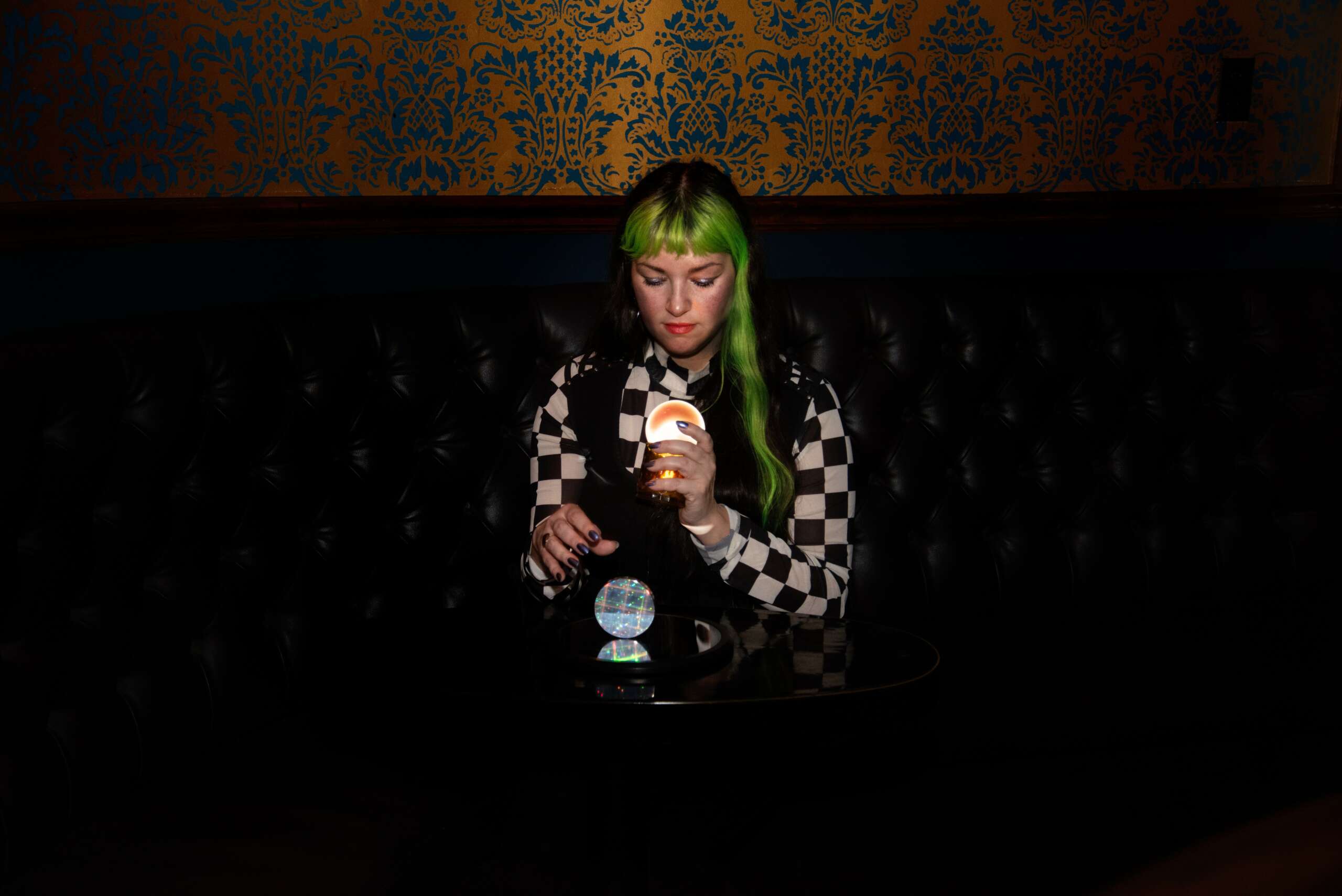
I practice evidence-based hypnosis, which means I primarily rely on time-tested, research-backed techniques, and am really excited by newer neuroscience research. It all factors into how I do hypnosis. Perhaps paradoxically, I work with a lot of healers, witches, and spiritual people, and I do hypnosis intuitively, responding in-session to cues from the client and gut feelings. When you understand certain principles of hypnosis and neuroscience, it’s actually easy to practice hypnosis intuitively.
I work with clients to stop unwanted habits and in creating new ones, stop smoking, neutralize phobias and anxiety, sleep better, gain clarity, or overcome blocks. I love helping clients with manifestation, to gather the momentum to make major timeline jumps and realize big dreams and goals in little windows of time.
In contrast to the science-based stuff, I really love working with spiritual people. Before I became a hypnotist I had trained to do Akashic Records Readings. I thought I was going to combine Akashic Readings with hypnosis, but soon I realized that accessing the Akashic Records is a byproduct of hypnosis, and many clients went there automatically on their own. I help them become familiar with the cosmic aspect of the self.
I’m also trained in hypno-psychedelics, which is a way of tapping back into a psychedelic state without substances. In these sessions, we revivify a client’s previous psychedelic experience as a hypnotic induction, activate neuroplasticity in the brain, and direct their expanded state towards new discoveries, insights, and outcomes. It works equally well for integrating recent psychedelic experiences and getting new insights from old ones.
I have a membership called the weekly microdose of hypnosis™️ where I drop a new hypnosis track every week that’s less than 13 minutes long. I fully believe hypnosis is a life skill that belongs in everyday life, even and especially for those who don’t have the attention span or the time to meditate. I’ve been doing it since 2021, so I have well over 100 tracks now, and they all live in an online archive I call “the despensary” [sic — a pun on my name]
In 2021, I became a certified hypnosis instructor, training hypnotists in my own proprietary curriculum focusing on evidence-based hypnotic techniques. The majority of my students are reiki practitioners, astrologers, tarot readers, and psychic mediums, and find hypnosis as I teach it to be a natural complement to their work.
When I first got into the field of hypnosis, I was excited to go to conferences. But I soon realized it’s a very traditional, male-dominated space. I felt like I wasn’t respected and wasn’t taken seriously, especially because of my outward appearance. Over the years, I used self-hypnosis to work on my confidence showing up in a space that at first felt unwelcoming and intimidating, to be able to command a level of respect. The way I was initially perceived also required me to really know my stuff and double-down on my way of doing things. I don’t follow tradition, I see myself as an innovator.
In 2022, I was a first-time speaker at the world’s largest hypnosis conference, and my room was completely full, with people standing against the walls and being denied at the door, which I never expected. My talk was on a pretty spiritual topic, too. It’s exciting to see this shift happening in hypnosis.
My ultimate goal is to bring more folks from the healing and guidance professions (reiki, tarot, etc) into the field of hypnosis using evidence based protocols. I want my students to come to conferences and teach our peers what it means to hold space and be a healer, to demonstrate that our ways of doing things are valid, and apply to hypnosis.
What do you find most rewarding about being a creative?
The best feeling in the world is being paid for your passion. I loved tailoring, but it wasn’t rewarding for me. I love hypnosis so much that it’s still so exciting and surreal that I get paid for it!
When I first started as a full time hypnotist, I made drastically less money than I had my entire adult life. Drastically. But every dollar means so much more.
When someone finds me and buys one of my tracks, and likes it so much that they book a session with me or sign up for one of my classes… Or when they have sessions and get good results, then sign up for my membership, it shows me how much value there is in what I do, so I can’t not do it. It’s nothing short of life-affirming, and I have to keep going and creating. Each client’s positive experience always inspires me to create more.
We’d love to hear the story of how you built up your social media audience?
Before 2020, I was seeing clients in-person in New York City part time, while still working freelance as a tailor. Most of my clients were in the entertainment industry, so they were freelance like me. When the pandemic struck, most of my existing client base was not working, therefore not getting paid, and I had to find new clients on social media, primarily instagram.
For hypnosis especially, you need to be visible on social media. Clients need to feel like they know you. It’s so important to their results that they feel safe with you and trust you. That can’t be conveyed with cute aesthetic infographics.
The only problem was I was super camera shy at the time, so I dedicated myself to changing that. I sought out mentorship, and did lots of self-hypnosis to be more comfortable being visible and letting my words flow with a phone screen in my face. I talked about hypnosis in relatable terms, from the place of passion I have for it, which can’t help but be contagious in the best way.
I think now more than ever, in the age of AI, us humans need to be visible on social media and be okay with imperfection. People want to see the human behind the art/brand/account. It establishes a level of trust and invites them know you and your work on a deeper level.
Also, my audience isn’t huge, and numbers truly don’t matter. I’ve had people with massive followings book sessions with me and inquire about my training. People are looking for real, passionate people. I’m sure consistency helps, but authenticity is paramount.
Contact Info:
- Website: www.desmerized.com
- Instagram: https://www.instagram.com/desmerized
- Linkedin: https://www.linkedin.com/in/desiree-eckert/
- Youtube: https://youtube.com/@desmerized
- Other: I have a bookshop.org bookstore where I share recommended reading for hypnotists or wannabe hypnotists. When purchases are made from my affiliate store, it directly benefits an indie bookstore I frequent in Oakland, CA. The organization’s mission is to keep indie bookshops alive! https://bookshop.org/shop/desmerized
Image Credits
Nikki Nolan, Désirée Eckert