

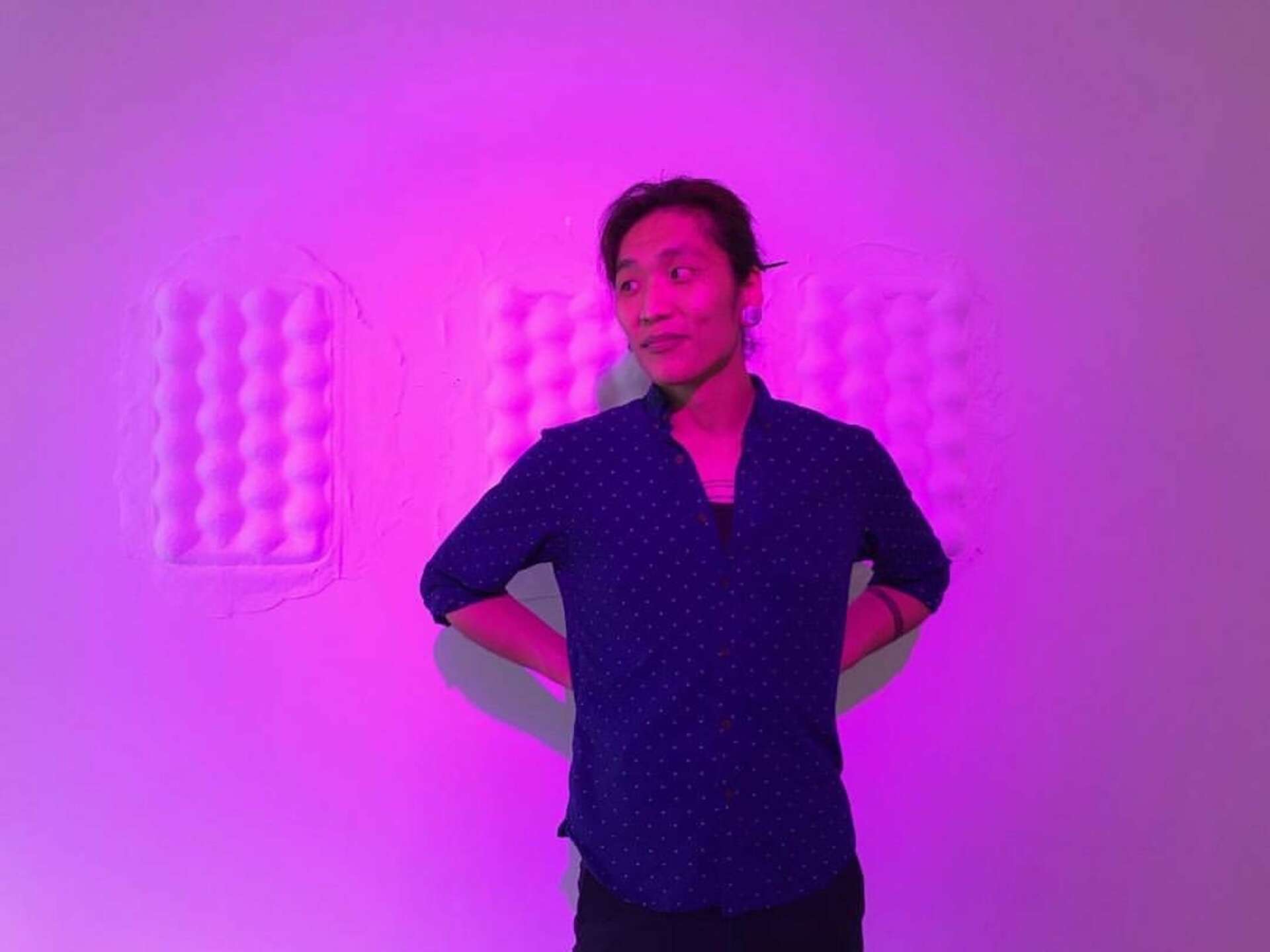

We were lucky to catch up with Philippe Hyojung Kim recently and have shared our conversation below.
Hi Philippe Hyojung, thanks for joining us today. Can you talk to us about a project that’s meant a lot to you?
Q: The title of your work “Typology of Absence,” brings up this idea of classification and categorization in terms of similarities and differences; A trace of existence (or being) that seems to tie into the idea of a body, skin and overall identity. What does the “absence” embody for you in this piece?
A: Absence necessitates a condition of presence, of something or someone at some point, and is remarked by trace, memory, and/or possibility of existence of that something or someone.
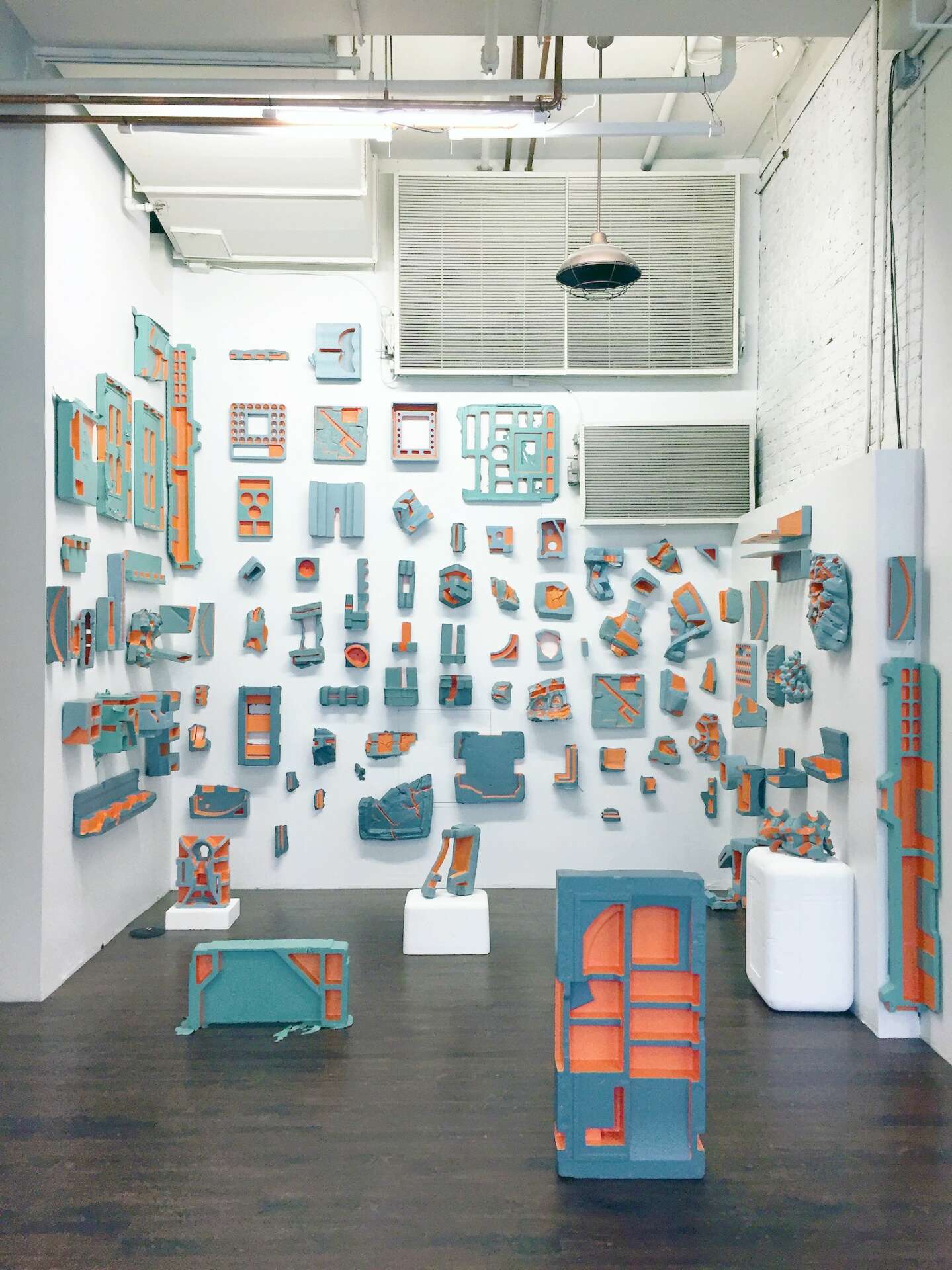
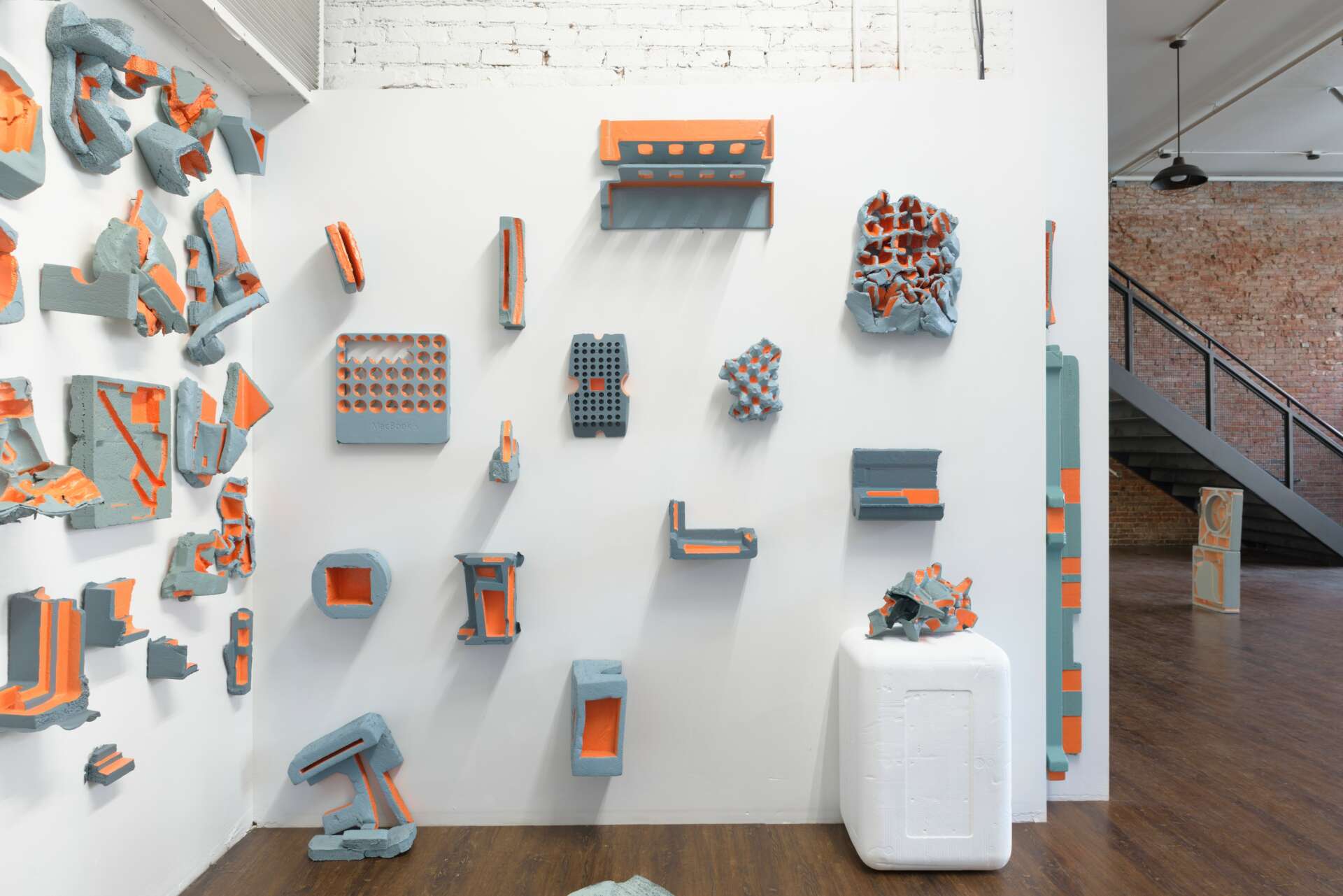
In 2018, I was invited to be one of the two resident artists at Recology, a regional recycling/waste management company. “Typology of Absence” is a project born out of that residency; what’s made visible here is a trace of Seattle’s “progress”, siting the seemingly perpetual cycle of modern manifest destiny, where the real cost of hyper-consumerist excess is infused in the smell of Puget Sound’s summer heat. Scavenged and salvaged from mounds of trash and recyclables, materials used in these works range from a muddy spectrum of green-gray-taupe paints leftover from various institutional facilities, and other materials including Styrofoam, plastic sheeting, and household refuse. Over 200 of these discarded packaging materials were gathered, transformed, and reassembled as a sculptural installation.
In “Typology of Absence,” I wanted to celebrate all the discarded packaging materials found at the local recycling center in their variety and beautifully sculptural nature of the forms. Each and every one of those packaging was at one point designed and manufactured to protect and house something presumably more precious and desirable. Once they served their purpose, they were discarded along with their prescribed utility and/or reasons for existence. Once they were in transit and resettled in the midst of other rejects, many of them got broken, misshapen, and at times defecated by neighboring diapers. (I’m not kidding..) So, I’d clean them up, put a “fresh” coat of paint on them, and highlight their convex and concave negative spaces in between that remarked on their initial “identity”. All this could have made a very somber and sobering effect on the viewers, or even perhaps acting as a satirical snapshot of our post-consumerist society, and I think that part has not gone without notice. But at the end of the day, I wanted to showcase these amazingly unique and beautiful “trash” as something worthy of being on its own, existing in the world as precious as the thing that it once held onto.
The statement for “Typology of Absence” reads as follows:
“They’ve been gutted of their meaning.
They exist for the other.
Their bodies were for others, and their skin made to endure.
We don’t know what they once held or held onto.
All that remains is a trace of a foregone presence,
an empty space filled with the weight of the absence.
There, in that in-between space,
through the cracks, a potential for selfhood emerges,
negotiating their remnant objecthood with their pronounced subjectivity.
They are artifacts,
reminders for renewal,
forever archiving dusts of the present.”
Great, appreciate you sharing that with us. Before we ask you to share more of your insights, can you take a moment to introduce yourself and how you got to where you are today to our readers.
My work often starts out as a painting or something that resembles a painting, and especially these days painting is part of a process for me to arrive at something other than that. Paint is a glue that lets my ideas stick. In grad school, I focused on researching paints and their makeup, experimenting with various types of pigments, colorants, binders, solvents, surfactants, etc., and eventually making paintings that are simply made of paint. In that process, I quickly realized most everything I used had some form of plastic in them, hence the malleability and durability. That plasticity in paint is what drove the tension in my earlier work, both materially and metaphorically, and evolved into the work I’m making today.
So, plastic is often thought of as this malleable thing, the ultimate material embodying modernity and universality, but it is perhaps the hardest and the most stubborn material there is. It is hard and stubborn because it refuses its environment, creating a sealant or barrier that remains impermeable to what surrounds it. In fact, once hardens, it often refuses its own kind to the point where it can only be fused through another heavy thermochemical process. But then, the lifespans of plastic products are often extremely short, and once purpose served, they turn into a kind of “living walking dead” among us. With this zombie mutant material, we have witnessed a total transformation and conception in matter and time, and of course, our perception of matter and time, just as it transforms any and all ecologies that it now composes. Despite, and perhaps because of, this devastatingly idiosyncratic nature, plastic continues to be a source of curiosity for me, if it hasn’t already consumed and become part of me. I’m still learning to deal with it, learning to take care of it, and making something out of it, since it is our making after all.
Is there a particular goal or mission driving your creative journey?
One of my art history professors from undergrad once said it the best: “We don’t make art alone.” That idea really stuck with me, and ever since it’s been proving to be more and more true, more poignant, more real.
Since my move to PNW about a decade ago in 2013, I’ve been fortunate to be part of many arts communities throughout Washington. From Gallery One and Punch Projects in rural central Washington to Specialist and SOIL in Seattle, these communities of artists and creatives have helped shape, grow, and develop my career as an artist, curator, and educator.
With Specialist (@specialist_sea), a small gallery I started in 2017 with 4 likeminded artist friends, we have been working with emerging artists from the region and out of state to cultivate a more intimate dialogue about contemporary art here in Seattle in its quintessentially quirky DIY spirit. Our exhibitions are often of solo shows that run 6-7 weeks, and in that process, we get to work with each artist directly, and the exhibiting artist ultimately decides on how they would like to present their work, and we facilitate however we can! (We survived through the pandemic quite successfully, so I think we will keep going!) Also, I’m part of a larger artist collective called SOIL, and it is all about collaboration with the artist communities here and beyond..Again, being part of these communities has really been indispensable in growing my own practice as an artist and my career as a curator and an educator.
Seattle may have a smaller art scene compared to LA or NYC, but we do have very vibrant artist communities here and lots of resources and opportunities. In fact, starting this year, King County is starting a program called “Doors Open” for the next 7 years, investing nearly 100 million dollars annually through 0.1% of the county sales tax to fund and support arts and cultural sectors in our region. I am currently serving as a board member of King County’s Public Arts Committee, at 4Culture, the county arts commission who are responsible for overseeing and distributing these incredible resources to the public at large, and I am so grateful to be part of this process to further enrich our communities.
What’s the most rewarding aspect of being a creative in your experience?
I get to to work with color, and weave layers upon layers of stories, ideas, and identities.
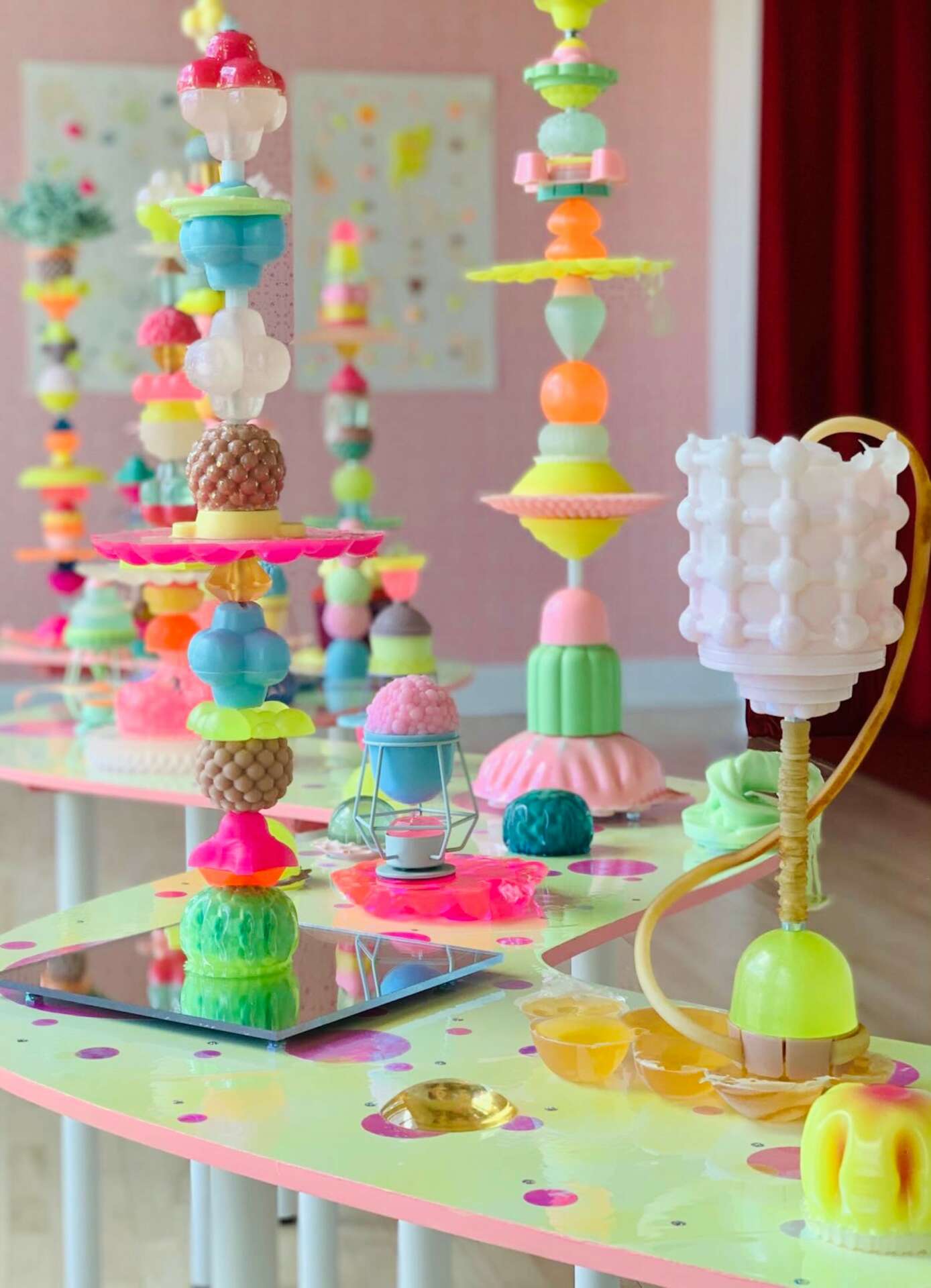
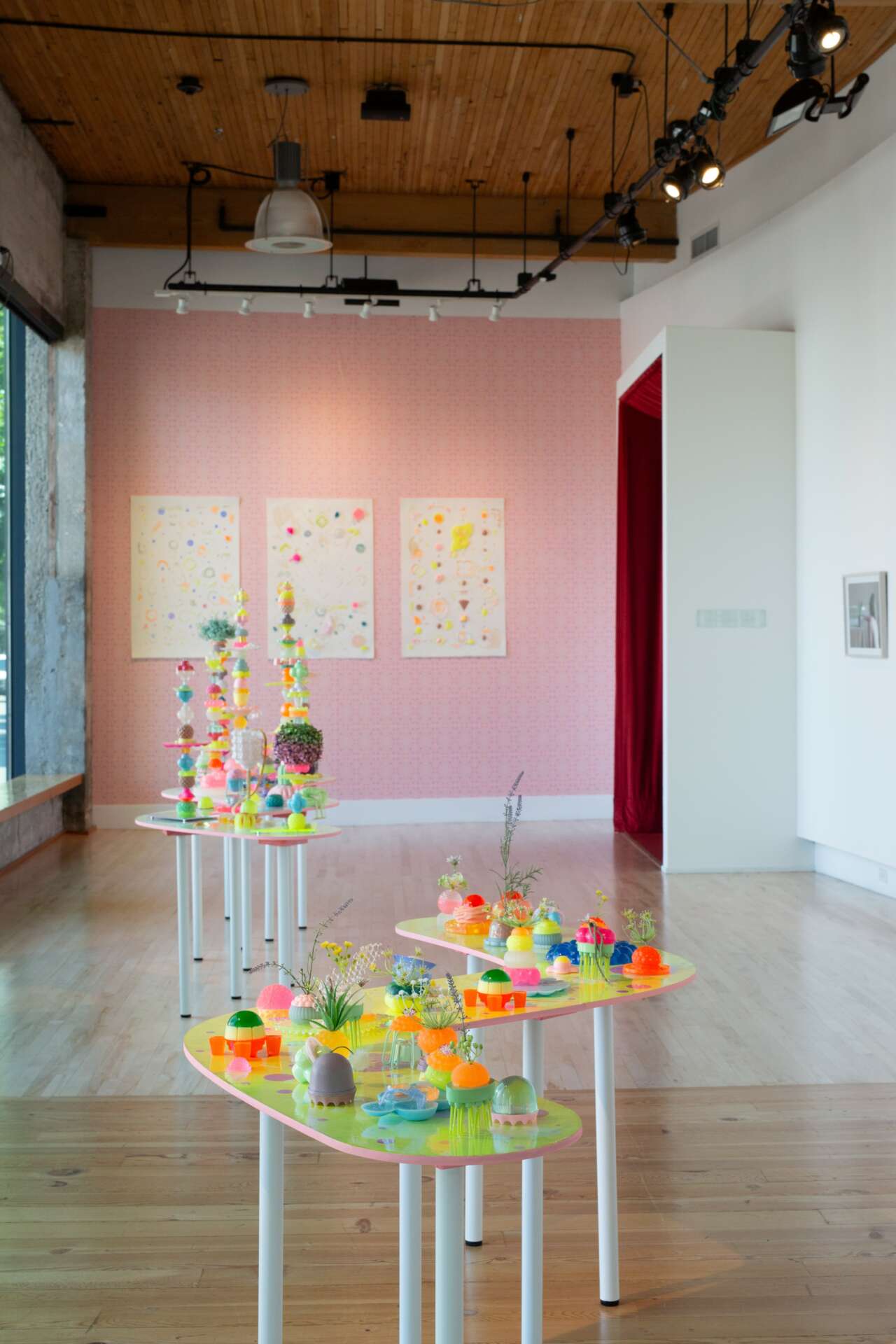
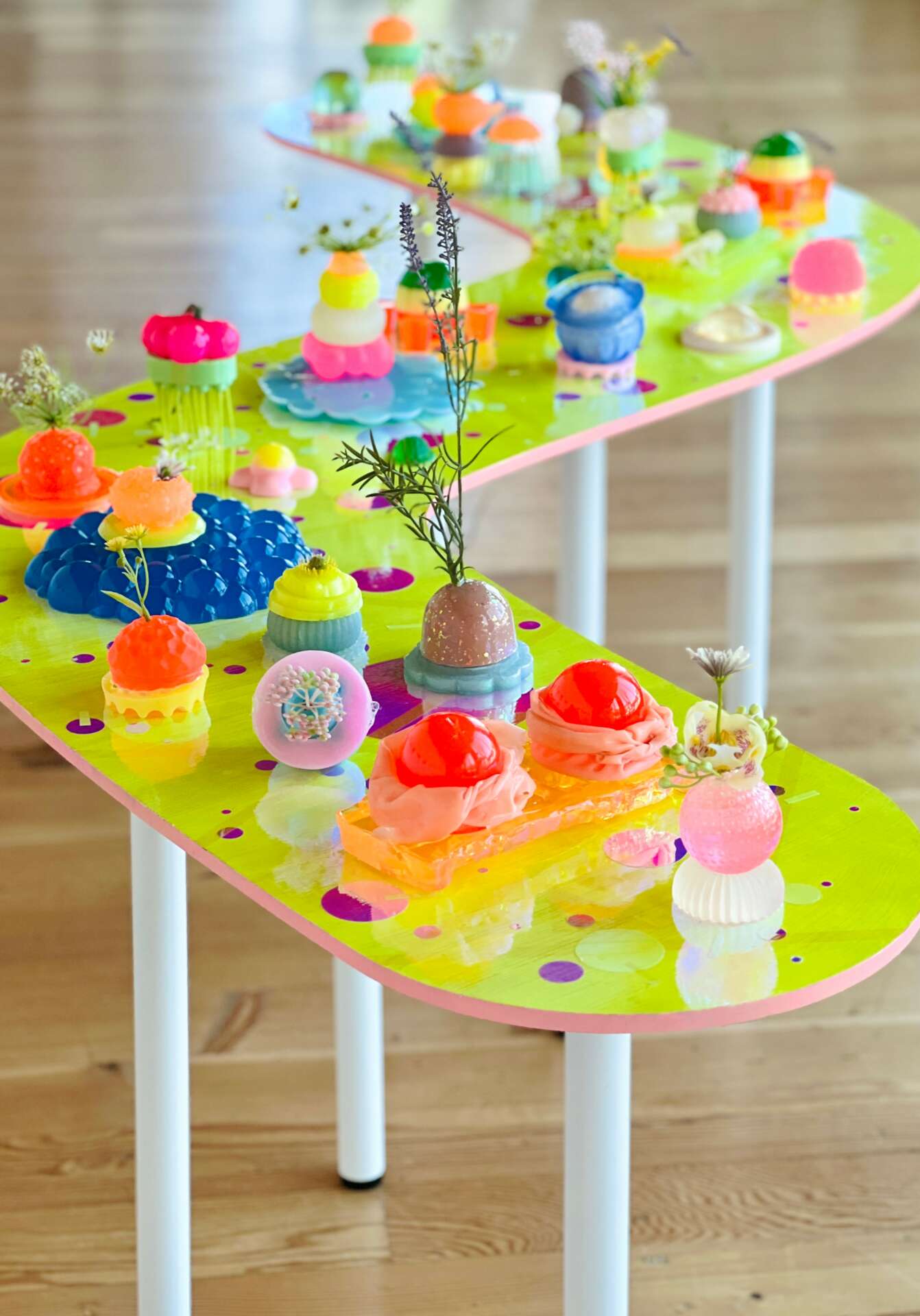
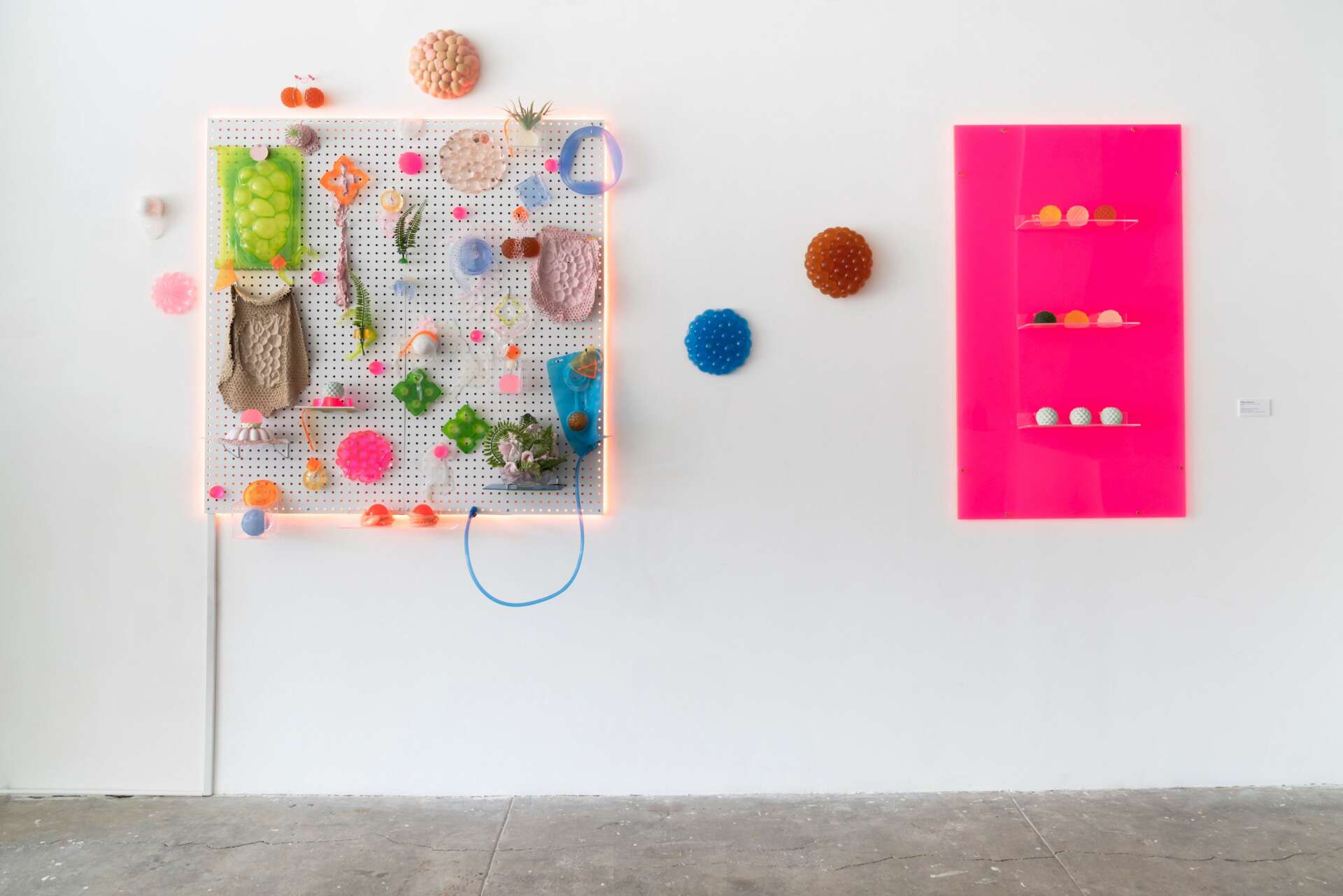
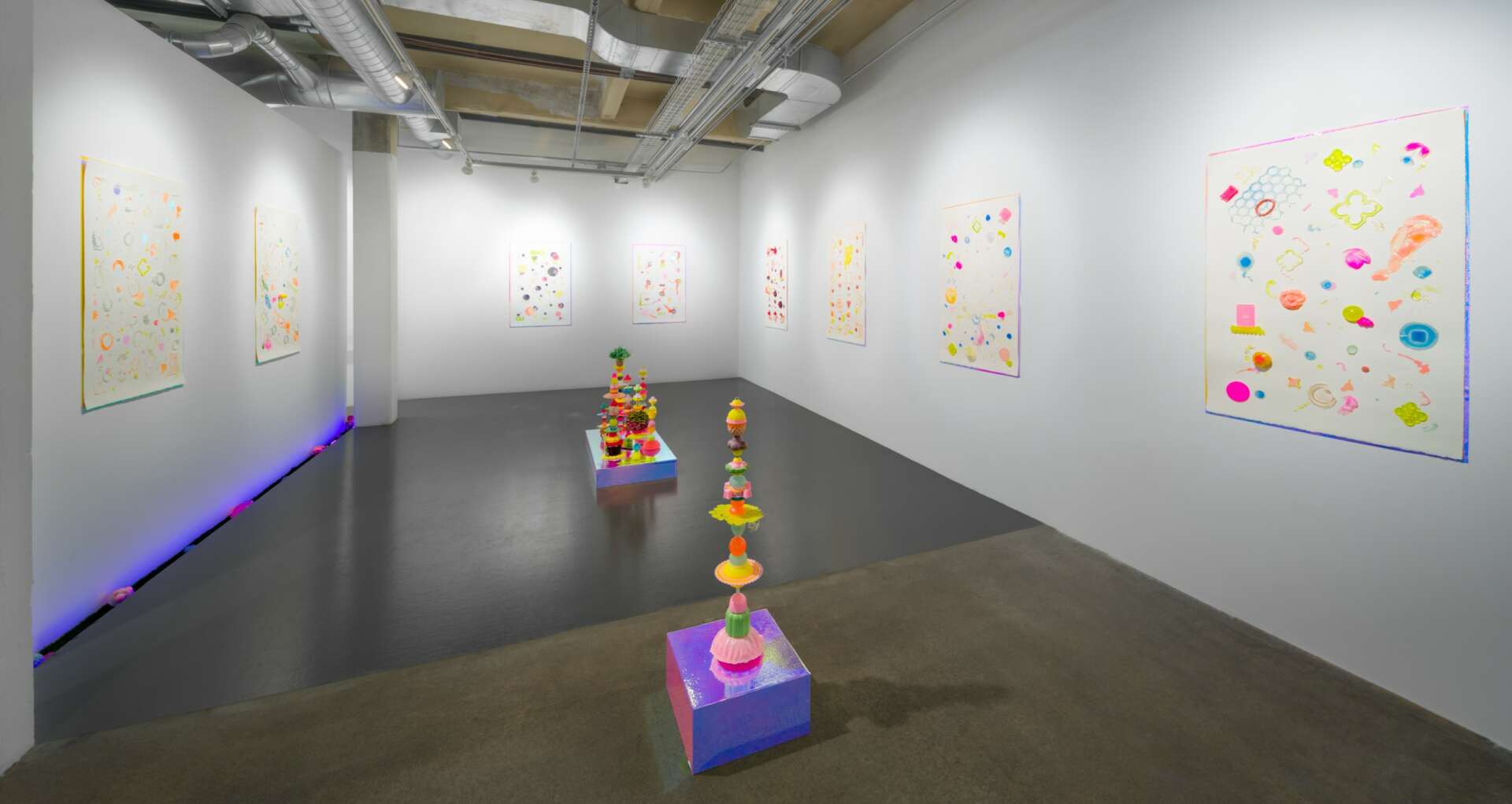
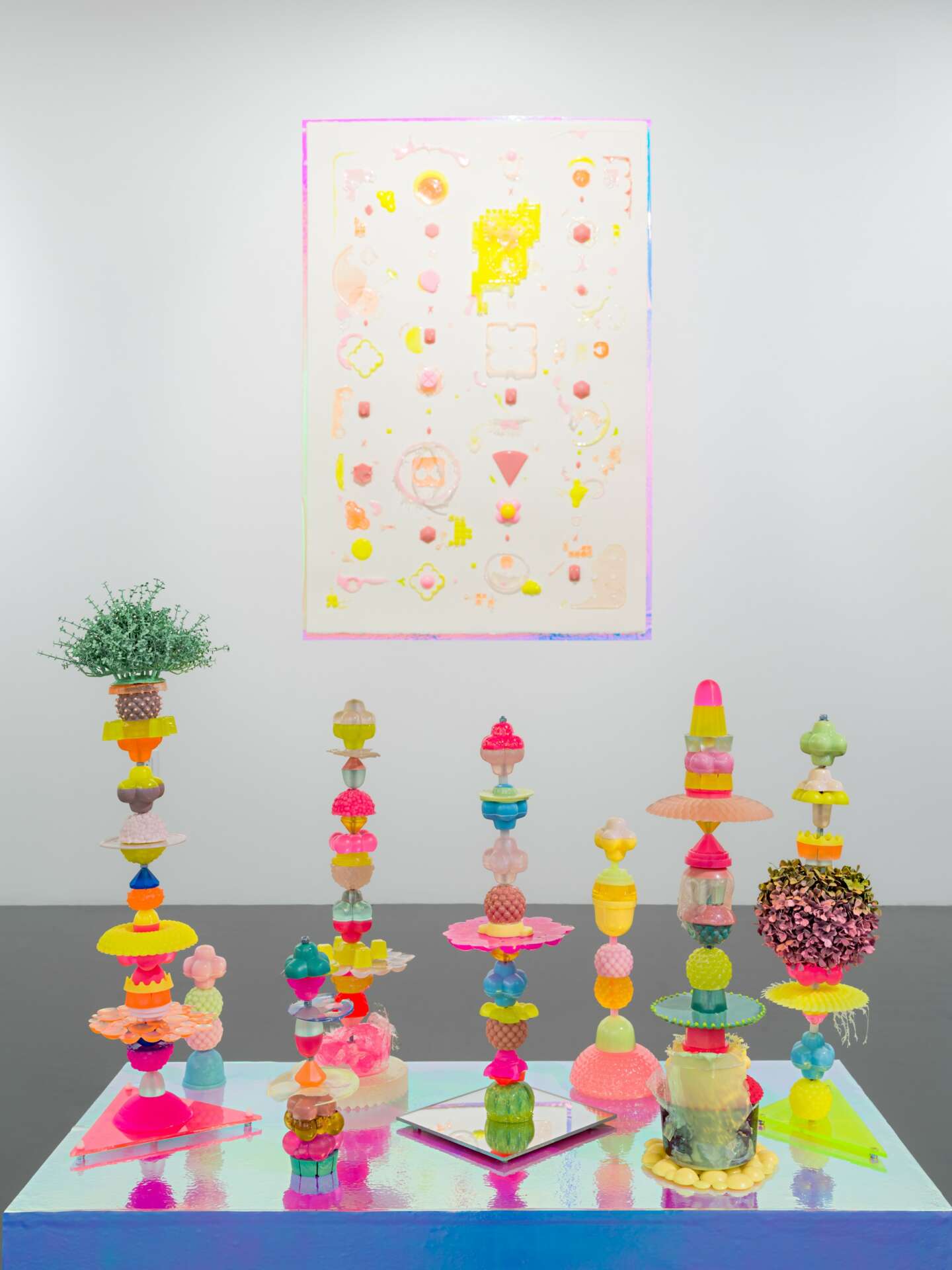
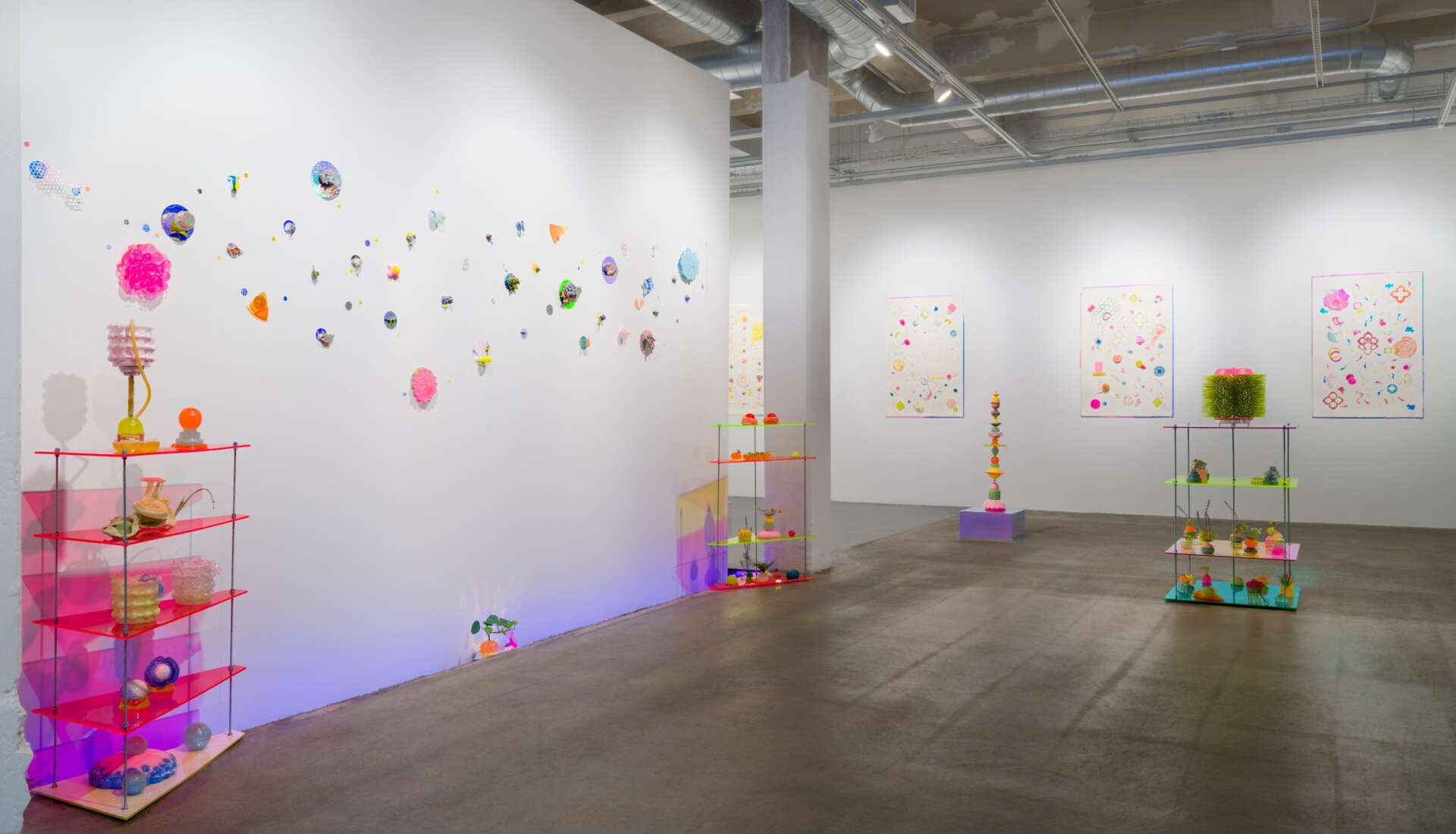
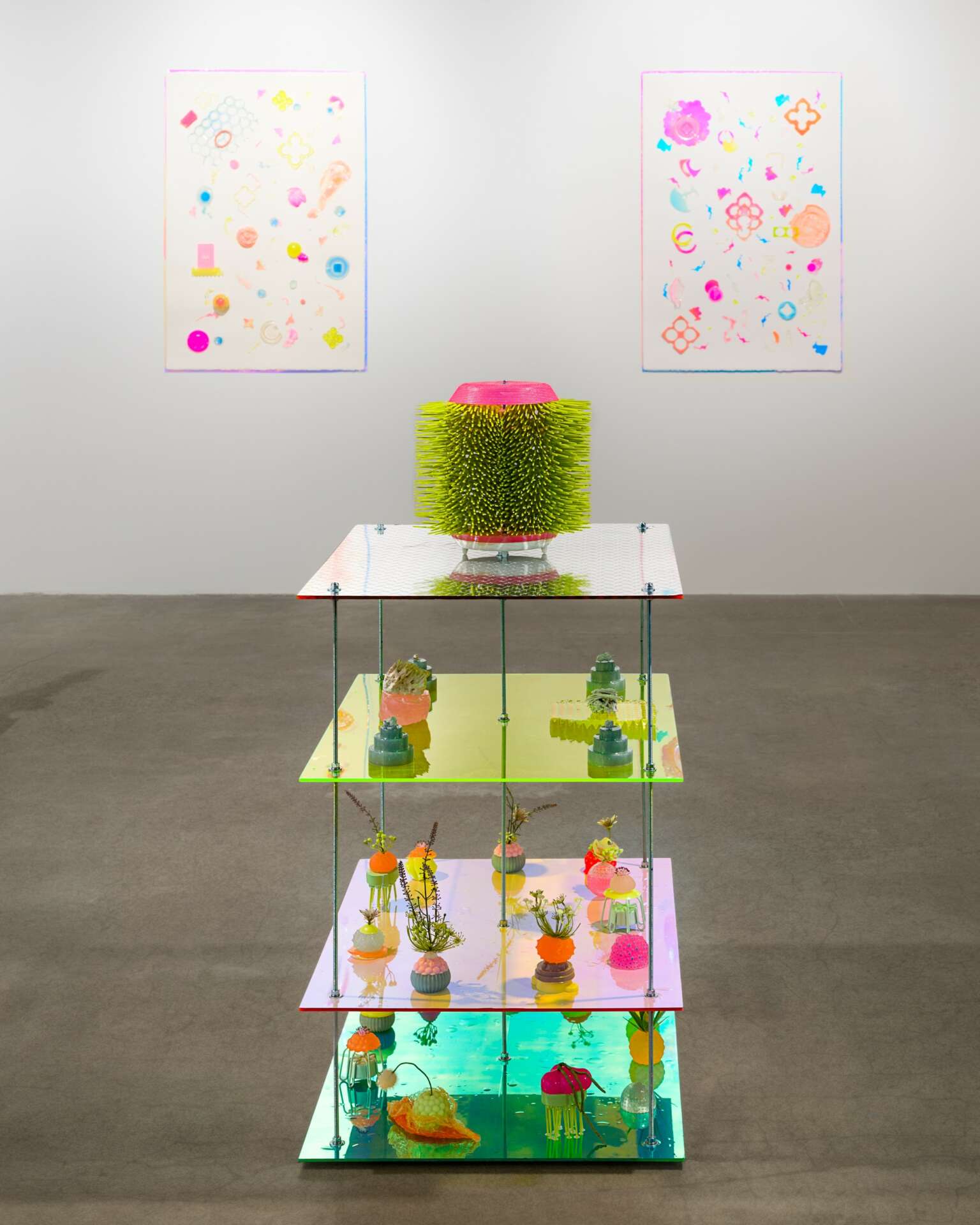
Color does different things depending on the surfaces and lighting, right? Color can make something look familiar and recognizable, and it can also make something totally abject and/or otherworldly. It creates space so effortless yet does it so expansively…it can shock and bring immediacy when needed, and it can also hide in plain sight and sustain attention…a tool for codifying meaning and bringing something formless into the visual language. I especially love that aspect of playfulness and responsiveness color can bring about in the work. In “Typology of Absences,” I relied on the grey-green-taupe industrial/institutional color palette pulled from the left-over recycled latex paint from the recycling center to speak volume for the work I was doing. With “(Un)Earthly Delights” series, I wanted to emphasize the ever-so-cloying nature of plastic and our addiction to it by using colors that are just as saccharine and artificial with a hint of toxicity. For “Plastisphere” series, a color chart was provided alongside the installation to invite viewers to code and decode different applications and meanings we associate with colors in different contexts, embodied in objecthood/objectness.
This “object-ness” embodied in my work through color can potentially generate new identities and resist “literal figurations of what is and what has been depicted as being queer.” Queer to me helps situate this notion of an in-between space, somewhere between visible and invisible, nameable and un-nameable, perhaps yet-to-be-named and not-yet-visible…once uttered, it is no longer that; yet it makes space and is made of space. and color is the at center of that space.
Going back to my process answer earlier how everything starts out as a painting…both in the process of making and reading a “painting”, queering takes place through the painting’s imagery and physicality that it asserts, and it allows us to see somewhere in between what is shown and what is not. The object-ness part of a painting records the thoughts and actions through marks made, communicates back some potential for meanings, however unrecognizable or not, and their identities/relations in and with their newly animated colorful world they reside in/on. I like seeing things literally when convenient and necessary, but when something does more than that, that’s when it gets fun and exciting, and kinda queer? :)
Contact Info:
- Website: https://philippepirrip.com
- Instagram: @philippepirrip
- Other: SPECIALIST GALLERY: https://specialist.gallery @SPECIALIST_SEA SOIL ARTIST-RUN GALLERY: https://www.soilart.org @SOILART
Image Credits
PLEASE CONTACT ME FOR CLARIFICATION. PHOTOGRAPHERS: TYPOLOGY OF ABSENCE: JUEQIAN FANG UNEARTHLY DELIGHTS (2020): LAURA HART NEWLON UNEARTHLY DELIGHTS (2022): JOE FREEMAN STILL LIFE: ARIELLE SIMMONS