

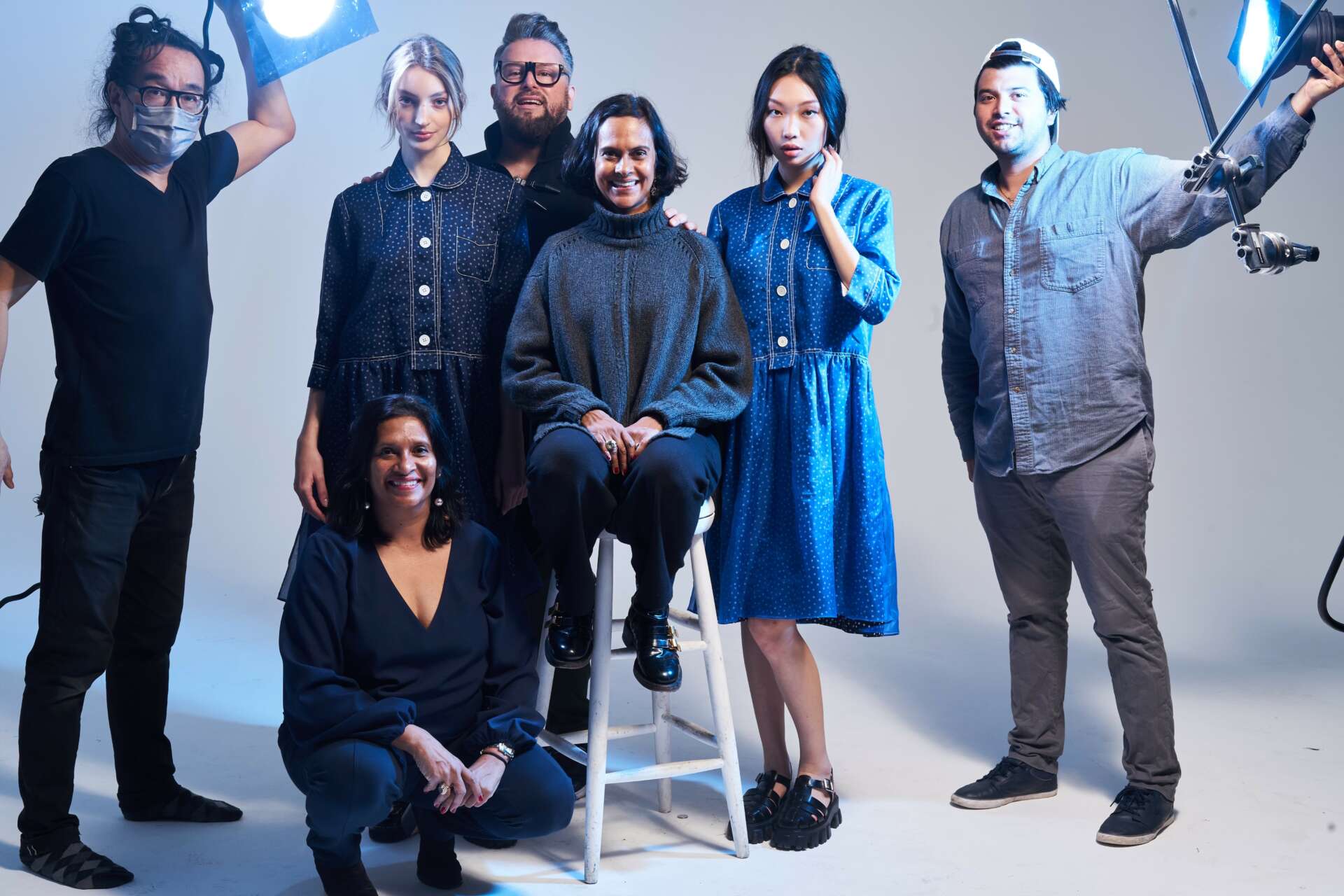

We recently connected with Aruna Inalsingh and have shared our conversation below.
Aruna, looking forward to hearing all of your stories today. What’s something crazy on unexpected that’s happened to you or your business
I once was referred to a client, who successfully sold his previous company and was starting a new one. He needed marketing help and, when I met him, I was impressed because he knew exactly what he wanted. My first assignment was to survey existing and prospective clients. I learned that they wanted to consume regular content from us. In agreement with the client, I developed a content calendar for PR, newsletters, blogs, and social media, and I wrote and distributed those communications. Once that program was on auto-pilot, though, the client shared that I didn’t give him what he expected. What he really wanted was an integrated marketing plan to generate leads. So, in addition to the messaging and thought leadership content that was scheduled, I enhanced those communications with campaigns to generate and nurture new business. Turns out, though, the client wasn’t pleased with that either. What the client actually wanted was sales collateral. You guessed it, after the collateral was produced, I still wasn’t satisfying the client. At that point, we were at our 2 month mark, and our meetings were becoming more contentious. Thank goodness I was being paid, but I realized that this was not a healthy professional relationship for me. After sleeping on the situation, I “put on my big girl pants”, and asked the client if he might be able to find someone else who was better suited to the role. Initially, he was appalled but, after he thought about it, we agreed to end my contract. It was the first time I “fired a customer”, and it certainly wasn’t easy. It was worth it, though, both the client and I ended up in a better place. That lesson has been carried with me ever since.

Aruna, before we move on to more of these sorts of questions, can you take some time to bring our readers up to speed on you and what you do?
I’m a marketer with engineering and business degrees. By understanding the financial underpinnings of a business, developing scalable processes, and being innovative, I’m able to help my clients grow in ways that best suit their individual organizations. I started in B2B marketing, helping manufacturing companies (Parker Hannifin) and chemical companies (Honeywell). I then moved into tech and started my own marketing agency, when I worked with a wider range of companies like British Telecom, McGraw-Hill, and Ann Taylor. My strength is that I see each business uniquely. I work with my clients’ leadership teams to uncover and prioritize their strategies and goals, so that we can back into marketing programs and organizational designs that achieve those objectives. I am most proud of taking chaotic teams and reorganizing them to make companies more efficient. This also keeps the teams challenged, and they are able to better serve their customers. For example, within 6 months I reorganized a marketing team to reduce budgets by 25%, increase revenue by 10%, and improve internal relations with the sales and product teams.



Let’s talk about resilience next – do you have a story you can share with us?
My entire career has been one of resilience and adjustments, and I’m not sure that will ever change:
* I started as an engineer and realized that I loved people more than products; so I became a marketer for technical companies.
* I was told my salary was capped when I was 28 years old; so I got an MBA and went into finance.
* My upward trajectory was limited in manufacturing companies; so I moved into technology.
* I couldn’t find a full-time job; so I started a marketing agency.
* The market crashed and in the next three years I lost all of my clients of ten years; so I went back into corporate.
* I spent 5 years unsuccessfully trying to “digitize” clients in publishing; so I went back into technology.
I share these stories with you and students throughout the world, because my path has been unorthodox, but I love where I am, I love the people in my network, and I love my opportunities to do great things.


How do you keep your team’s morale high?
Once you start managing people, it ends up taking most of your time. If you are a doer, it can be extremely frustrating — especially if your team becomes the doers and you are their coach. So, when you have the option to manage people, make sure you are open to making this transition. Also, have the confidence to try it, and then decide it’s not right for you. Your success will come when you can choose doing the things you enjoy.
I love being a manager, because I can challenge my team with new projects, give them access to resources, and provide support when its needed. It gives them an opportunity to learn, get results, grow, and shine! The hardest part is the failures, which inevitably happens when you are taking risks with new projects. That’s the magic of being a good boss; you have to know how to handle these types of situations. What you don’t do is criticize, especially not in front of the team. What you also don’t do is ignore the failure. One-on-one transparency and humility are important. Ask the person what went wrong, how do they want to fix it, and how you can help. Make sure you set review meetings and deadlines, so you can monitor the progress. Remember, as a manager, this person’s success is on you as much as it is on his/ her. The great news is that, when you work together and eventually get the win, your teammate will be appreciative of your coaching. That positivity will be infectious throughout the team, the company, and even your customers! Plus, you’ll gain some managerial experience along the way, which will behoove you as your career develops.
Image Credits
Credit for 1st picture — Nish Niche Pi Collection, Dirk Kikstra Photograher and Crew