


We recently connected with Ingrid Restemayer and have shared our conversation below.
Ingrid, appreciate you joining us today. We’d love to hear about the things you feel your parents did right and how those things have impacted your career and life.
My parents were both creative, inquisitive, lifelong-learners with a touch of blind optimism. All things that are needed to be an artist. While they both worked outside the home, Dad was a woodwork and photography hobbyist who had a woodshop in the garage and a darkroom setup in our basement laundry room. Mom was always, always crocheting, knitting, or sewing our clothes. Both of them were household DIY-ers before it was trendy, with a budget based in “use what you’ve got”. My childhood memories include playing Barbies in the dark while pictures were being developed and sitting under the sewing table making things from discarded fabric scraps. At age 12, my dad and I built my bedroom set together. How could I not have become a maker? The thing that clinched art as an outlet, though, is thanks to my mother. I was the youngest of three. When it was time for me to go to school, my mother went back to school for a second degree…in art. And so, at age 5, I was in kindergarten in the mornings and attending university printmaking and life-drawing classes at my mom’s feet in the afternoons. Years later, when I went to art school, I would end up taking classes from some of the same professors.
There you have it. Because of my upbringing, it is absolutely part of my fiber, my consciousness always to be making, fixing, creating something. I’m lucky enough to have inherited a bit of talent and enjoyment in doing so. That with the years of practice and inquiry made me an artist.
Great, appreciate you sharing that with us. Before we ask you to share more of your insights, can you take a moment to introduce yourself and how you got to where you are today to our readers.
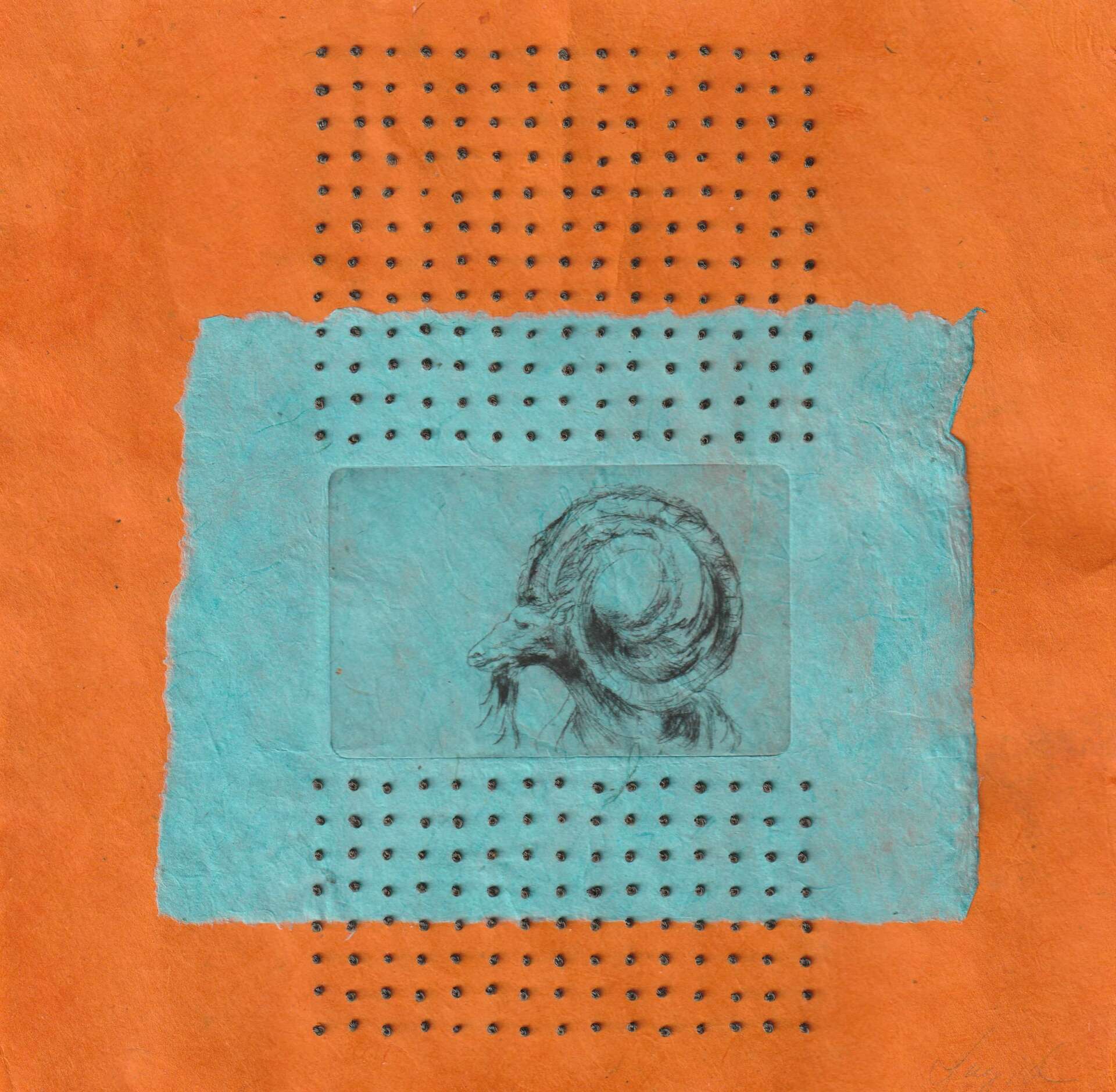
The landscape in the Northern plains is a never-ending steady horizon. In such an environment one learns to find excitement and inquiry in the slightest variation. This is where I was raised. Originally from North Dakota, I am a fiber artist based in Minneapolis, MN. My mixed media artwork incorporates traditional hand-embroidery techniques on paper, collaged with hand-pulled drypoint prints.
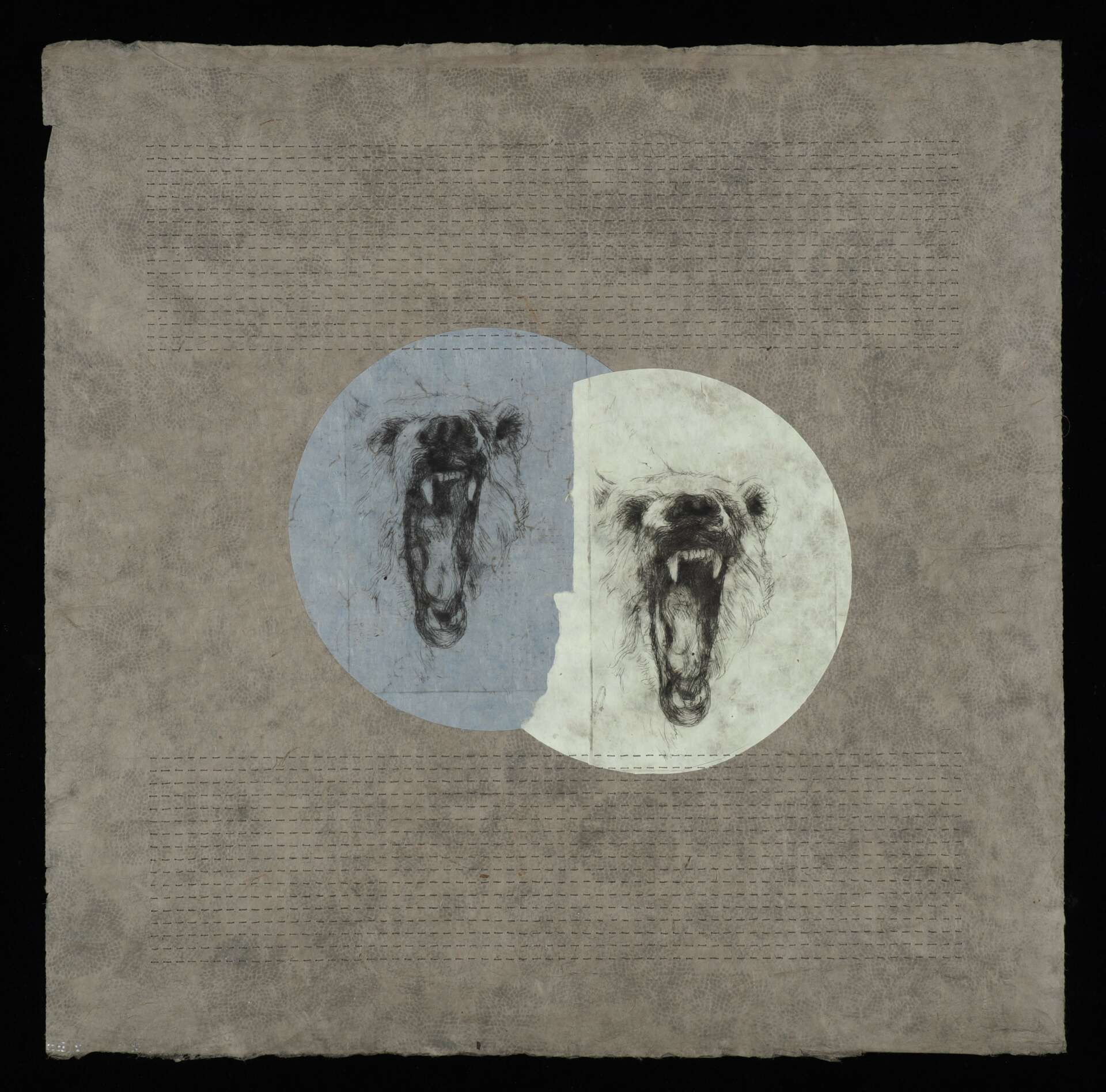
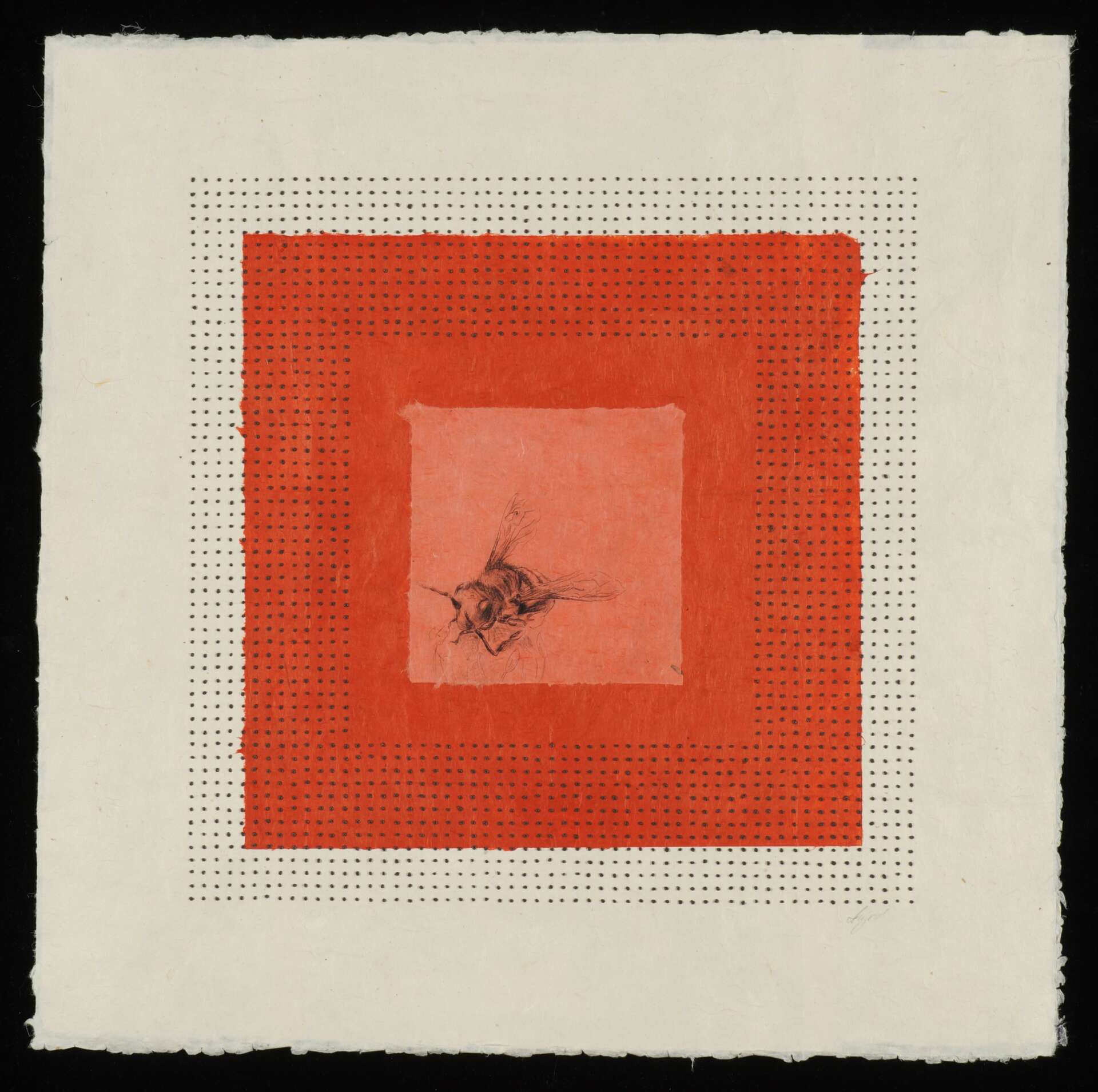
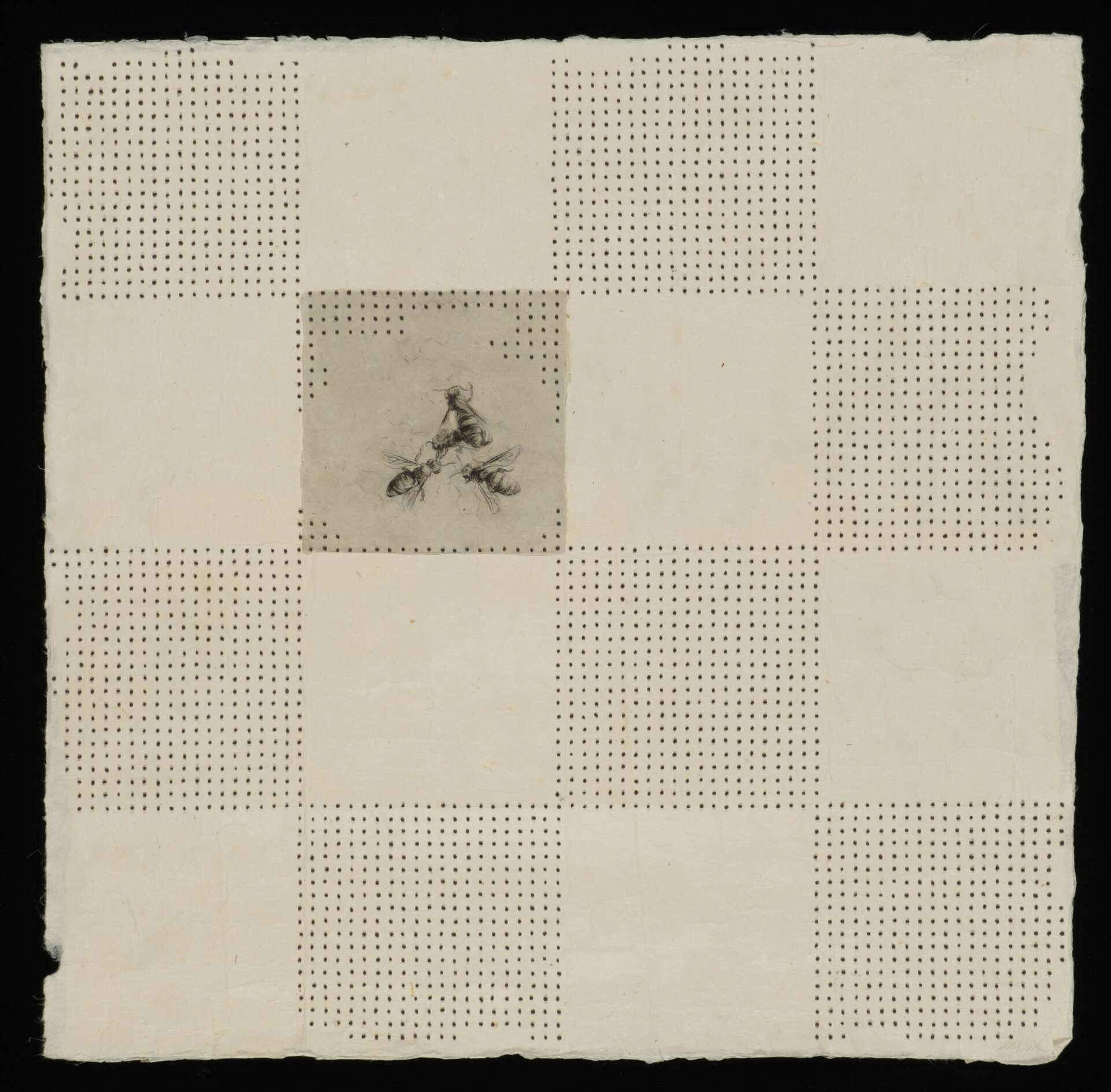
For many months of the year the Northern landscape is frozen — the only interruption to low snow drifts being the regular linear patterns of farmland. The continual lines of running stitches and fields of French knots in my art were born out of inspiration from those windblown spaces. Though fiber is not typically a minimalist medium, my work emulates this peaceful beauty in its monotony while also conveying calmness through repetition. My work has a hint of storytelling with the inclusion of my intaglio images as pseudo-illustrations when paired with paragraph shapes formed from hand-embroidery.
I stitch by hand using needle and thread – not by machine. This is the age of electronic communication, the age of getting anything. Sustainable tactics in art creation, things made by the human hand often have the power to promote further human interaction. I want my work to remind society that non-mechanized art and imagery is still achievable and still experiential.
Fiberart is inherently linked to the handmade – to traditional craft techniques. My work, however, is contemporary art. I use the idea of embroidery into an intentional maker’s mark in “art for art’s sake” vs. an embellishment on something that is utilitarian. My work, though temptingly haptic, is presented framed under glass. I have found great success showing my fiber artwork alongside more traditional 2-D fine art mediums such as oil paintings.
My work presents the question of representative vs. abstract. While my intaglio images are certainly identifiable as images of animals or elements from nature — a bird’s nest, for example – the collages themselves are a compilation of color blocks. The embroidery is not only an area of interest, but also draws the viewer in to investigate further. This is when the true nature of the hand work is revealed as part of the overall “abstract” composition.
Have you ever had to pivot?
As I mentioned before, I’ve been sewing and printmaking for most of my life. Other making habits (DIY’s, crafts, hobbies) inevitably happened. So did an interest in art processes and art history. I didn’t start my formal art education until I was in my twenties when I attended the University of North Dakota. It was here that I went deep into intaglio printmaking and a variety of Fiberart processes – weaving, dyeing, etc. It was when I got an amazing opportunity to study at Whitecliffe College of Art and Design in Auckland, New Zealand that I started combining fibers and prints, which paved the way for the mixed media work I’d do for the next 30+ years. Studying with and alongside artists from other cultures broke me out of the solely Western art experience I’d had up until then. The next big change in my work happened because of the sensibilities I gained working at a day-job in print advertising. The compositional strategies of combining image with text blocks found their way into my art. I began to combine an identifiable print image with sections of embroidery stitches on handmade papers. The print images themselves came about while using animal shapes to train my hand to do fluid and variegated lines dry-point drawn onto plexiglass plates. So it was really a combination of many things that came together.
When my husband and I decided to start a family, I had to take a really hard look at some of the toxic processes I used in creating my work. While I was expecting, I pivoted to stitching small found objects onto paper, rather than using hand-pulled prints. This kicked off a whole other body of work, that does continue today.
I was already looking at environmental impacts of “disposable” lifestyles, and upcycling those found objects got me to look at other things that could be re-used. In particular, I was bothered by all the plastic gift cards that were being produced, used once and discarded. As someone who basically scratches into plastic to make print images, I tried my hand at making drypoint etchings on discarded retail gift cards. The substrate is soft, and does not yield as many in an edition as other materials before breaking down — zinc or copper can yeild hundreds, plexiglass maybe up to 20, but gift cards only about 8. This actually makes the resulting images a little more dear.
In your view, what can society to do to best support artists, creatives and a thriving creative ecosystem?
I live in the Midwest, where the mentality is inherently practical. (i.e. “What are you going to do with that?”) I think that’s why we are home to a great number of weavers and potters who manufacture artful but useful items. My work is not that. What I do is purely visual, and presented in a frame, under glass. Often times every-day-people cannot justify purchasing original art that is just that — art. I’d like to advise people not to be so afraid of it. Surround yourself with items that you enjoy or cause you to think or spark a memory. When it comes to outfitting your environment, those things are not easily found at big-box stores. AND you might be surprised at the not-so-high price when buying from artists or local galleries. But people also need to think of this price in terms of value — dollar-for-dollar a piece of original art is much more economical that almost anything else, as it will last you for years more than even your most expensive appliances.
Contact Info:
- Website: ingridartworks.com
- Instagram: @ingridartworks