

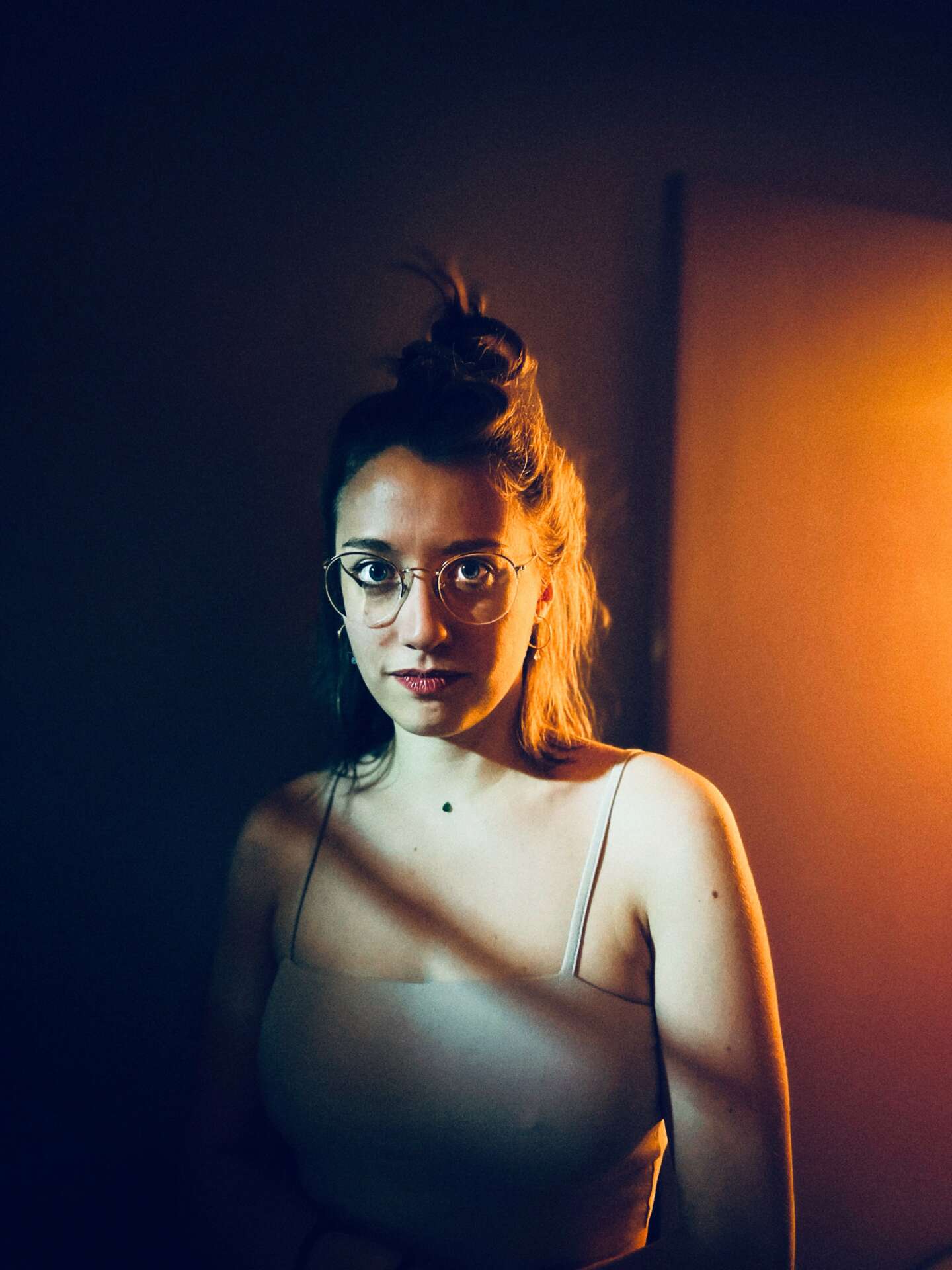

We were lucky to catch up with Fanny Reynaud recently and have shared our conversation below.
Fanny, thanks for joining us, excited to have you contributing your stories and insights. When did you first know you wanted to pursue a creative/artistic path professionally?
I’ve known since I was around 12 years old that I wanted to work in cinema. I’ve been a huge movie enthusiast since I was very young. My father, himself a passionate cinephile (though he had a completely ordinary profession, working as an artist painter in his spare time), used to rent DVDs for me during his work-related absences. My task was to watch them before he returned. Thanks to this game between us, I can say I was able to immerse myself in all the greatest cinematic classics very early on. The encounter with Ingmar Bergman’s films marked my adolescence. I believe they significantly shaped my perspective. Initially, I wasn’t quite sure about what I wanted to do in cinema. I first thought about directing, like most young enthusiasts, and then about editing. But quite naturally, at the age of 14, I received my first DSLR camera as a gift, with which I started making small videos. Then, when I turned 16, I got my first analog camera, and that was the beginning of a great love story. And now, for the past few years, I have wholeheartedly embraced the role of a cinematographer with a lot of passion and determination.


Fanny, before we move on to more of these sorts of questions, can you take some time to bring our readers up to speed on you and what you do?
So, I knew from a very young age that I wanted to be a cinematographer, but where I come from (Toulouse, France), it wasn’t really possible to directly start studying cinema right after middle school. So, I pursued a traditional economics bachelor’s degree and then shifted towards a preparatory year specialized in cinema (Prép’art Toulouse). I learned a lot there, with both theoretical and practical classes.
After that, I continued my studies in cinema at ECAL in Lausanne, Switzerland. It was four years of education that allowed me to specialize in the field I truly wanted: cinematography. What was great about my time at ECAL was the numerous internships I had on feature films. I genuinely believe it’s the best way to learn and connect with people. Networking is, in fact, one of the most crucial aspects of this profession.
Thanks to these internships, I met a first assistant camera who took me under his wing for four years. I’ll always remember what he said when we started working together: ‘What I love about you is your determination. I know you won’t remain my assistant camera for long. You have talent, and what I truly want is to help you become a cinematographer.’ He became a stepping stone because through him, I found my footing, learned from other cinematographers, and indeed developed myself as a cinematographer.


We’d love to hear a story of resilience from your journey.
I don’t have a particular story illustrating my resilience, but I still want to answer this question because I believe it’s one of the most important qualities to have, along with passion. Indeed, it’s quite challenging to start off, not knowing if I’ll manage to find work for the next month, constantly in the pursuit of jobs, contacts, and so on. The insecurity of tomorrow isn’t an easy thing to handle. Without passion, it would be impossible for me to continue. But I deeply love my profession; it provides me with much more than just insecurity at its core. I believe it’s what I do best, where I feel most comfortable. Over time, I’ve learned to manage this aspect better, to live with the fact that I don’t always know. There will always be tough moments, but I guess that’s a part of every profession, at least in different ways. And it’s also this uncertainty that adds to the beauty of this profession; living through the same days repeatedly would depress me. I love the adventure of working in the cinema.


What do you find most rewarding about being a creative?
What’s most rewarding about working as an artist is being able to share visions of the world. And in cinema, even more so, as it’s an art that’s fundamentally quite popular in its origins. We bear witness to an era; it’s a strong temporal mark. This is evident in all the movements that have occurred in the world of cinema (film noir, nouvelle vague, New Hollywood, etc.). Knowing that what we could leaves a trace in someone mind, or even in the history, brings me immense joy.
Cinema is also deeply political for me. It’s important to choose projects, just as one chooses causes. I believe I can have a certain impact on the world. So, I find it crucial to select projects that hold meaning for oneself and for the ‘greater good of humanity,’ so to speak.

Contact Info:
- Website: https://www.fannyreynaud.com
- Instagram: https://www.instagram.com/fanny.reynd/
- Other: https://www.imdb.com/name/nm10781162/
Image Credits
For the portrait : Alfredo Altamirano AMC