

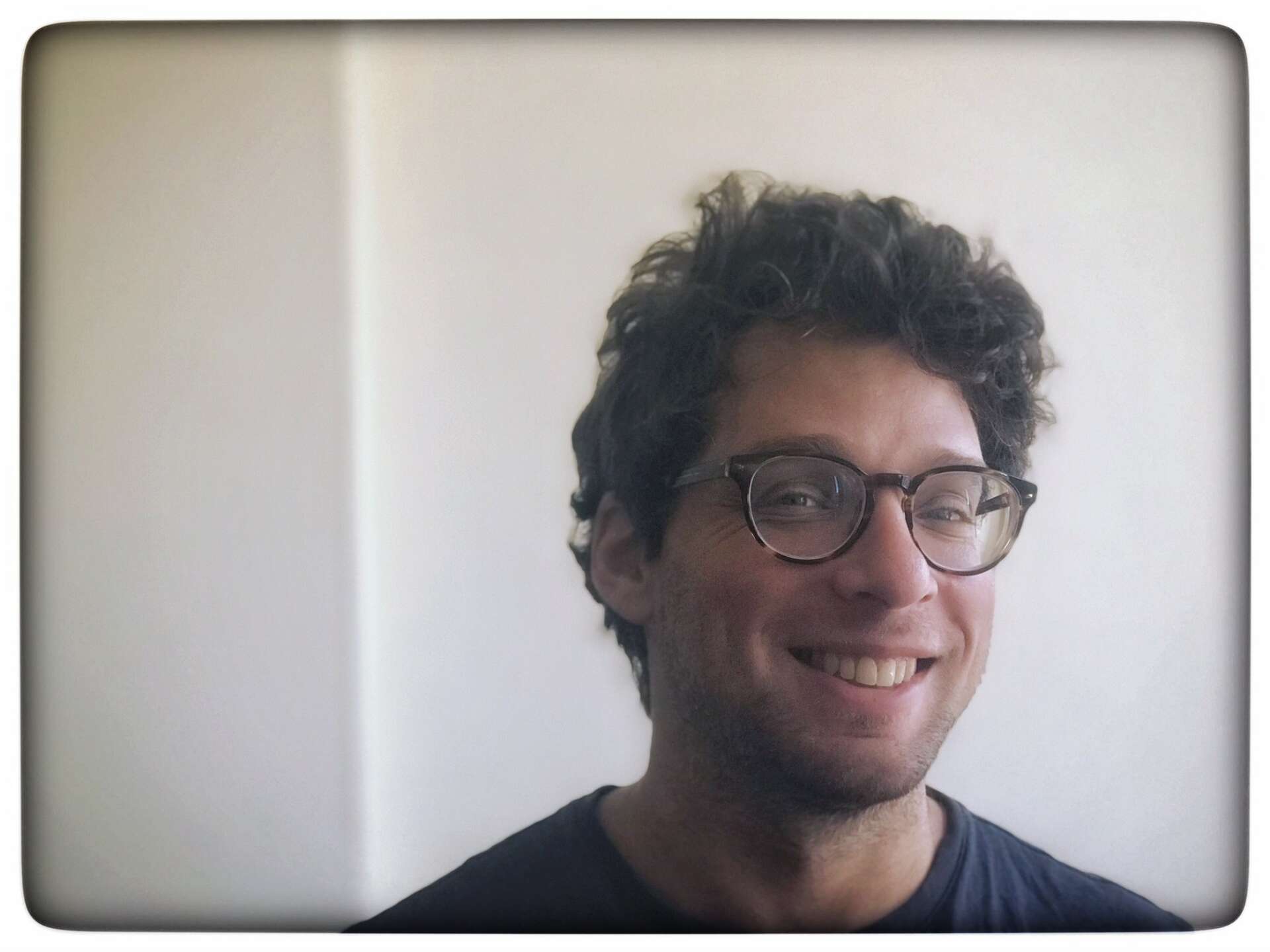

We were lucky to catch up with Noam Osband recently and have shared our conversation below.
Noam , thanks for joining us, excited to have you contributing your stories and insights. Learning the craft is often a unique journey from every creative – we’d love to hear about your journey and if knowing what you know now, you would have done anything differently to speed up the learning process.
I work now within documentary film and podcasting as a sort of jack-of-all-trades, a pretty common role for a freelancer. I know how to develop a project, film it or record it, and then edit it. I started off working in film, and I remember the first time I no longer felt like a beginner.
It was the time I enjoyed making difficult cuts in editing. I was working on my first feature film, Adelante, a profile of a traditionally Irish-Catholic church that was revitalized by Mexican immigrants. I was cutting a montage scene that showed some of the immigrant parishioners celebrating the patron saint of their hometown in Puebla, Mexico. The montage was good….but it dragged. I knew it would require “killing your darlings” to make it work and taking out shots that I loved. I had always dreaded this process – and I still do! – but that one editing session, I really remember doing it and thinking, “Oh, this is making everything better.” It wasn’t painful like usual. I was really doing the hard work of editing,making the cuts I needed and enjoying it, and that night I thought, “You’re learning that everything you take out makes what you leave in stronger. You’re no longer a beginner editor.” And that felt great!
As always, we appreciate you sharing your insights and we’ve got a few more questions for you, but before we get to all of that can you take a minute to introduce yourself and give our readers some of your back background and context?
I got into media production in an unlikely way: through a PhD program. It was my first year of my PhD in anthropology, and I was struggling with writing papers. I knew how to do it, but I found the style and conventions of academic writing to be kind of stiffling. I didn’t enjoy writing for an audience where simplicity in language would be seen as a bad thing. So, I took a filmmaking course….and I just fell in love it. I found filmmaking – and now audio – to be forms where I can merge my intellectual interests with my artistic side, where I get to learn about fascinating things and create art to share these things with others. Not every project lets me do this; you gotta pay the bills. But I’ve been fortunate enough to work on and develop project that let me merge those two sides of me.
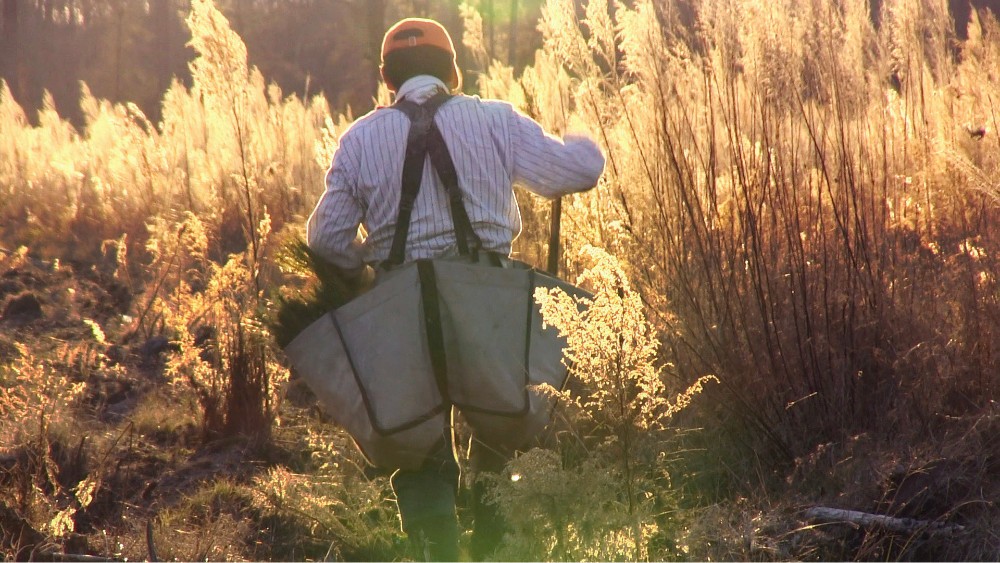
Maybe the best example of this convergence is my most recent film, A Thousand Pines. The movie came out of my work for my PhD. I ended up finishing the degree, creating a 3 hour film about reforestation workers in the USA and Canada. It was a film for a specialized academic audience, using narration that had academic terms. But after I finished, I knew I wanted to use the material and make a larger, more accessible film. Well, 10 years after I first started filming, I finally finished the film, working with a team I assembled to make a documentary that has played in festivals around the world and that will air nationally in the USA this spring. That film feels to me like the best piece of art I’ve made and perhaps also the most informative, and I have watched it at festivals with a bit of pride that I managed to find a way to merge the separate interests and parts of my personality.
We’d love to hear your thoughts on NFTs. (Note: this is for education/entertainment purposes only, readers should not construe this as advice)
I am deeply skeptical. This is the anthropologist in me talking. We should be hesitant about anything that has a big blowup, ad the fact people have a hard time even understanding exactly what it is makes me think it’s a bubble, an asset class for sure but one not nearly as lucrative as portrayed.
Are there any resources you wish you knew about earlier in your creative journey?
Do not trust people who compliment your work too much. I’ve made a bunch of films, and I always do lots of screenings before finishing. People so rarely want to give negative feedback. They’ll tell you what they liked (or what they think you want to hear they liked). But that wont help you the way negative feedback does! What you really need are people who are going to rip things to shreds for you in a supportive manner, and when you find those people, hold onto them for dear life. They’re gold.
Contact Info:
- Website: www.noamosband.com
- Instagram: https://www.instagram.com/noamosband/
- Facebook: https://www.facebook.com/noam.osband/
- Linkedin: https://www.linkedin.com/in/noam-osband-12aab81a/
- Twitter: @noamosband
- Youtube: https://www.youtube.com/@NoamOsband
- Yelp: https://www.yelp.com/biz/noam-osband-san-francisco-3
Image Credits
Photo: Abbie Reese