

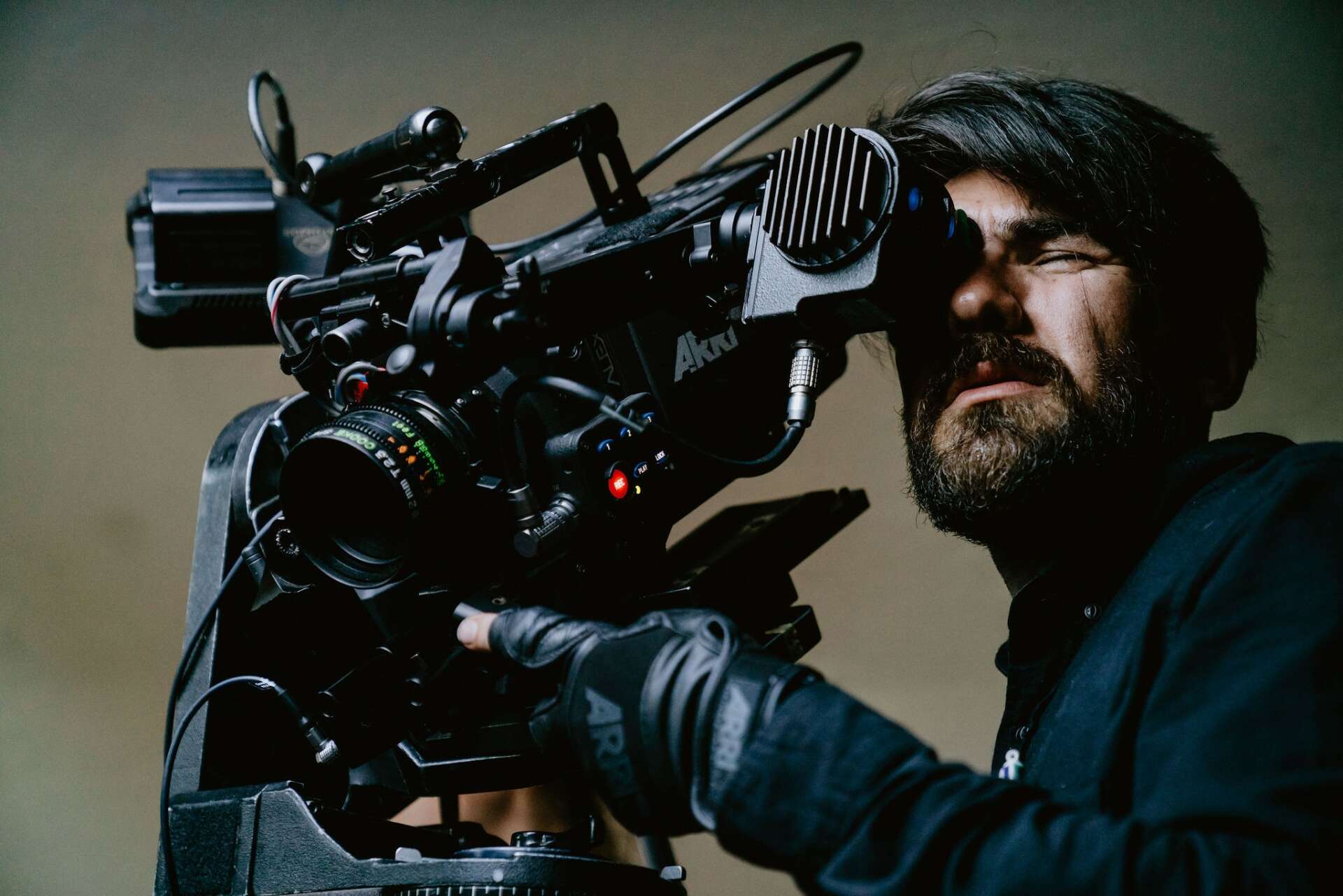

Alright – so today we’ve got the honor of introducing you to Andrés Gallegos. We think you’ll enjoy our conversation, we’ve shared it below.
Andrés, thanks for taking the time to share your stories with us today When did you first know you wanted to pursue a creative/artistic path professionally?
I was born in Chile in 1986. I think I discovered my passion for filmmaking at an early stage of my life. The world of art was not very close to me or my family, however, I kind of knew that I had some form of artistic sensibility. My curiosity about the world of films was always present, I remember that my favorite show on TV was about behind the scenes of movies. Movie Magic, I think it was called. Once my parents had access to purchasing a Video Hi8 camcorder, that was the moment when everything started. I was 11 years old, and with that camcorder, I began making stop-motion videos and diverse sorts of videos with my brother and friends.
In 2003, I went to college to study audiovisual communications at Uniacc, in Santiago de Chile, and here is when I discovered the art of cinematography, and that was it for me, there is no more search, cinematography was going to be the thing I will do for the rest of my life. Right after getting that degree, I was awarded Best Cinematography at FESANCOR (Santiago Short Film Festival) Festival for “Axion”, when I was just twenty-two years old.

Andrés, before we move on to more of these sorts of questions, can you take some time to bring our readers up to speed on you and what you do?
I work as a cinematographer on narrative films, documentary films, and commercial projects. When approaching a film project, my way of operating always consists of immersing myself in the story, understanding the conflict in question, and understanding very clearly the trajectory or dramatic arcs of each of the characters from the beginning. I dive into the practicality of the story and how it moves forward, but most importantly, into the characters’ psychology and understanding what is behind their decision-making process.
My creative process consists of creating and designing my visual approach from an internal place of the character. It lies in creating images and a visual scheme from a place that analyzes not only what the story offers, but the complex world of the character’s psychology. From there, in conjunction with the director, I make creative choices regarding the use of light, type of framing, how to move the camera, optics, aspect ratio, and so on.
Personally, I believe that cinematography is a discipline that accompanies a main vision, which is the vision of the director. With all the elements that cinematography offers, I am always at the service of that vision.
Can you share a story from your journey that illustrates your resilience?
The most arduous obstacle for me has been the immigration process, along with the need to build my career almost entirely anew, having no connections in the United States. Nevertheless, I am immensely appreciative of the opportunity to pursue my educational objectives and associate with a wonderful infield of people who have enabled me to persevere with my filmmaking passion. Thank you all!
Is there a particular goal or mission driving your creative journey?
Like any art form, cinema is constantly looking for mutations; mutations to create new representations of the human condition. I think that the cinematic experience is a theatrical illusion that uses narrative or non-narrative structures as a technique for interpersonal persuasion. I strongly believe that one of the key goals of cinema is to expand the consciousness of society. The democratization of film production has changed the rules of the game, allowing the rising of new cinematic visions. Exciting!
Contact Info:
- Website: http://andres-gallegos.com/
- Instagram: https://www.instagram.com/andresgallegos_dp/
- Facebook: https://www.facebook.com/andresgallegos.y/
- Linkedin: https://www.linkedin.com/in/andresgallegosy/
- Other: IMDB www.imdb.com/name/nm3672514


Image Credits
All photos by Mogli Maureal