

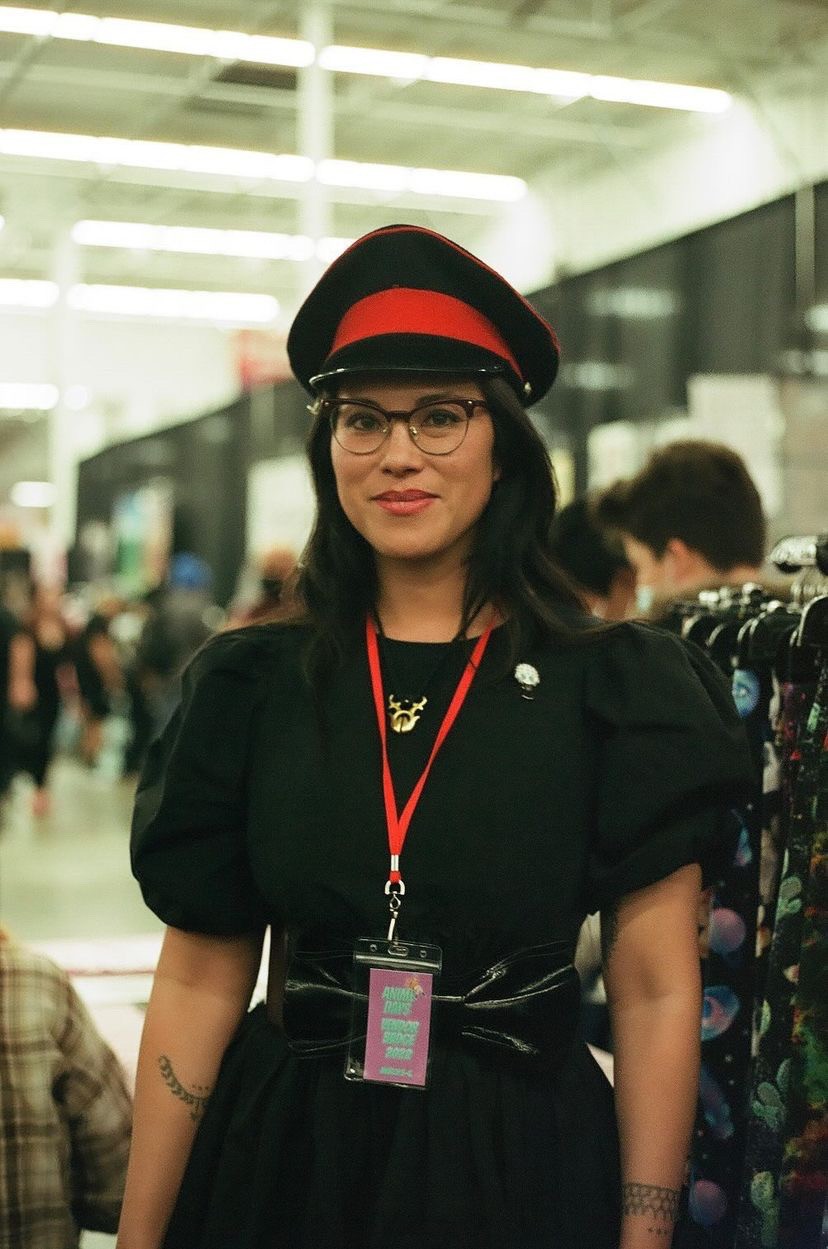

We were lucky to catch up with Angelica Kai Bautista recently and have shared our conversation below.
Angelica Kai, thanks for joining us, excited to have you contributing your stories and insights. What do you think matters most in terms of achieving success?
I believe success is holistic and well-rounded. If a business includes humanity, care, and ethics along with revenue, that is my definition of a successful business. Success also includes maintaining mental, spiritual and physical health. I learned that the hard way. When I began, I pushed myself to burn out and injury. I gave into patriarchal hustle culture, while amputating the feminine aspects of self nourishment and rest. Adding those missing ingredients has energetically balanced and aligned me closer with my business.
Angelica Kai, before we move on to more of these sorts of questions, can you take some time to bring our readers up to speed on you and what you do?
My lifestyle before I started my business was in complete contrast to where I am now. I have a lot of history, so here we go. I was forced to go to real estate school by my mother at 18. My hair was bright orange, I was draped in black and my eyes were filled with rage from my situation. Ha ha. Needless to say, I never got my license. Since then, I have been a hairstylist/educator, a fashion designer working with some pretty rad companies, a reiki and energy worker, yoga teacher, a medium/spirit whisperer, farmhand and much more! I also lived out of backpacks around the world for a good chunk of my life. I tried to live off the grid away from the general populace to avoid being sculpted by the influences of hegemony. . Living like this has allowed me to witness a multitude of perspectives, culture, human behavior, terrain, architecture, art, etc., which fostered a wide perspective for my company, Still Wild.
During the pandemic, I was forced to come back to LA. I thought I would be here for two weeks because of the lockdown, but as we know, it lasted two years+. I started my business out of survival. I started off by making a goth online shop called Space Vamp, but then I realized it would fail because everyone was wearing pajamas all day, working out, or going to the grocery store in casual clothes. Who would buy a velvet cloak from 1893 and coffin luggage during this time?
I shifted to selling really adorable leggings and biker shorts with different prints, that ranged from cats, sloths, skeletons and a ton more. I basically wanted a non-basic bitch yoga clothing company. No hate, but that demographic was already catered to, generously, with tons of beige. I wanted everybody excluded from that space to feel welcome at my shop. Even the basic demographic are welcome. I wanted inclusivity for everyone. I started making sizes from 4X-XS and adding more and more prints. I then added skirts and dresses. I wanted to add happiness to peoples lives during this low time and if it meant providing smiling llamas, to suspend reality for a few moments, so be it.
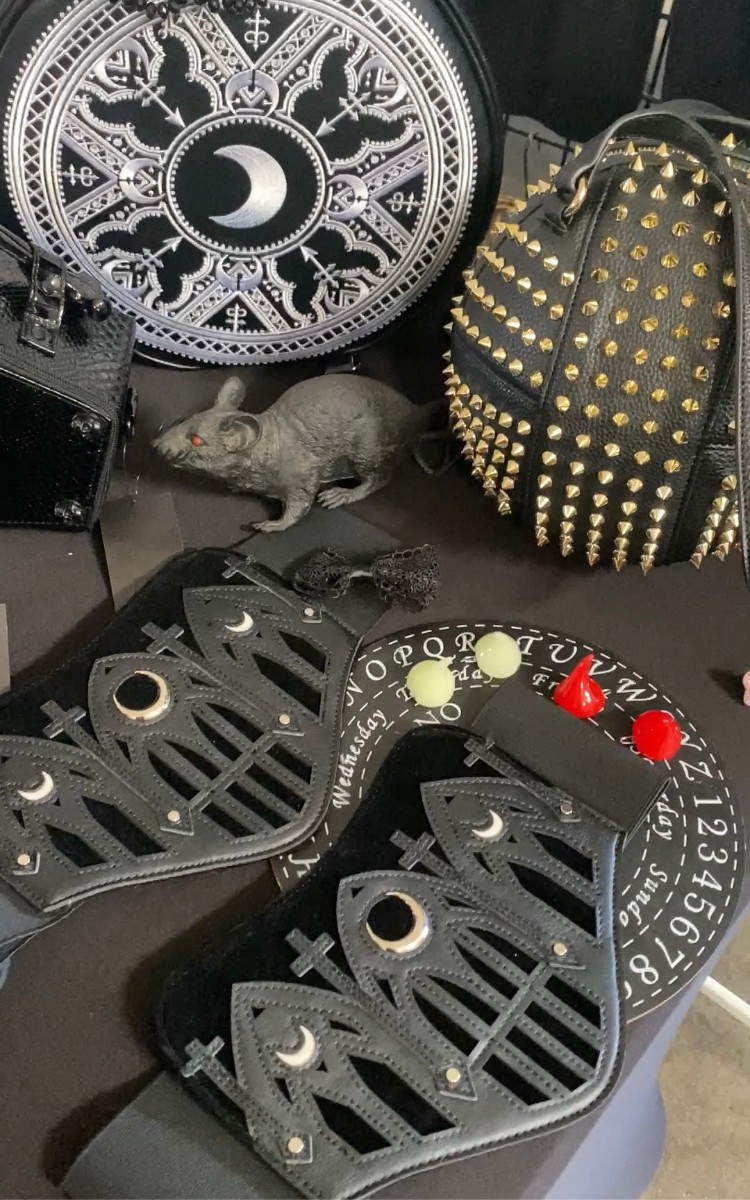
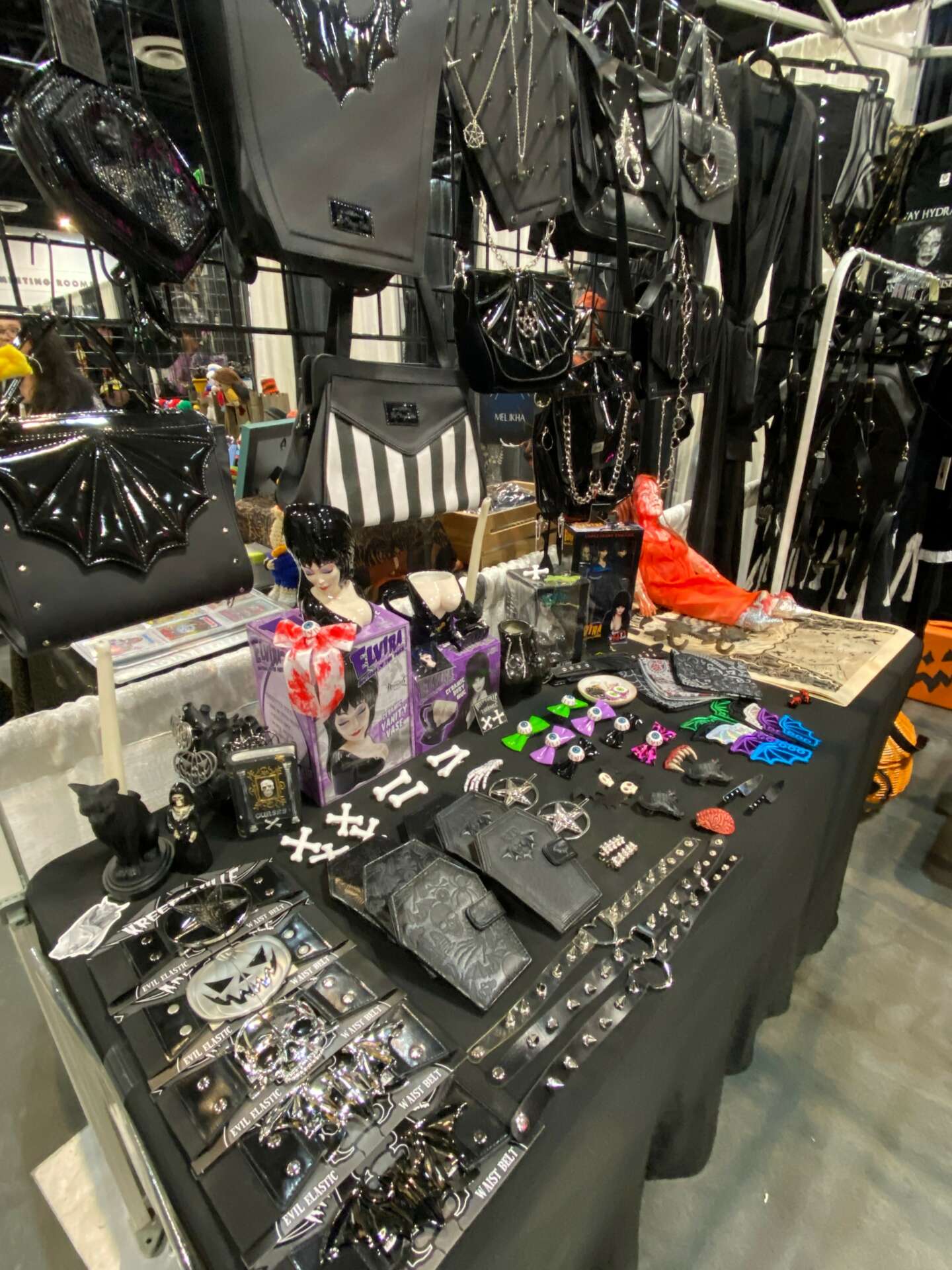
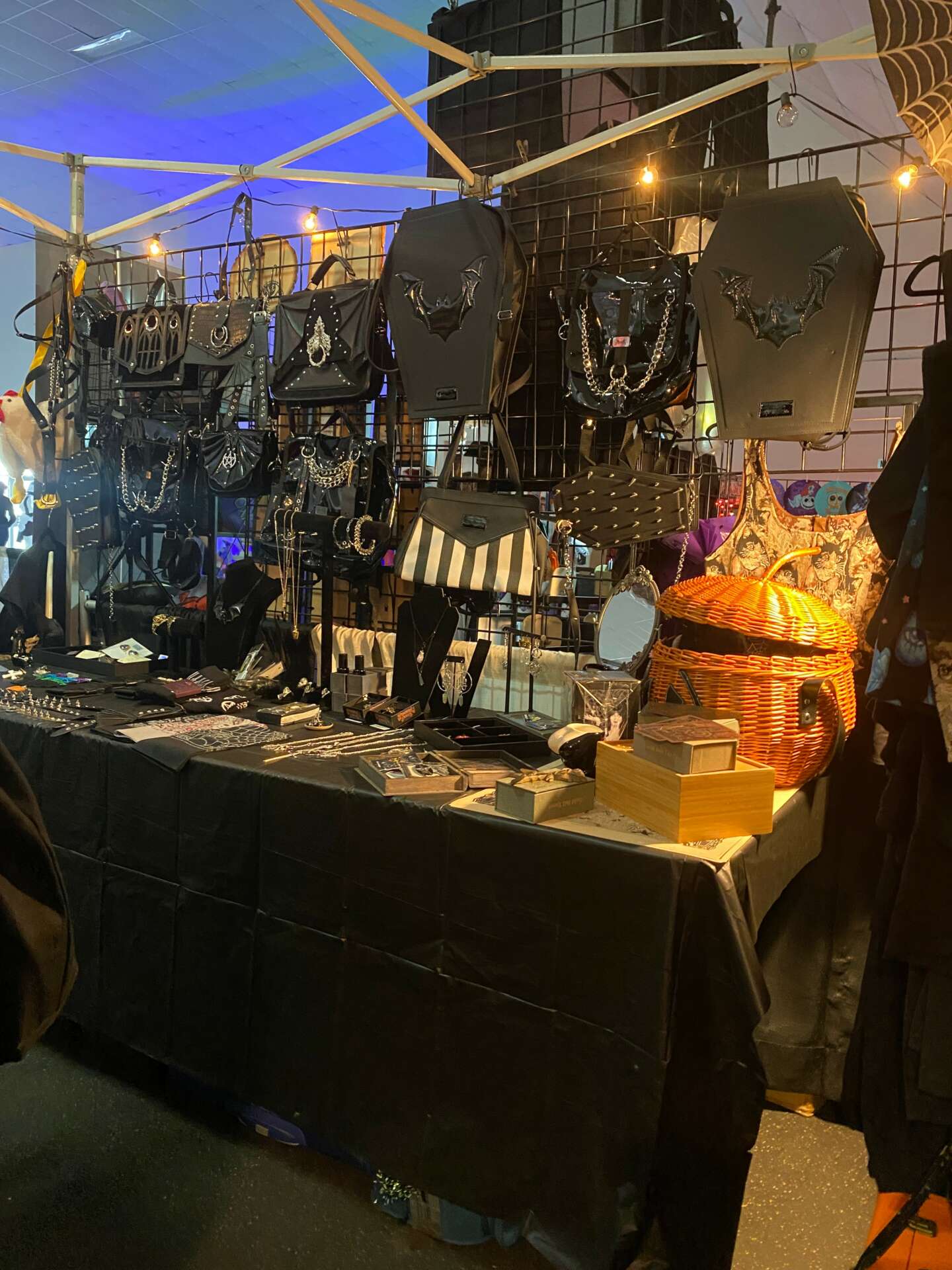
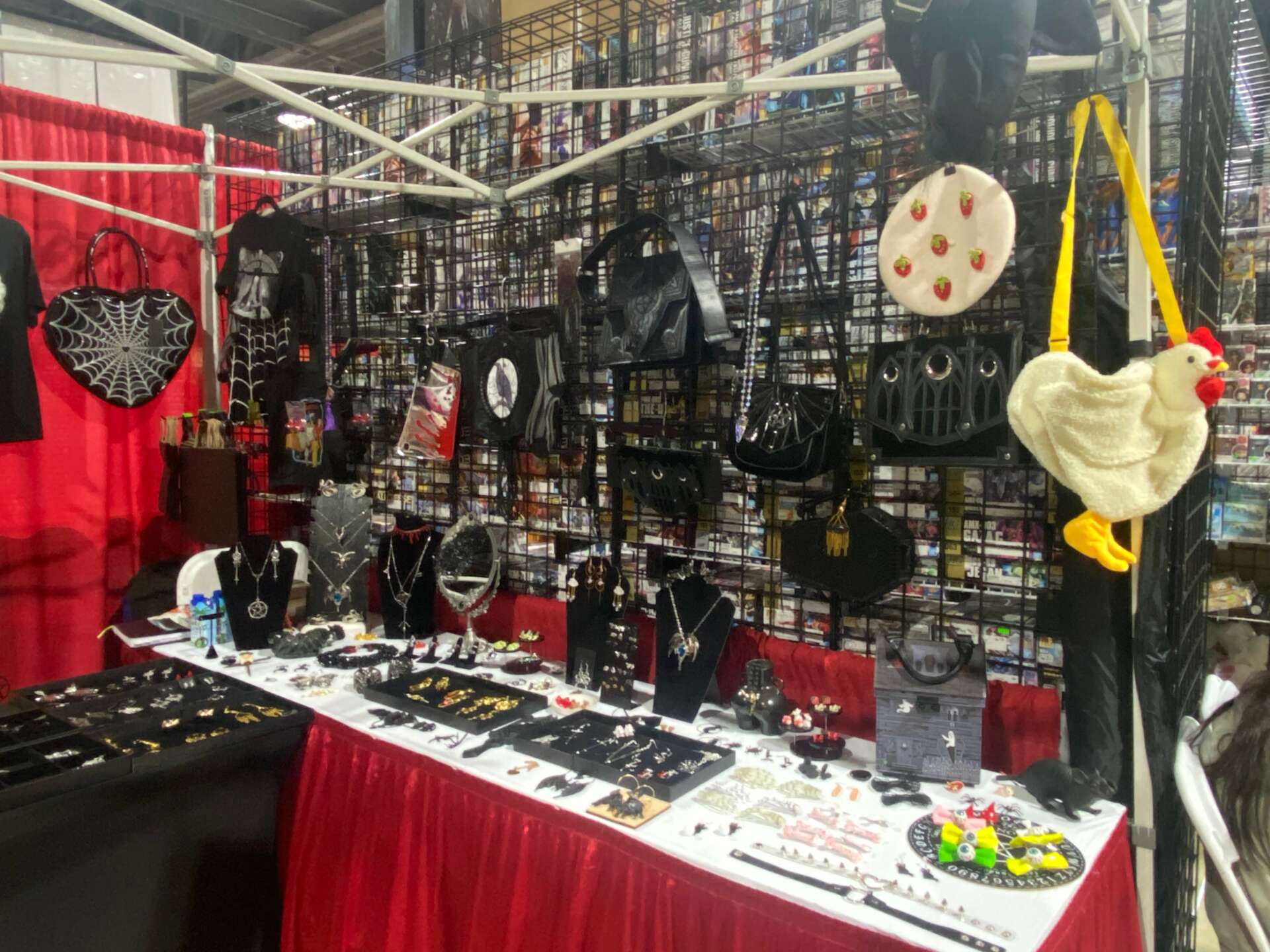
As the pandemic moved along, and life started to morphing into the new mutant civilization we are in now, I came back to my original roots and my technicolor shop went back to black. Currently, with my new iteration, I love adding cute nonsensical surprises to juxtapose the overall black hole of treasures. Silver guillotine earrings with red jewels, offset a grim demise. A fluffy chicken purse next to Linda Blair‘s possessed face brings a smile to my face, hand sculpted couture boob clutches are displayed in their elegance, handmade spiked coffin bags with dainty chain handles hang about next to fuzzy bloody bunny earrings, glamorous gold Victorian inspired earrings are displayed on voluptuous butt vases, Fuck You heart necklaces are hidden in boxes for a surprise, juicy brain hair clips are hidden behind vintage jewelry boxes for a tiny thrill.
I pride my shop in being very thoughtful with every step. I love to find unusual items everywhere. I have found items in funeral museums, punk rock flea markets in other countries, the workshops of unknown talented artists, estate sales of costume designers. I also add foundational pieces from local LA brands. I like to mix items that don’t make sense together, and make them make sense. I think that philosophy could help the world be better. It would help integrate the fear of seeing something different outside oneself and instead, reconcile to make something new that’s beautiful, and surprisingly interesting.
How did you build your audience on social media?
When I first started, I was intimidated by pages that had tens of thousands of followers. I thought I needed to hire somebody to build my following. That would surely put eyeballs on my page, not just the eyeballs of my cousin, sister and 12 friends. Well, that strategy didn’t pan out too well. A lot of my new followers were middle-aged Indian men with children. Although I was grateful for a follow, I knew they were not going to buy my cat leggings, and my stomach was starting to growl from hunger. Sigh. The amount of random followers separated me from my real customers who I cared about. I couldn’t differentiate anymore, and I hated it.
I started from scratch again and started building a following organically. That’s my recommendation for anybody. I started doing pop-ups and meeting fellow vendors and customers. Almost every single person who has followed me, I met in person at my markets. I connected with them in real life. To me, it’s the quality, not quantity of people. I would much rather have people who appreciate my shop, than a bunch of random people who don’t care. It’s symbiotic, and I like that.
How did you put together the initial capital you needed to start your business?
I used my savings and credit card to start. I used the bulk of it for education on how to build a business, some went to testing Facebook ads, apps, and the rest was spent on inventory and paying for my first market. I wanted to be an e-commerce brand, but advertising costed way too much for a newbie. I shifted to pop-ups to get immediate capital. At least 65% of my income goes right back into inventory and market fees. That’s how I started building. I’d make money, and put it right back into the business. It grew from there, and I think it was good strategy.
Contact Info:
- Website: StillWildShop.com
- Instagram: @StillWildShop @StillWildBoutique
Image Credits
@PerCapita