



We were lucky to catch up with Sarah Callender recently and have shared our conversation below.
Sarah, looking forward to hearing all of your stories today. Talk to us about building a team – did you hire quickly, how’d you recruit the first few team members? Any interesting lessons?
As the Executive Director of the nonprofit organization Main Street Murfreesboro, I came into my position with an established board of directors. Most of the members had been on the board for over ten years with no term limits in place. There was a deep-rooted mindset in the organization that this is how we have always done it and change is not needed. I made it a point to meet privately with as many of the members as possible to talk about their passion and desire to serve in the organization.
During these meetings I was able to get a clearer picture of what changes needed to be made, where to utilize members in different capacities, and who I should seek further guidance from. I asked board members for suggestions on other “influential” people in the community that they thought I should talk to. This helped form a list of community leaders I proceeded to meet, with the goal of asking their opinions on the organization’s influence, history, and potential in fulfilling our mission and goals.
I gave myself a year to get acclimated to my new position and build confidence with those on my board of directors, while forming strong relationships through new partnerships around the community. My goal was to slowly incorporate change by bringing new perspectives into the organization by inviting outside leaders to be a part of our vision and tapping into underutilized talent within some of our quieter board members.
I realized quickly that to bring about change in an older, established organization that is set in its ways one must gain the trust of those who have the ability to influence others. This can only occur through listening and empowering others who you see potential in making a positive change. One board member, a younger individual who had served on the board for a few years, told me at our first meeting alone, “I will probably step down from the board soon because I just don’t feel like I’m being used to make a difference. No one is asking me to do anything or step up into a role where I can use my talents.” I realized that volunteers won’t continue to put in the time and effort to support an organization if they don’t feel they are having some sort of impact. Shortly after this meeting I asked this individual to lead one of our three committees and help me strategize on making some changes in the organization. Two years later this individual was my board chair and one of the most helpful members behind the scenes.
Another board member I met with had just joined the organization and admitted to me he didn’t really understand what the mission of the organization was even about. I spent a lot of time learning about his passions and what he wanted to bring to the organization. Through fostering that relationship, I was able to create a new committee with this individual as the chair and develop a strategic plan to implement tasks that helped our organization meet standards for our annual accreditation. He too became a future board chair and one of the most utilized members in a particular area of need for our organization, one that I had the least experience in,
While meeting individuals in the community I would consider how they could influence our organization with their skillset or networking power. I would often ask an individual to serve on a committee or help advise me on a project or event and then if I felt they were a good fit for the organization, bring them forward to be nominated for the board of directors. As an Executive Director of a nonprofit organization, I feel you have to have a certain level of trust with anyone you invite to serve on your board. Their job is to look after the organization, you as a director, and be someone who represents the mission of your work while out in the community. The best way to really build that kind of team is by constantly watching what others are doing, how they serve in the community, and listen to them when they share with others their passion and interests.
Deciding to make changes in an established organization with volunteers who carried a sense of ownership with them was a scary thing. I faced opposition at times. I didn’t please everyone. But I can say after four years in this position I have grown the organization to a higher level of influence. I have created a more diverse board of directors, bringing in people who reflect our growing community, have new ideas and are willing to pivot when needed to accomplish our strategic goals.


Sarah, before we move on to more of these sorts of questions, can you take some time to bring our readers up to speed on you and what you do?
I have been passionate about including others since I can remember. Everyone wants to feel they belong to something bigger than themselves, whether a village of friends, a cause that makes a difference in the world, or a job that serves a purpose and gives them a sense of meaning in their week. I attended a women’s college in Macon, Georgia in the late 90’s that was focused on collaboration before it became a buzz word in our culture. There was a ‘sisterhood’ established within each class. We were to bond by having pep rallies, even though we didn’t have a football team, and compete in annual theatrical productions by writing, casting, and acting in a play against the other classes for a coveted STUNT cup. In class my professors taught me to ask questions, speak up, and be a leader. I formed my core values of service to the community and others through those four years at Wesleyan College, interning with three different nonprofit organizations that fueled a fire in my spirit to give back and build up.
My first job after graduation was with the Boy Scouts of America as the first female District Executive for Rutherford and Cannon County’s Trail of Tears District. I learned the essentials of the nonprofit world and adulting that first year as a 22-year-old female in a male dominated, volunteer run organization. Pulling from my own girl scout experience as a child, I respected the values of the organization, the dependency of volunteers to give their time to complete the vision and the financial scarcity that drives donation requests and fundraising events. I soaked up everything I could the next three years in that organization.
I learned that to survive as the new person I had to first show humility by admitting to everyone I knew my place as the newbie and my dependence on their expertise for us to all be successful. I discovered that others wanted to be a part of a winning team; there is pride in achieving goals as a district, company or business, and so they would willingly support me when asked. People work harder and will help each other more if they are appreciated for their part in the success of moving everyone forward. So, I asked for help a lot. I listened to those around me who had been involved in the organization of scouting for as long as I had been alive. I laughed at myself as I figured things out. And I cried.
One of the proudest moments of my early career was when a man, who could have been my grandfather, met me for the first time as I entered his ‘territory’ or ‘neck of the woods’ in the scouting area. His cultural identity and years of mountain customs had influenced him enough to take one look at me as the new district executive and decide to put me in my place. Needless to say, I was brought to tears and decided I would turn in my resignation that day. After a very thoughtful, and probably desperate boss, had a conversation with the scouting leader over the phone I received an apology and invitation to come ride along with him to learn about his community. He was an influencer before I knew what the term meant. I spent a whole day riding in this man’s pickup truck around the small town in the mountains, meeting all of his scouting connections and business leaders. After that day…we were the best of friends. And he had my back. I didn’t have to fear another old scouting leader set in his ways trying to scare me off if he was around. What did I learn from that experience? Sometimes people can’t help themselves. You have to be willing to give people a second chance, learn from their own prejudices or customs and listen to them. When others see that you care about learning from them, hearing their stories, and want their help to be successful in a united vision they often will come around.

How about pivoting – can you share the story of a time you’ve had to pivot?
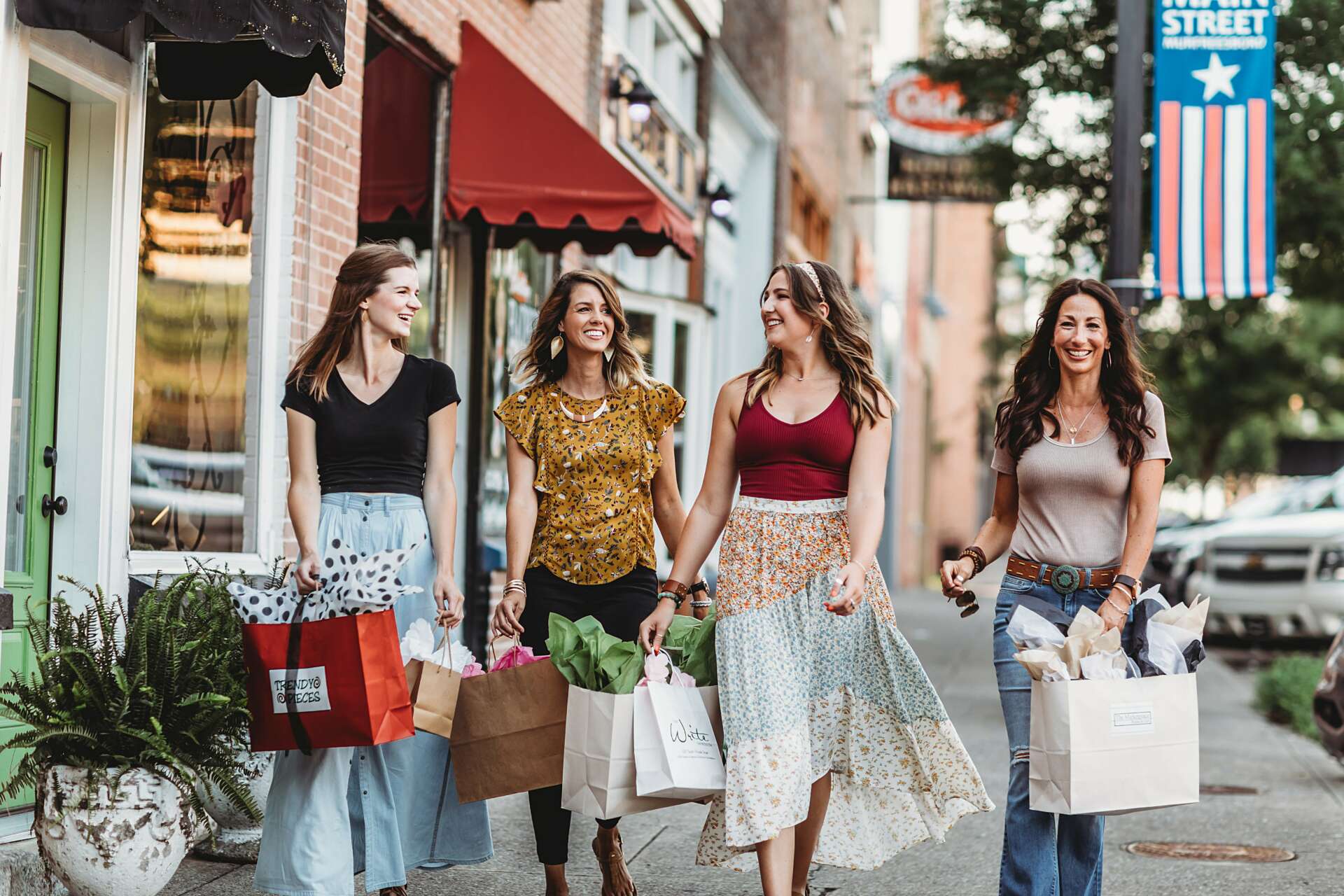
When I started my position in the Main Street organization it was 90% event planning for the historic downtown community. The goal was to bring people downtown and you did that through planning free events and activities for them to participate in, expose them to the area and hope they will patronize the small businesses located there. I was in the job for six months, barely enough time to learn the names of all my board members when the Covid 19 pandemic shut the world down.
I learned what the word pivot meant during those next months, just like everyone else. I was already working hard to making changes in the organization by focusing more on the small business owner located in the historic downtown. Now I had the platform and attention of the community to do just that. I started by sharing stories. I interviewed as many business owners as would answer me through email, asking them to share their why and tell our city who they were. Putting a face to the title ‘small business owner’ became real for me. It was a door I was able to open for the people who lived in my city and were struggling to pay their bills with their shops and restaurant doors closed. The downtown became a living organism, and the world around it started to pay attention to their cries for help. Support Small Businesses was the slogan preached everywhere in our country. The heroes were those neighbors of ours who worked each day as a small business owner, giving back to our communities but now needing our help.
This pivot led me to re-evaluate my organization’s goals. It didn’t make sense to spend so much time creating large events all year, focusing on raising money for activities verses spending funds on helping the business owners in our historic downtown. Through small changes over the next two years our Main Street organization, along with many others across the nation, refocused on economic vitality instead of promotions. I learned to equip the small business owner with information on grants, free workshops, and cross promotional activities to highlight themselves and help their neighboring business community members. I worked to form an ecosystem downtown and build networking among the people there. I listened to what the businesses wanted, where they thought change needed to occur, and found out who had the power to make those changes happen.
With these changes in my focus and time I was able to build a larger board of directors and form stronger committees with community leaders who had the influence, wisdom, and expertise to help me make changes for the better. I spent less time organizing large events that had little impact on my organization’s mission. I continue to be inspired by the people I work with in the downtown business district, learning from their individual passions and hard work ethic.

Contact Info:
- Website: www.mainstreetmurfreesboro.org
- Instagram: mainstreetmurfreesboro
- Facebook: mainstreetmurfreesboro